Back to Travel Guide

Ultimate Species Guide

The marine and land wildlife of Curaçao — what you can see, where to see it, and when.

Curaçao's coral reefs host over 400 species, and the island's dry-forest interior adds flamingos, parrots, iguanas, and more. This guide covers 30+ of the most visible and distinctive species — what they look like, where to spot them, and what makes each one worth looking for.

Green Sea Turtle (Chelonia mydas)

Green Sea Turtle (Chelonia mydas)

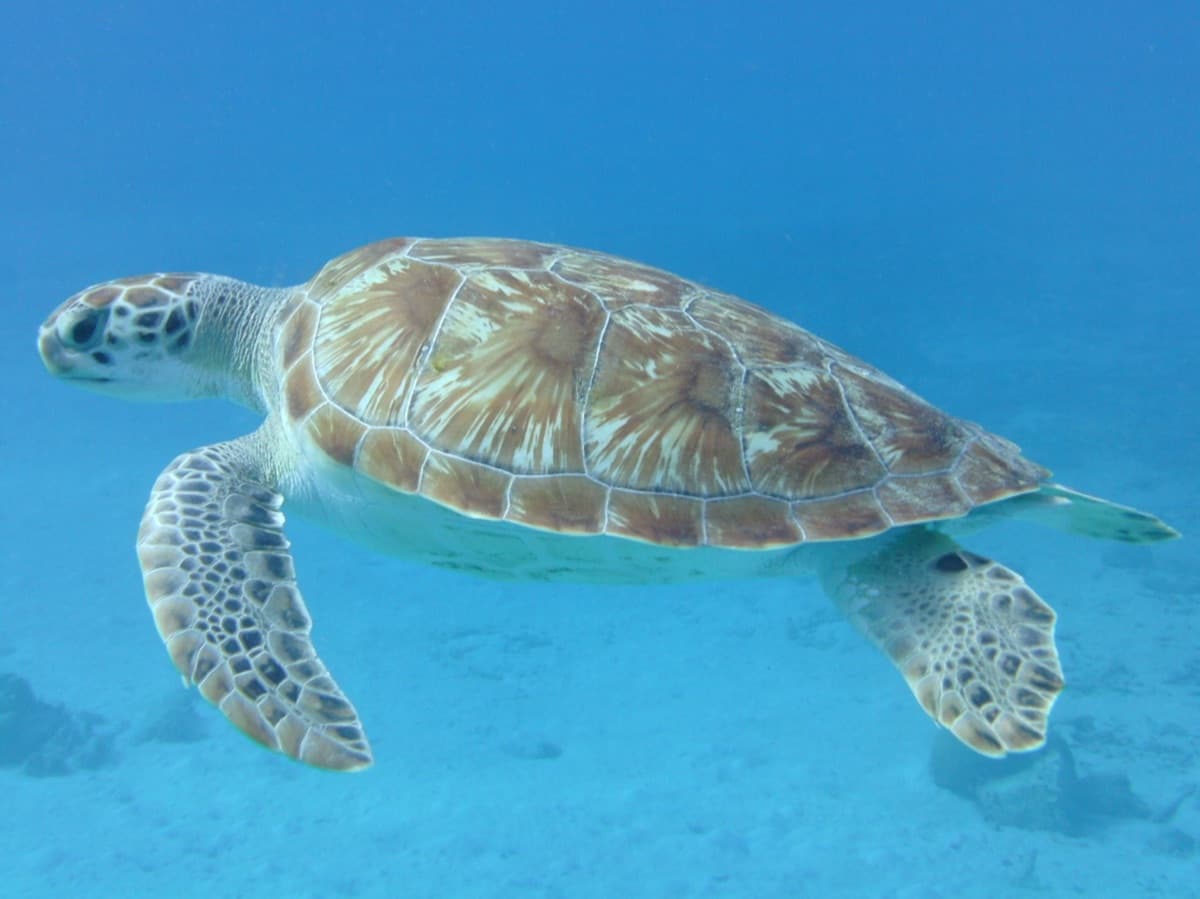
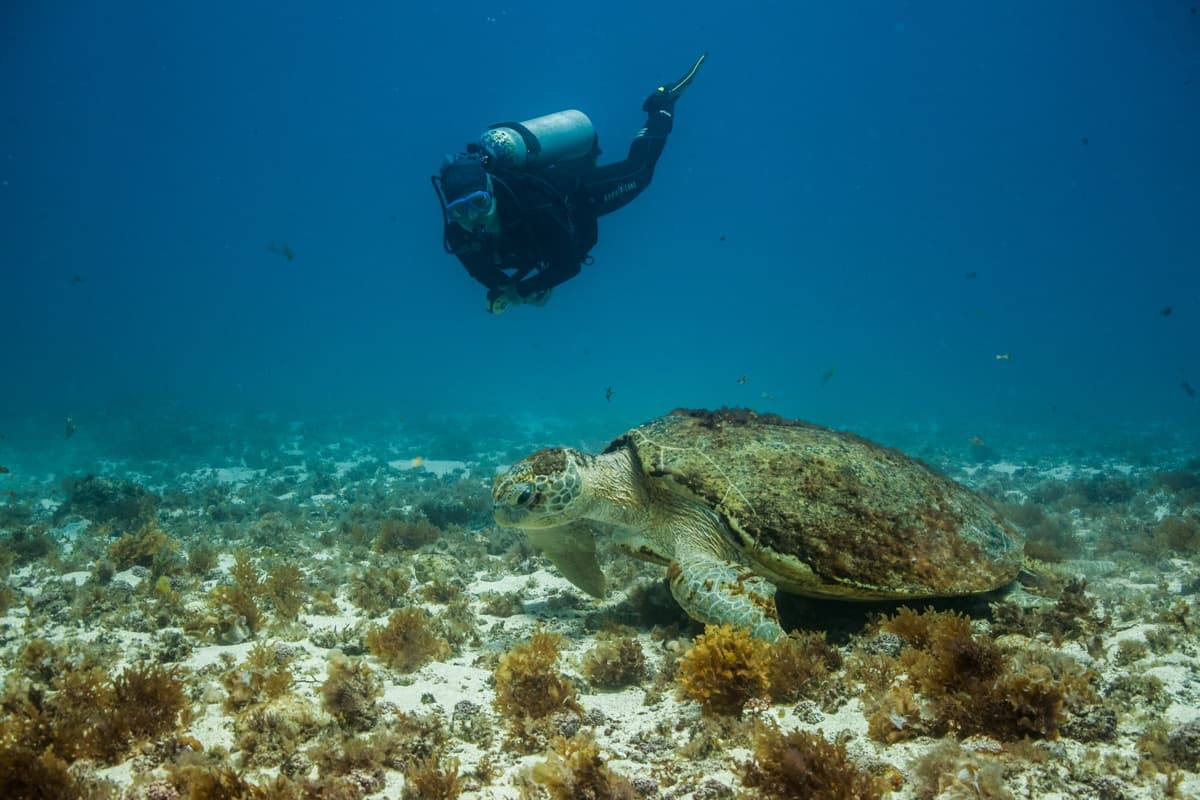
The green sea turtle is Curaçao's most commonly sighted turtle species, particularly at Playa Piskado (Turtle Beach) where individuals feed on sponges and fishermen's scraps daily. Adults can exceed 1 metre in shell length and weigh 150 kg. They're herbivorous as adults — mostly sea grass and algae — which is the 'green' in the name (the fat layer turns greenish from chlorophyll). They surface every 5-10 minutes to breathe during active foraging. Protected species; no touching. Best seen: Playa Piskado, Playa Lagun, Alice in Wonderland (Playa Kalki).

💡 Tip: Green turtles swim with a sculling motion using both front flippers simultaneously. Hawksbills flap alternately. That's how to tell them apart from above.
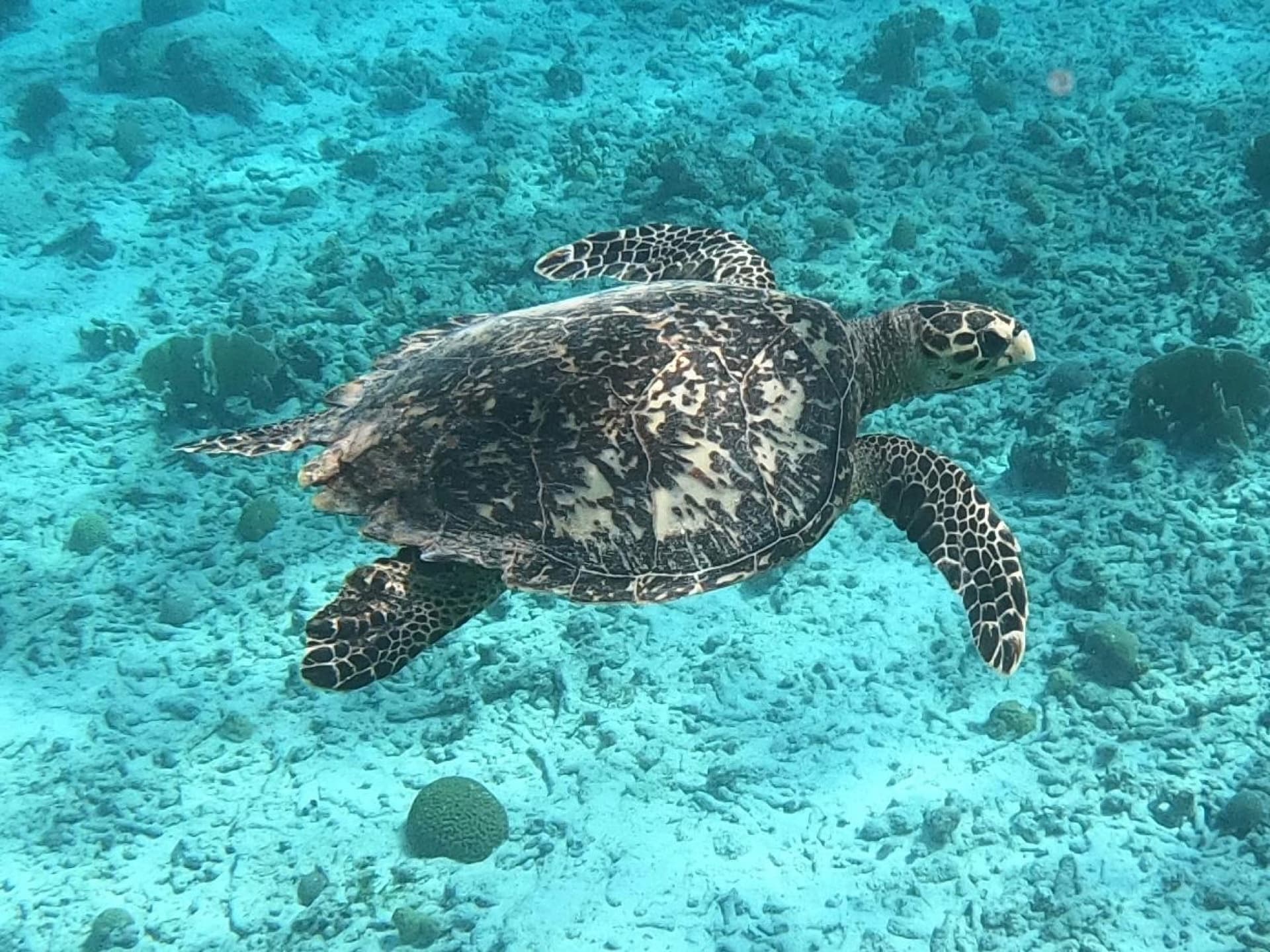
Hawksbill Turtle (Eretmochelys imbricata)

Hawksbill Turtle (Eretmochelys imbricata)

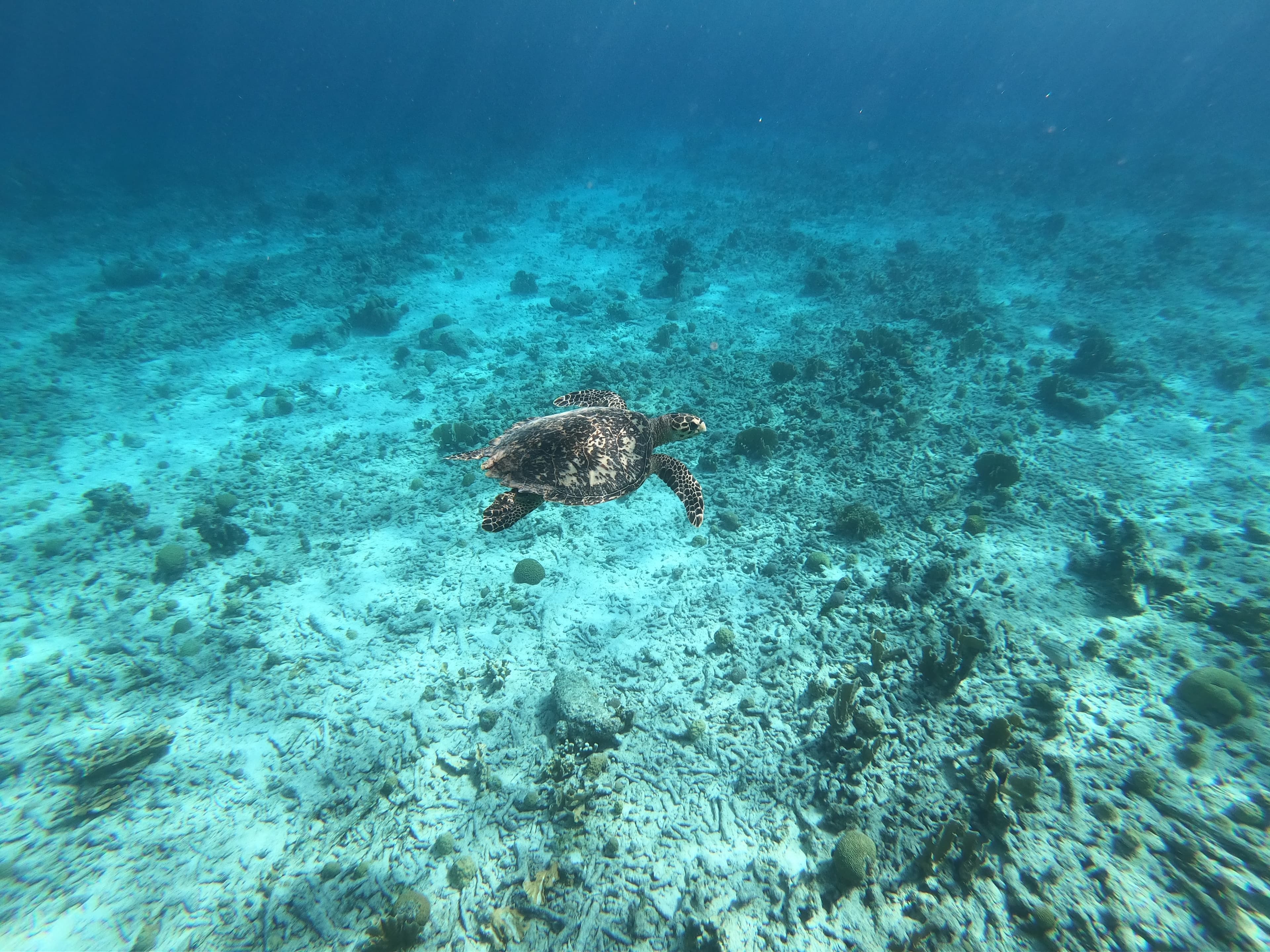
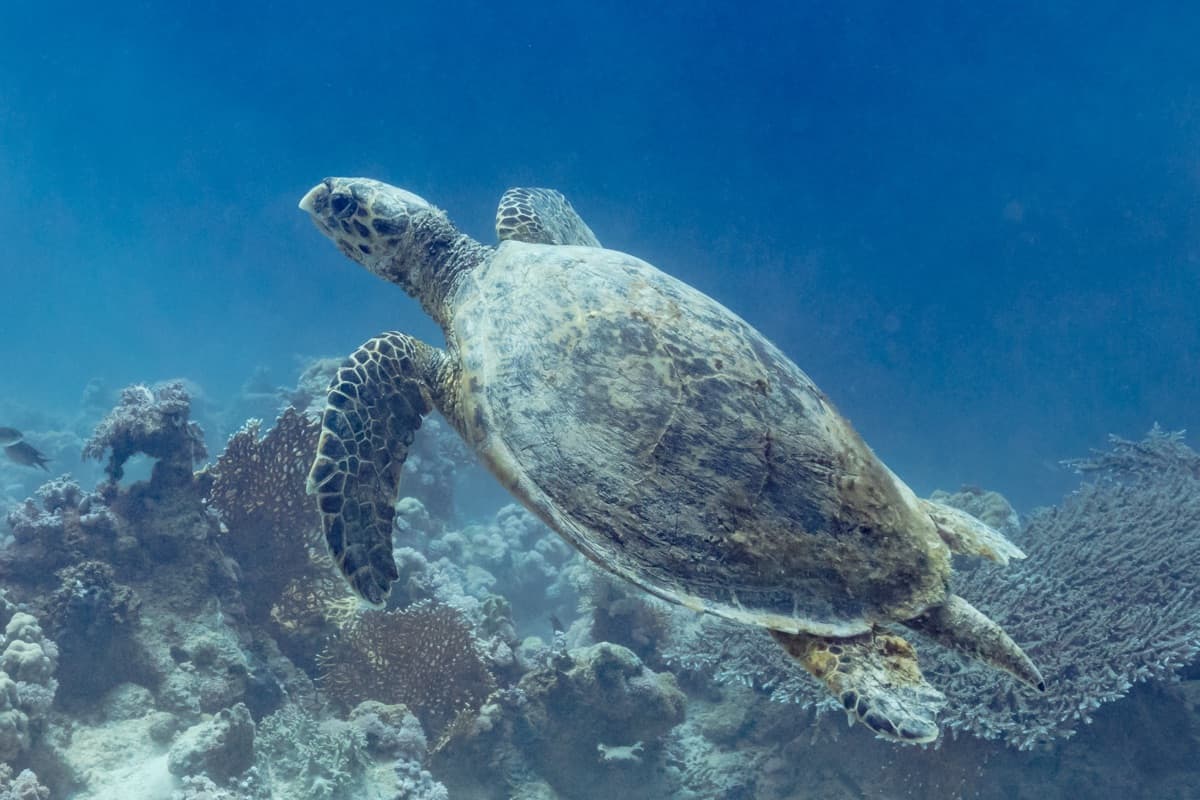
The hawksbill is the more elusive of Curaçao's regularly-sighted turtles — smaller than the green (up to 90 cm shell length), with a distinctive pointed 'beak' and overlapping scutes on the carapace. They're specialists: they eat sponges almost exclusively. On Curaçao's reefs you'll find them methodically biting chunks from barrel sponges and tube sponges at 6-15 metres. Critically endangered globally; seeing one is a real encounter. Best seen: Playa Lagun, Santa Martha, Alice in Wonderland, Porto Mari outer reef.

💡 Tip: Their amber-and-brown shell pattern was historically harvested for 'tortoiseshell' — jewellery, eyewear, carvings. The species is protected everywhere now; international trade is banned.

Loggerhead Turtle (Caretta caretta)

Loggerhead Turtle (Caretta caretta)

The loggerhead is the rarer visitor of Curaçao's three turtle species — larger than either green or hawksbill (up to 110 cm shell length) with a huge head and powerful jaws adapted to crushing molluscs and crustaceans. They're carnivorous, unlike the mostly-herbivorous green. Sightings are less predictable; occasional encounters on the offshore reefs of Klein Curaçao and the far north coast. Best seen: Klein Curaçao outer reefs, occasional at Watamula.

💡 Tip: The head size relative to the body is the quick ID — loggerheads look 'big-headed'. Greens and hawksbills have proportionally smaller heads.

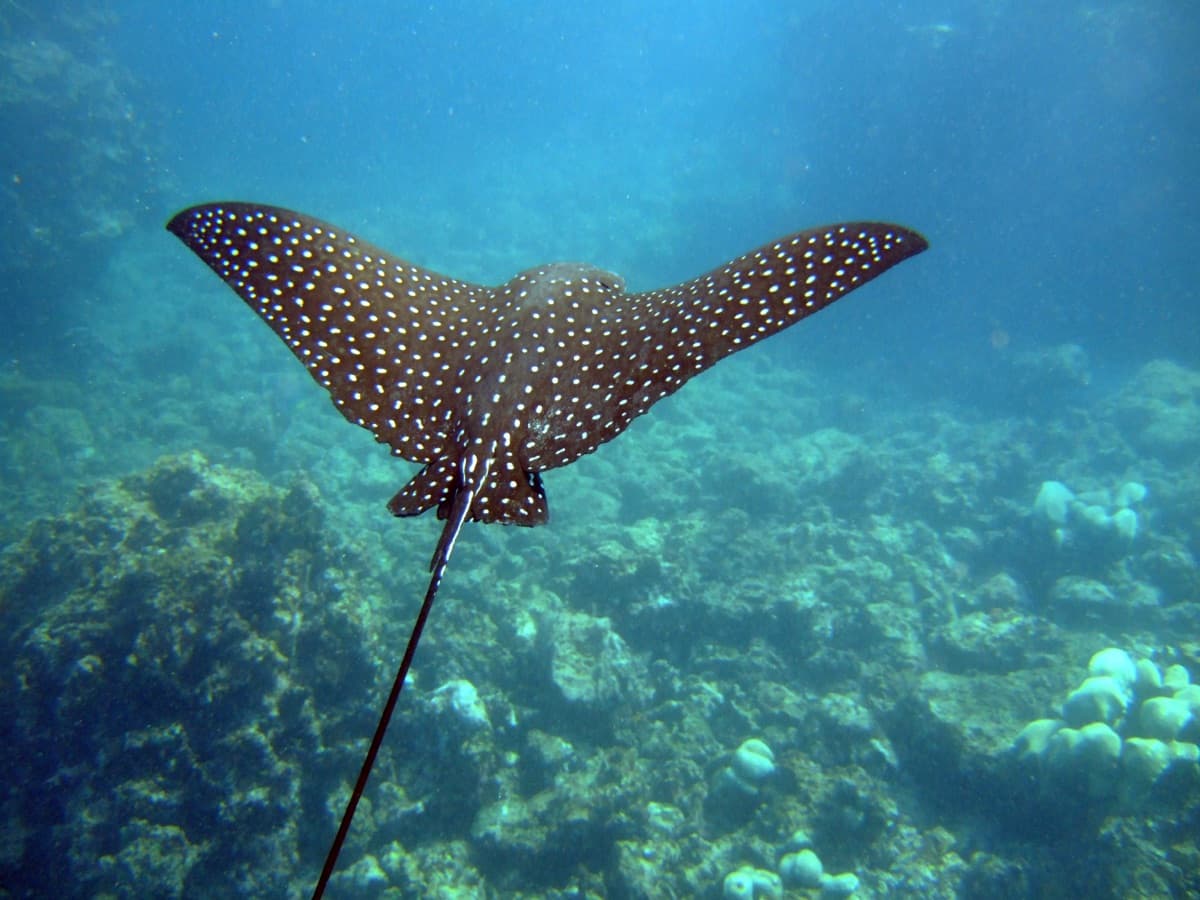
Spotted Eagle Ray (Aetobatus narinari)

Spotted Eagle Ray (Aetobatus narinari)

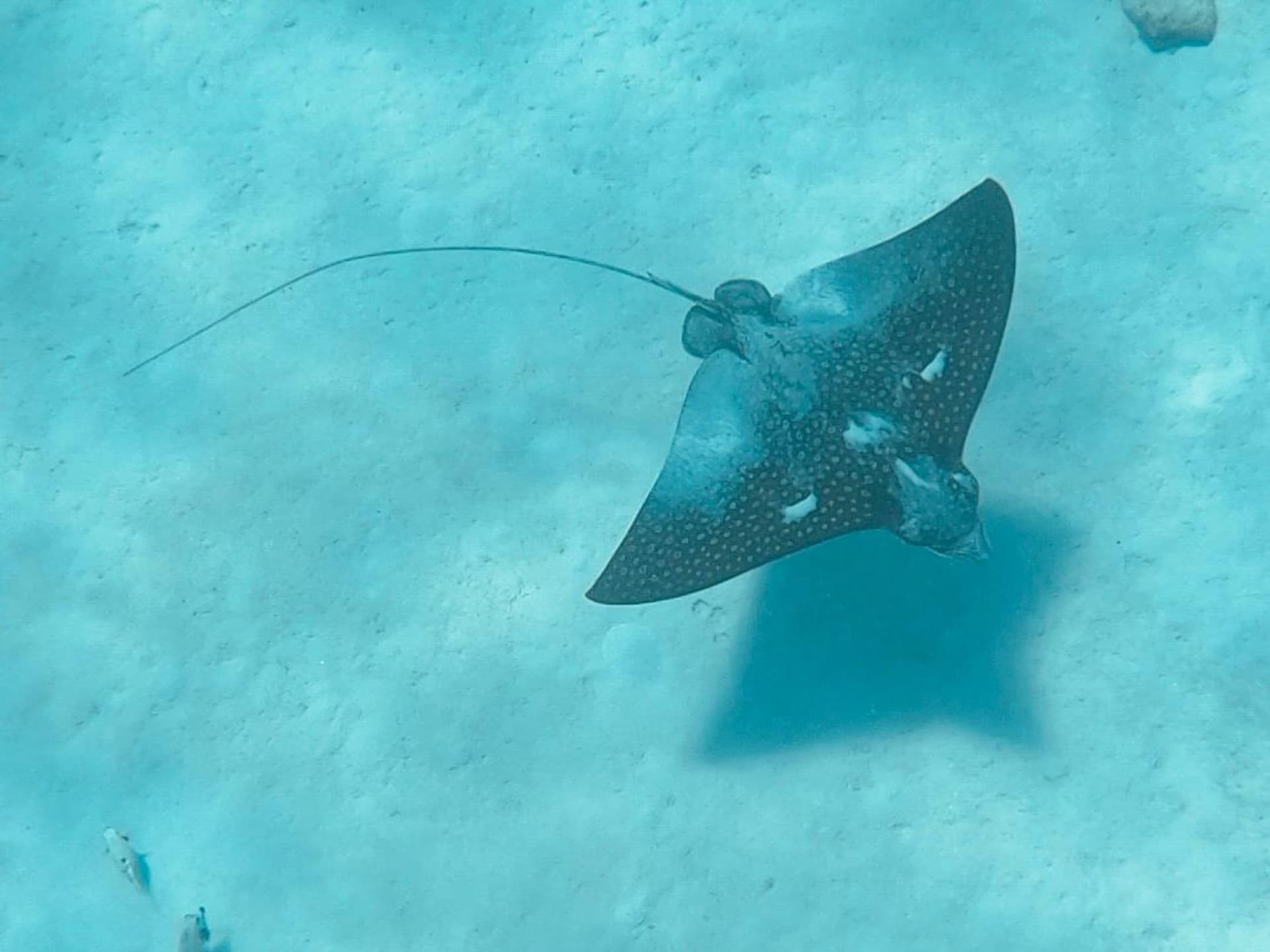
The spotted eagle ray is Curaçao's most photogenic pelagic — up to 3 metres wingspan, distinctive white-spotted dark back, and a graceful gliding flight pattern above the sand between reef zones. They often travel in small groups of 2-5 individuals, sometimes larger schools. They feed on molluscs and crustaceans in the sandy areas between reef formations. Unlike stingrays, eagle rays rarely rest on the bottom; they're almost always in motion.

💡 Tip: Best sightings happen along the wall edges at 15-25 metres where they cruise the sand. Slow approach from the side; they're shy of sudden movements from above.
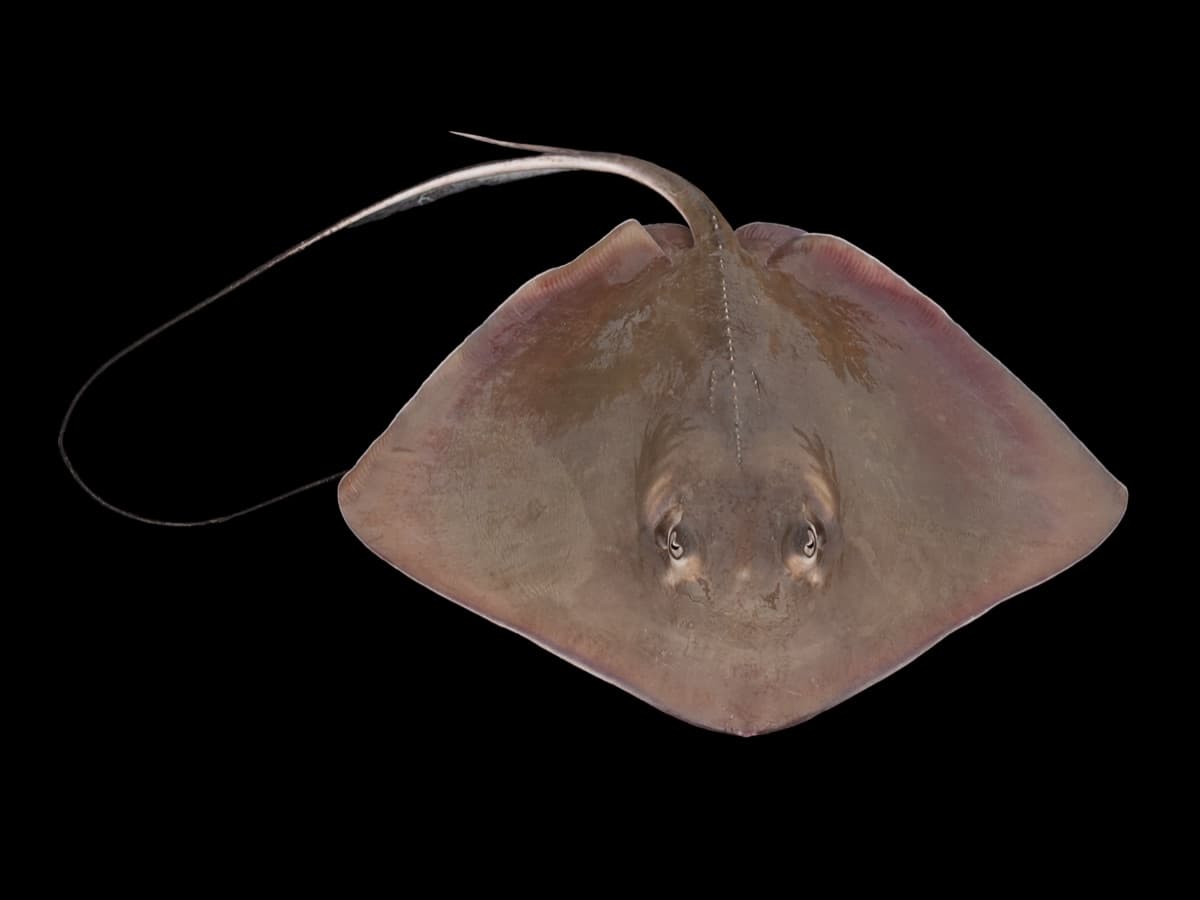
Southern Stingray (Hypanus americanus)

Southern Stingray (Hypanus americanus)

The southern stingray is a reliable find on Curaçao's sandy bottoms — flat, disk-shaped, up to 1.5 metres across, often half-buried in sand with only the eyes and spiracles exposed. They use their mouths on the underside of their bodies to vacuum up molluscs, crustaceans, and small fish from the sediment. The tail carries a venomous spine used only in self-defence; give them space. Best seen: Porto Mari sand channel, Director's Bay, Alice in Wonderland.

💡 Tip: Look for 'dig marks' in the sand — craters where stingrays have been feeding. The ray is often still nearby, just buried.

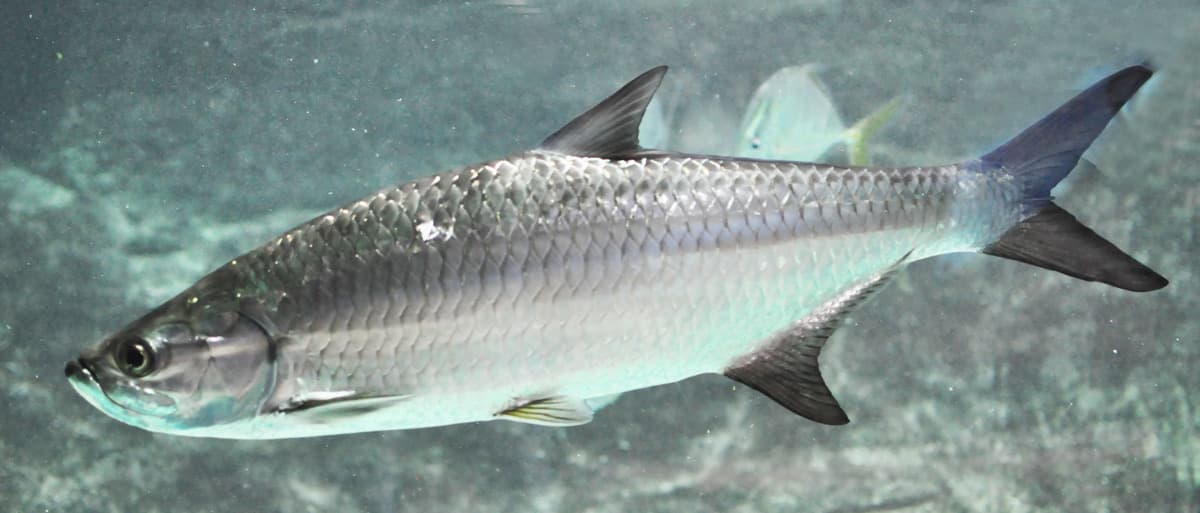
Atlantic Tarpon (Megalops atlanticus)

Atlantic Tarpon (Megalops atlanticus)

The tarpon is the silver giant of Curaçao's south coast reefs. Adults reach 2 metres and 150 kg, with massive shining scales and a distinctive upward-pointing lower jaw. Schools of tarpon use specific reef sites as daytime holding stations — Tarpon City and Tarpon Bridge are named for this. Divers who hover calmly can be surrounded by a school of 50+ fish, each the size of a person. Primarily nocturnal hunters; during daylight they cruise slowly along reef walls.

💡 Tip: Tarpon City and Tarpon Bridge on the south coast (boat-access) are the reliable sites. Stay calm and still — they'll come close.

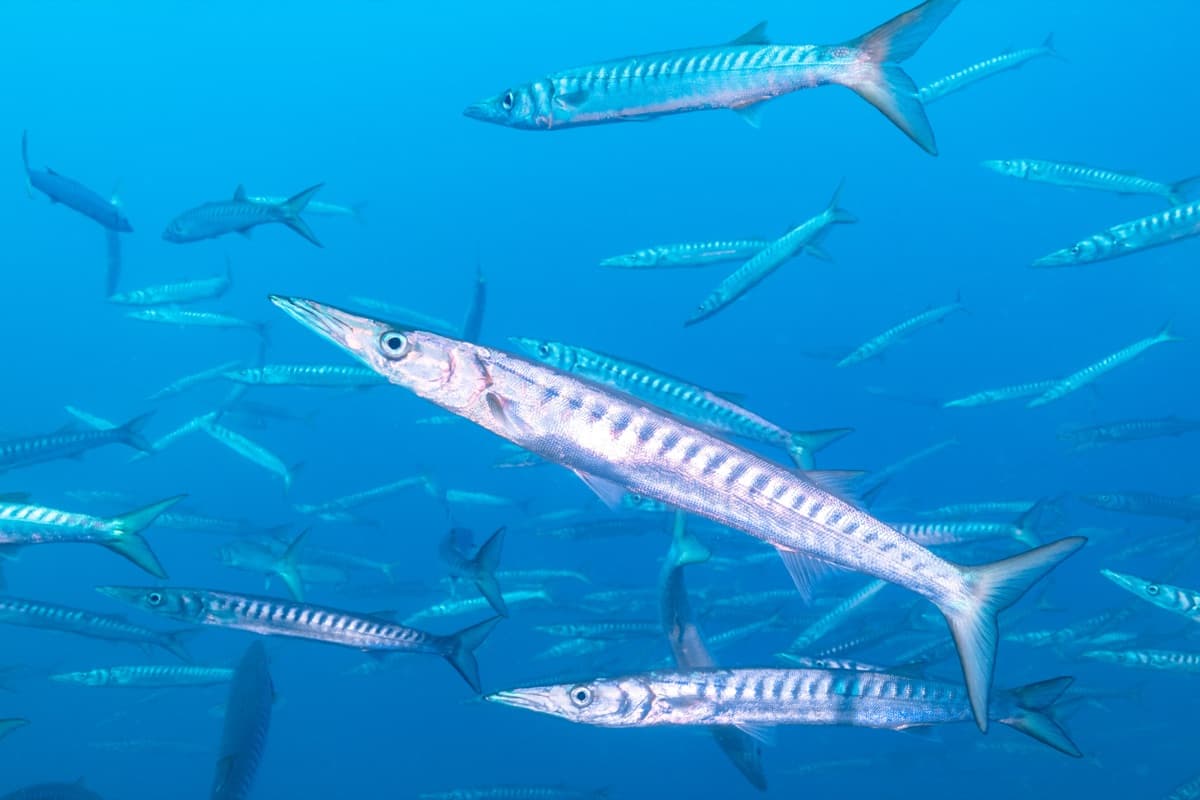
Great Barracuda (Sphyraena barracuda)

Great Barracuda (Sphyraena barracuda)

The great barracuda is Curaçao's most common apex predator — lean, silver, up to 1.5 metres long, with a prominent lower jaw showing sharp teeth. Often seen hovering motionless in mid-water or slowly cruising alongside divers. Despite reputation, unprovoked attacks on humans are vanishingly rare. They hunt by ambush, attacking smaller fish with a lightning burst of speed. Solo adults are most common; juveniles form small schools.

💡 Tip: Don't wear shiny metal jewellery on the reef — barracudas can mistake flashes for prey. Not dangerous, but they will investigate.

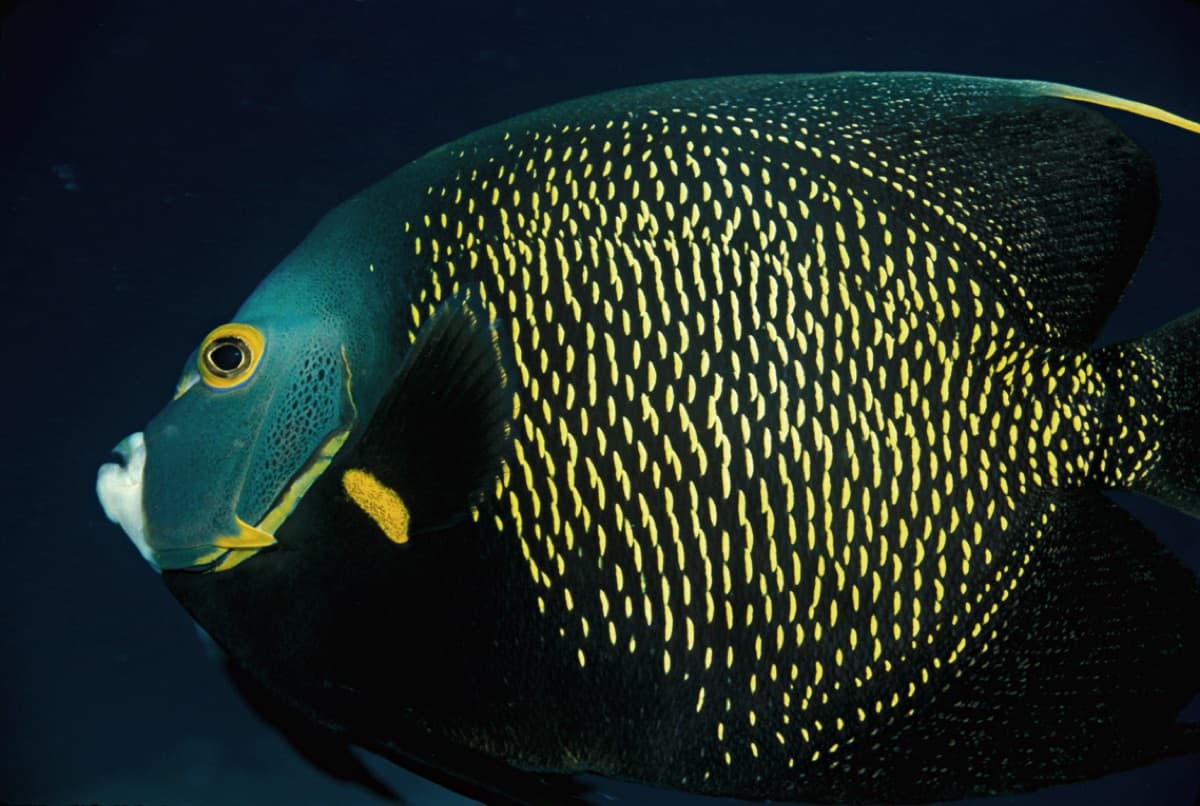
French Angelfish (Pomacanthus paru)

French Angelfish (Pomacanthus paru)

The French angelfish is one of the most recognisable reef fish on Curaçao — disk-shaped, deep black with each scale tipped yellow-gold, giving a speckled metallic appearance. Adults reach 40 cm. They often travel in pairs (mated for life) and patrol the reef for sponges, tunicates, and algae. Comfortable around divers; they'll often approach curiously. Juveniles are black with bright yellow vertical bars — totally different appearance.

💡 Tip: Watch for pairs moving together — the fact they're paired is a rare reef behaviour. Photograph both in one frame if possible.

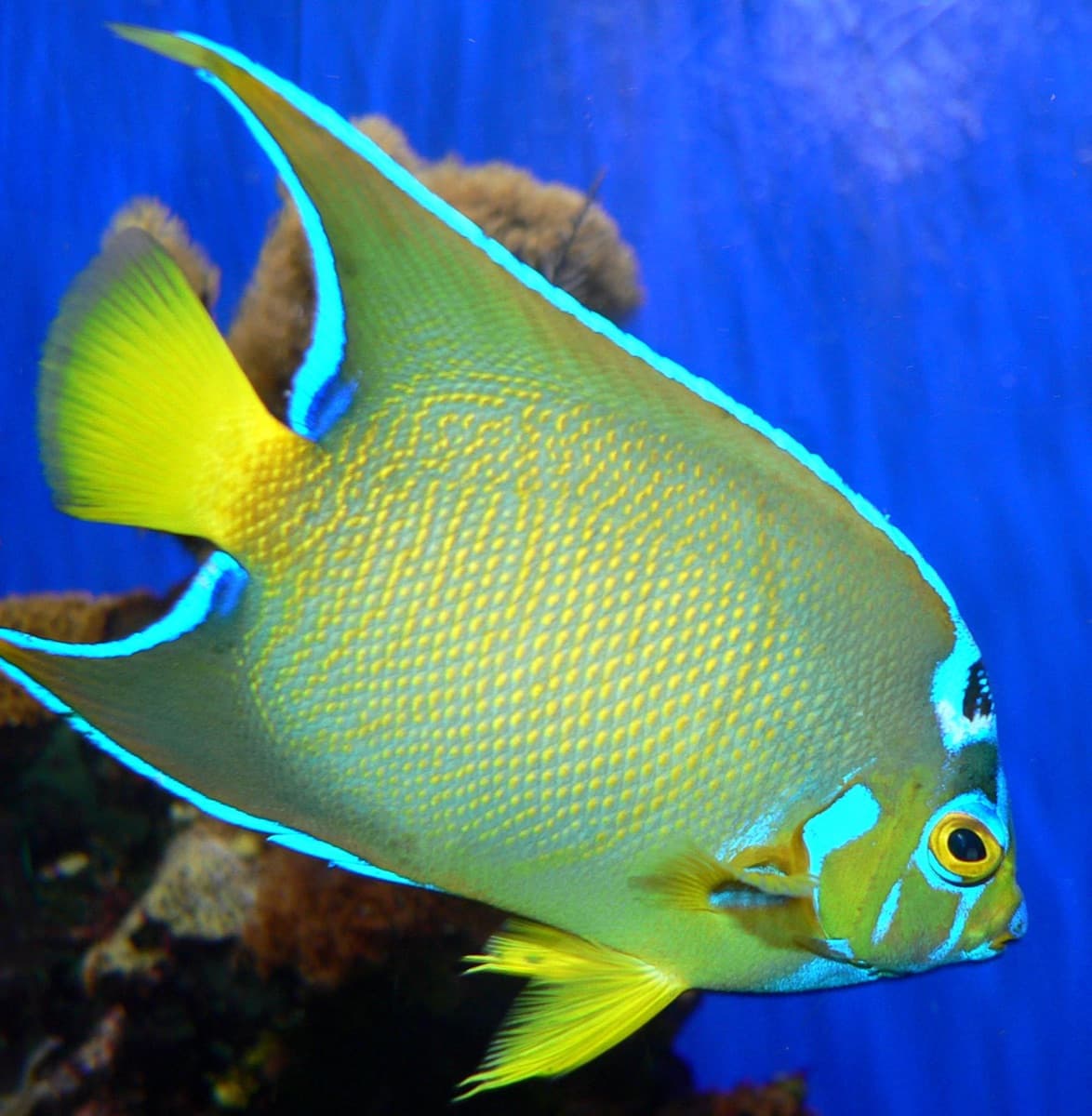
Queen Angelfish (Holacanthus ciliaris)

Queen Angelfish (Holacanthus ciliaris)

The queen angelfish is the more colourful cousin of the French — electric blues and yellows across the body, a distinctive crown-shaped blue marking on the forehead, and long filaments trailing from the dorsal and anal fins. Adults reach 45 cm. Territorial; they patrol a specific section of reef and will defend it against other queens. Feed on sponges, tunicates, and algae. Best seen on shallower healthy reefs.

💡 Tip: The 'crown' marking on the forehead is the identification shortcut. French angelfish has no crown; queen angelfish always does.

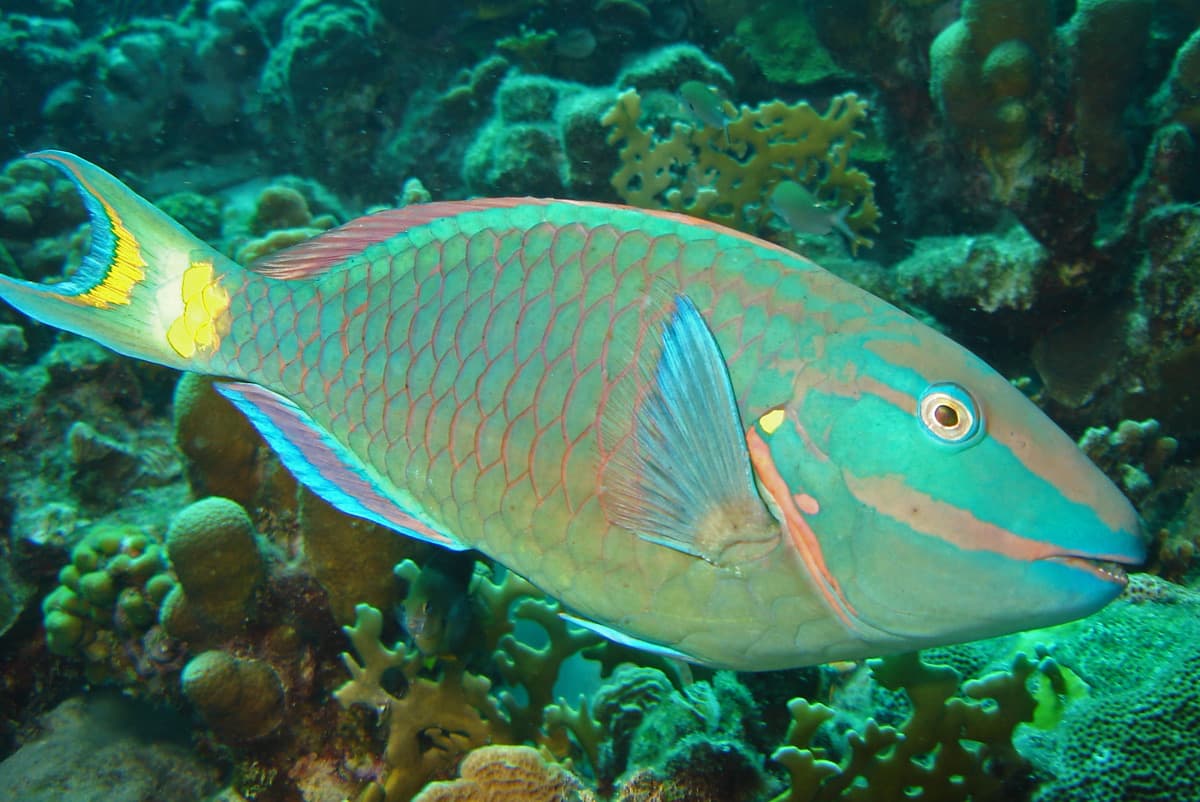
Stoplight Parrotfish (Sparisoma viride)

Stoplight Parrotfish (Sparisoma viride)

The stoplight parrotfish is a colourful contributor to the Caribbean reef — adults show bright blue-green bodies, pink bellies, and a yellow spot near the tail (the 'stoplight'). Up to 60 cm long. Parrotfish use beak-like fused teeth to scrape algae and coral polyps off reef surfaces, producing sand as a byproduct — literally a single parrotfish can produce 100 kg of sand per year. They change sex during their lifetime (female to male). Hear them biting coral during dives; the sound is unmistakable.

💡 Tip: Sleep in mucus cocoons at night to avoid predators. Night dives at Director's Bay sometimes find them slumbering wrapped in slime.

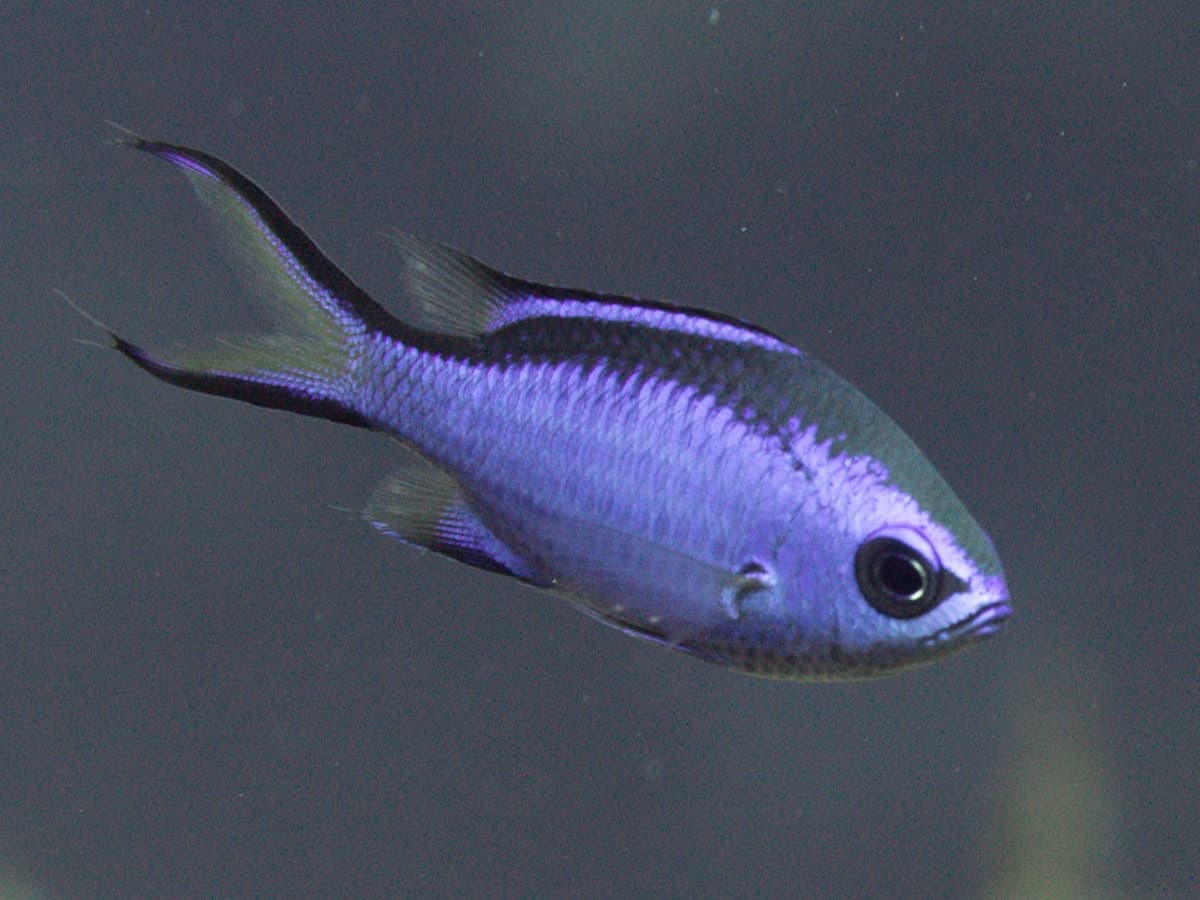
Blue Chromis (Chromis cyanea)

Blue Chromis (Chromis cyanea)

The blue chromis is the small, electric-blue fish that forms dense schools hovering above Curaçao reefs. Each fish is only 10-15 cm long but they travel in schools of hundreds, creating a shimmering blue cloud in the water column. They feed on zooplankton drifting past the reef. A standard background element on nearly every Curaçao dive site — so common that divers sometimes stop noticing them, but they are iconic reef animation.

💡 Tip: When a blue chromis school suddenly dives for cover into the coral, look for a predator nearby — it's a real-time reef warning system.

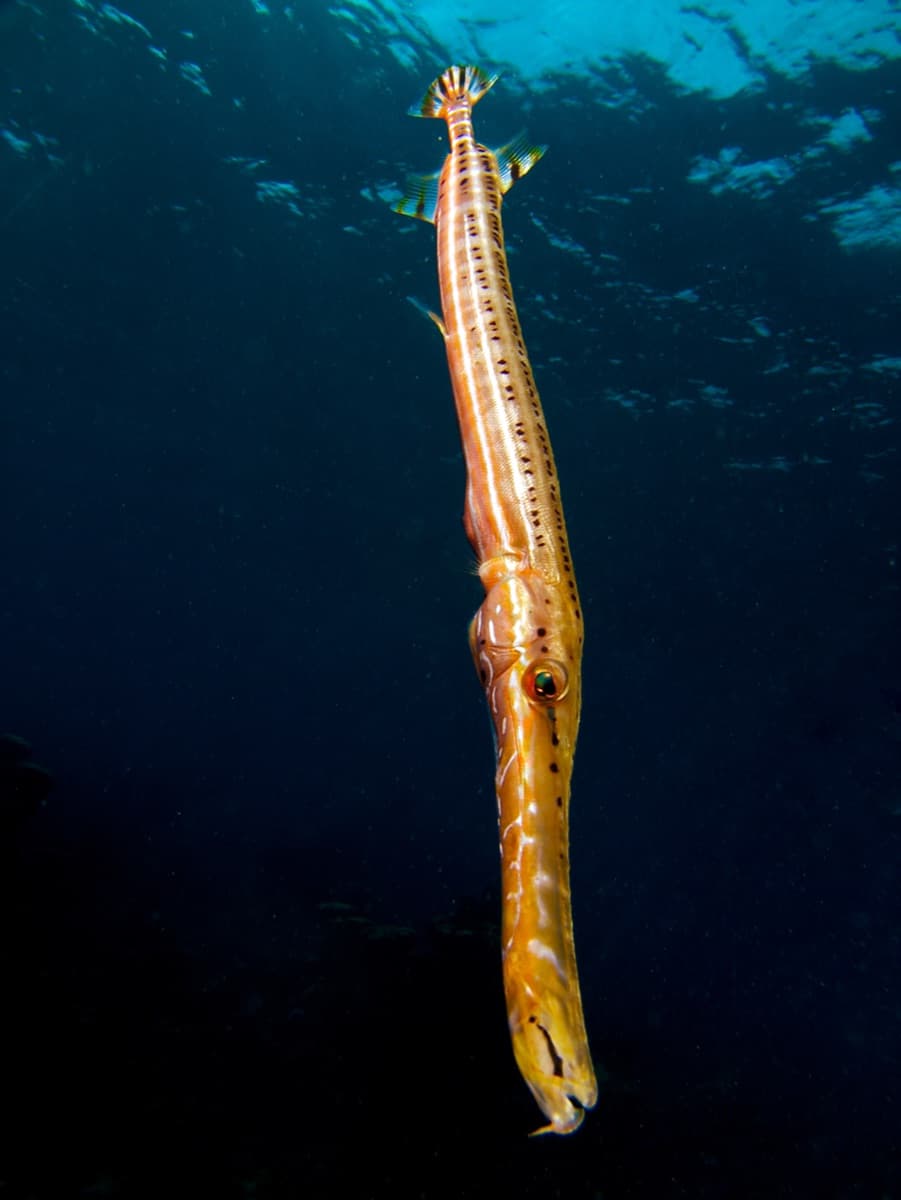
Trumpetfish (Aulostomus maculatus)

Trumpetfish (Aulostomus maculatus)

The trumpetfish is one of Curaçao's more bizarre reef residents — long, thin, with a trumpet-shaped mouth it uses to vacuum up small fish. Up to 1 metre long but only the thickness of a wrist, they often hover vertically amongst gorgonians and sea fans, hidden in plain sight. Colour varies from olive-brown to yellow; some individuals are striking bright yellow. They stalk prey by hiding alongside larger 'host' fish, using them as cover until they can ambush.

💡 Tip: Look vertically among sea fans and soft coral — you'll be surprised how often a trumpetfish is there. The yellow variant is a rare photo target.

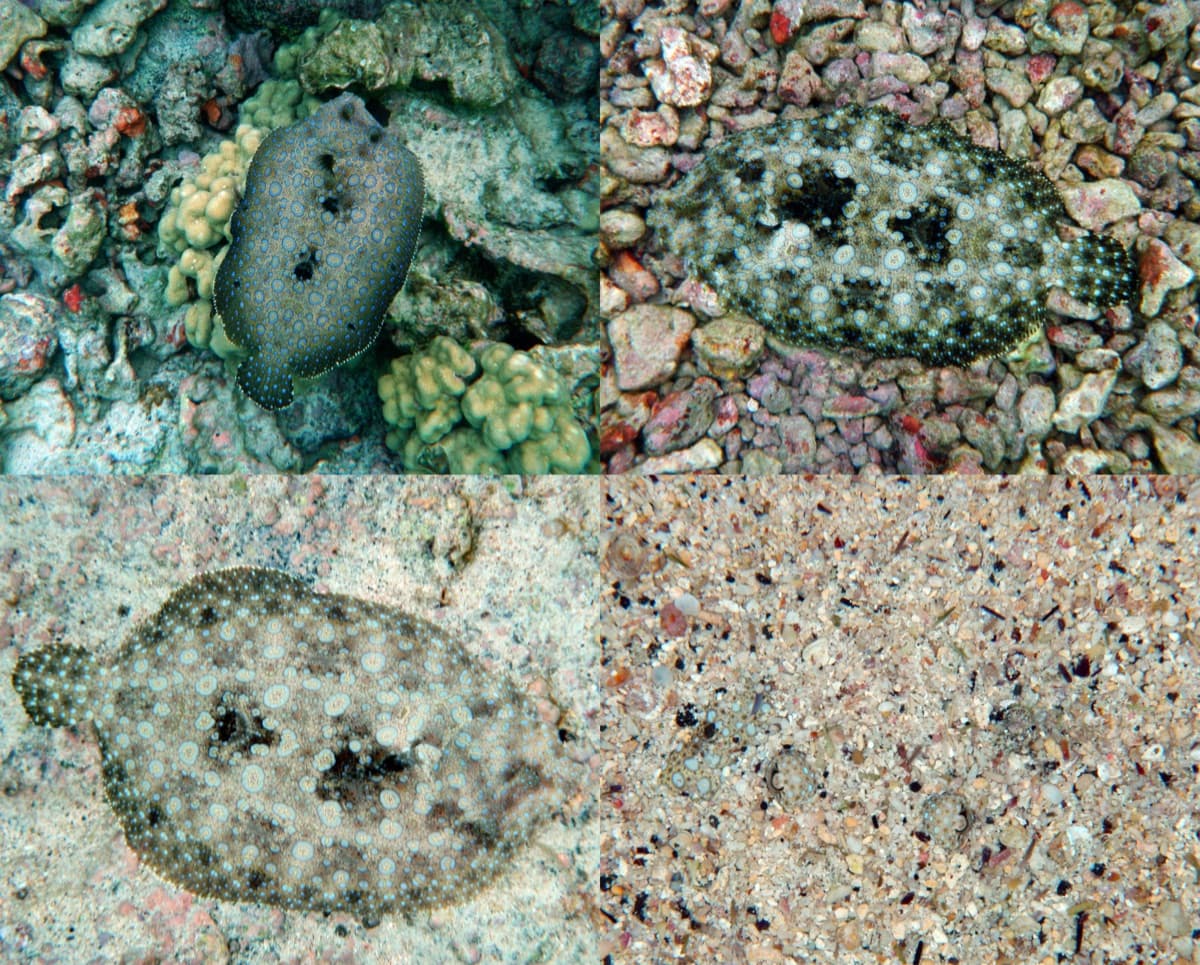
Peacock Flounder (Bothus lunatus)

Peacock Flounder (Bothus lunatus)

The peacock flounder is the master of disguise on Curaçao's sandy bottoms. Flat-bodied, up to 45 cm long, with both eyes on the top of its head (it lies on its right side). The skin has iridescent blue rings and spots that can instantly change colour to match the surrounding sand. Hunts small fish and crustaceans; moves in short bursts then stops and camouflages again. Easy to miss until they move.

💡 Tip: Scan the sand near the reef edge. A moving 'cloud' of sand often reveals a flounder that just relocated. Photograph quickly — they freeze and disappear.

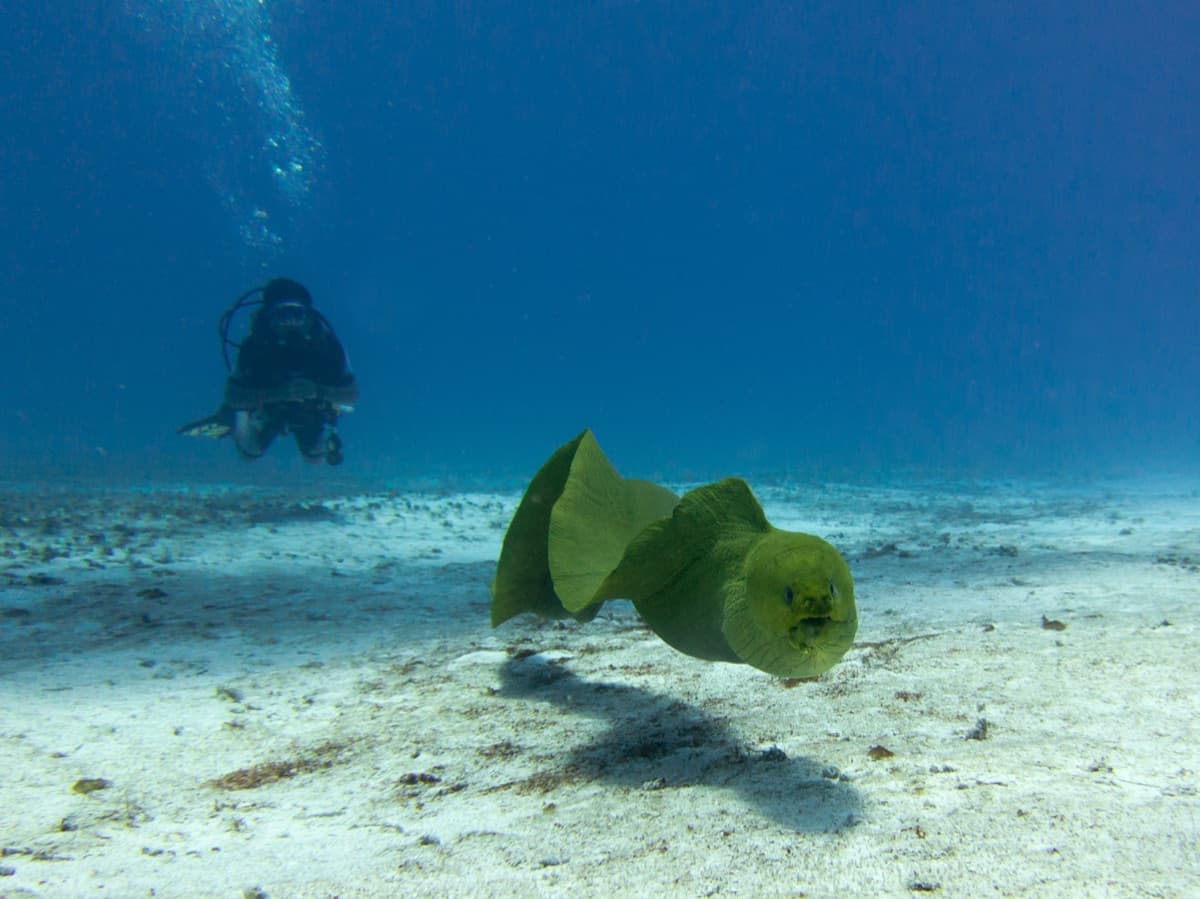
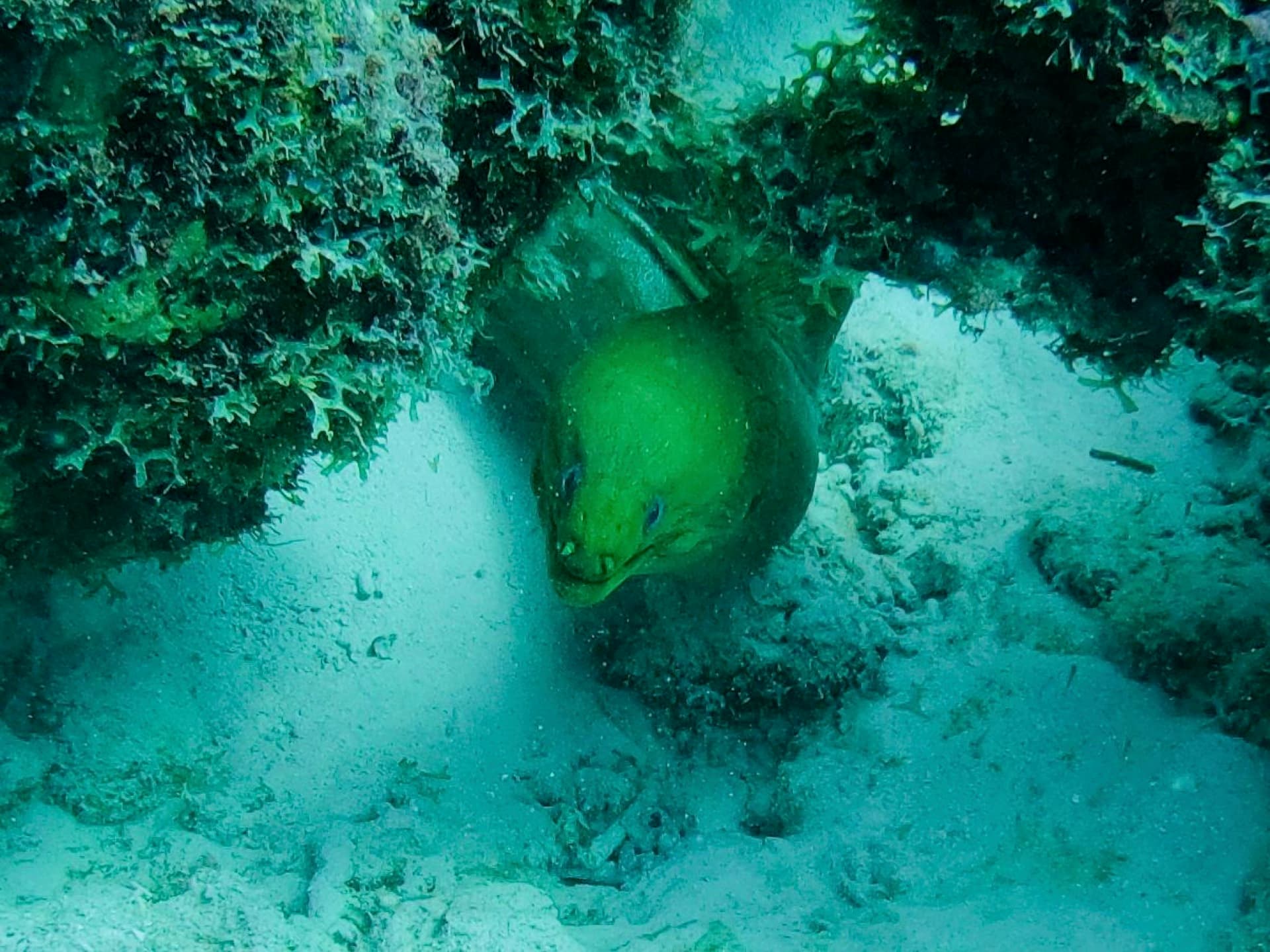
Green Moray Eel (Gymnothorax funebris)

Green Moray Eel (Gymnothorax funebris)

The green moray is the largest moray in Caribbean waters — up to 2.5 metres long, with a muscular green-brown body and an open-jawed resting posture that looks menacing but is just how they breathe (pumping water over gills). They hide in reef crevices during the day and hunt at night. The resident green moray at the Tugboat wreck is one of Curaçao's most photographed individuals. Not aggressive unless threatened; stay hands-off.

💡 Tip: The open mouth is not aggression — it's respiration. Give them 1 metre of space and they'll ignore you.

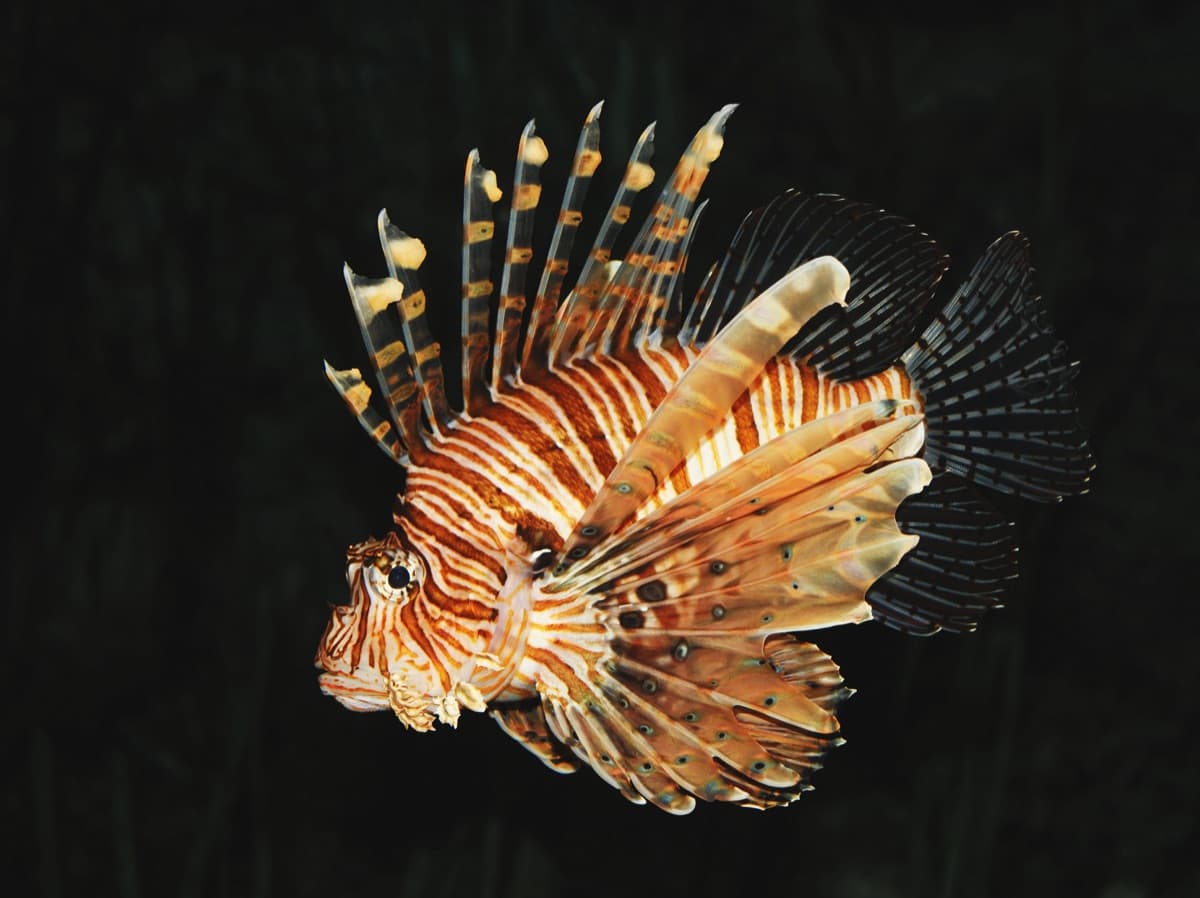
Lionfish (Pterois volitans) — The Invasive Threat

Lionfish (Pterois volitans) — The Invasive Threat

The red lionfish is an introduced species in Caribbean waters and a serious threat to Curaçao's reef ecology. Native to the Indo-Pacific, released accidentally in Florida decades ago, they've spread across the Caribbean with no natural predators. One lionfish can eat dozens of juvenile reef fish per day. Adults reach 35 cm, with dramatic spiny fins and striking red-and-white vertical stripes. The spines are venomous; don't touch. Curaçao has a 'Lionfish Hunter' diver certification allowing legal spear-fishing of lionfish to protect the reef. They're also excellent eating — many local restaurants serve lionfish ceviche.

💡 Tip: If you see a lionfish, report it to your dive shop — they pass sightings to licensed hunters. Do not attempt to spear one yourself without the certification.

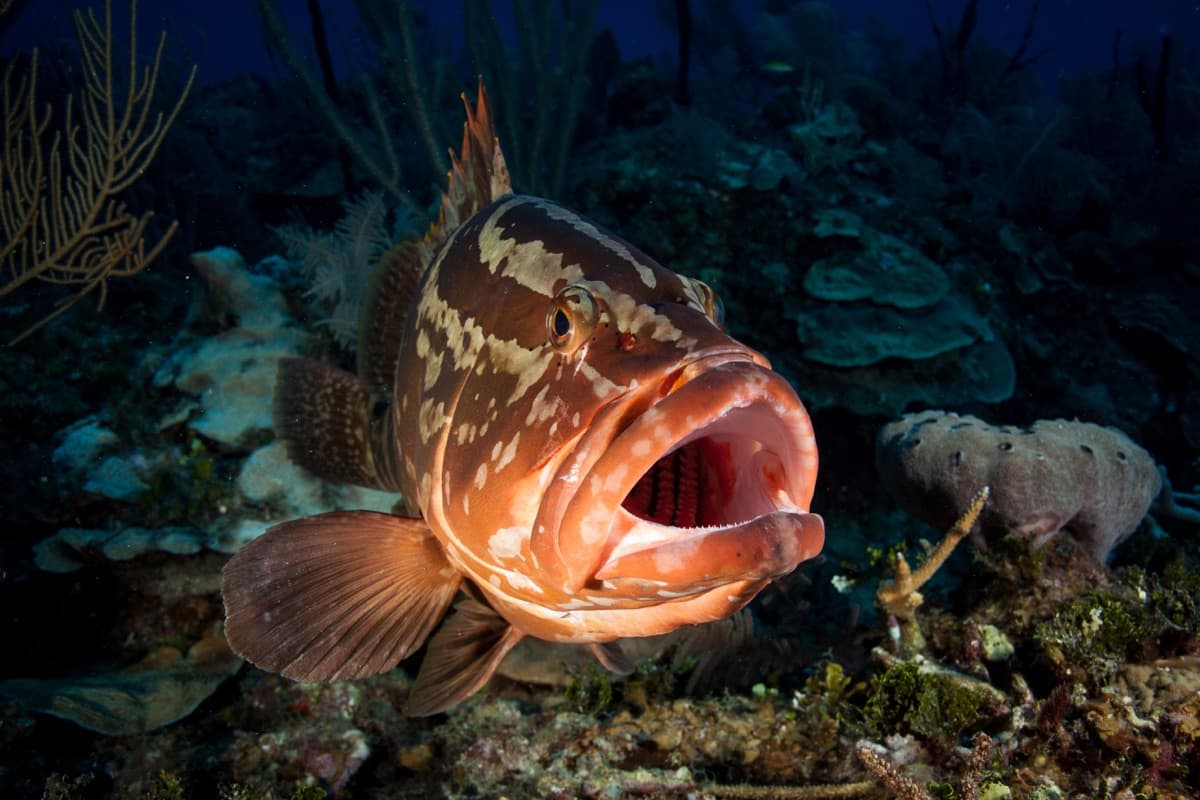
Nassau Grouper (Epinephelus striatus)

Nassau Grouper (Epinephelus striatus)

The Nassau grouper is Curaçao's most recognisable large reef fish — up to 1 metre long, with dramatic dark vertical bars, reddish-brown colouration, and often a distinctive 'saddle' marking on the tail. They're long-lived (up to 30 years) and slow-growing, which makes them vulnerable to overfishing; populations are now protected across much of the Caribbean. They hang out in rocky areas and reef overhangs. Seeing a large adult at close range is a classic Curaçao dive encounter.

💡 Tip: They're curious fish — hover calmly and they'll often swim right up. Don't chase; a calm approach gets closer encounters.

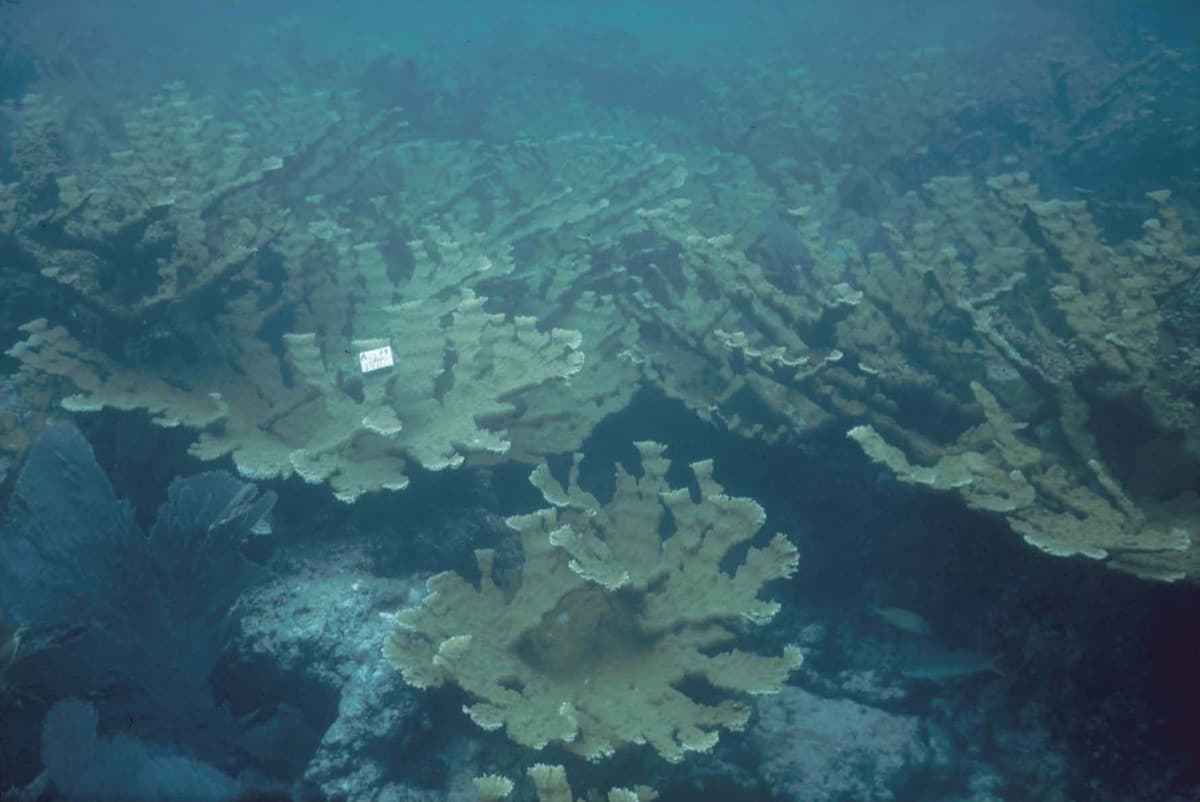
Elkhorn Coral (Acropora palmata)

Elkhorn Coral (Acropora palmata)

Elkhorn coral is one of the most important reef-building species in the Caribbean — but sadly one of the most endangered. The large branching colonies look like antlers (hence the name) and can exceed 4 metres across. Elkhorn has declined 97% across the Caribbean since 1980 due to disease, bleaching, and climate change. Curaçao is one of the few remaining Caribbean islands where mature elkhorn colonies still thrive, particularly at Alice in Wonderland (Playa Kalki) in the shallow zone. Seeing a healthy elkhorn colony is increasingly rare.

💡 Tip: Be especially careful with fins and gear near elkhorn — the species is critically endangered, and any physical damage matters.

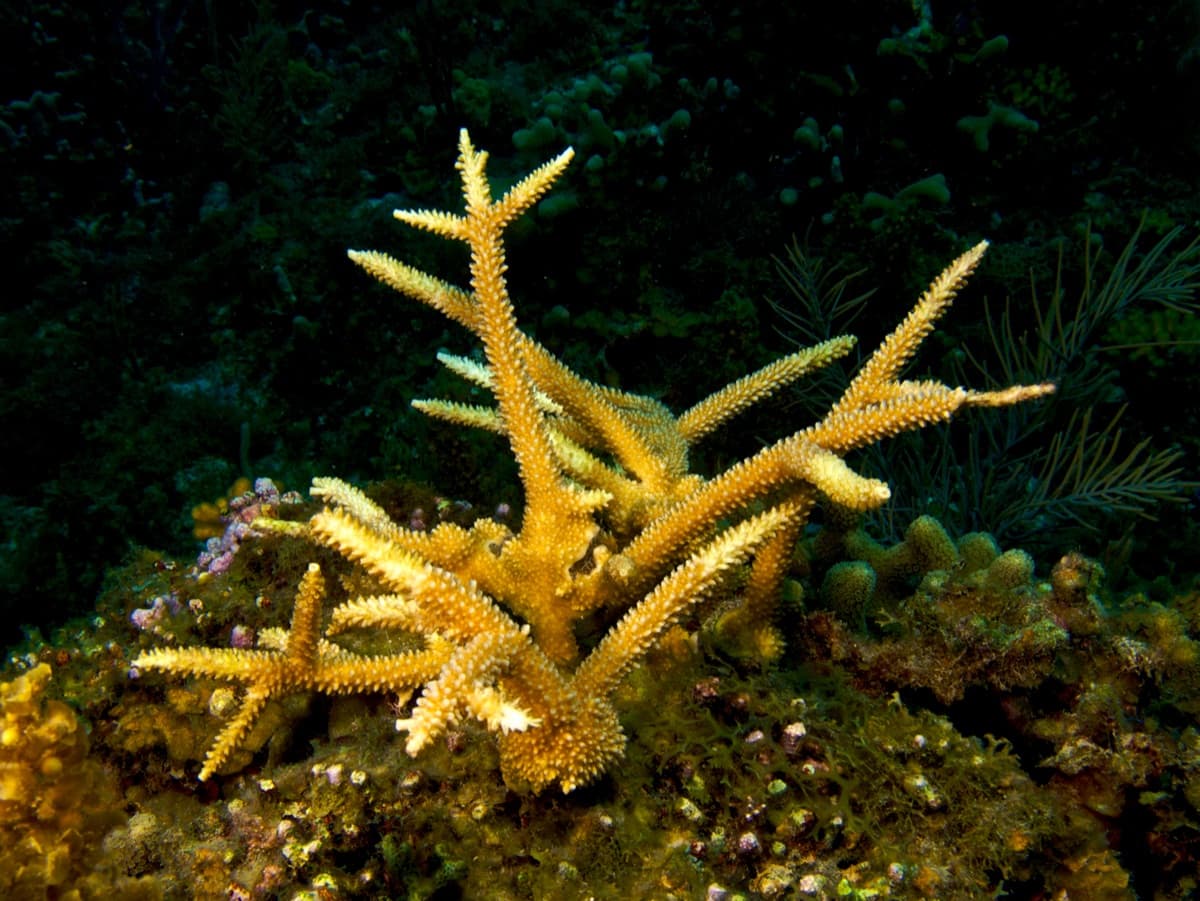
Staghorn Coral (Acropora cervicornis)

Staghorn Coral (Acropora cervicornis)

Staghorn coral is the elkhorn's thinner-branched sibling — dense thickets of pencil-thin branches forming in shallow reef zones. Like elkhorn, staghorn has declined catastrophically across the Caribbean (>90% loss) due to white-band disease and climate stress. Surviving thickets on Curaçao are precious — Alice in Wonderland, Playa Lagun, and Cas Abao all have staghorn zones. Provides critical habitat for juvenile reef fish; once lost, the habitat for many species disappears with it.

💡 Tip: Staghorn thickets are fish nurseries — slow down and look for small juvenile fish sheltered among the branches.

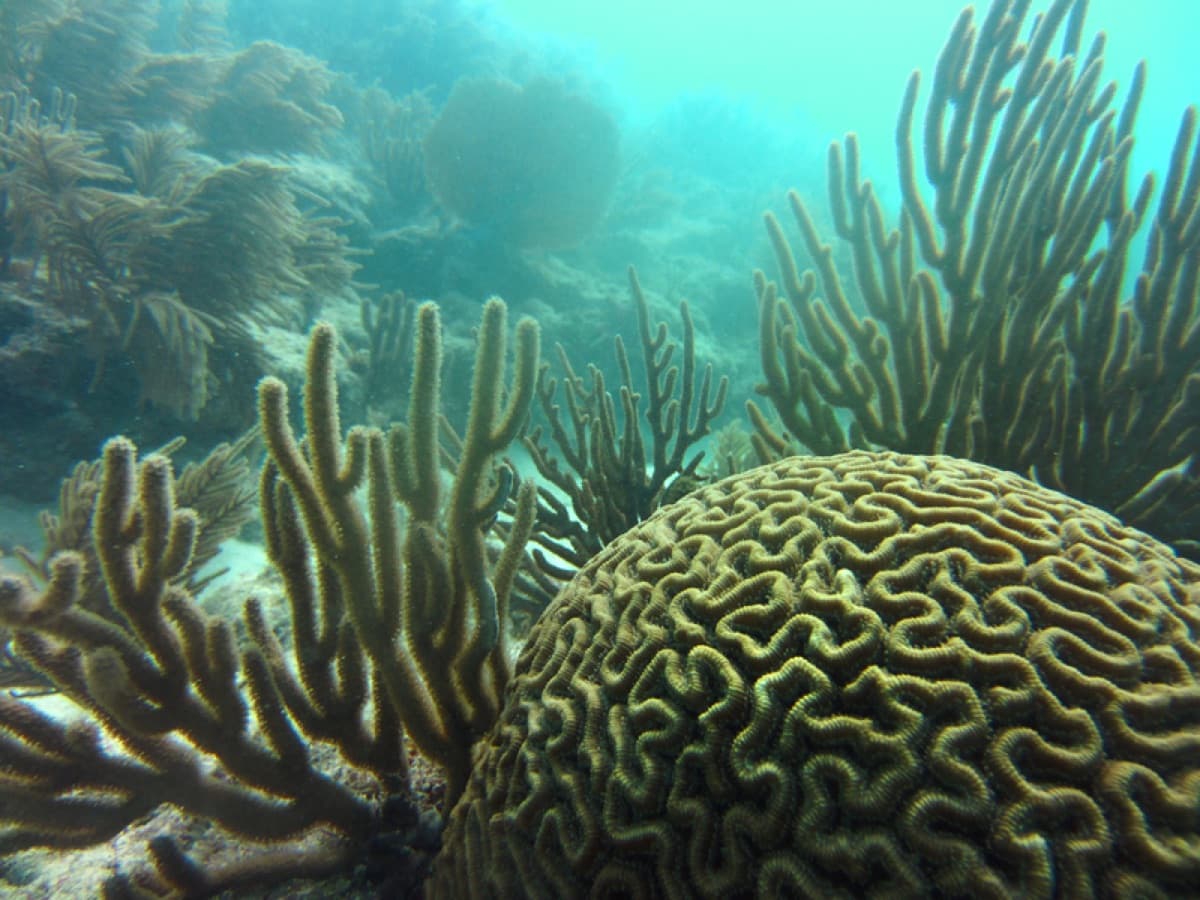
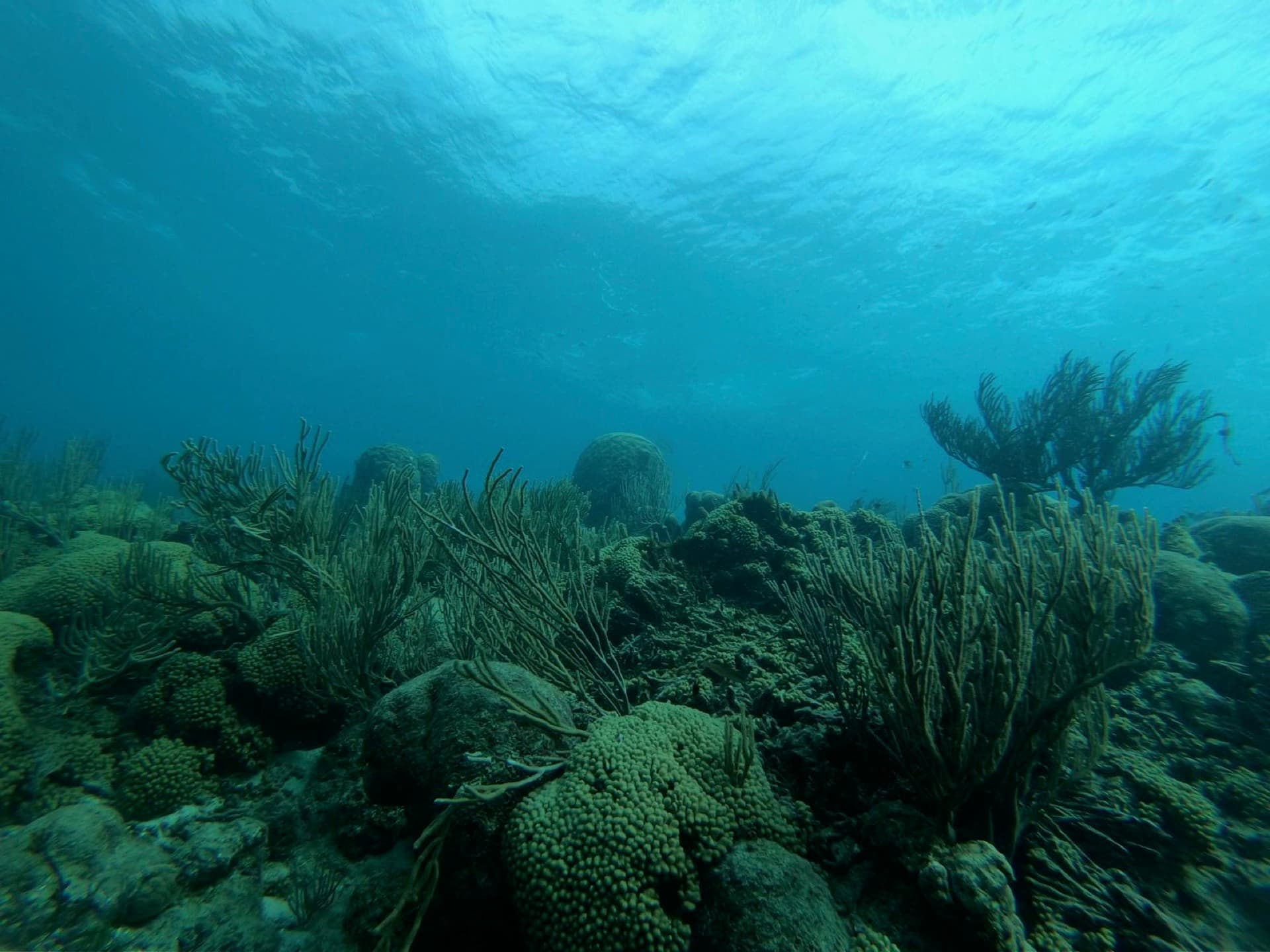
Brain Coral (Diploria labyrinthiformis)

Brain Coral (Diploria labyrinthiformis)

Brain coral colonies look exactly like their name — massive rounded boulders with a labyrinth-pattern surface that resembles a human brain. Slow-growing (about 1 cm per year) and long-lived (individual colonies can be centuries old). They form the structural backbone of many Caribbean reefs. Multiple species of brain coral exist on Curaçao's reefs; symmetrical brain coral (Pseudodiploria strigosa) is the most common. Look for them on nearly every Curaçao dive site at 5-15 metres.

💡 Tip: At night, the tiny coral polyps extend from the 'valleys' of the brain pattern to feed — a subtle but transformative visual shift. Night divers watch for this.

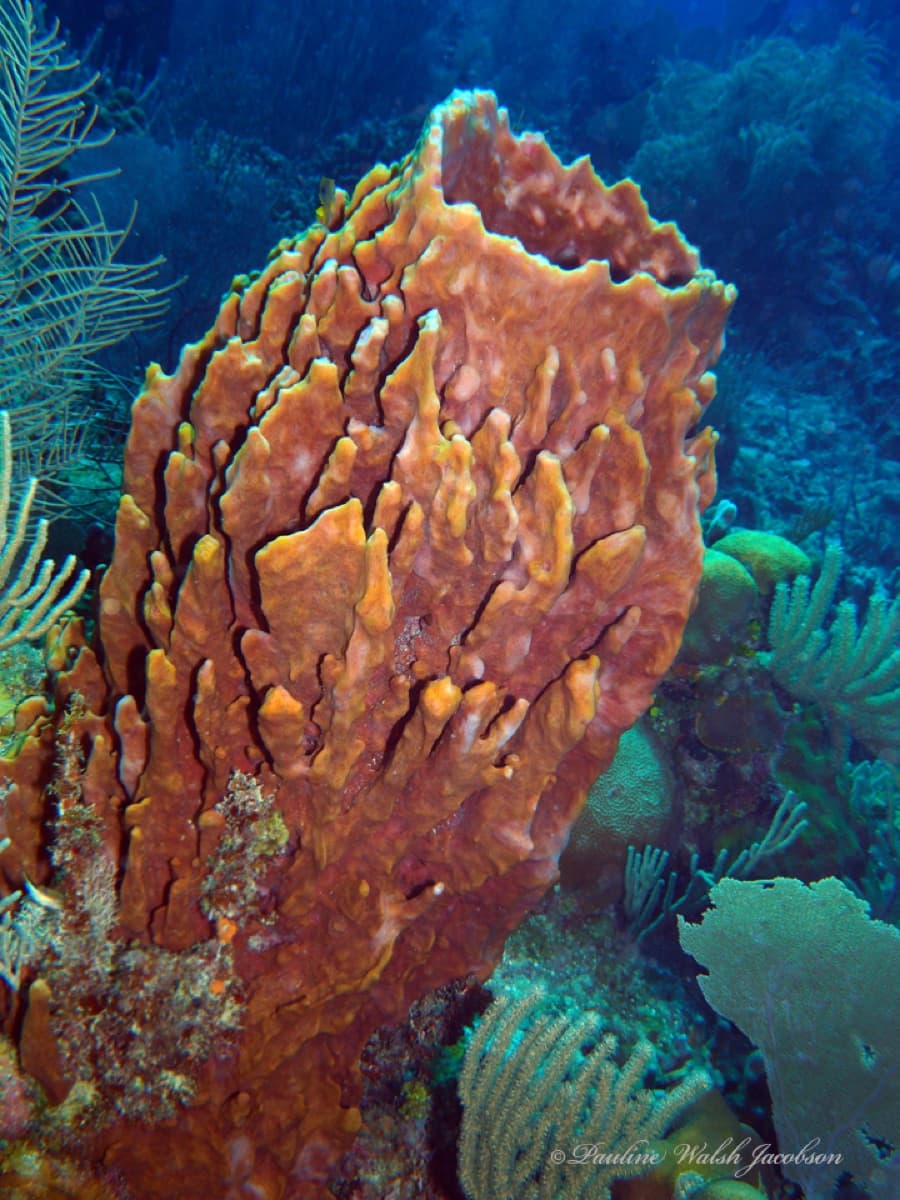
Giant Barrel Sponge (Xestospongia muta)

Giant Barrel Sponge (Xestospongia muta)

The giant barrel sponge is the largest sponge species in the Caribbean — some individuals exceed 2 metres in diameter and are estimated to be 500+ years old. Orange, cup-shaped, barrel-ish; they filter thousands of litres of seawater per day extracting plankton and bacteria. Sponge Forest on Curaçao's north-west coast is named for the dense population of these giants. Individual sponges have been given names by local dive guides. Hurt a barrel sponge and it doesn't recover; they grow at about 1 cm per year.

💡 Tip: Keep ALL gear (fins, computer, camera housing) away from barrel sponges — they are surprisingly fragile and extremely slow to recover.

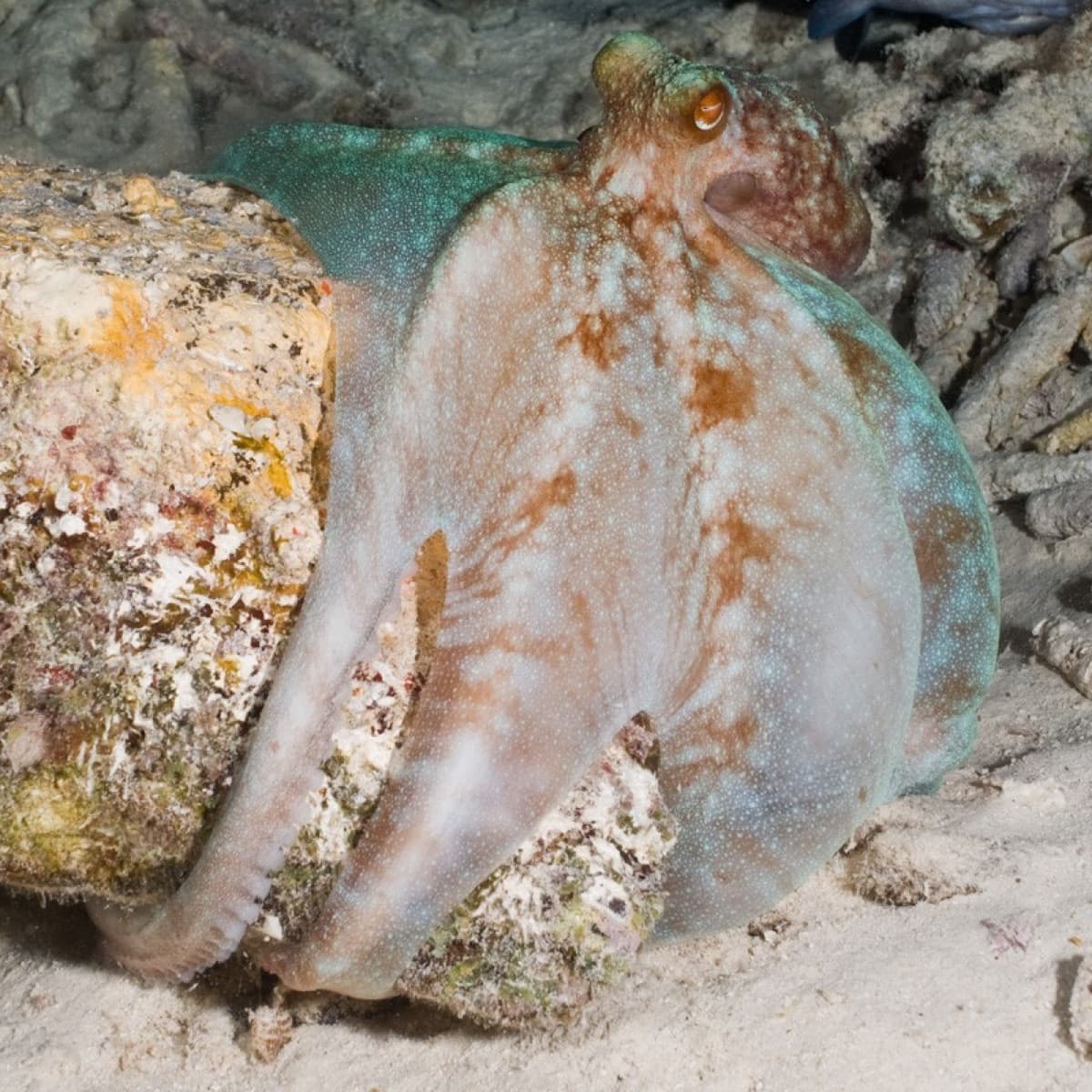
Caribbean Reef Octopus (Octopus briareus)

Caribbean Reef Octopus (Octopus briareus)

The Caribbean reef octopus is one of Curaçao's most fascinating night-dive sightings — small (arm-span up to 60 cm), highly intelligent, with colour-changing skin that can shift in milliseconds from pale white to rich red-brown. Nocturnal hunters; during day they hide in reef holes and rubble piles. At night they emerge to hunt crabs and small fish, using their eight arms with remarkable dexterity. Individual octopus have distinct personalities; some approach divers, others vanish instantly.

💡 Tip: Director's Bay night dives are the reliable sighting location. If an octopus approaches and 'touches' your dive torch, it's curiosity, not threat.

Caribbean Reef Squid (Sepioteuthis sepioidea)

The Caribbean reef squid is a smaller, diurnal cephalopod often seen hovering in small schools of 3-10 individuals just above the reef. They display rapid colour-change communication — within a single school, one squid might simultaneously flash bright colours to its neighbour while showing camouflage colouration to a potential predator on the other side. Each squid is only 15-20 cm long. Easy to approach slowly; they're curious and often pose for photos.

💡 Tip: Squid 'blush' when startled — the entire school flushing pink simultaneously. Move slowly to avoid triggering this; they're more interesting when calm.

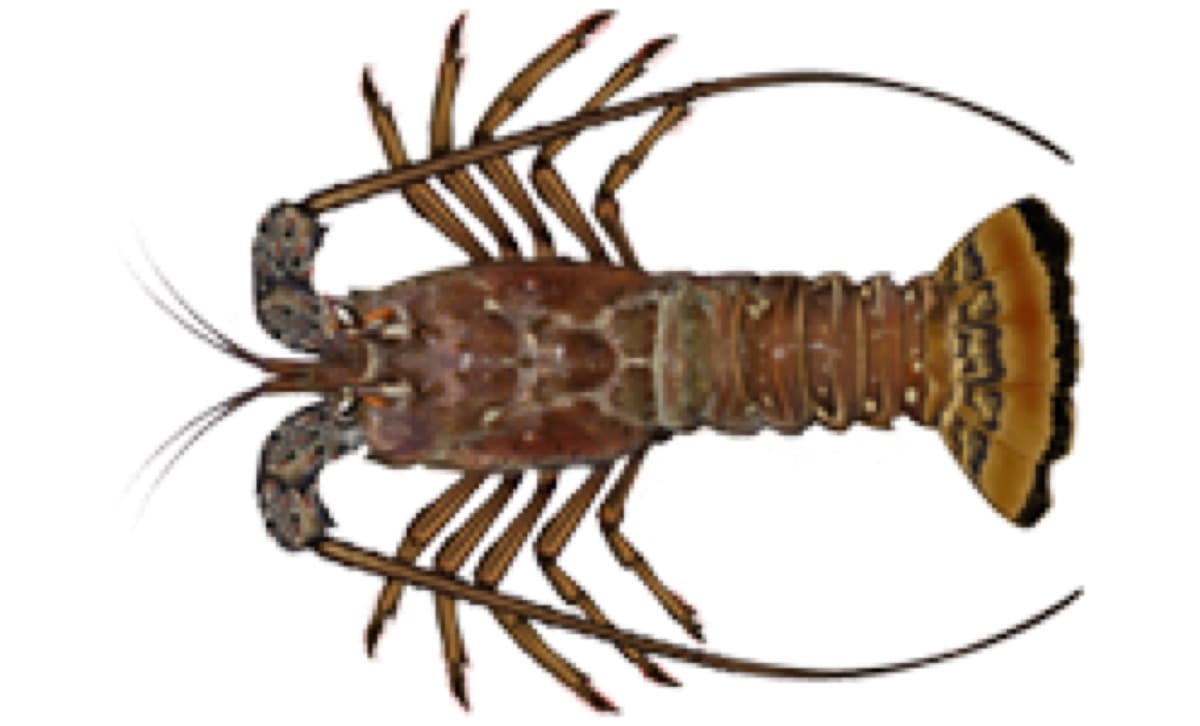
Caribbean Spiny Lobster (Panulirus argus)

Caribbean Spiny Lobster (Panulirus argus)

The spiny lobster is Curaçao's most common lobster — up to 60 cm body length, with two long antennae extending even further. Unlike American lobsters, spiny lobsters don't have the big front claws; they defend themselves with powerful tail-flips and spiny exoskeleton. Nocturnal; during day they hide in reef crevices with only antennae visible. Night dives reveal them walking the reef floor. Migrate in long single-file lines of dozens of individuals during certain seasons — a spectacular and rare sighting.

💡 Tip: Look for the twin antennae projecting from reef holes during daytime — often the only visible part of a hidden lobster.

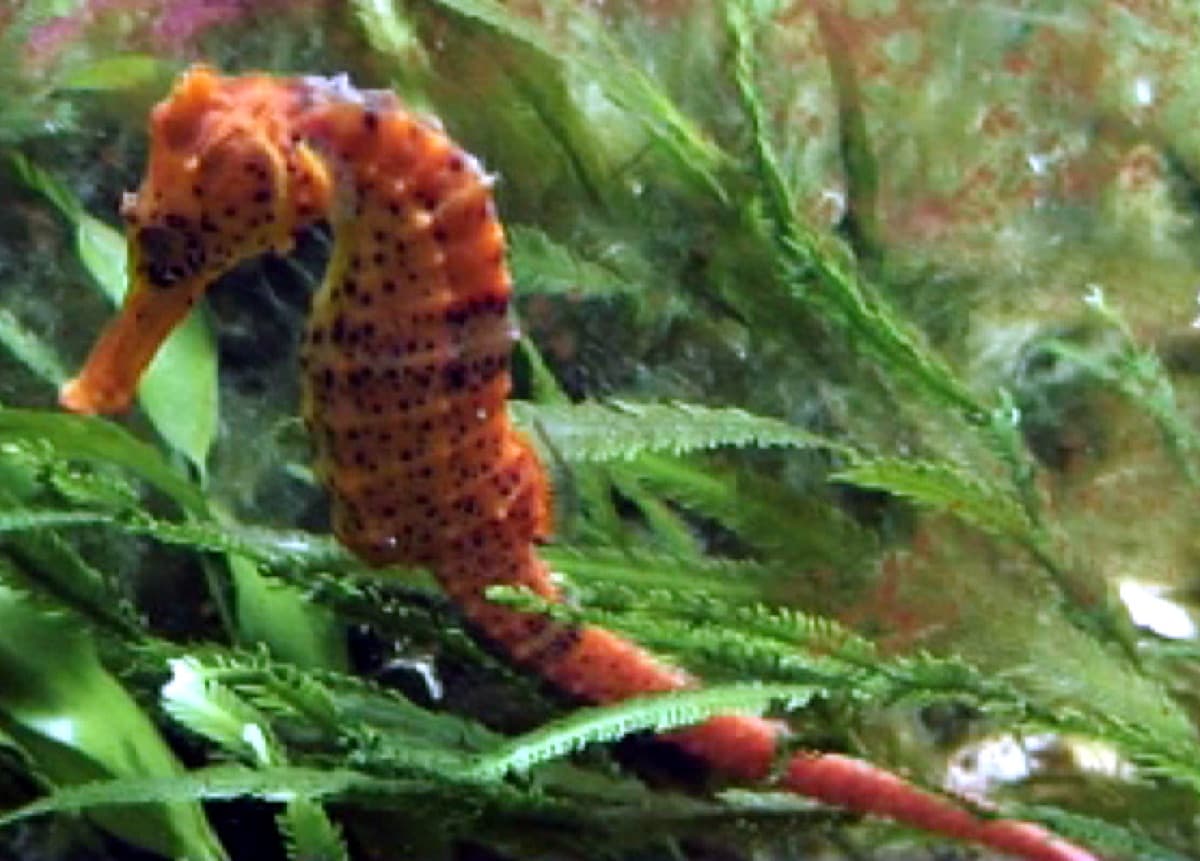
Seahorse (Hippocampus reidi)

Seahorse (Hippocampus reidi)

Seahorses in Curaçao are rare, cryptic, and thrilling to find. The longsnout seahorse lives in the mangrove root systems of Spanish Water and occasionally on the open reef. They grow to 15 cm, with variable colour (yellow, orange, brown, black depending on their surroundings), and cling to seagrass or coral with prehensile tails. Males incubate eggs in a brood pouch — one of the few species where males give 'birth'. Critically elusive; a guide doubles your chances of spotting one.

💡 Tip: Mangrove tours in Spanish Water with experienced guides have the highest seahorse encounter rate. Count on 30+ minutes of slow searching.

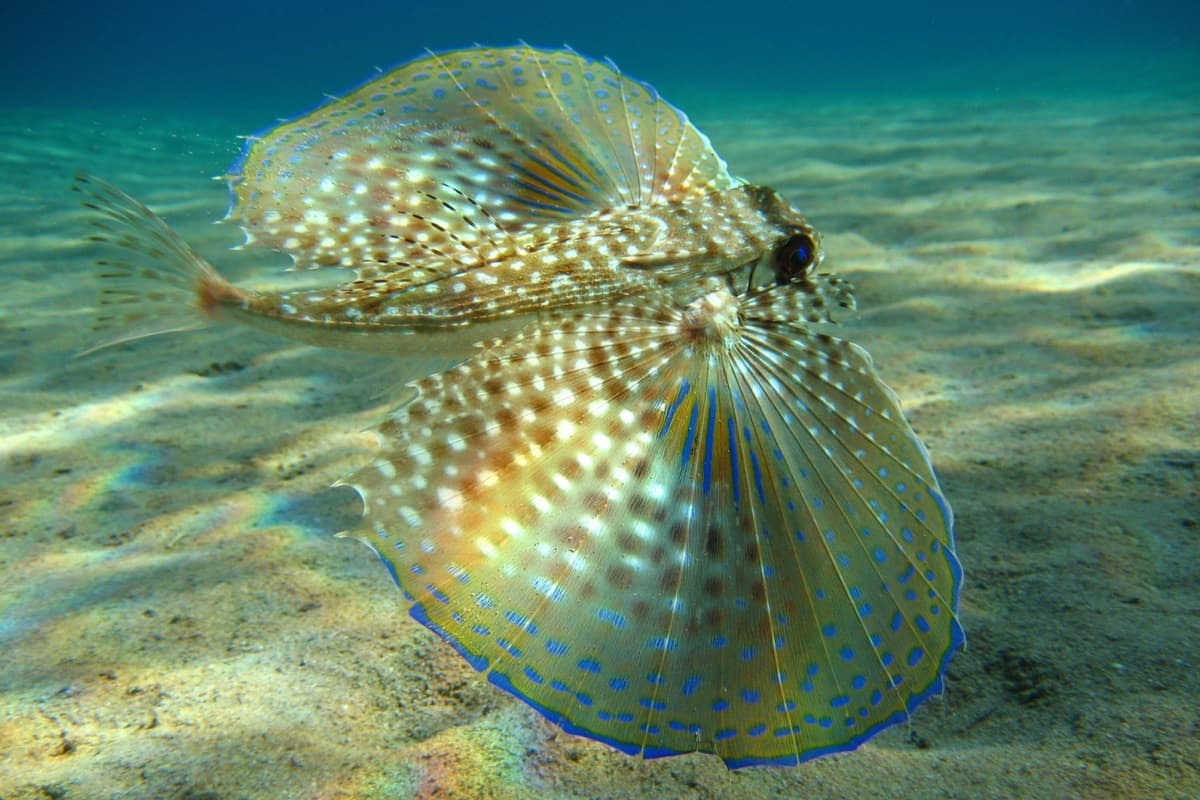
Flying Gurnard (Dactylopterus volitans)

Flying Gurnard (Dactylopterus volitans)

The flying gurnard is a strange bottom-dwelling fish with massive wing-like pectoral fins that spread to reveal blue-tipped rays when the fish is startled or courting. Up to 40 cm long, they walk on sandy bottoms using modified pelvic fins like little legs, feeding on crustaceans and small fish. The spread-fin display is extraordinary — an underwater rainbow fan. Relatively uncommon on Curaçao but spotted on sand channels and shallow reef edges.

💡 Tip: If you see a grey-brown fish 'walking' on the sand, approach very slowly. Any disturbance makes it fly off in a fin-spreading display.

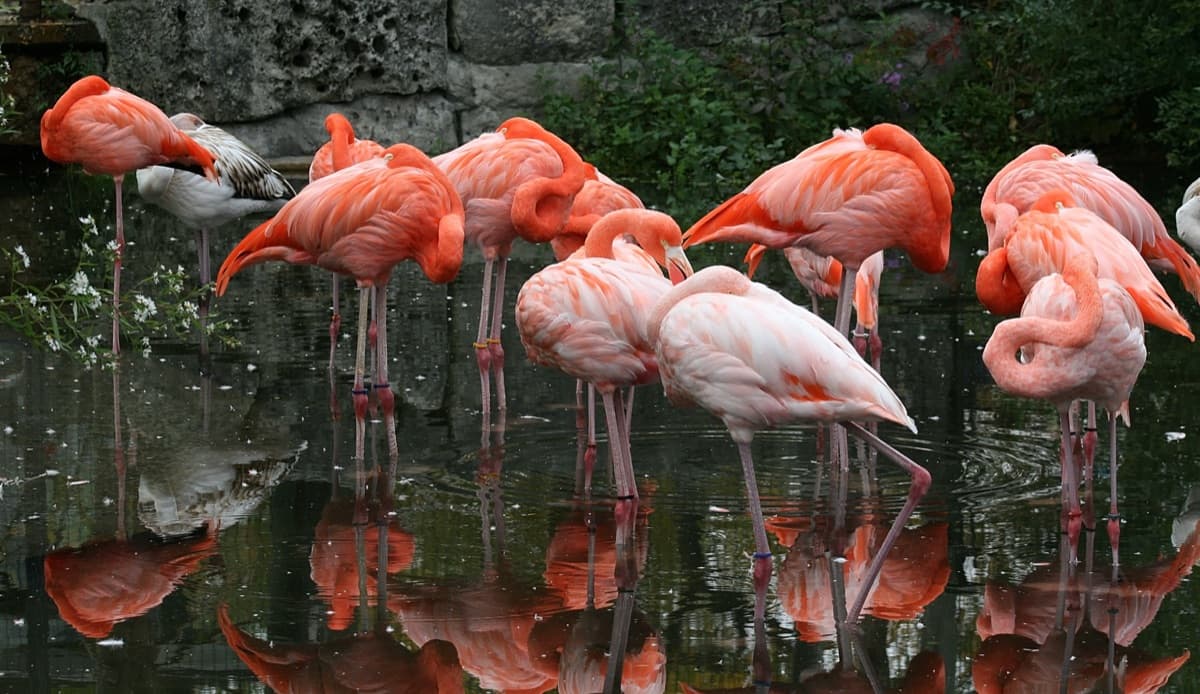
Caribbean Flamingo (Phoenicopterus ruber)

Caribbean Flamingo (Phoenicopterus ruber)

Caribbean flamingos are Curaçao's most recognisable non-marine wildlife. They feed in the salt pans and shallow inland bays, filtering algae and small crustaceans that give their feathers the distinctive pink colour. The best reliable viewing is at the Jan Kok salt pans, where small flocks wade year-round, but larger populations live mostly on Bonaire — Curaçao's flocks are smaller and fly between the two islands. Best photographed at sunset when the pink reflects in the pink-tinted water.

💡 Tip: Landhuis Jan Kok's restaurant terrace overlooks the flamingo feeding area. Dinner reservation there at sunset is the island's best flamingo-watching experience.

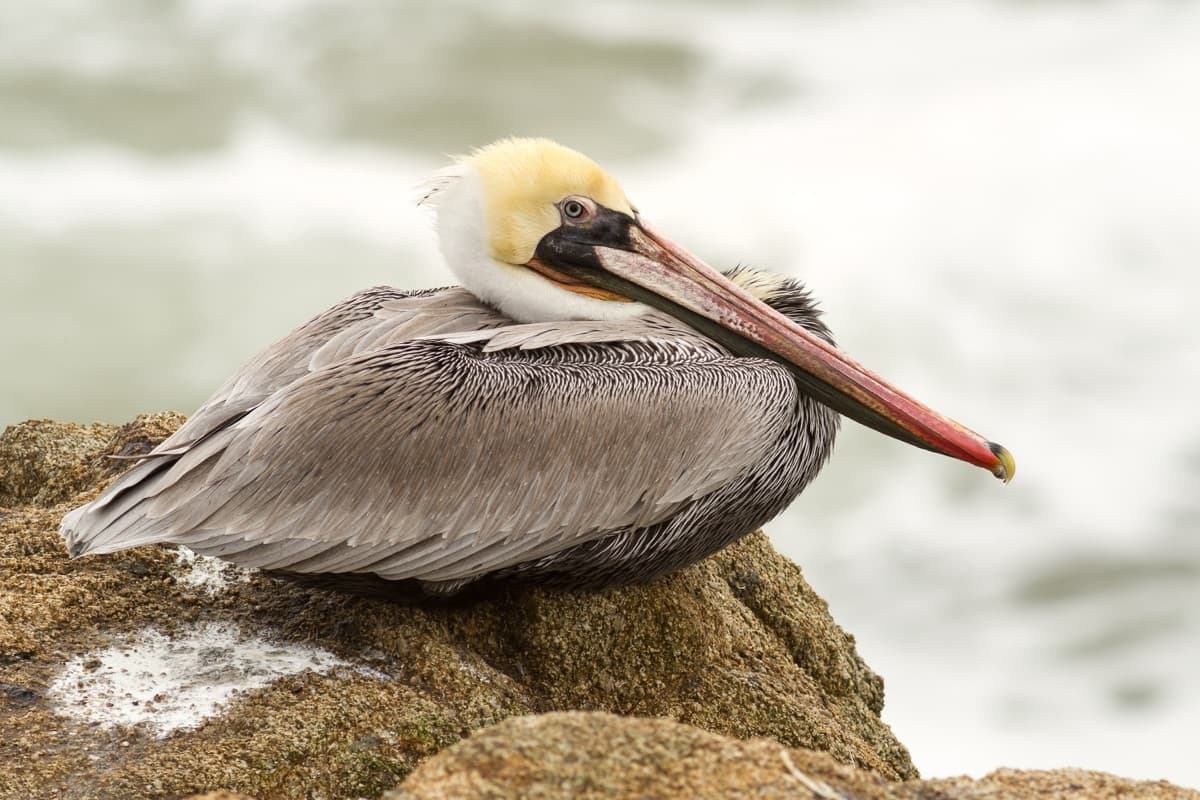
Brown Pelican (Pelecanus occidentalis)

Brown Pelican (Pelecanus occidentalis)

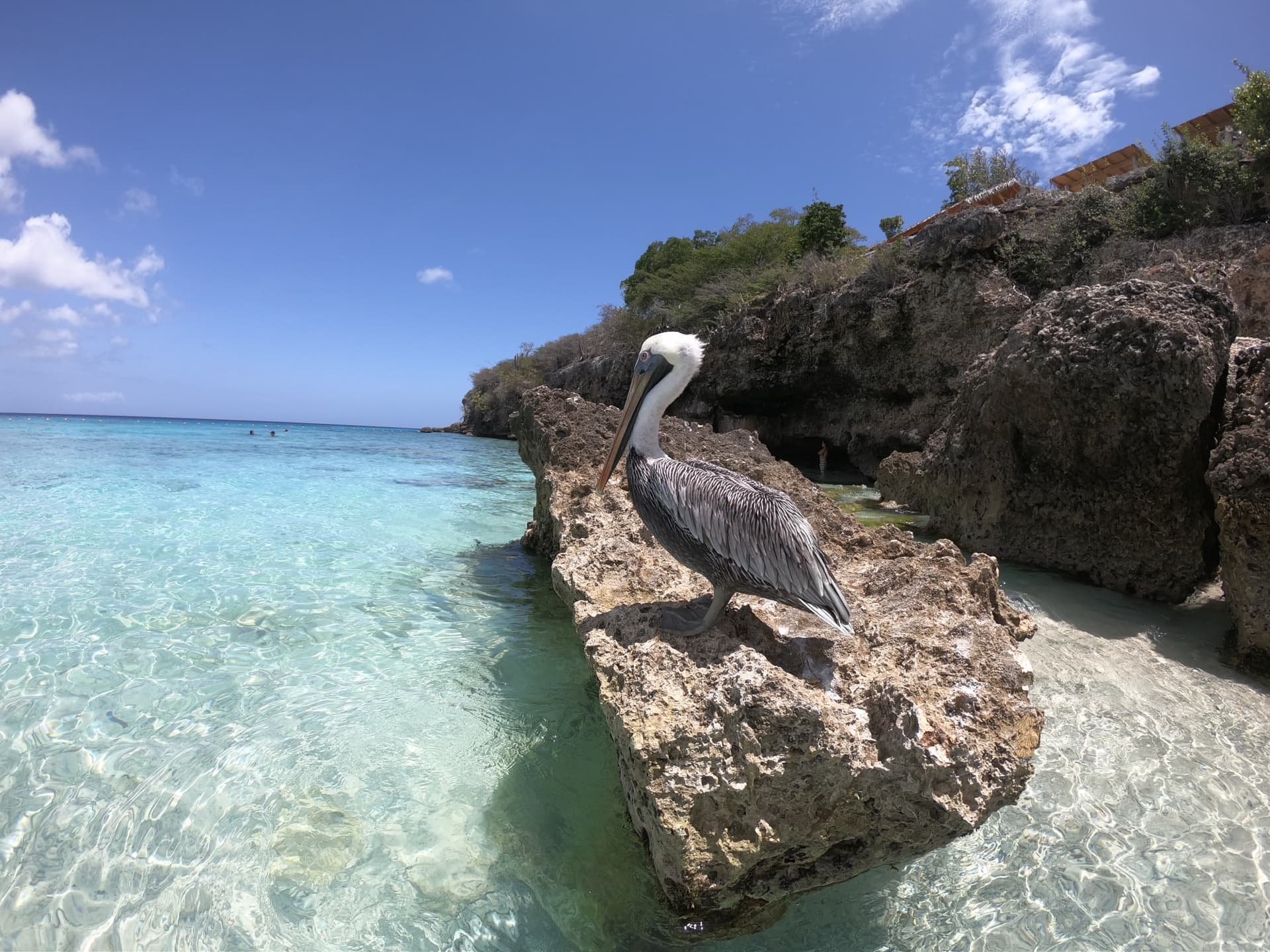
Brown pelicans are Curaçao's most dramatic coastal birds — up to 2 metre wingspan, with a spectacular plunging dive-fishing technique: they spot fish from the air, then drop bill-first from 5-10 metres to scoop prey into their expandable throat pouch. Resident populations along the entire coast. Often seen fishing near reef entries in the morning — frequently at the same dive sites where snorkellers enter the water.

💡 Tip: Watch the pelican dive patterns for fish schools — if pelicans are actively plunging in one area, there's a baitfish school visible from air, often also interesting for snorkel.

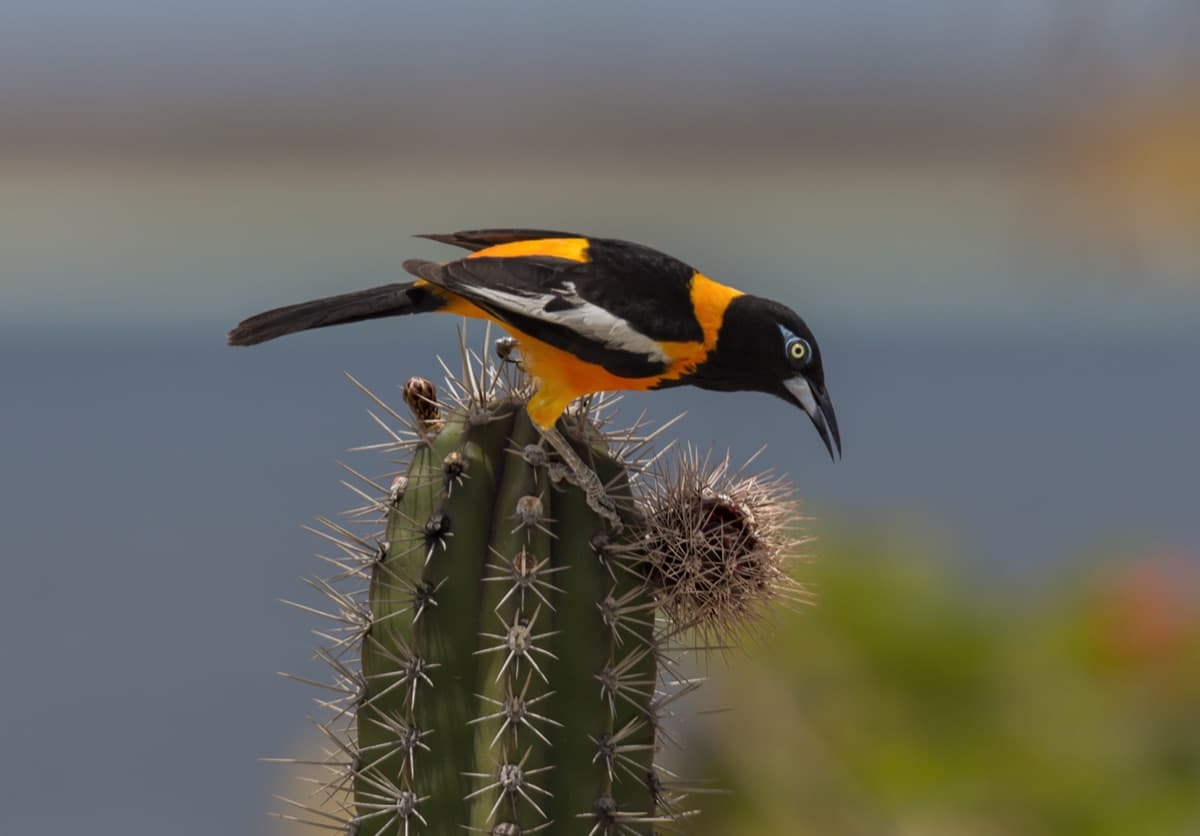
Trupial (Icterus icterus)

Trupial (Icterus icterus)

The Trupial is Curaçao's national bird — a striking black-and-orange songbird that is impossible to miss when it flies across the landscape. Males have a bright orange body, black head and tail, and distinctive white wing bars. They're loud, territorial, and often perch prominently on cactus tips or fence posts. Best sightings: Christoffel National Park, the dry cactus landscapes of the west coast, and the hills around Westpunt. A pair of Trupials often stays in the same territory for years.

💡 Tip: Listen before you look — the Trupial's song is a loud, whistling call that travels hundreds of metres. Follow the sound.

Yellow-Shouldered Parrot (Amazona barbadensis)

Yellow-Shouldered Parrot (Amazona barbadensis)

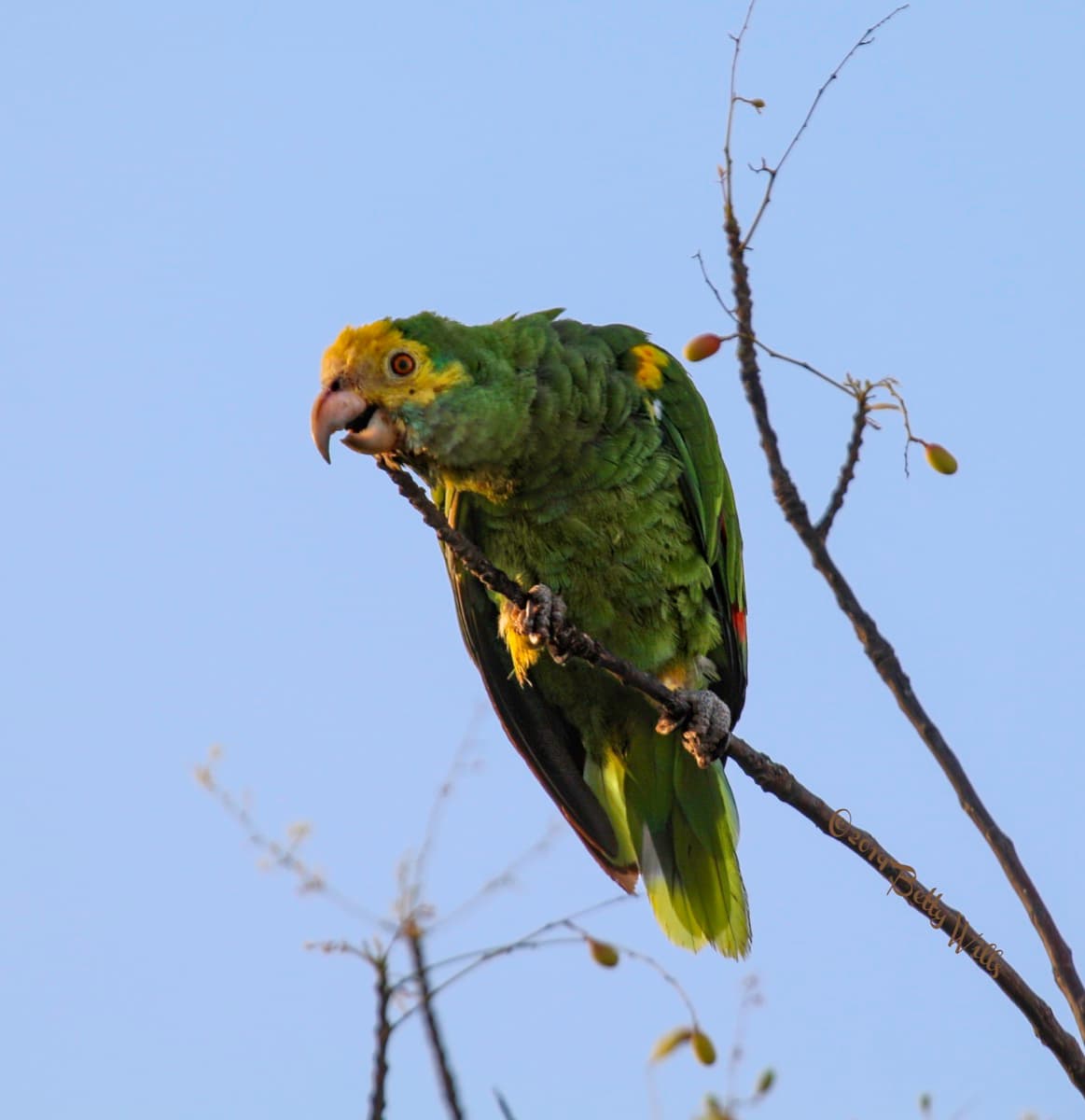
The yellow-shouldered parrot — locally called the Curaçao parrot — is the island's rarest endemic bird, critically endangered with only 700-900 individuals remaining in the wild. Medium-sized (around 33 cm), green body with yellow shoulders, blue on the wings, and a white forehead. They live primarily in the dry cactus landscape of Christoffel National Park and the surrounding hills. Conservation efforts are active; visiting the park supports protection programmes.

💡 Tip: Early morning (6-8 AM) and late afternoon (5-7 PM) in Christoffel Park are the best viewing times. They fly in small groups, usually calling loudly.

Bananaquit (Coereba flaveola)

Bananaquit (Coereba flaveola)

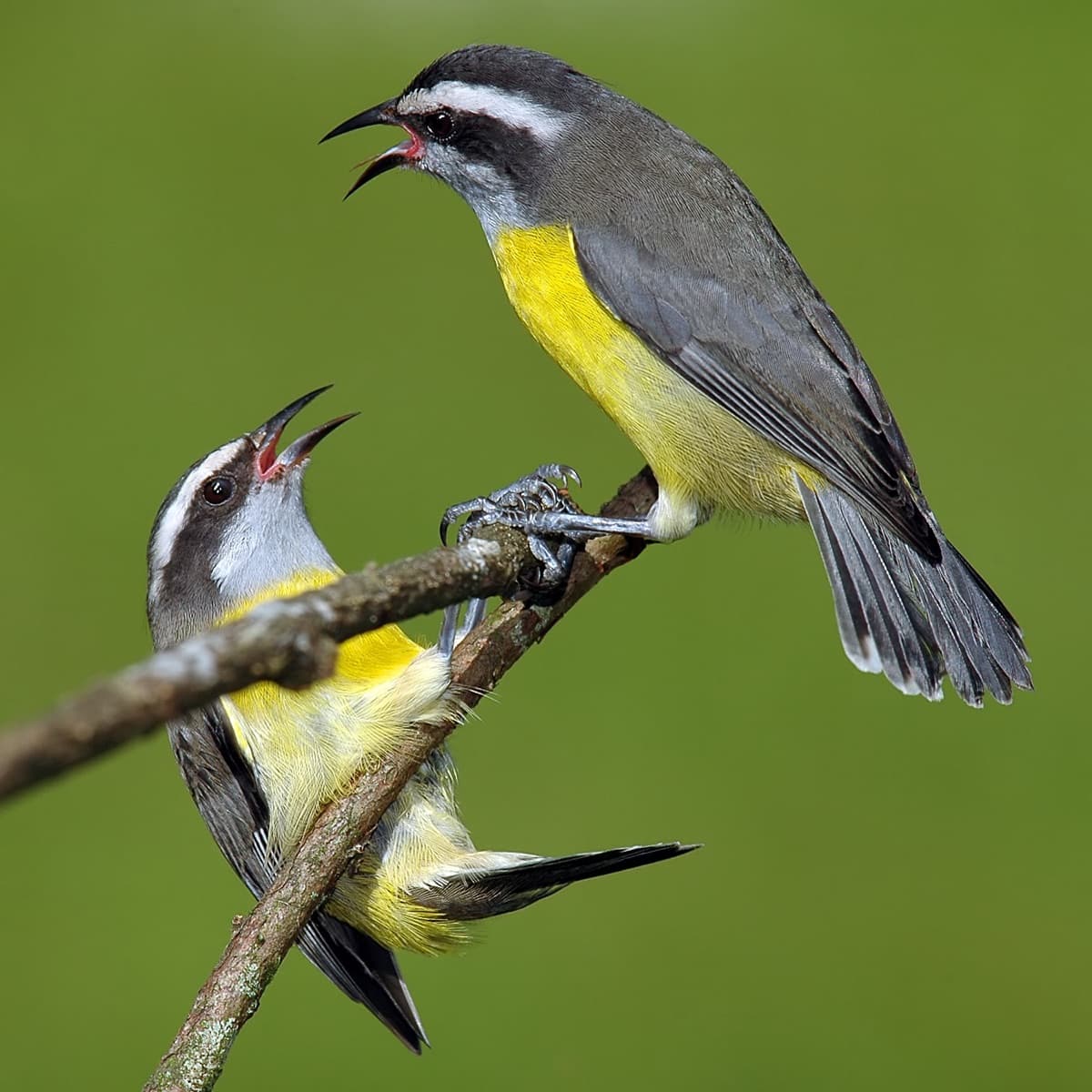
The bananaquit is the small, confiding bird you'll meet everywhere on Curaçao — black head with white eye-stripe, yellow belly, dark back. About 11 cm long. They're nectar feeders, moving between flowering plants with curved beaks adapted to reach deep into blossoms. Extremely common on hotel grounds, gardens, and terraces; they'll happily sip sugar water from open glasses if left unattended. One of the most accessible Caribbean birds for casual birdwatching.

💡 Tip: Leave a small dish of sugar water on your balcony and bananaquits will visit within hours. They're bold and unbothered by humans.

Green Iguana (Iguana iguana)

Green Iguana (Iguana iguana)

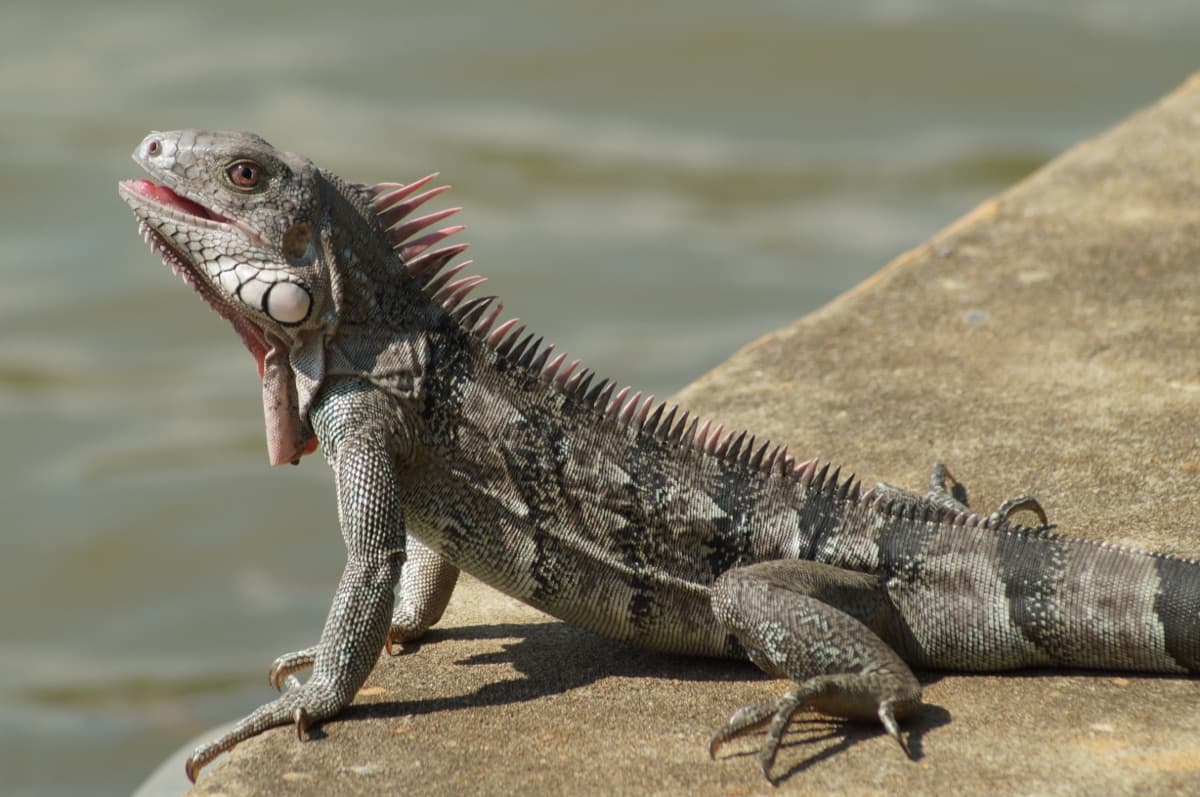
Green iguanas are Curaçao's most visible large reptile — often 1.5 metres long including the tail, with impressive spinal crests and loose skin folds under the chin. They're herbivorous, feeding on leaves and fruit, and are expert climbers often seen sunning on rocks or tree branches. Juveniles are bright green; adults shift to greyish-green with orange tones. On some parts of the island (Banda Abou, Christoffel Park area) they're hunted for food — iguana stew is a traditional Curaçao dish.

💡 Tip: The Curaçaosch Seaquarium and the restaurant at Landhuis Jan Kok both have resident tame iguanas — good for up-close observation.

Curaçao White-Tailed Deer (Odocoileus virginianus curassavicus)

The Curaçao white-tailed deer — locally called biná — is an endangered endemic subspecies of the North American white-tailed deer, surviving only in Christoffel National Park. The population is tiny (about 200 individuals), protected, and hard to spot during daytime. They're most active at dawn and dusk. The subspecies has been isolated on Curaçao for thousands of years and is genetically distinct from mainland white-tails. Conservation is a Christoffel Park priority.

💡 Tip: Early morning (6-7 AM) drives through Christoffel Park offer the highest chance of sighting. They cross the main park road at predictable points.

About our Seafari safaris

How do I book a Seafari tour?+
Book directly on seafariadventurescuracao.com — select your tour, pick a date, fill in your details, pay securely, and receive instant confirmation. No booking fees. Cruise passengers: we match your ship schedule and guarantee on-time return.
What's included in a Seafari tour?+
All our tours include professional snorkeling equipment, drinks (soft drinks, beer, signature Seafari cocktail), snacks or lunch depending on the tour, sun shade on the boat, and a multilingual guide. Snorkel vests are free on request. You only bring swimwear, towel, and sunscreen.
What if the weather is bad?+
Our Rupert 50 RIB handles moderate chop comfortably. For genuinely dangerous weather we reschedule or refund 100%. You get a call by 7 AM on the tour day if we need to adjust. Curaçao weather is stable year-round — cancellations happen less than 5% of the year.
Is Seafari suitable for children?+
Yes. Children 6+ are welcome on all standard tours. The boat has stable RIB hulls (no seasickness for most), life vests in all sizes, and our guides are trained in family snorkel introductions. For children under 6 we recommend a private charter for flexibility.
Can I book a private charter?+
Yes — the Rupert 50 is available for private charter for groups of 2-36. Design your own route, pick your own stops, set your own pace. Contact us via the Private Charter form and we'll quote a fixed price within 24 hours.
What's the cancellation policy?+
Free cancellation up to 48 hours before departure — full refund, no questions asked. Within 48 hours: 50% refund. If WE cancel (weather, mechanical, safety): 100% refund or free reschedule. Travel insurance is recommended for cruise passengers.

Discover it by boat

The best way to experience Curaçao's coastline is from the water. Our sea safaris take you to the island's most beautiful spots — places you can only reach by boat.

View Our Tours