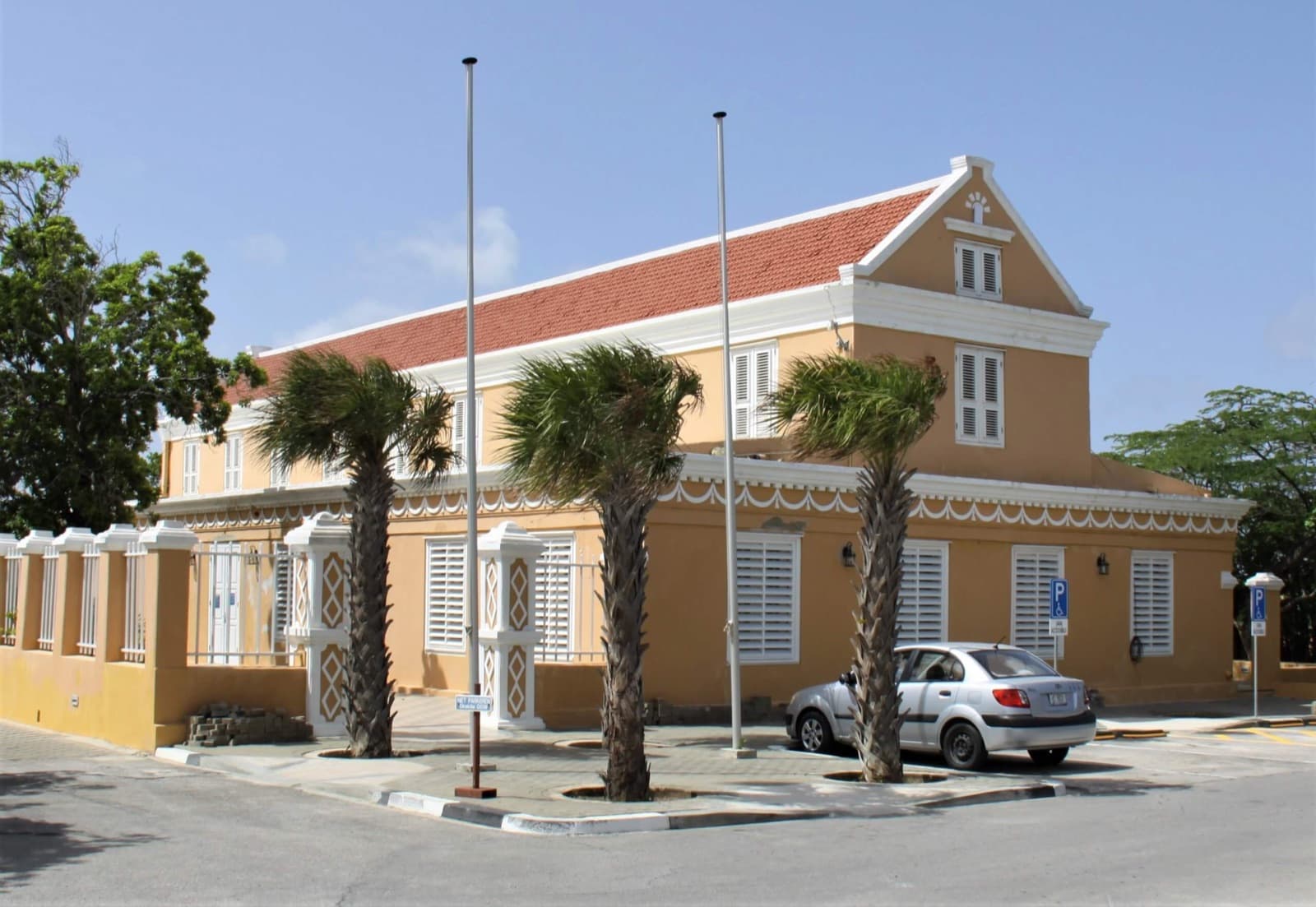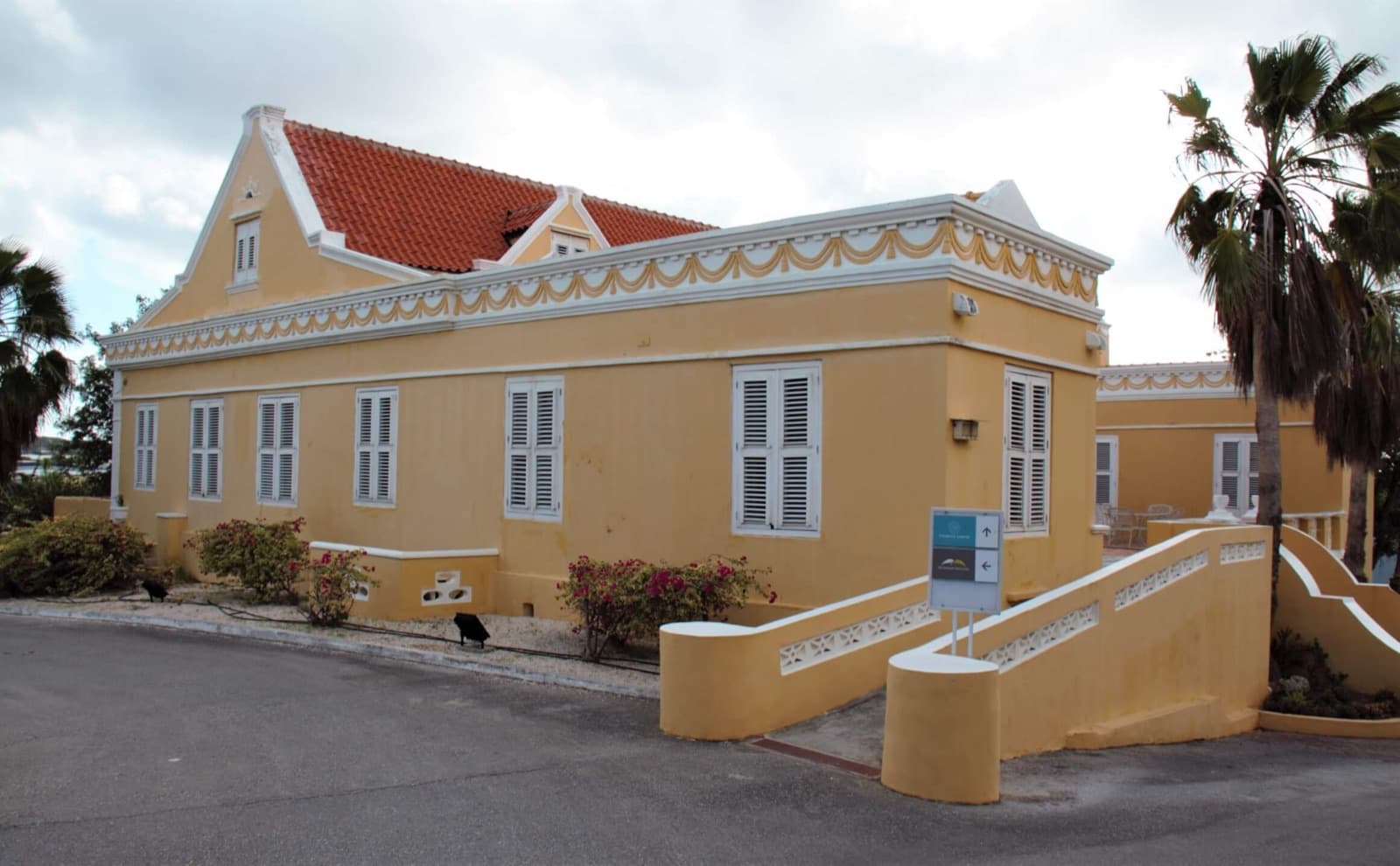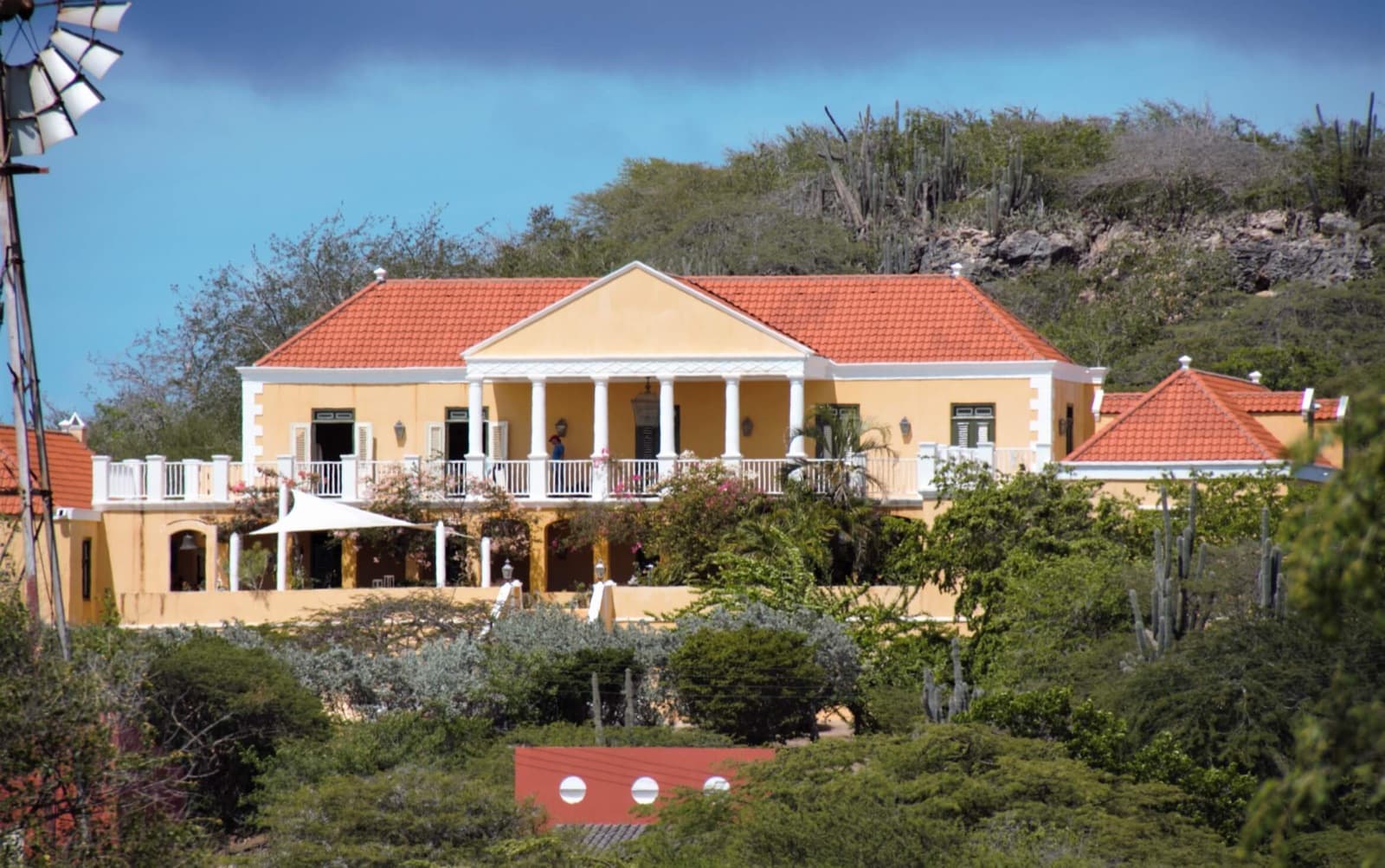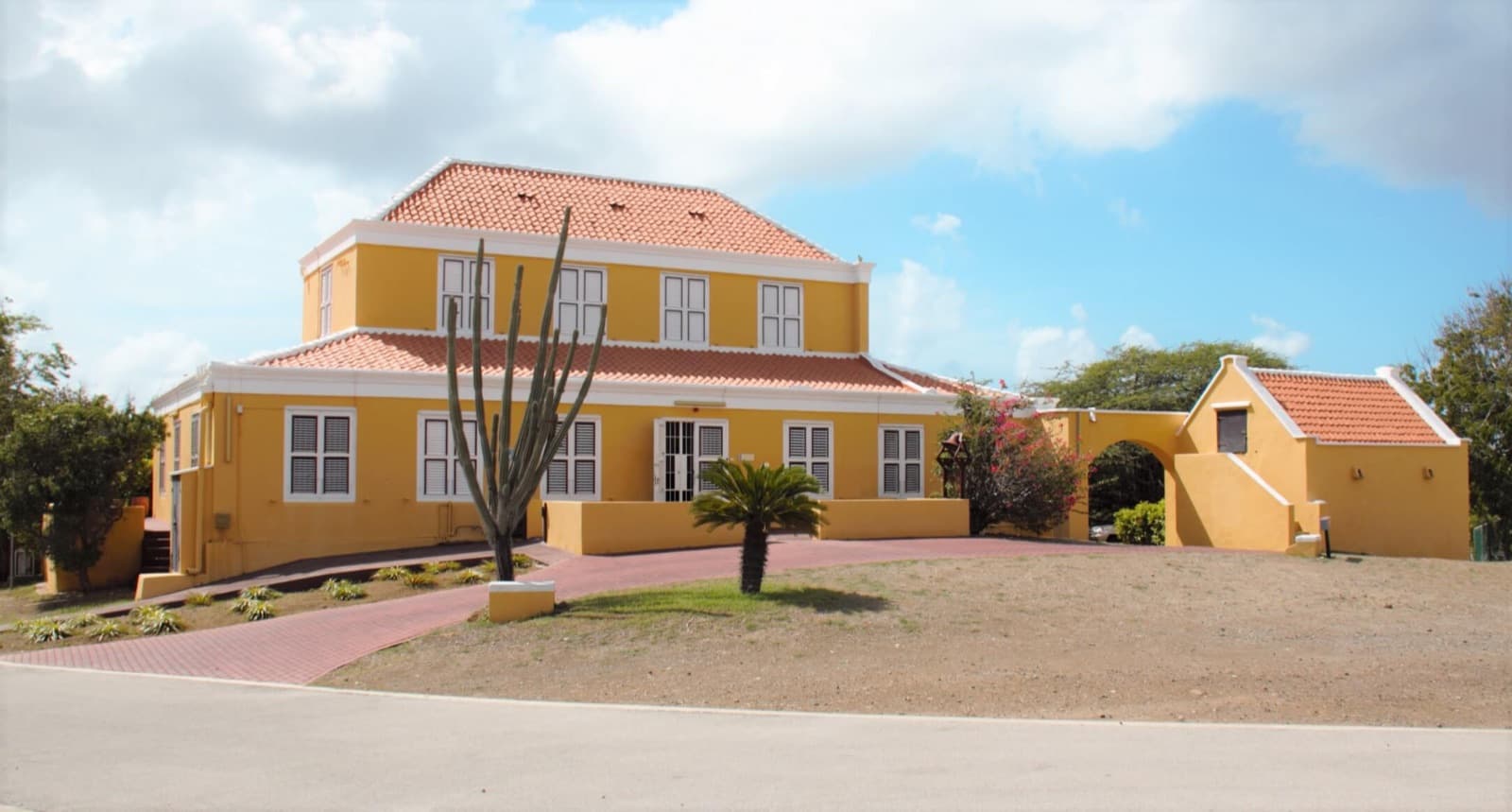
Foto © Michael A. Newton, curacaomonuments.org
Landhuis Ascencion — One of Curaçao's Oldest Plantations
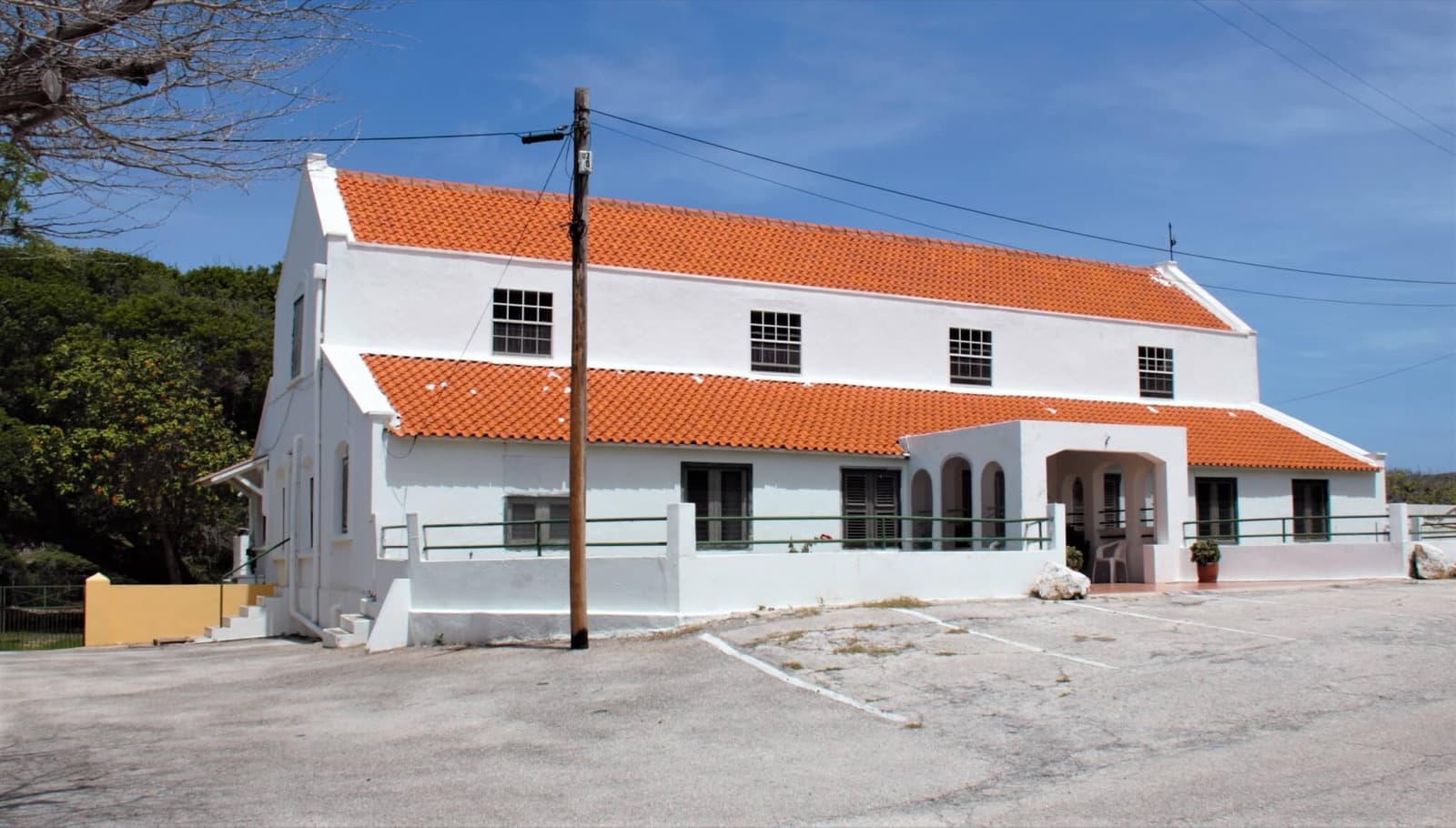
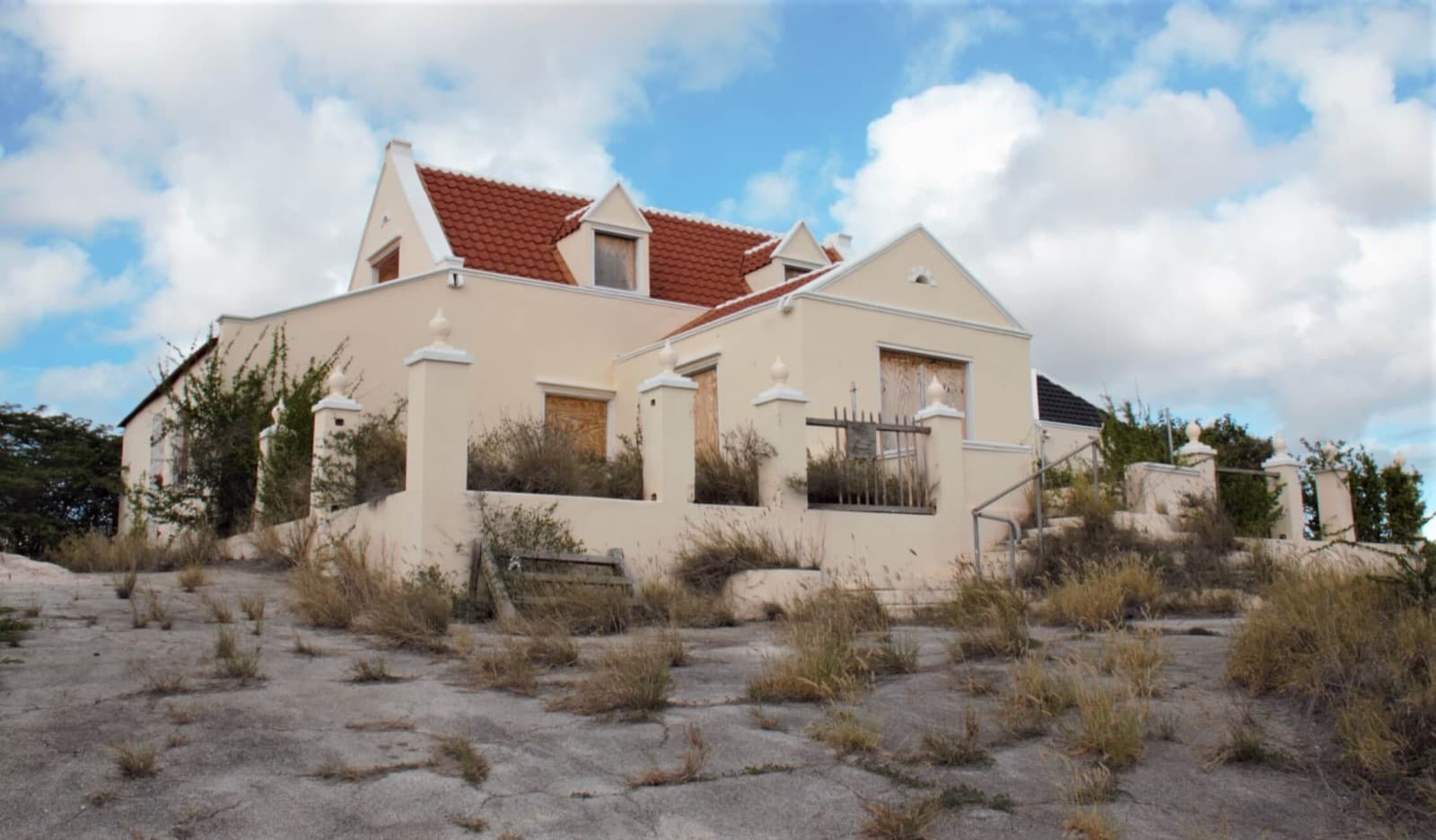
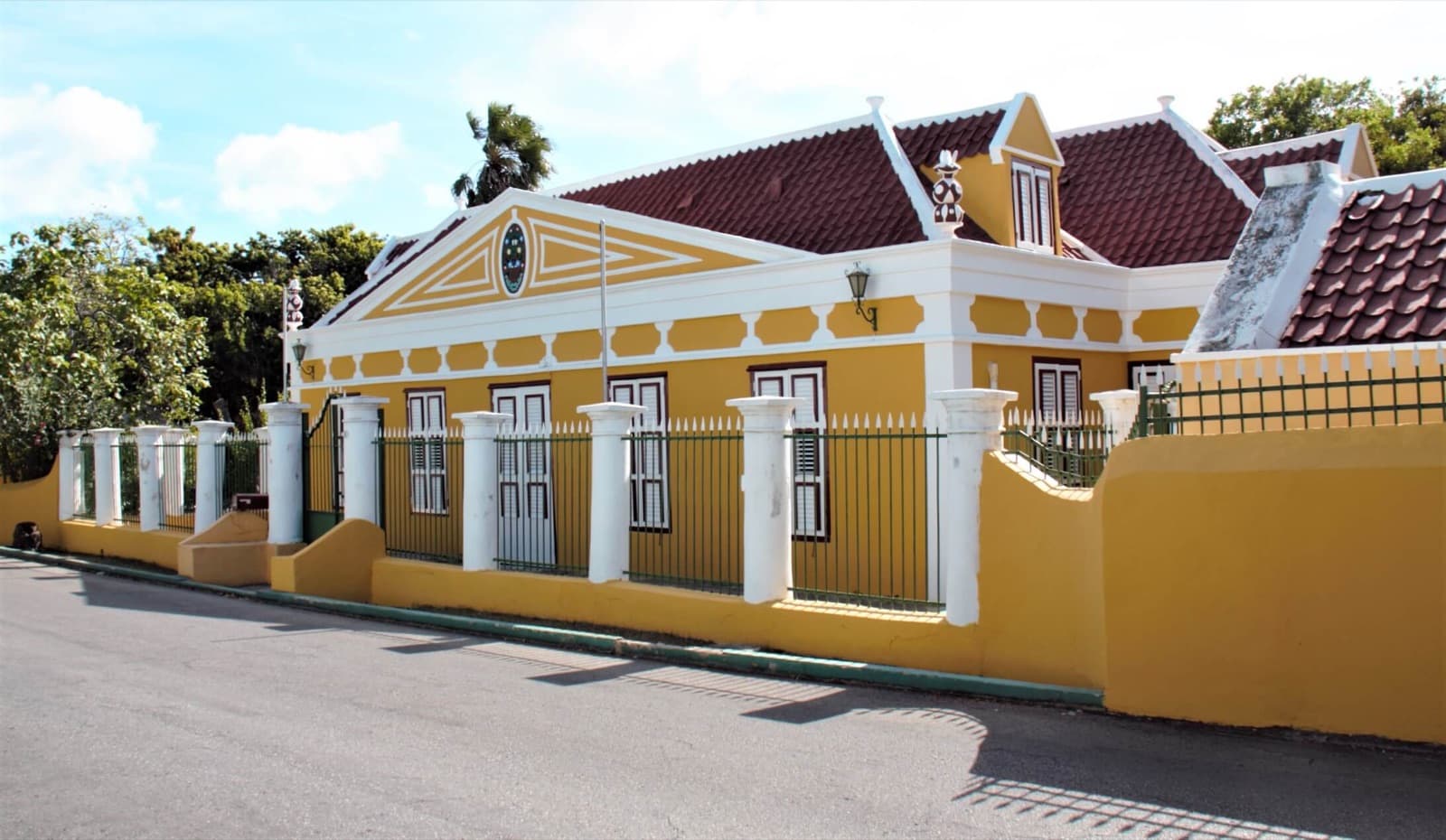
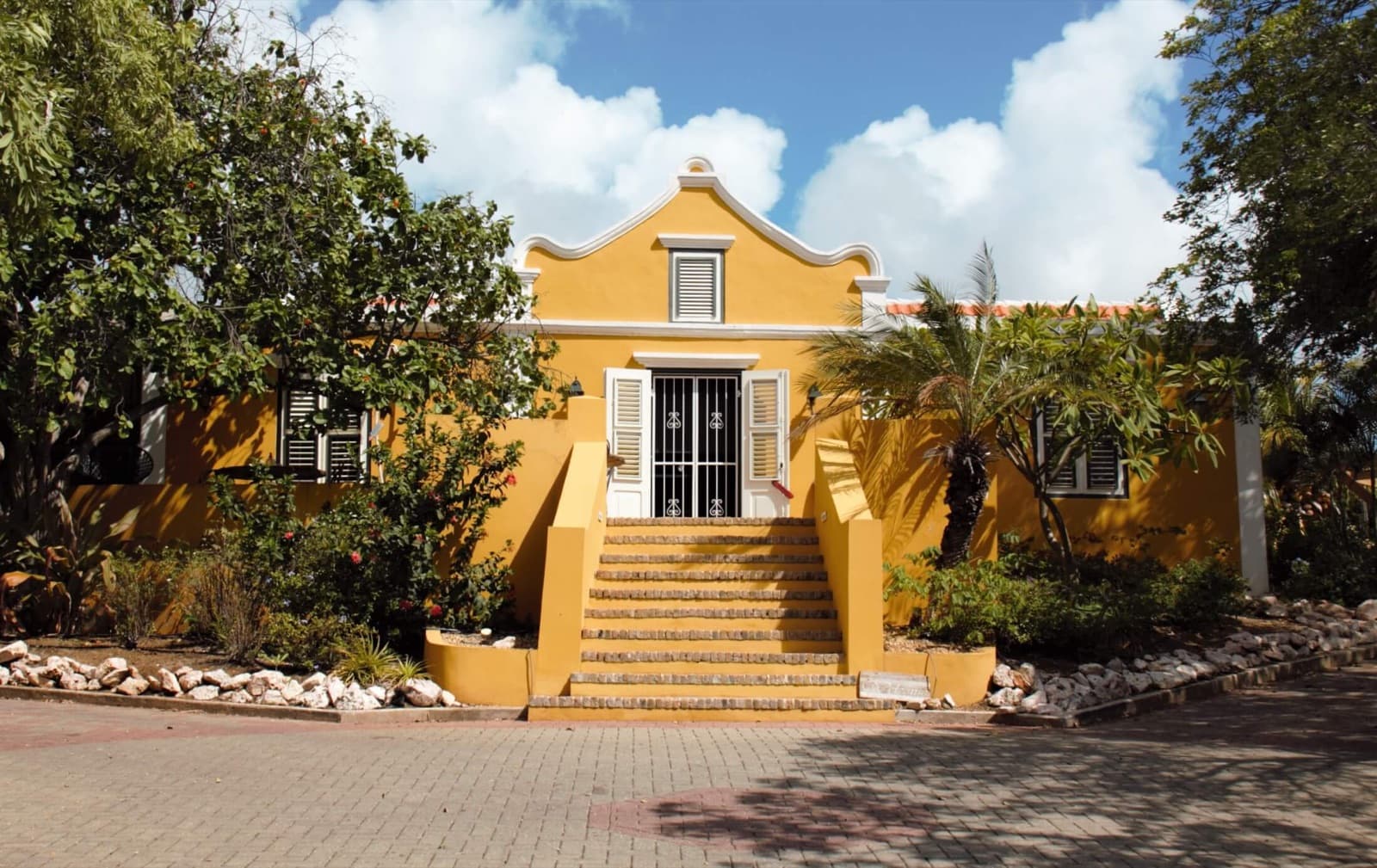
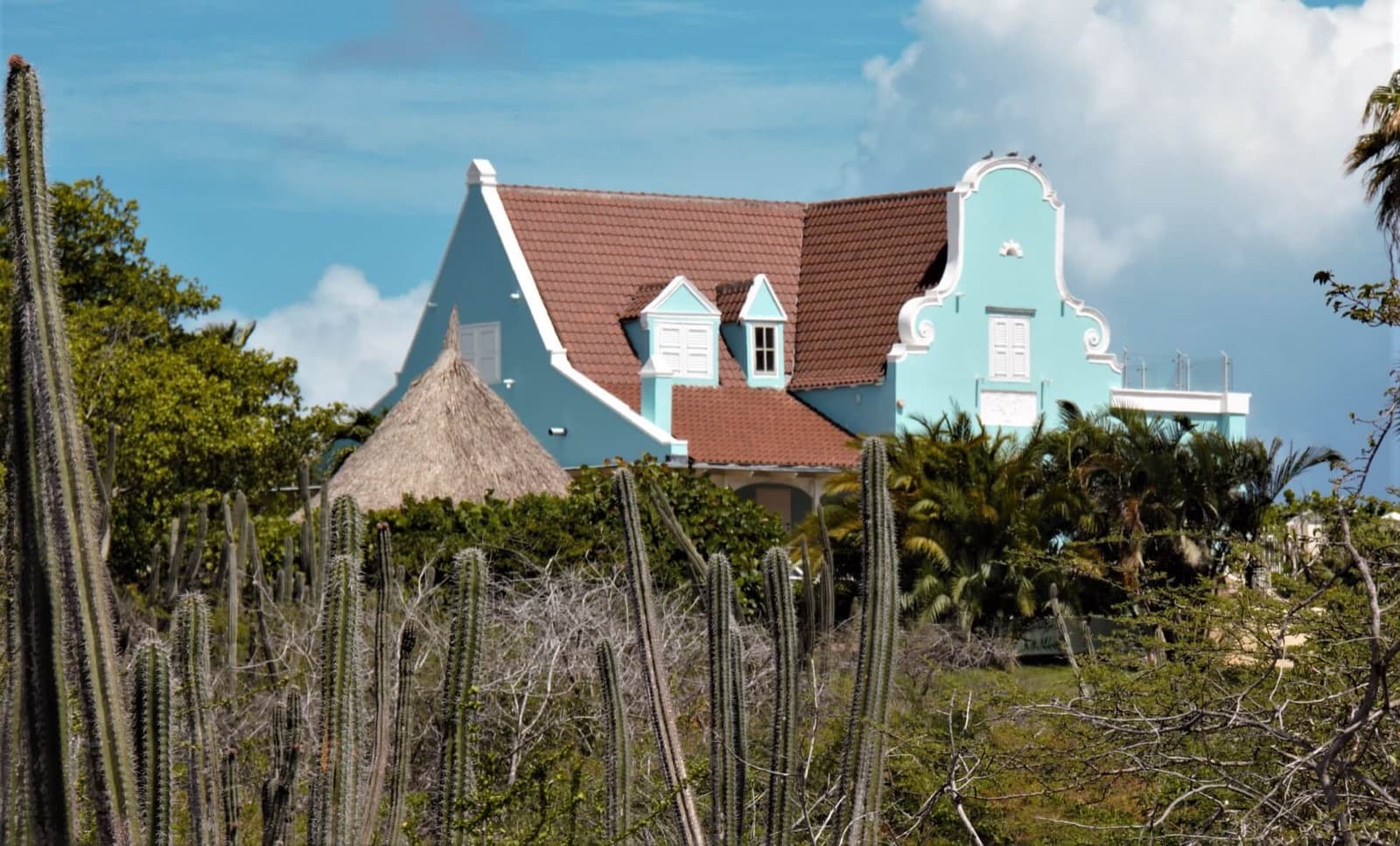
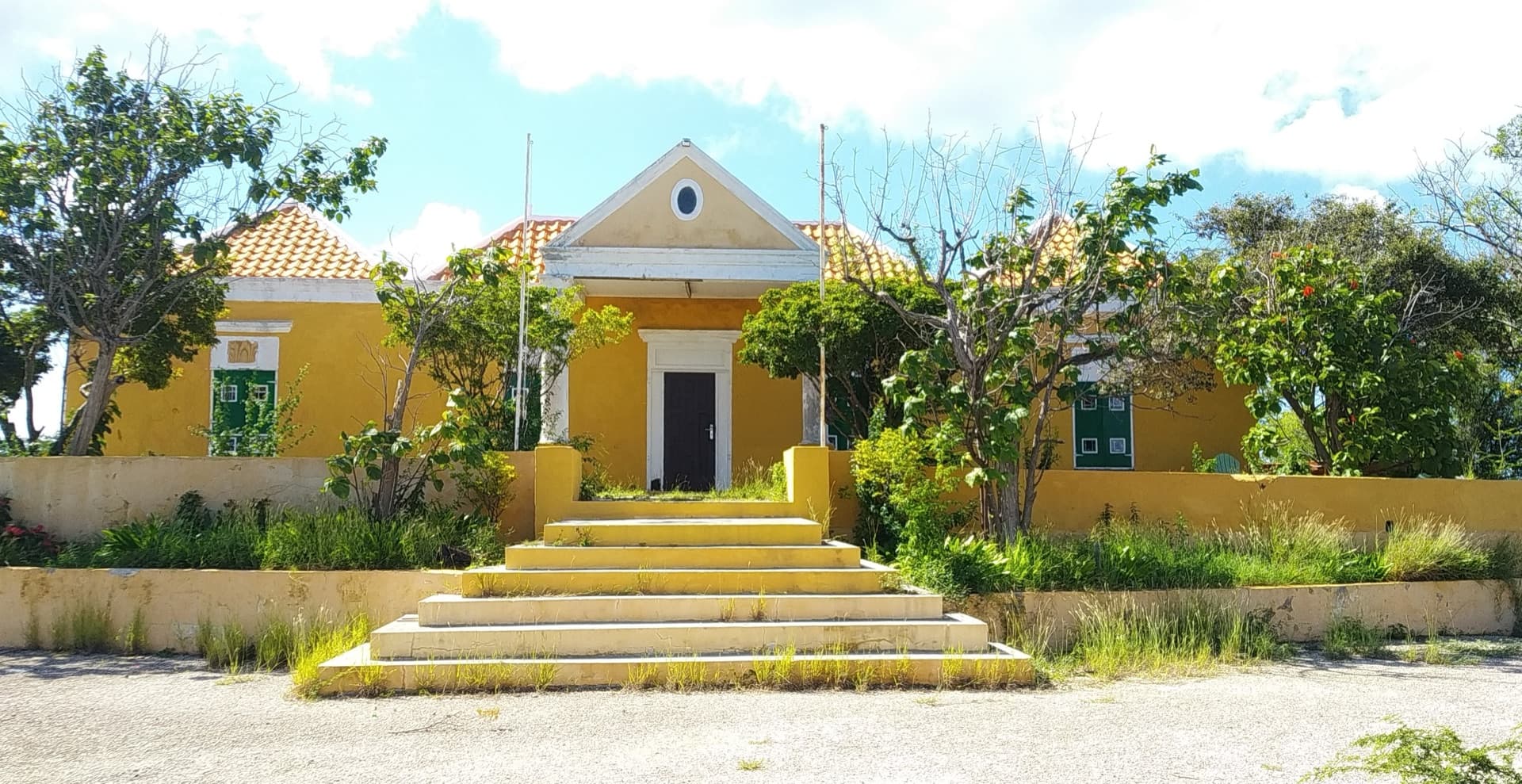
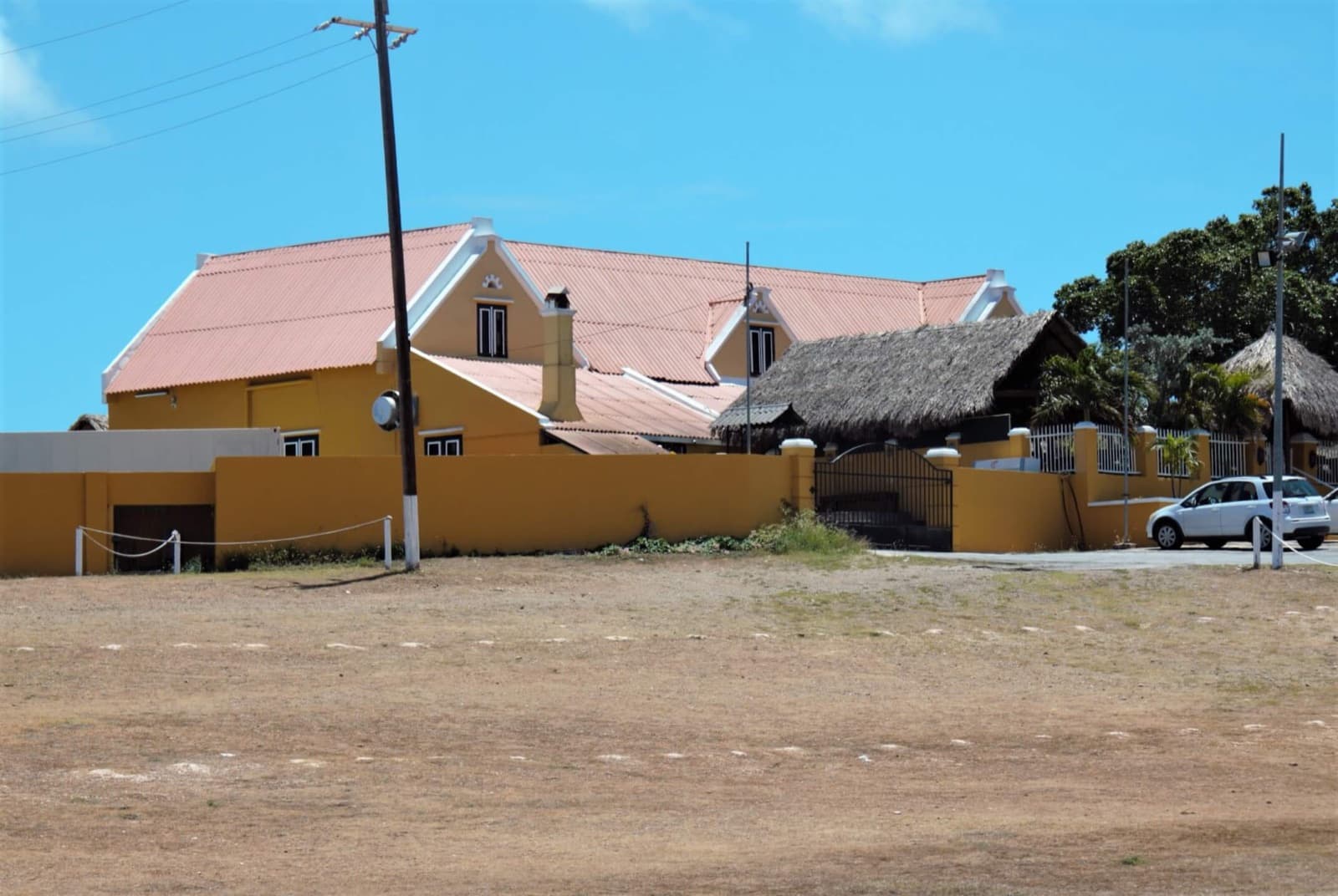
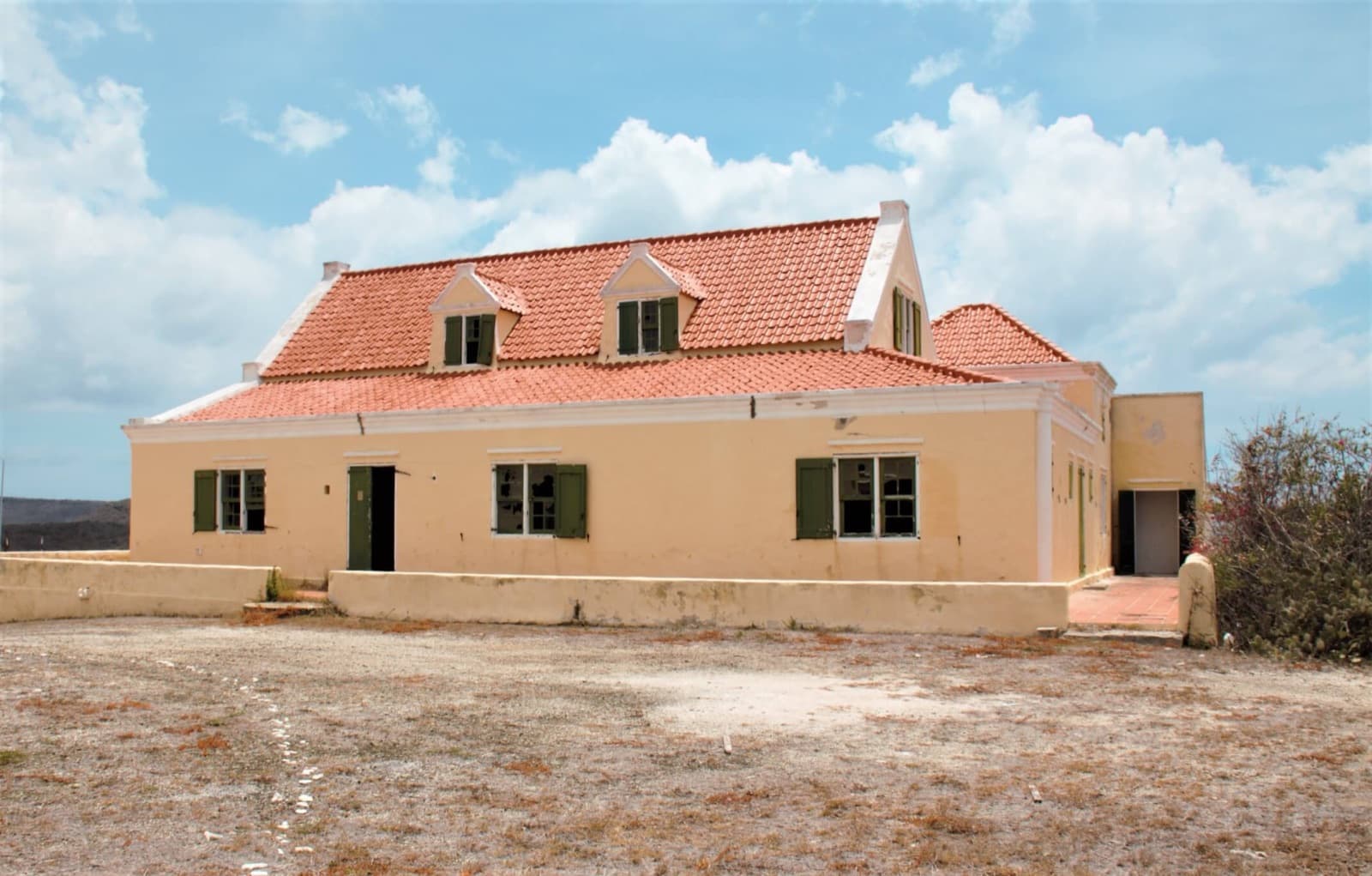
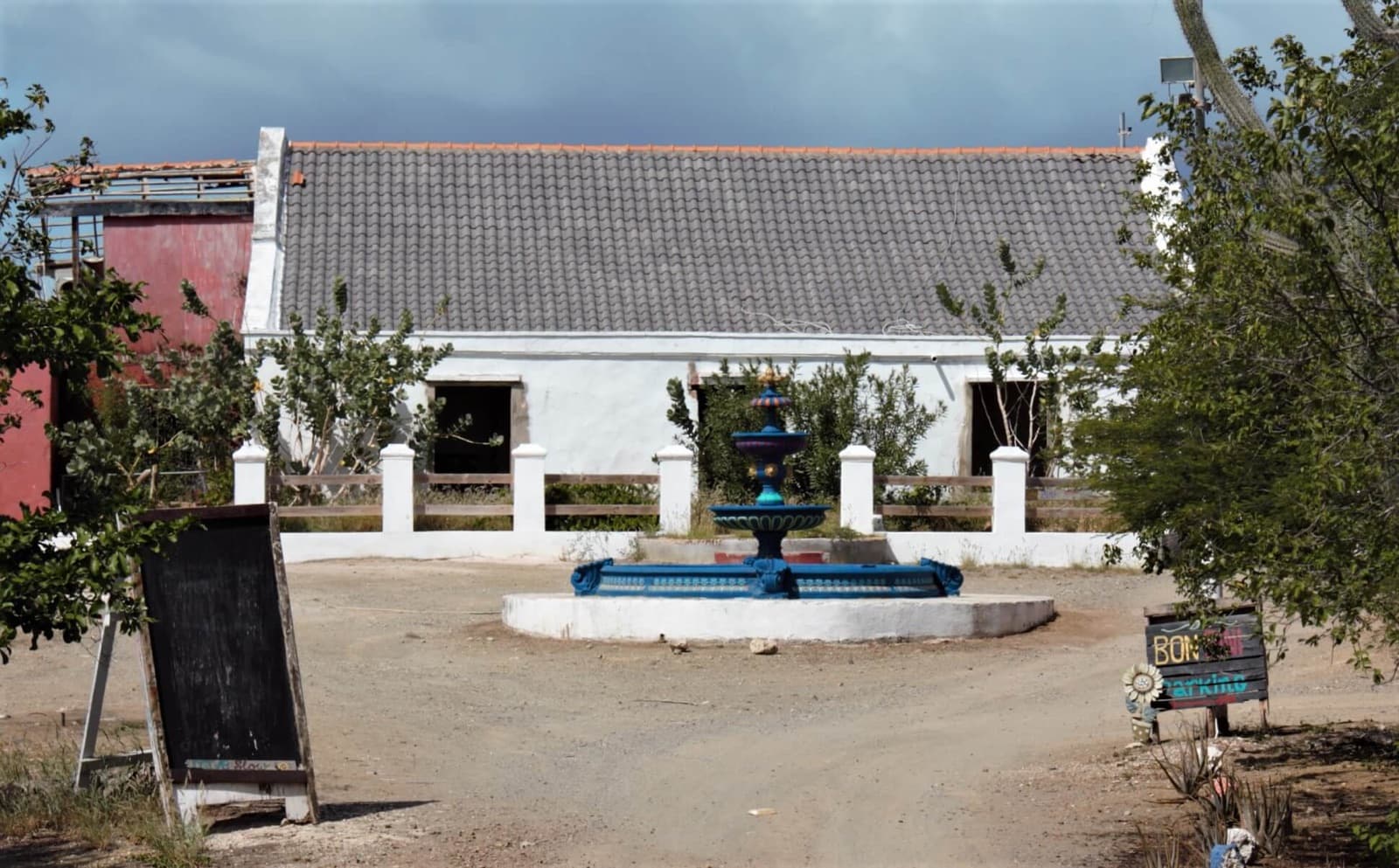
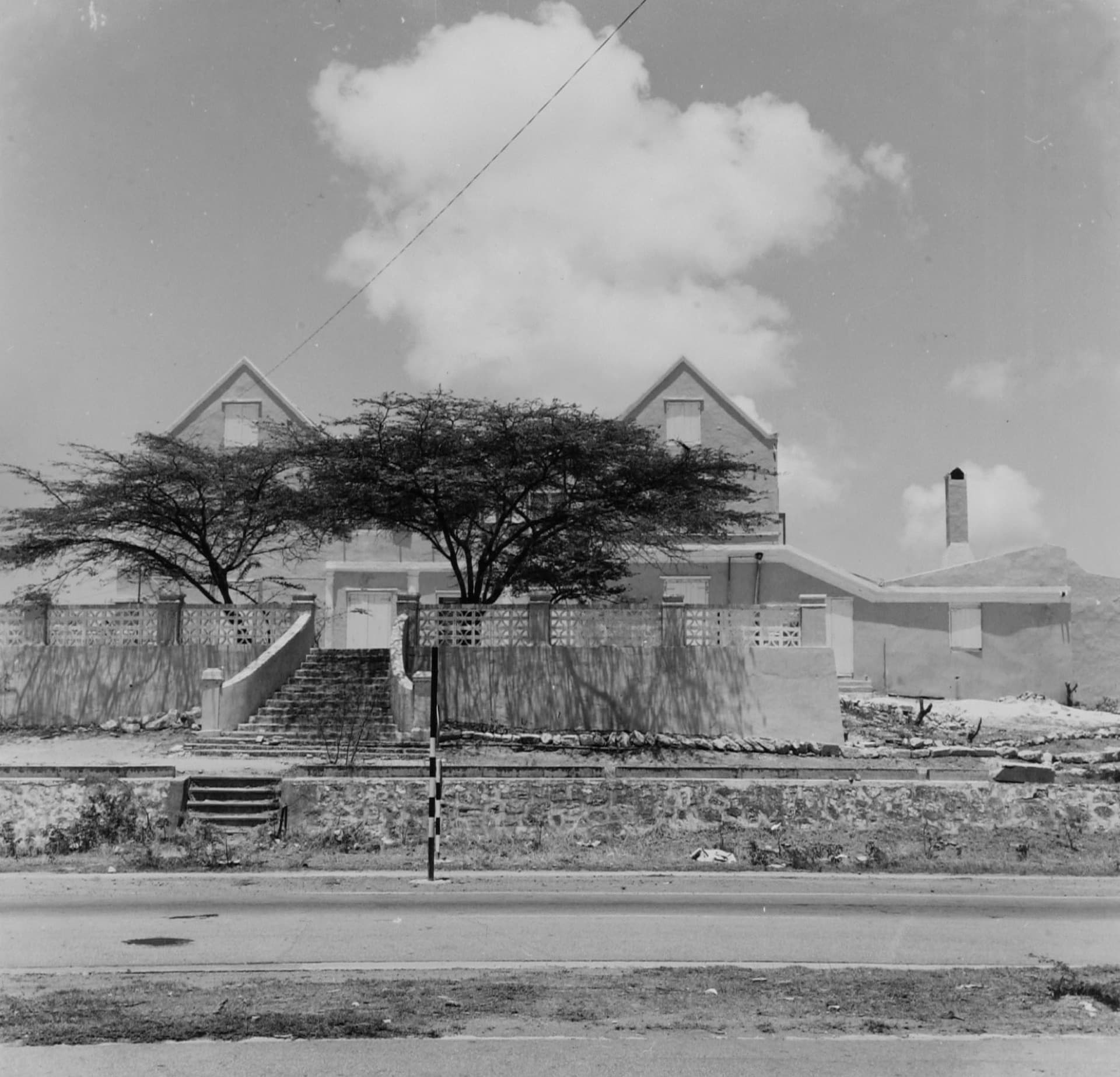
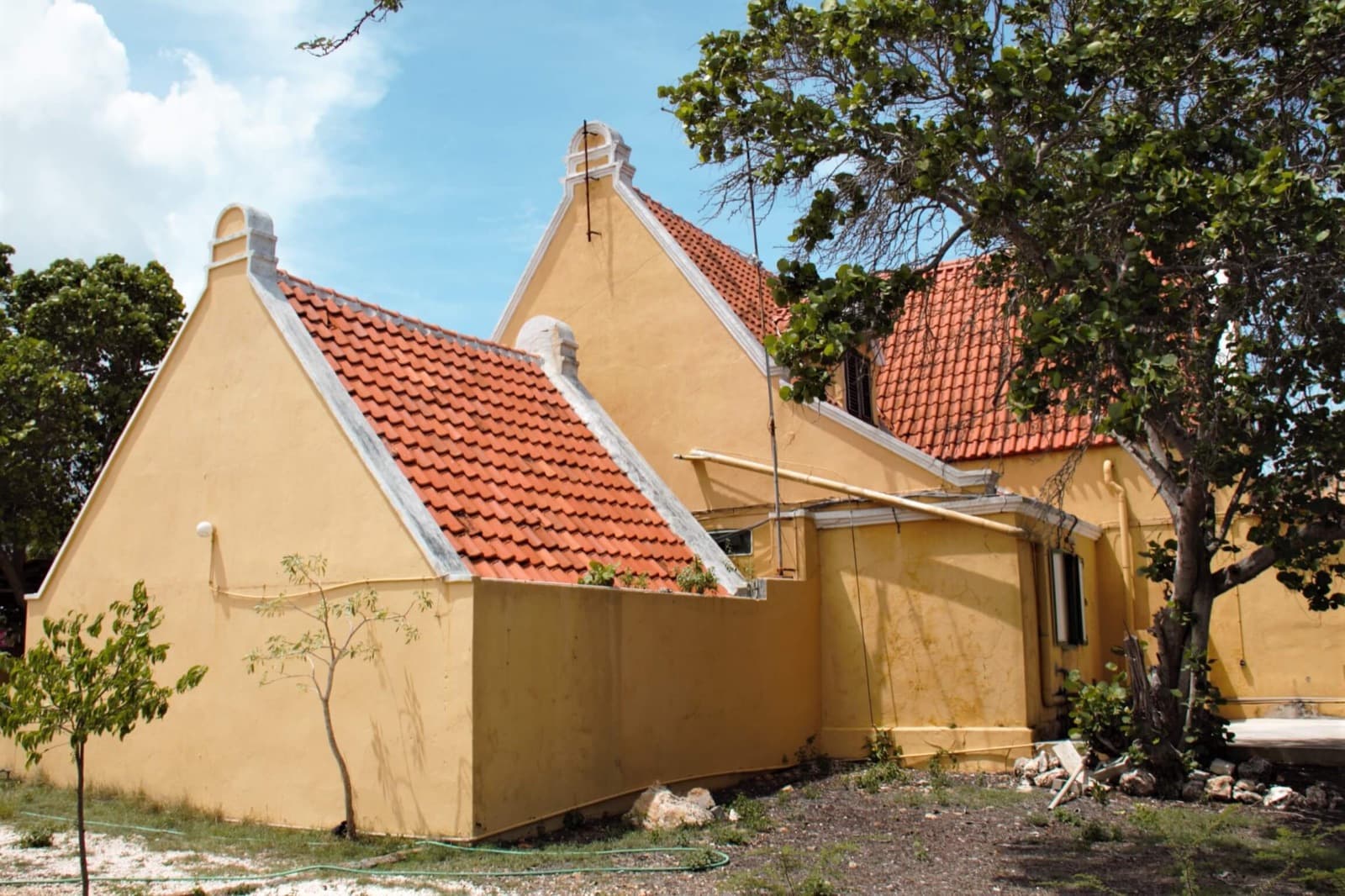
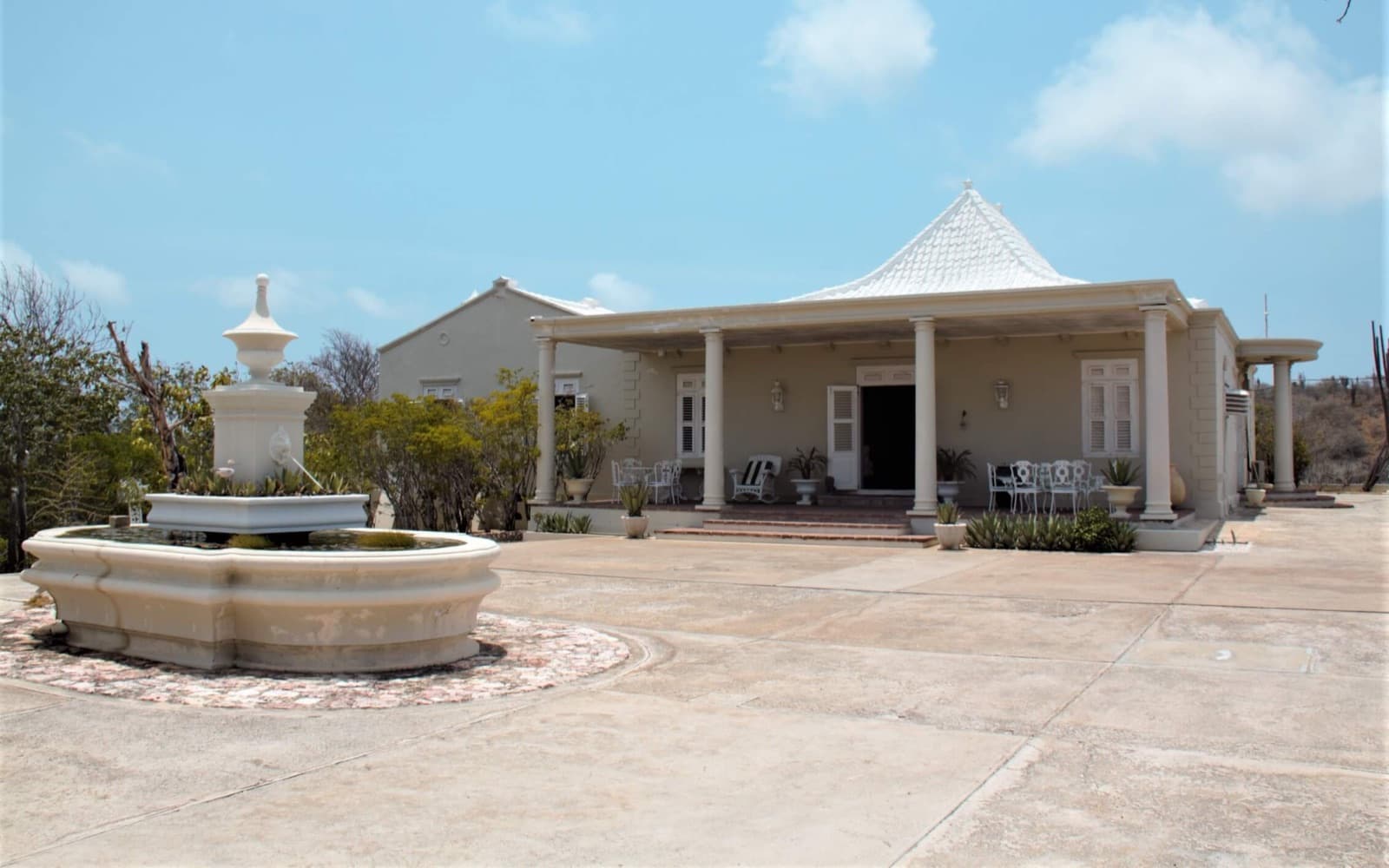
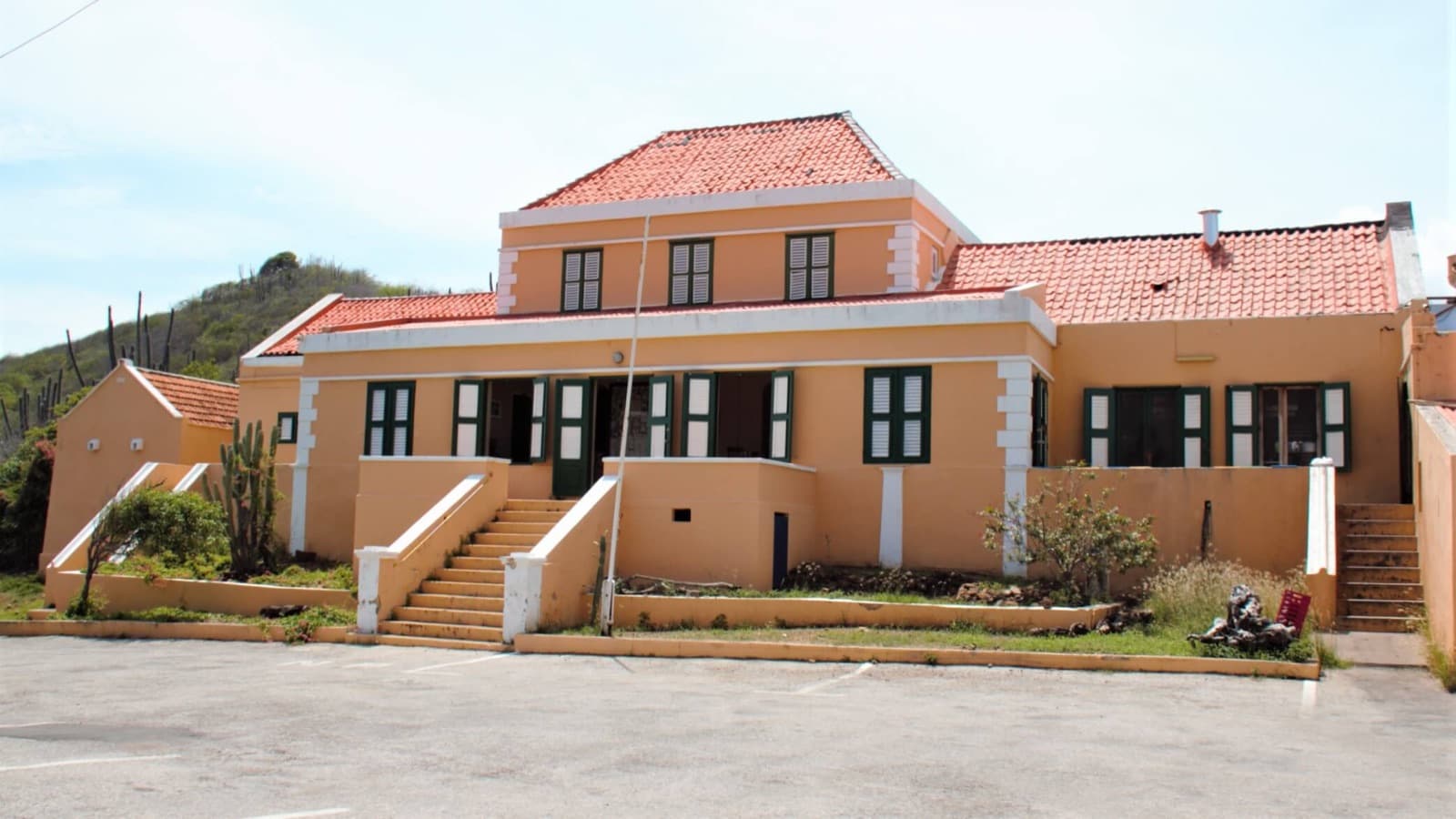
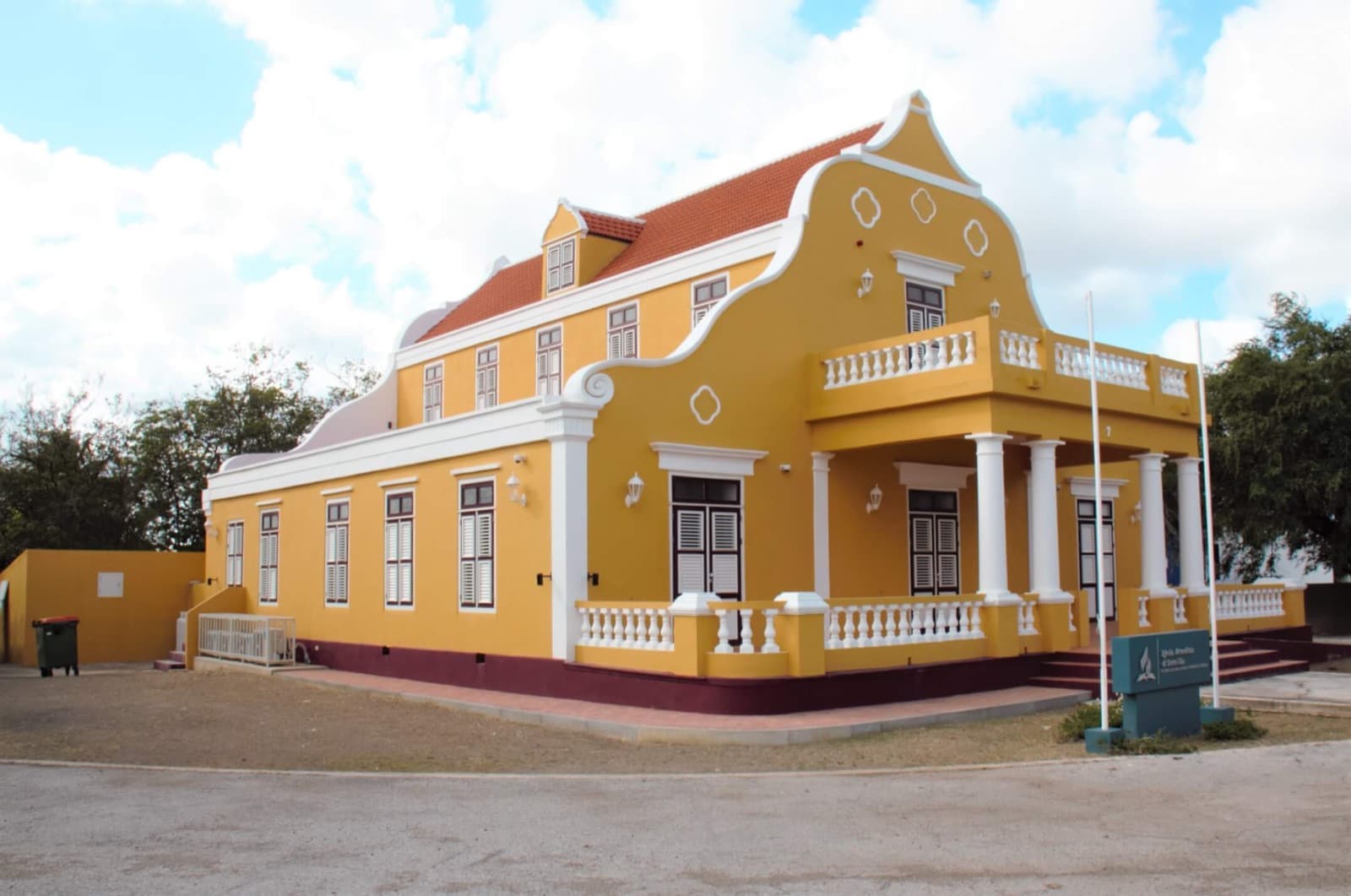
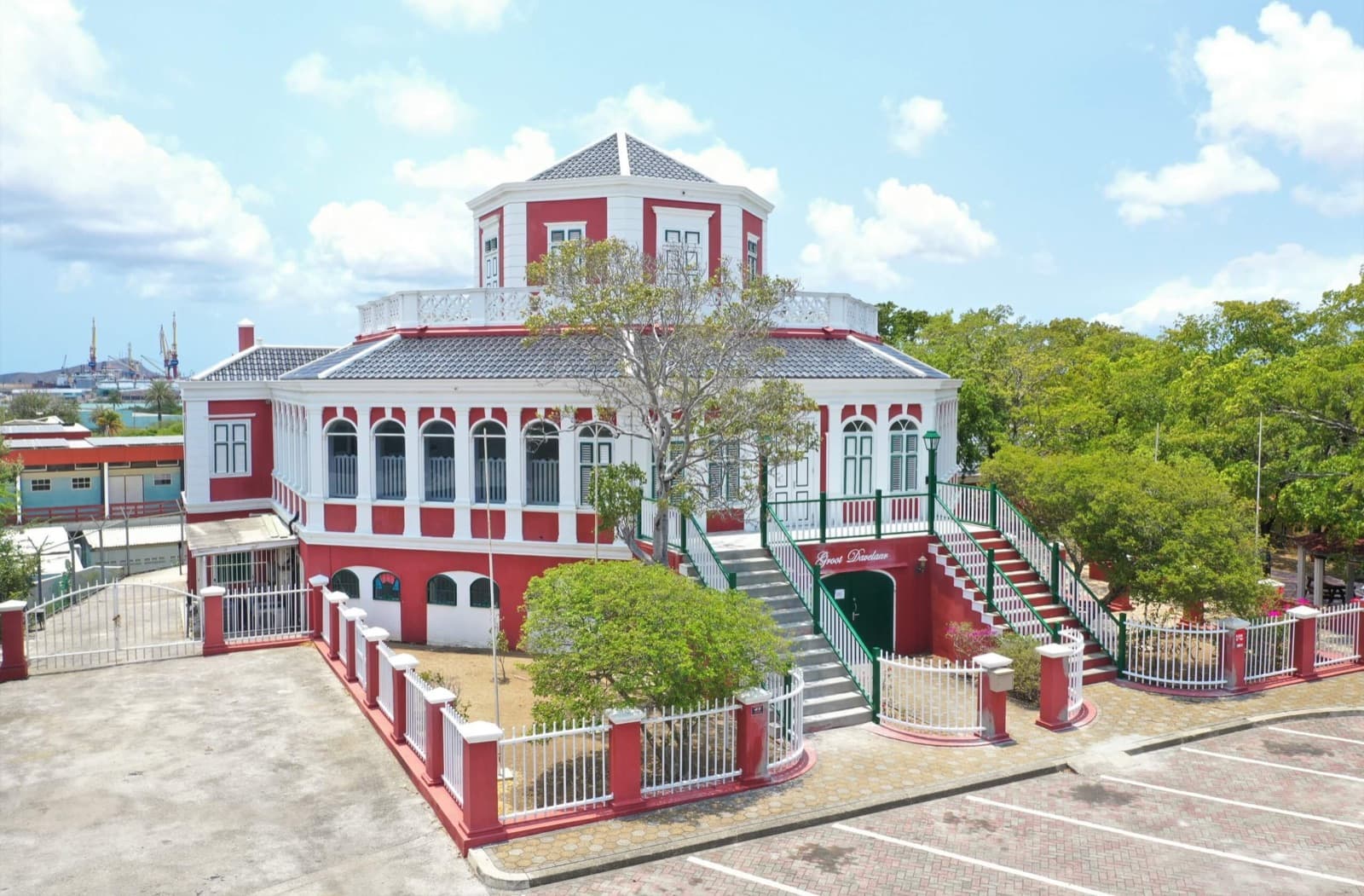
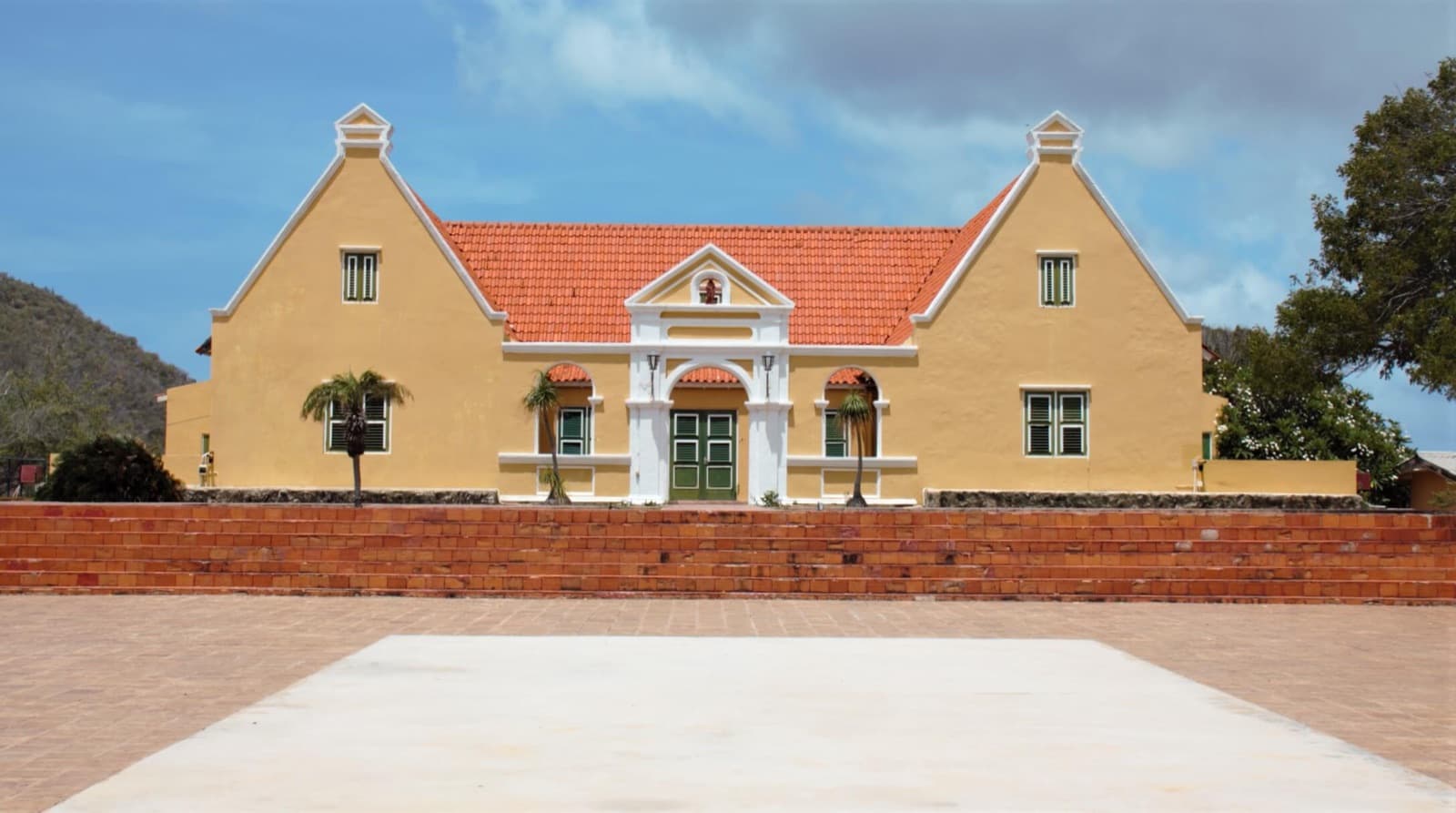
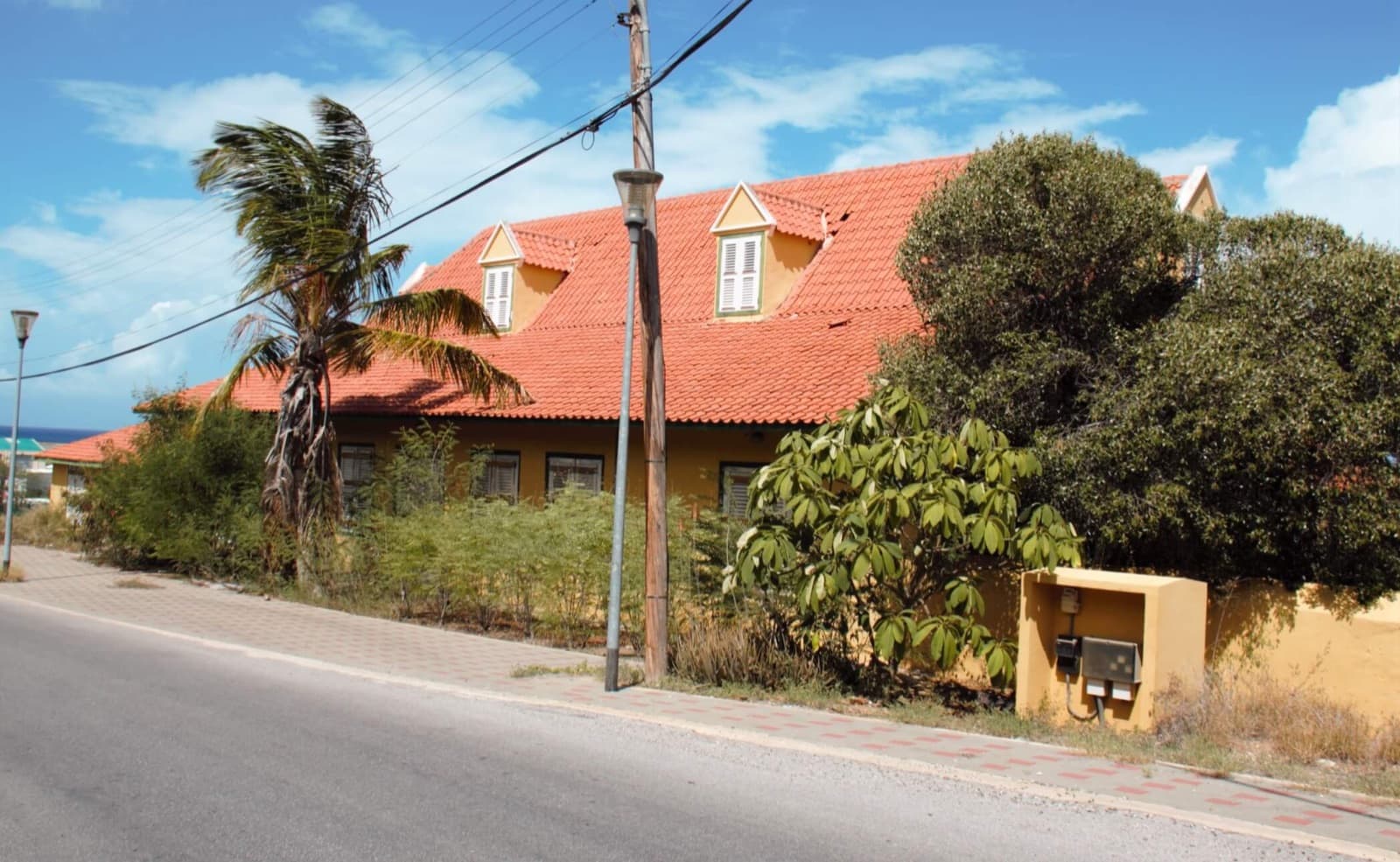
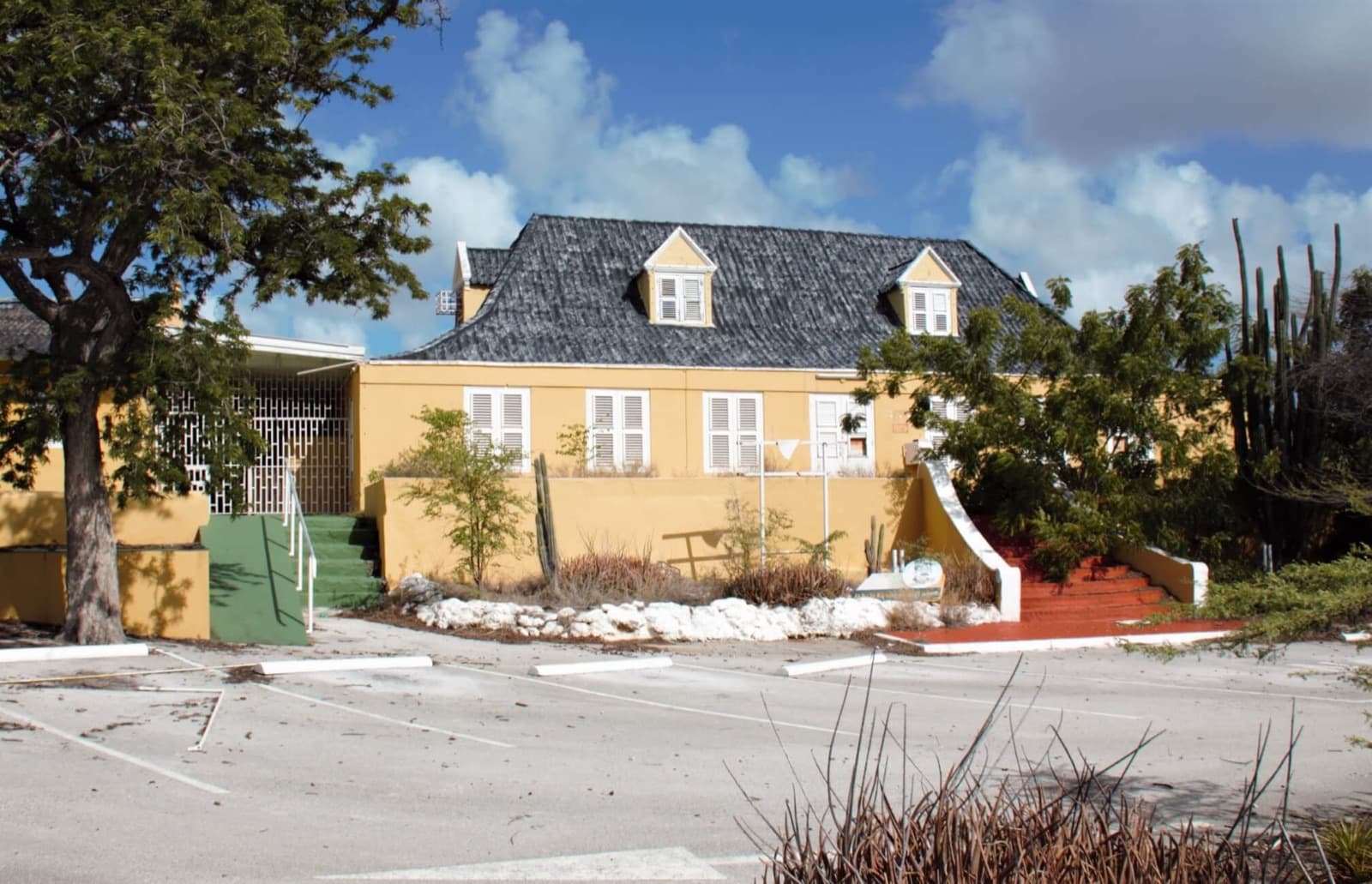
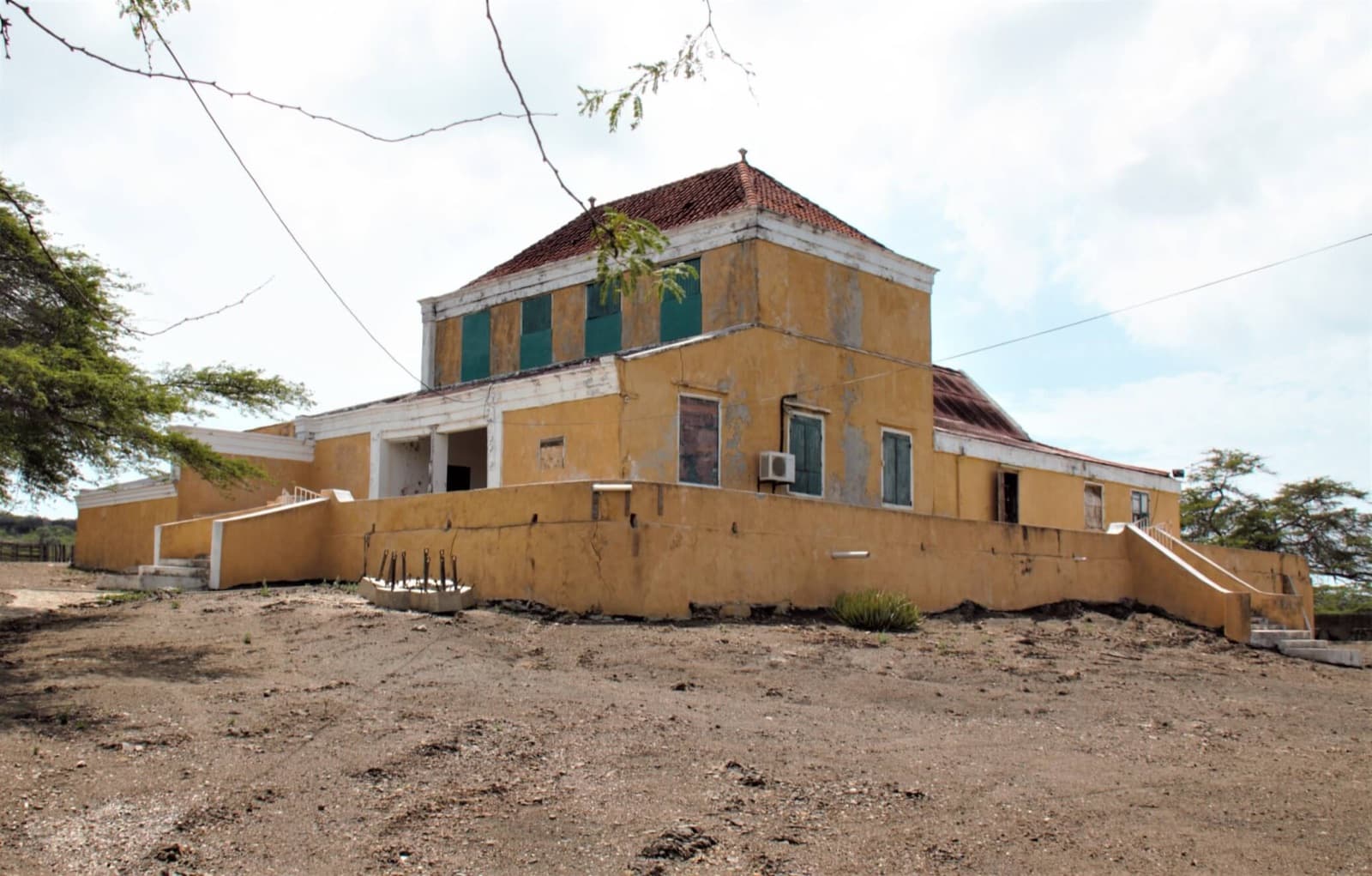
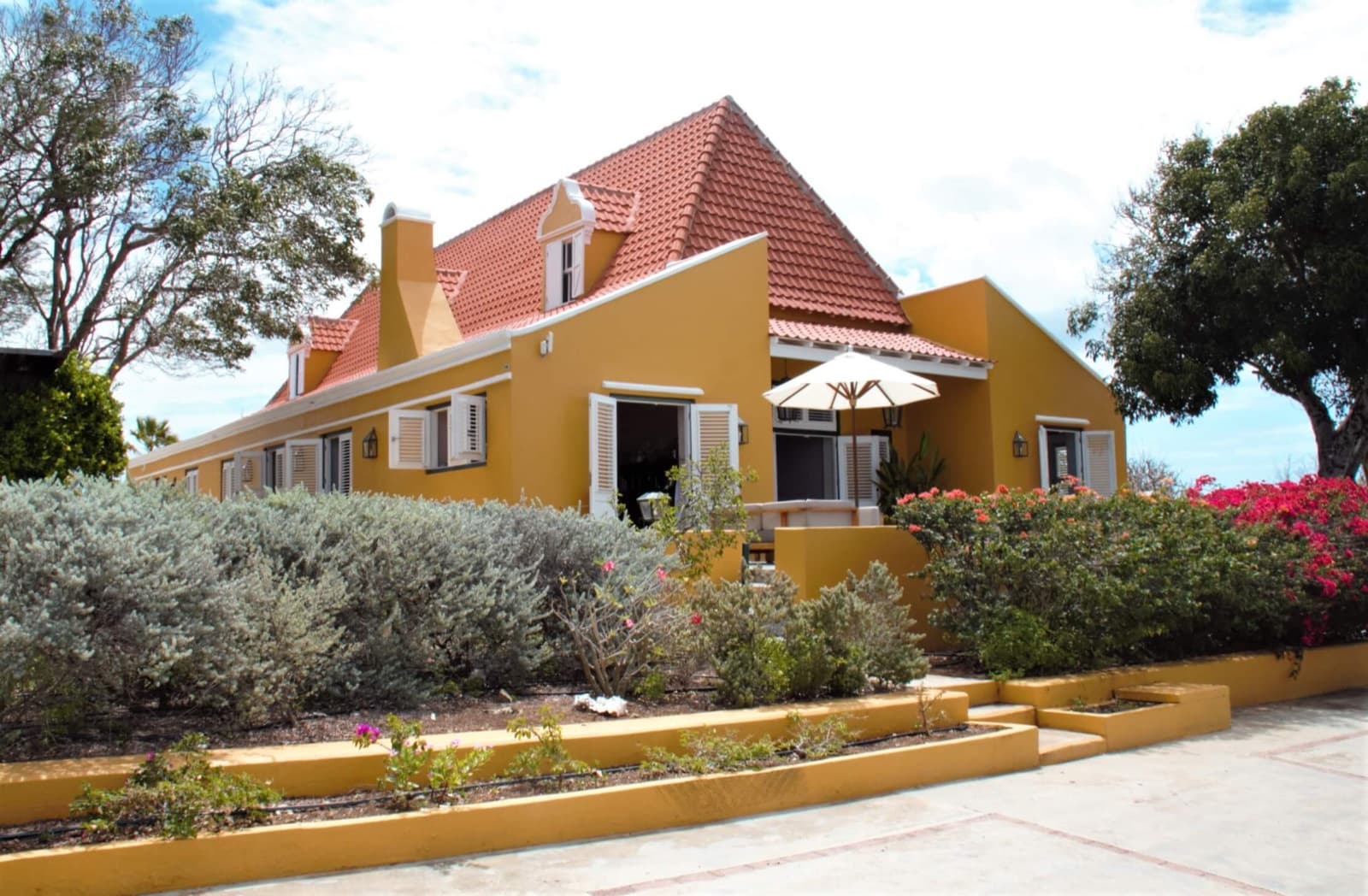
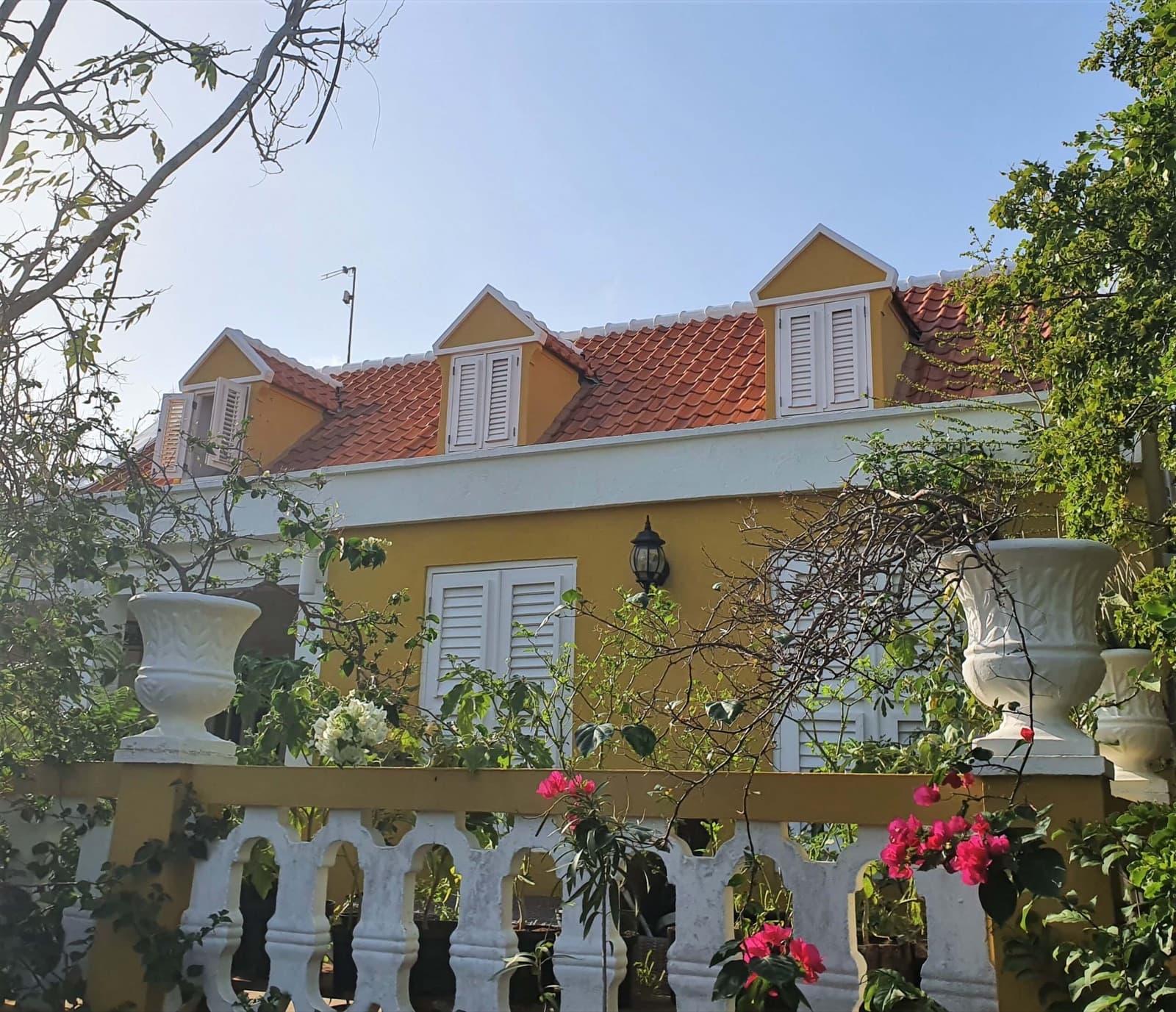
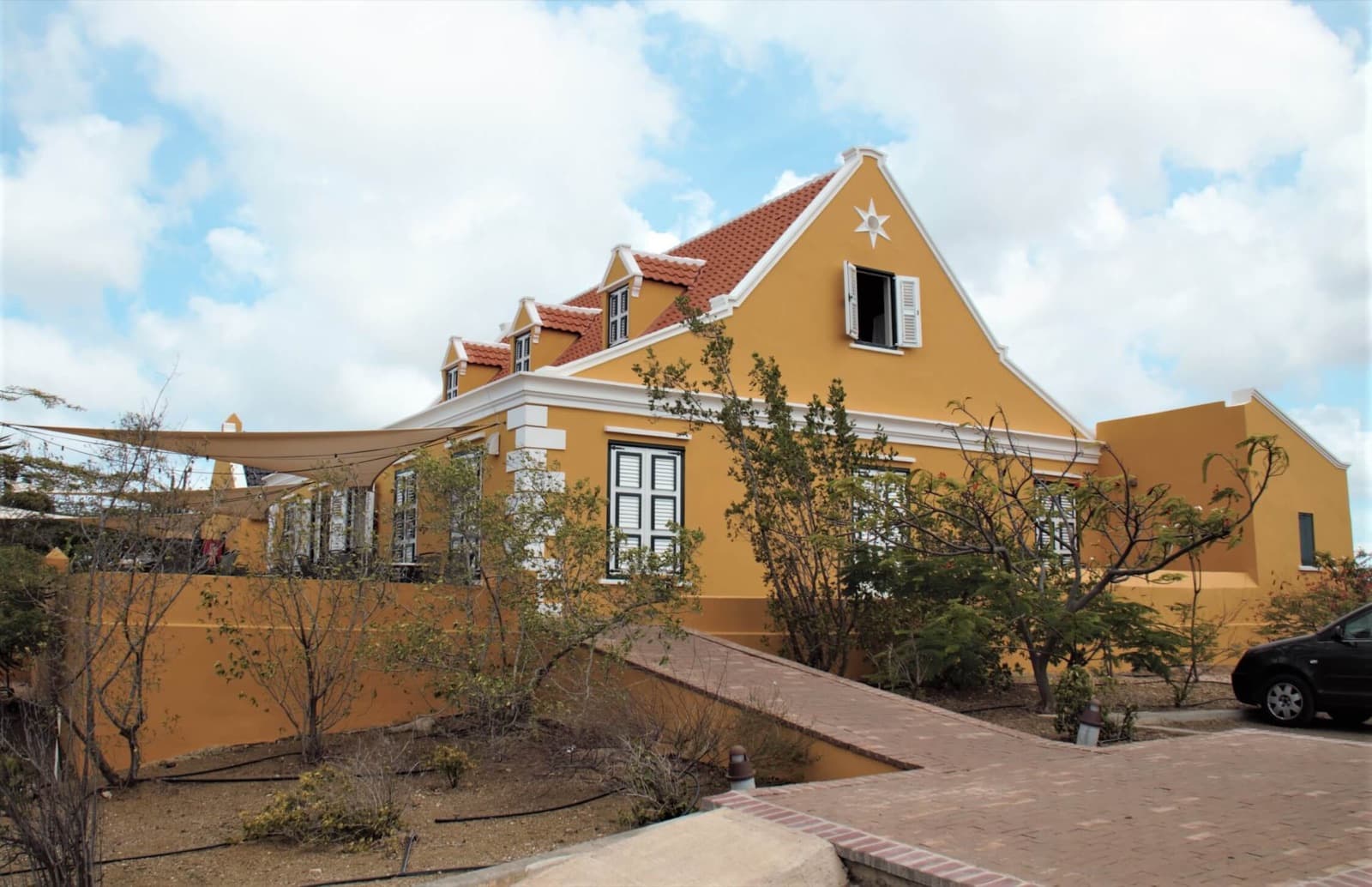
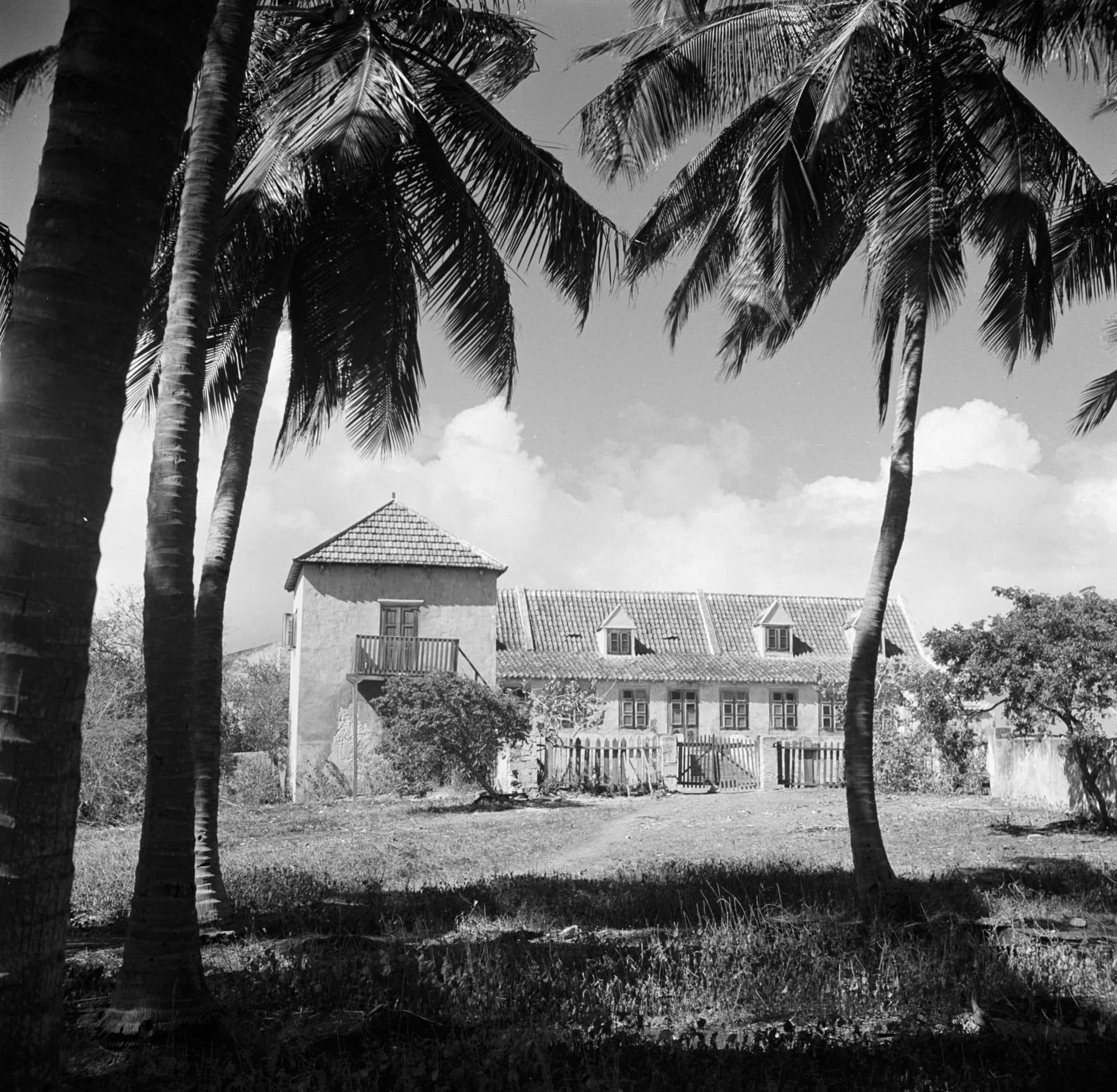
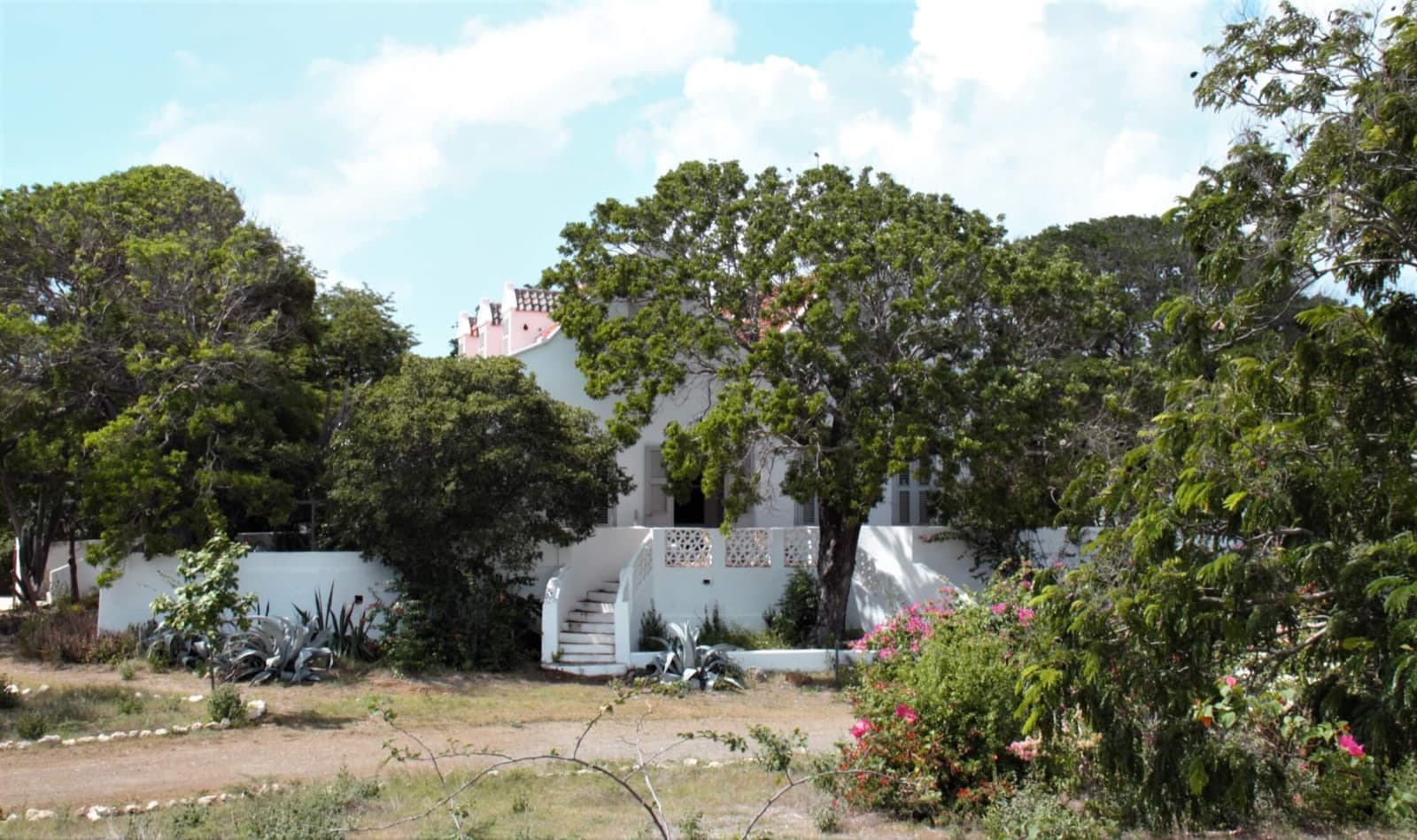
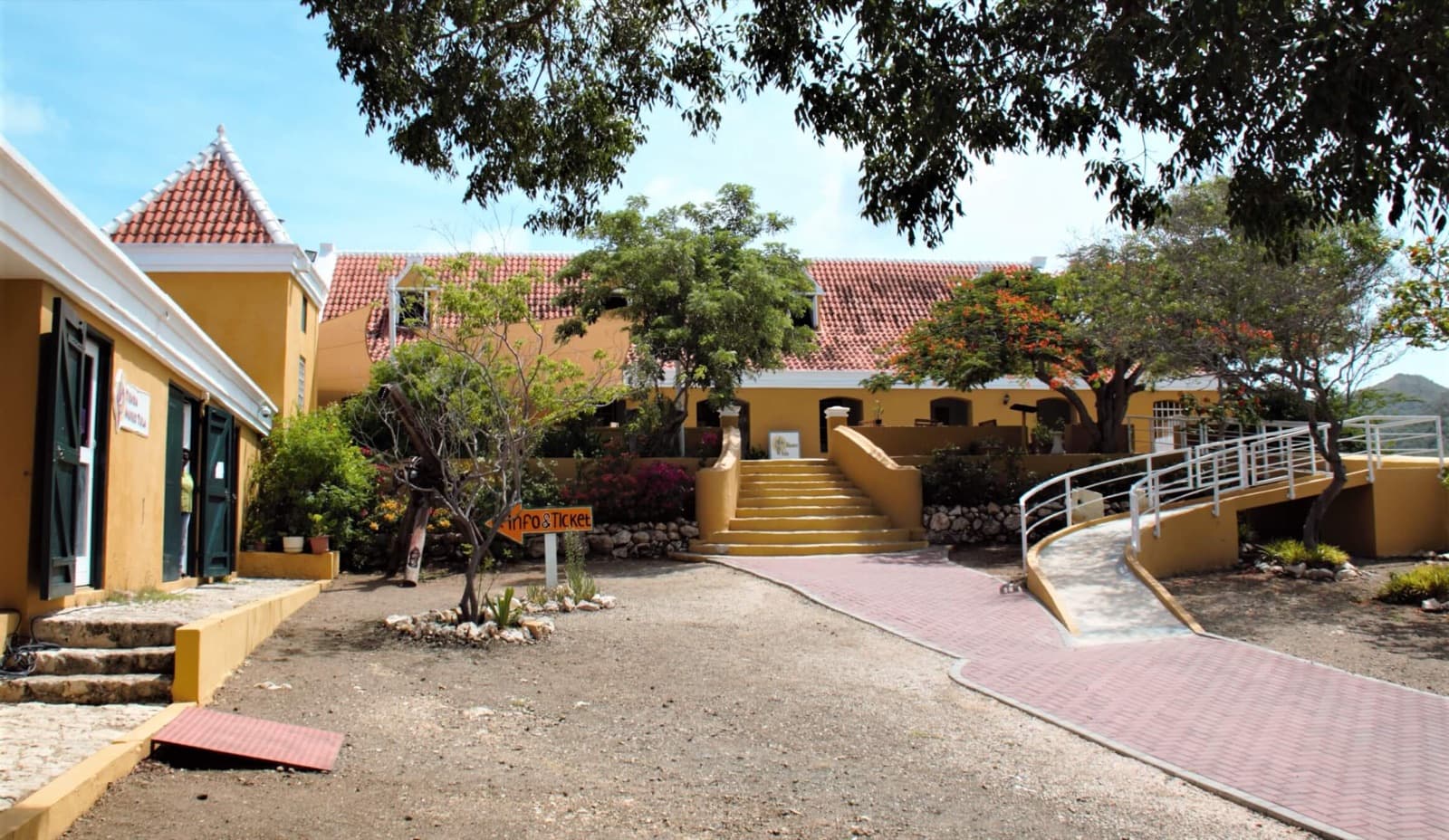
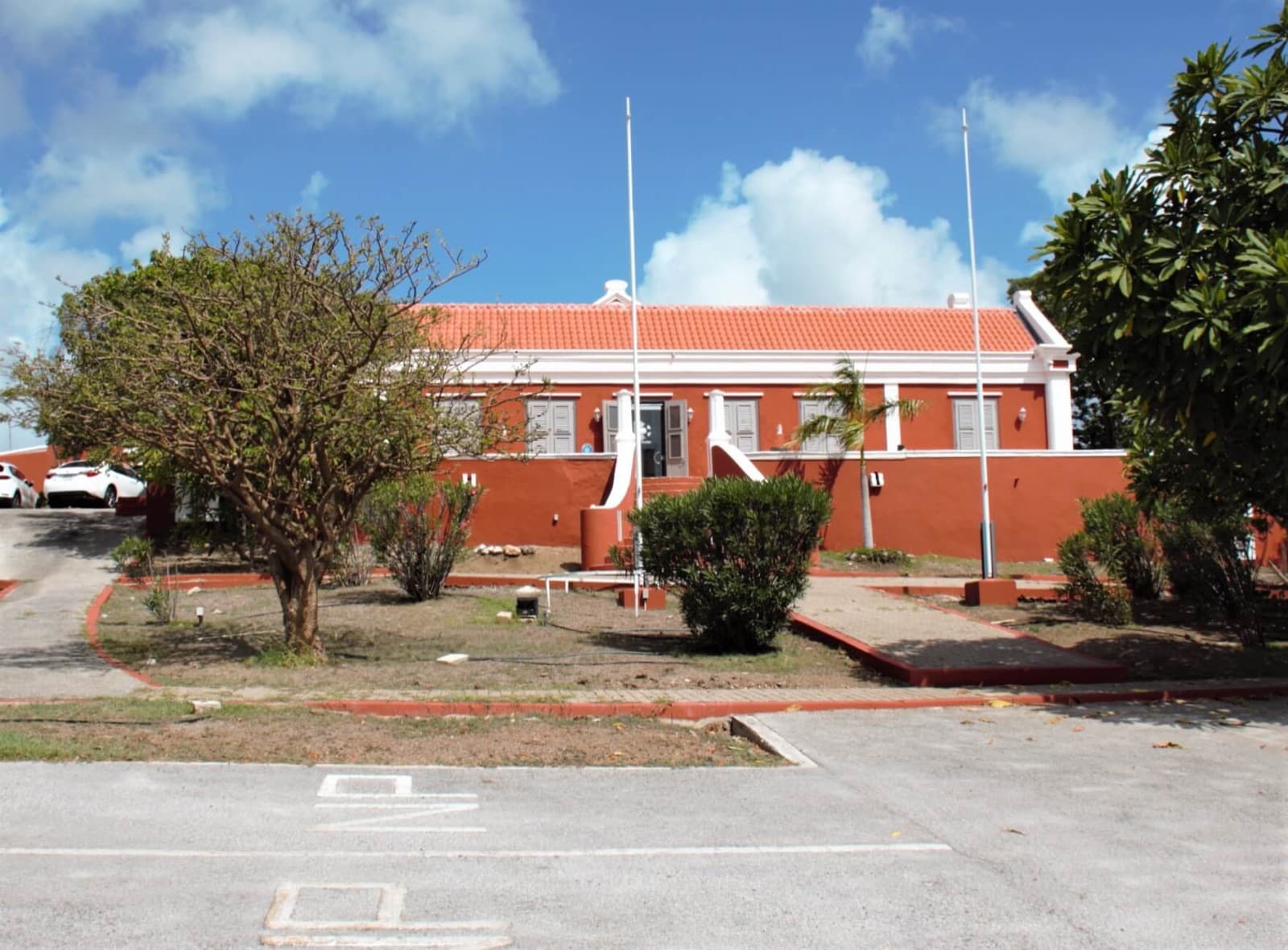
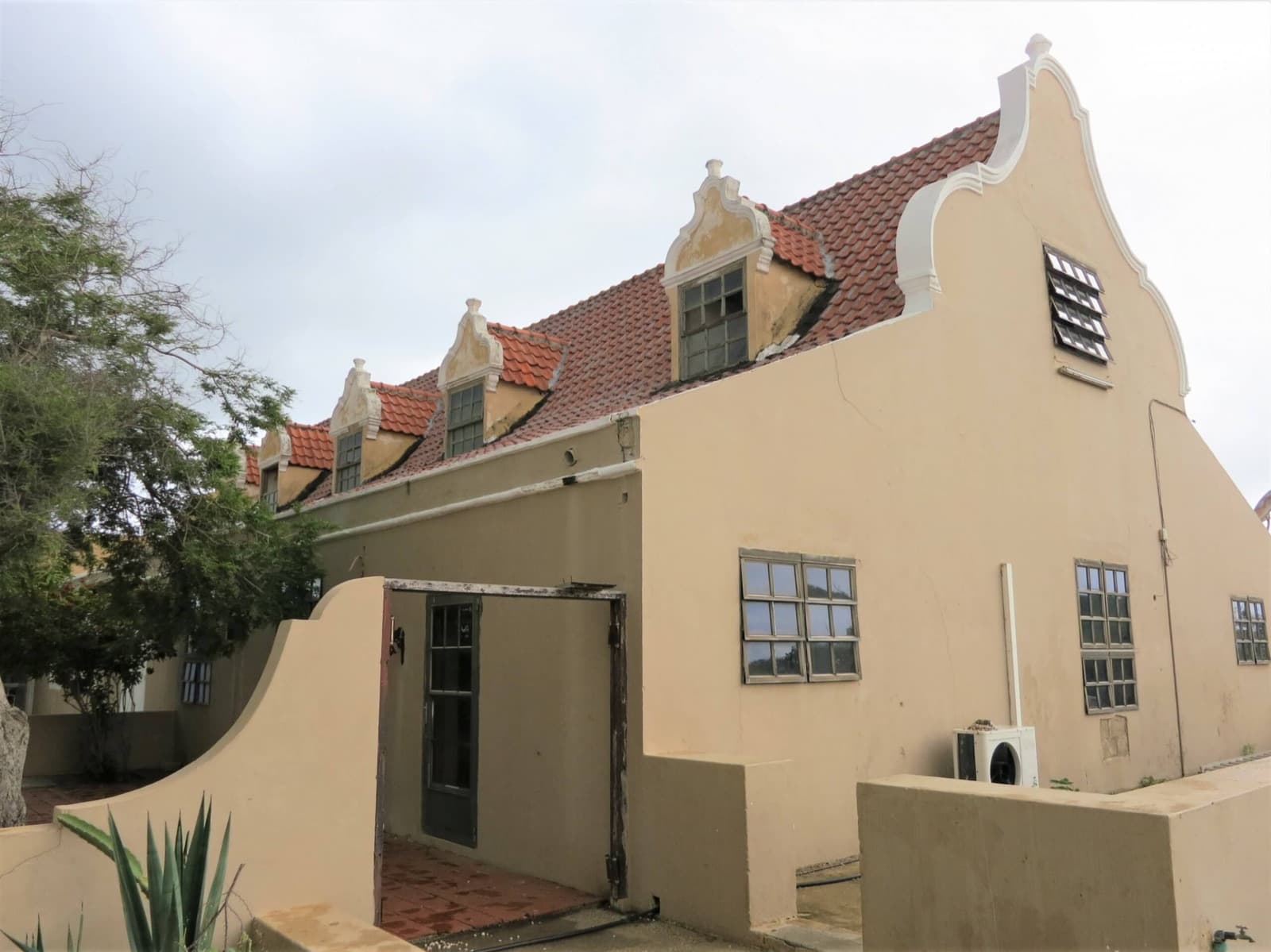
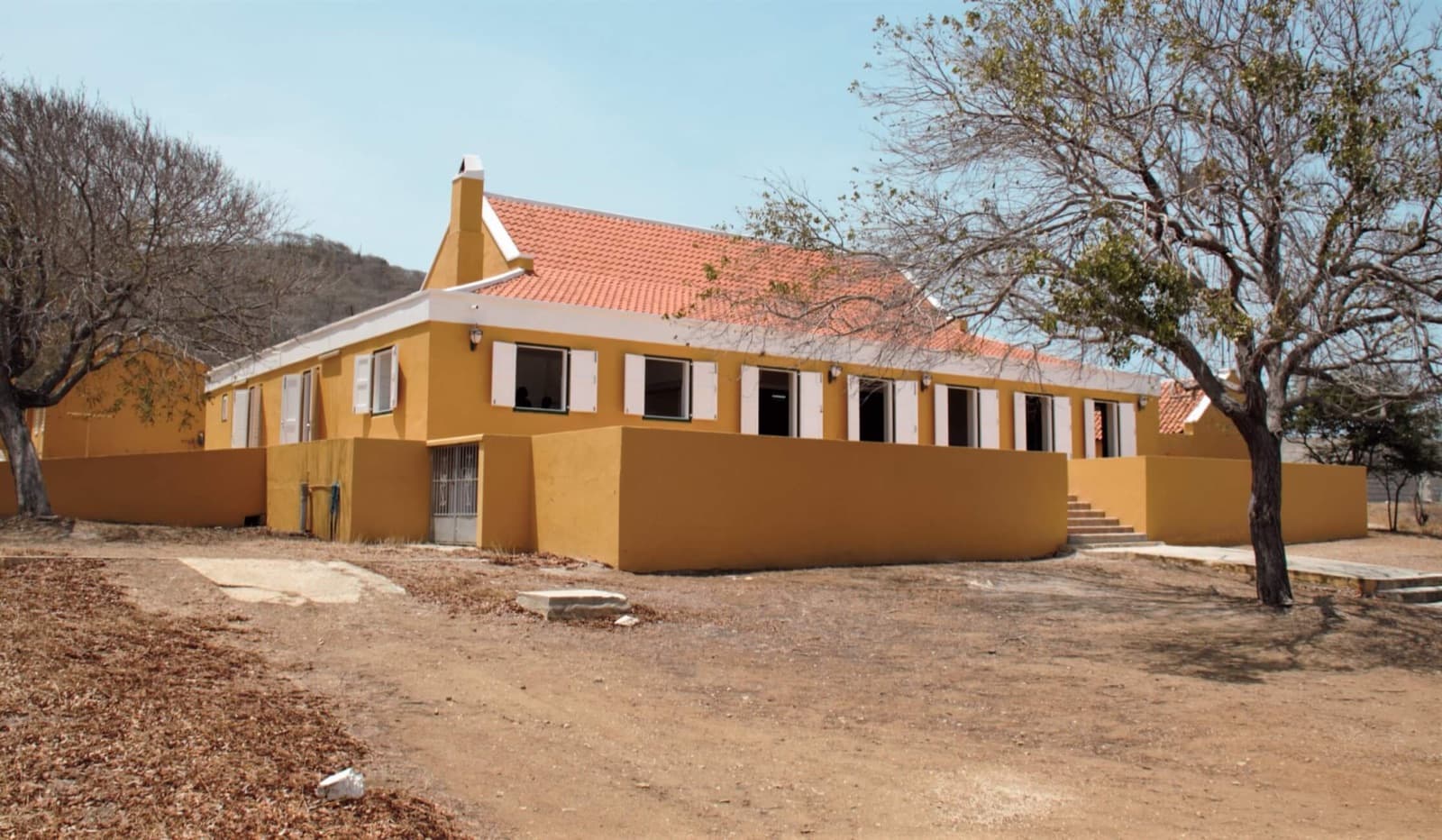
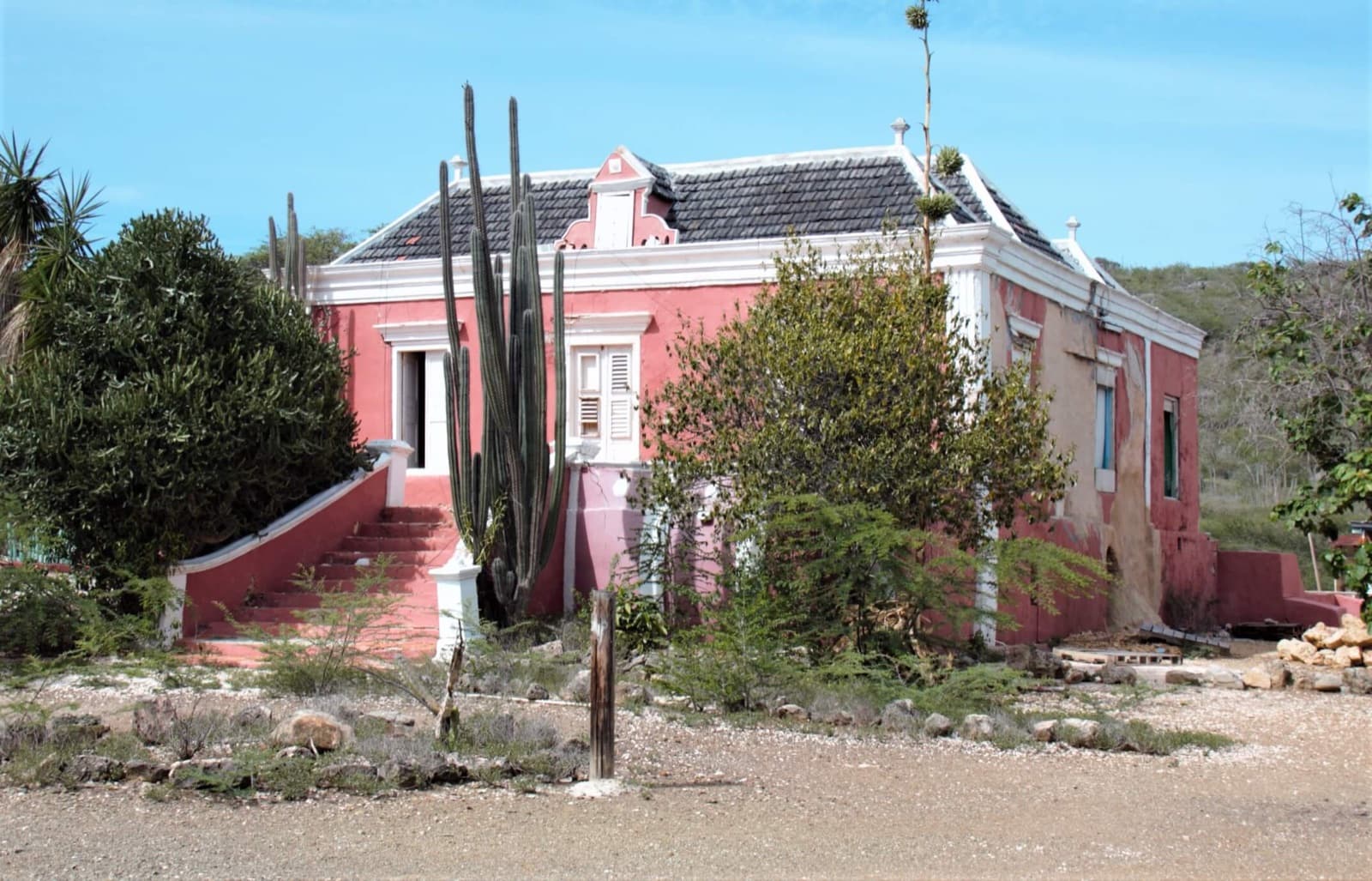
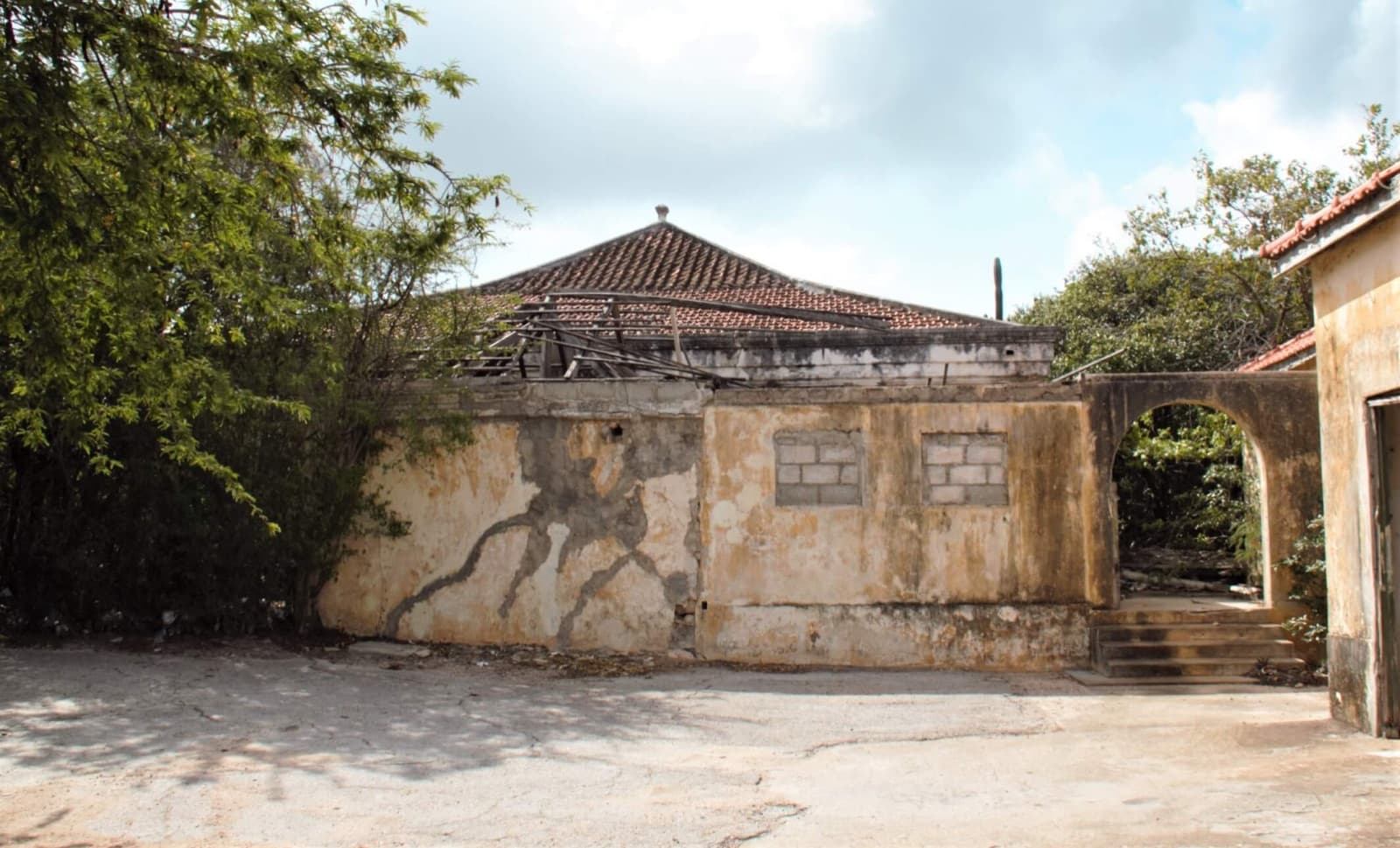
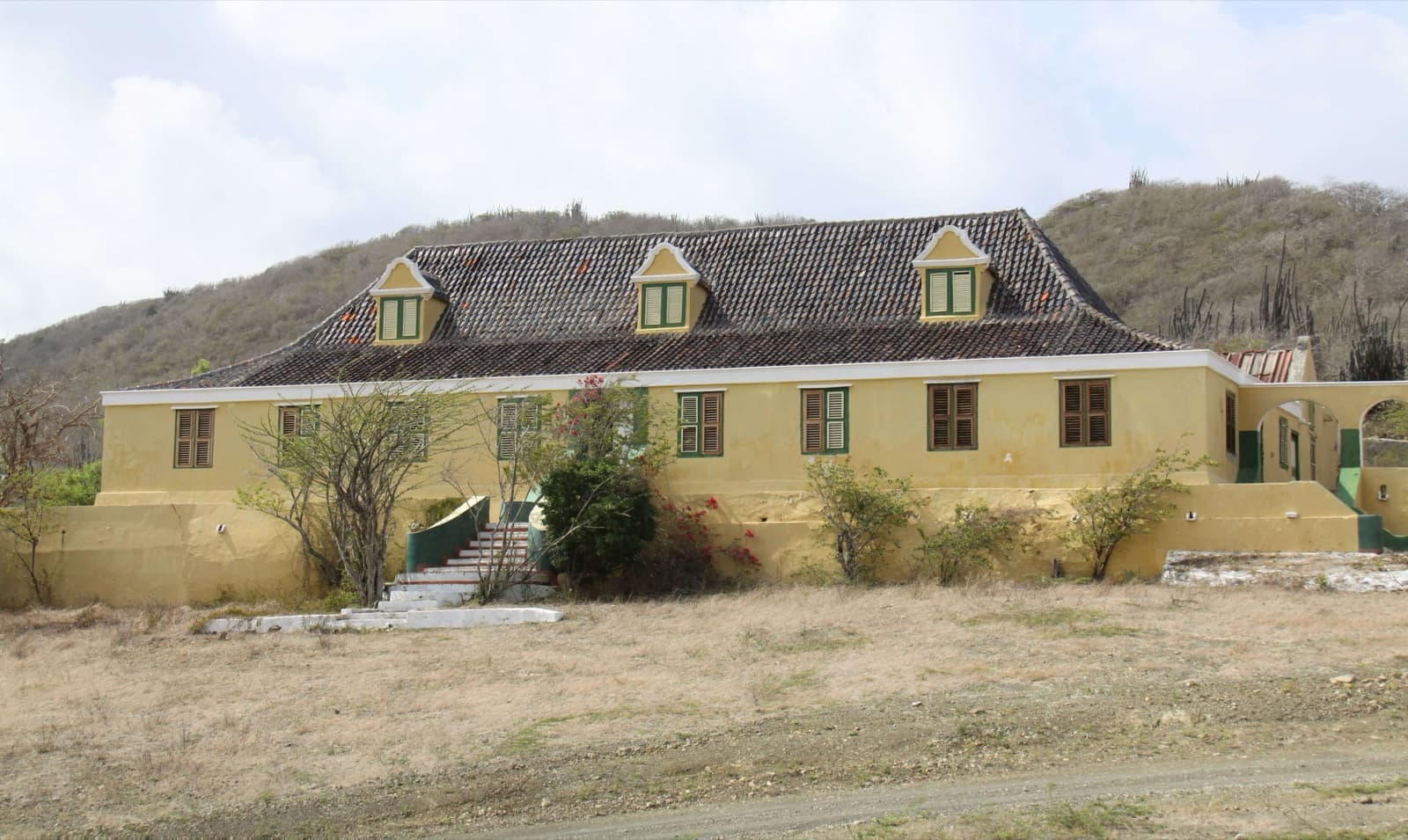
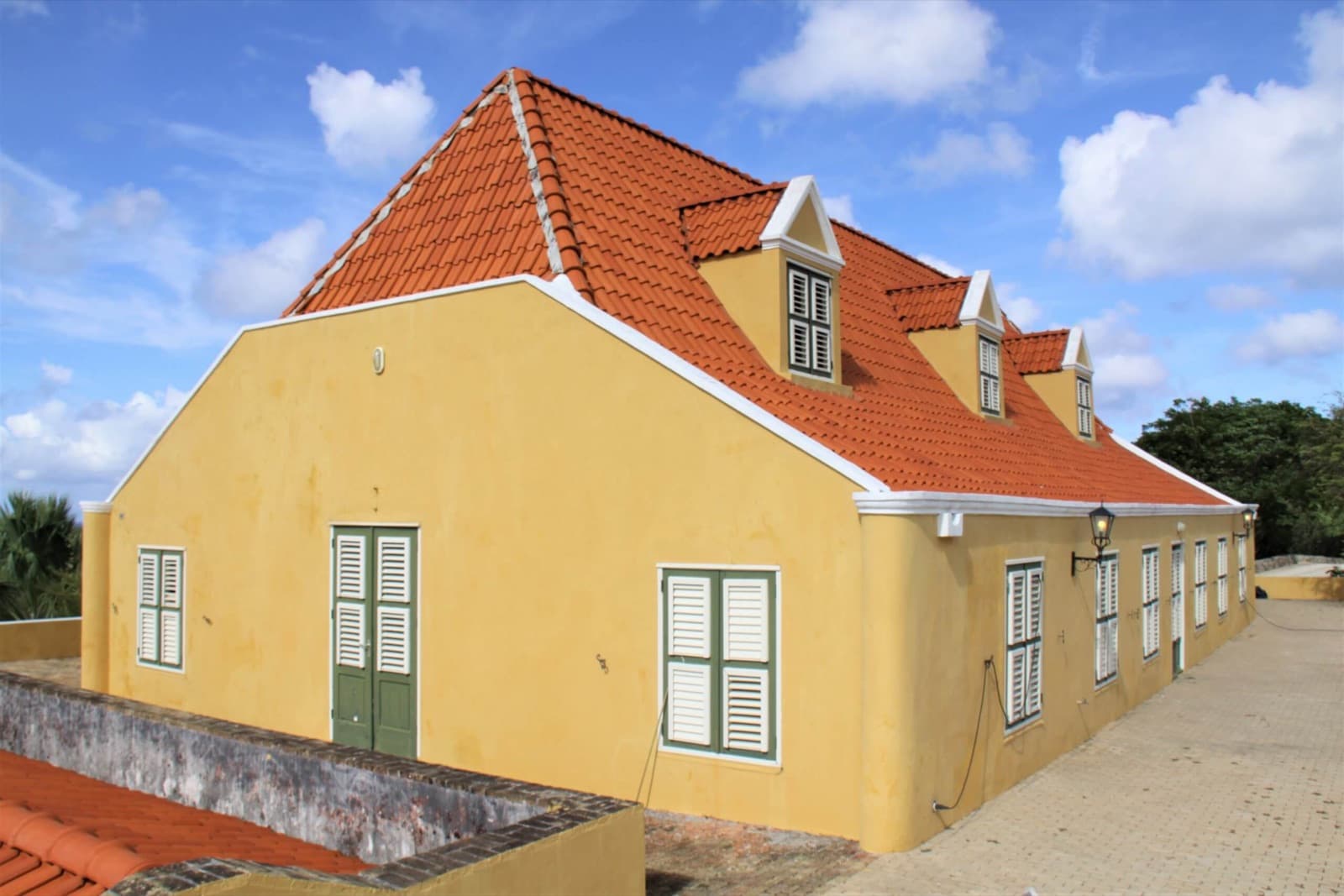
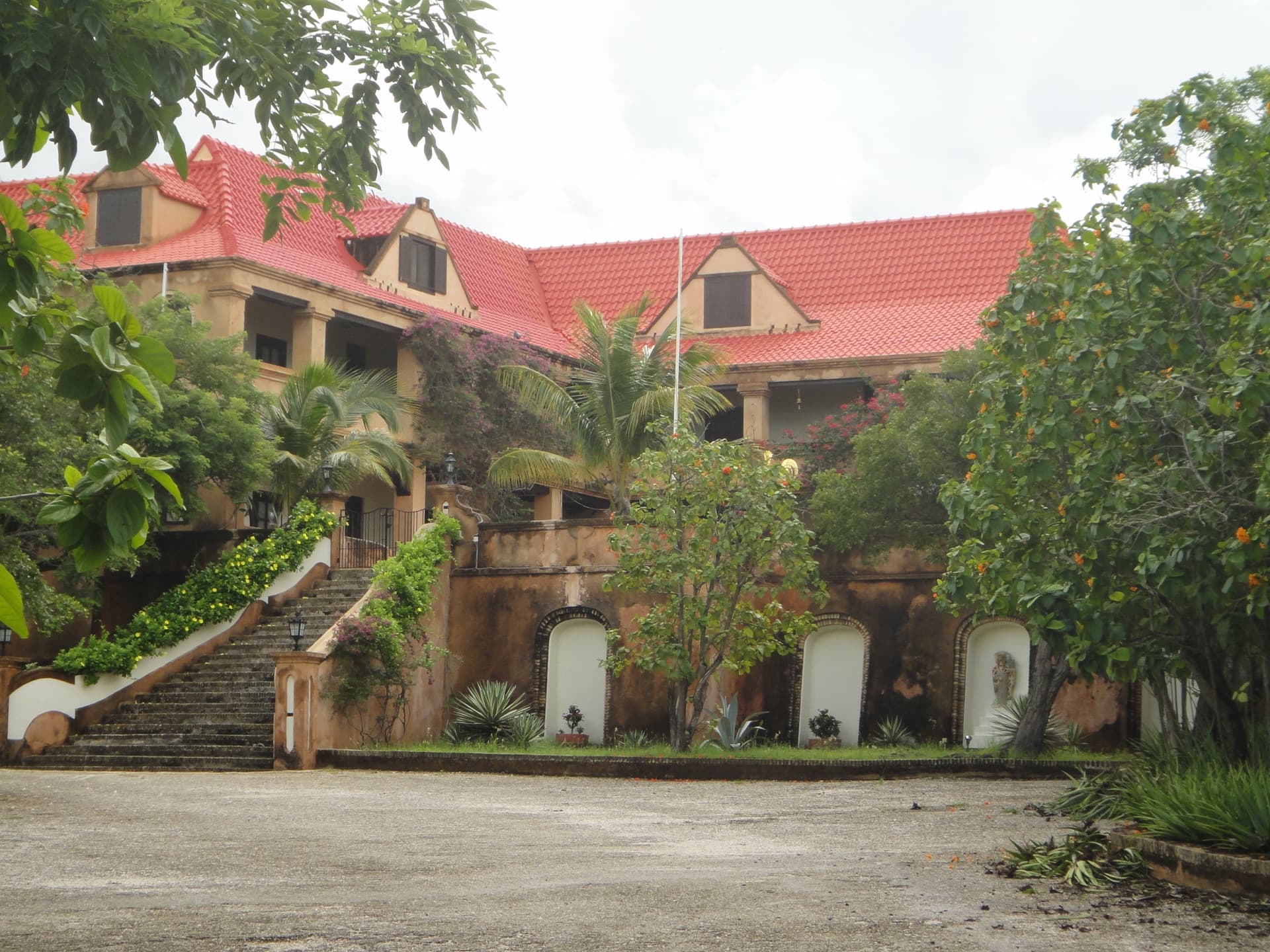
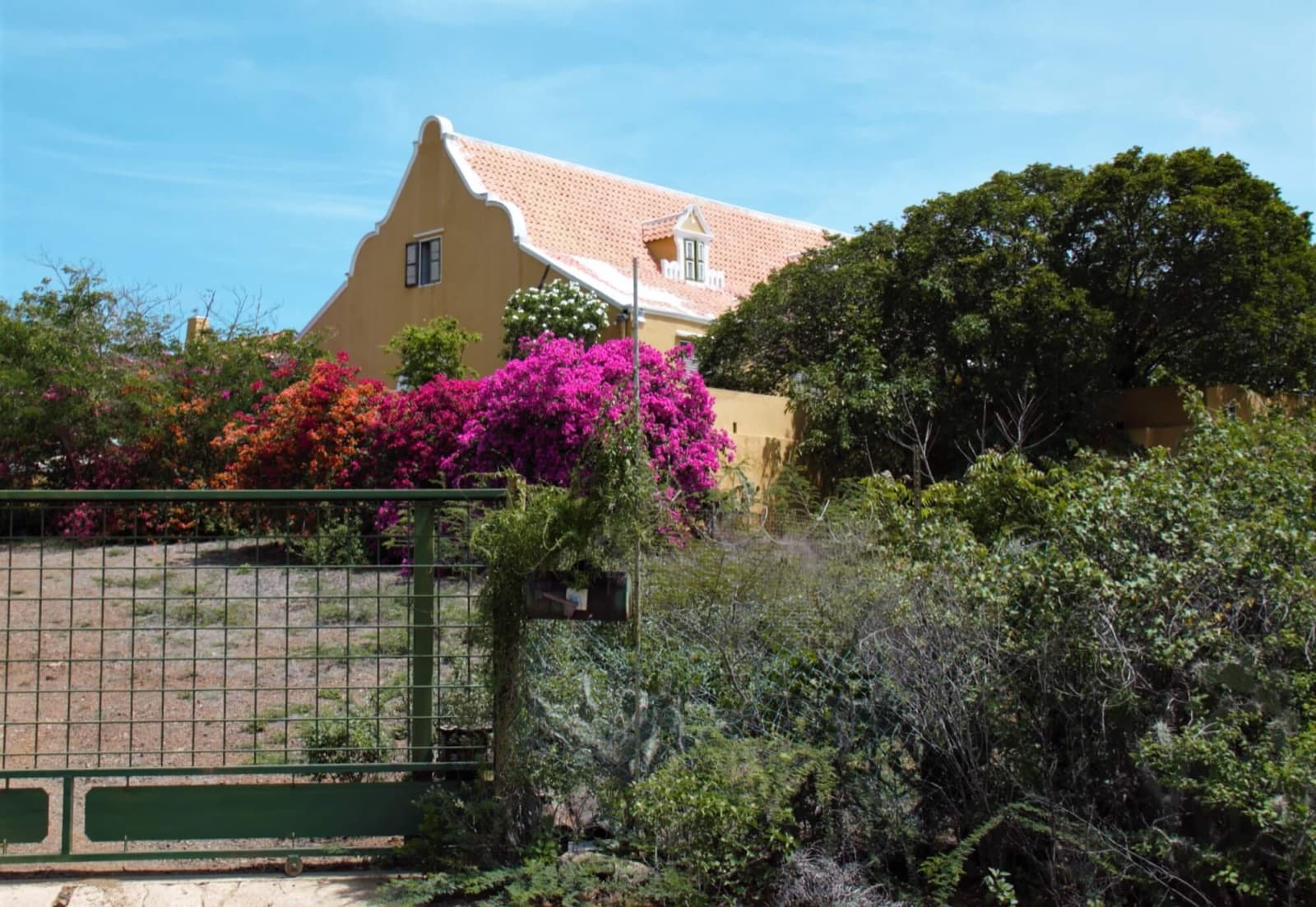
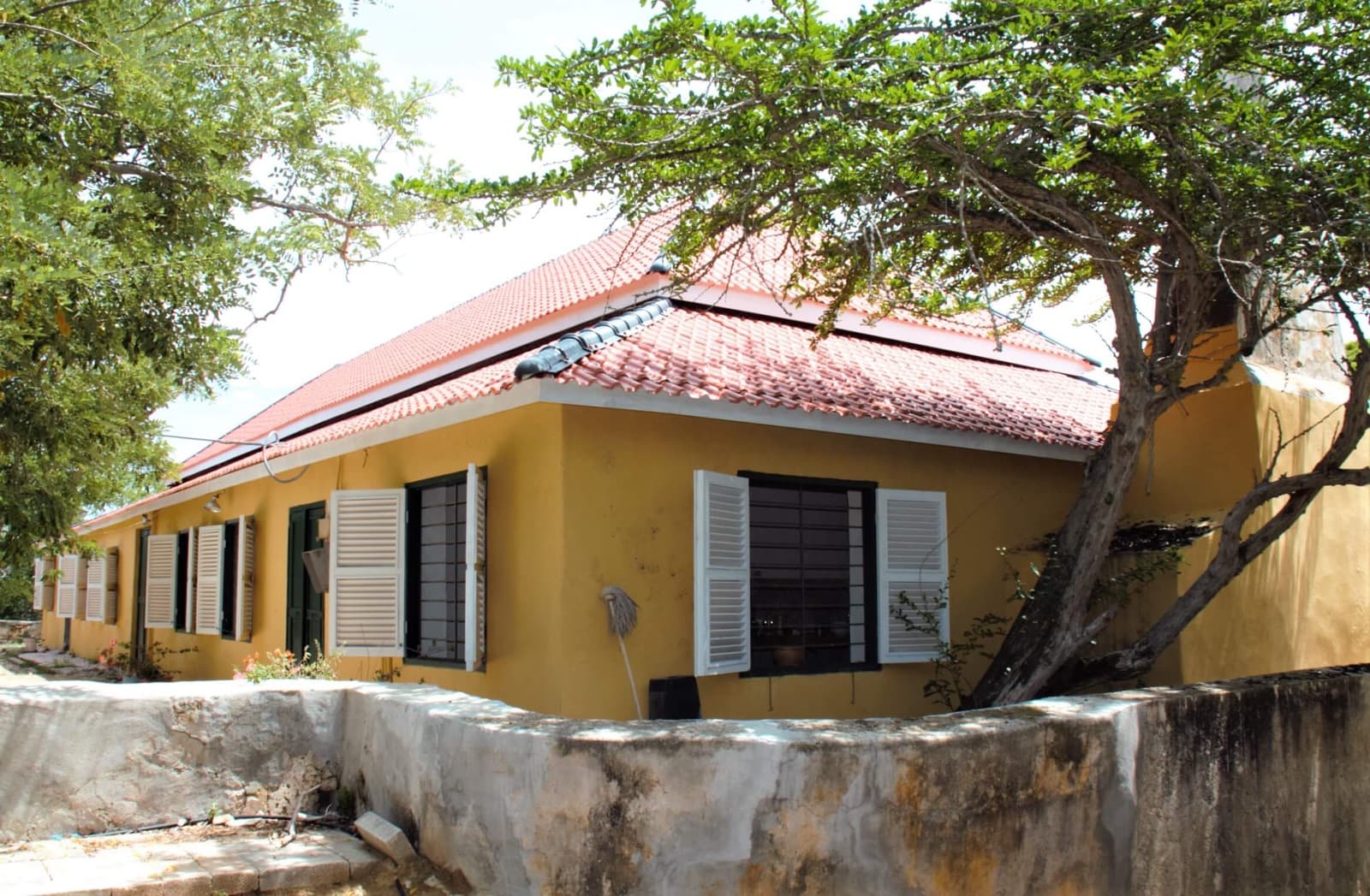
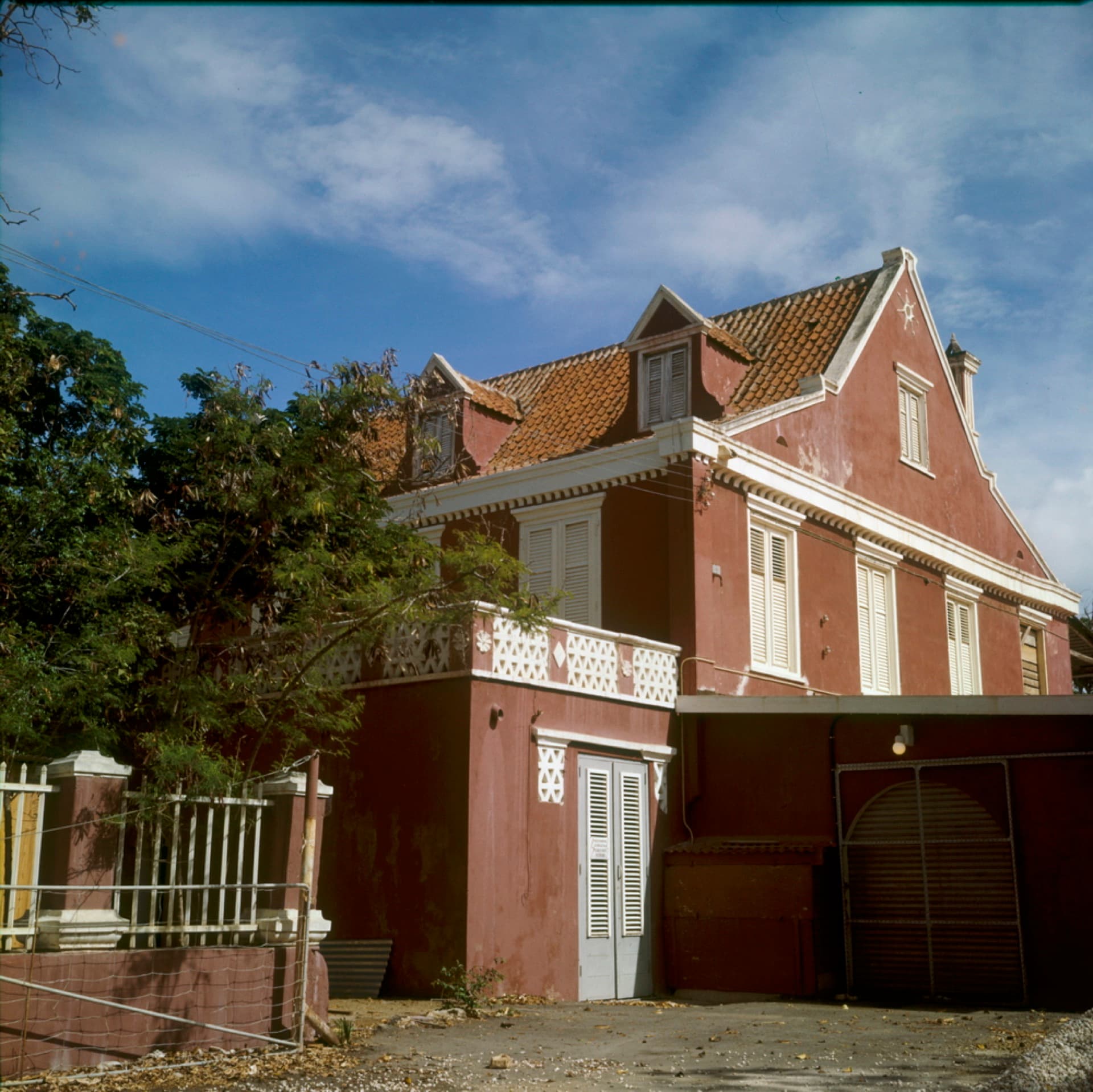
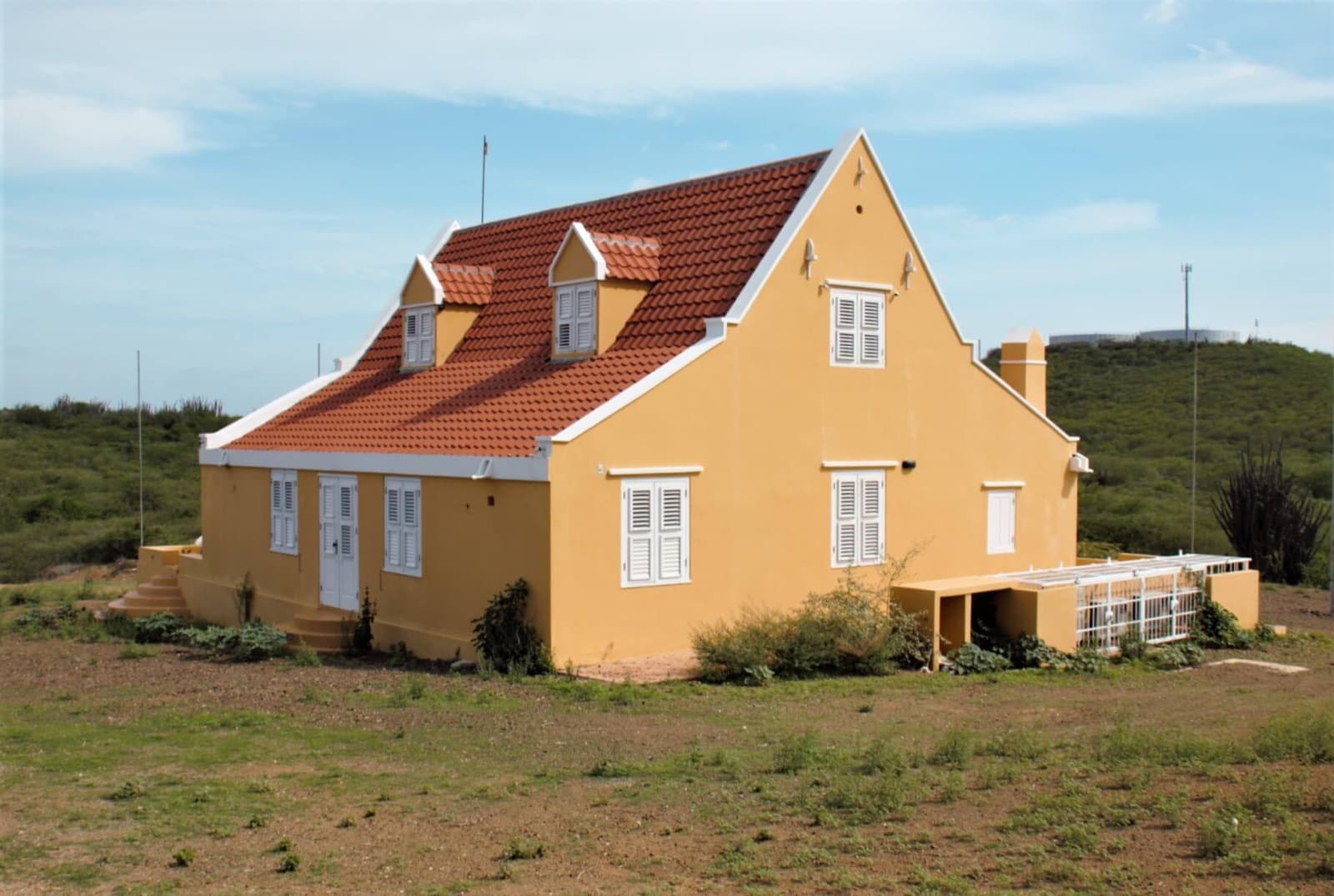
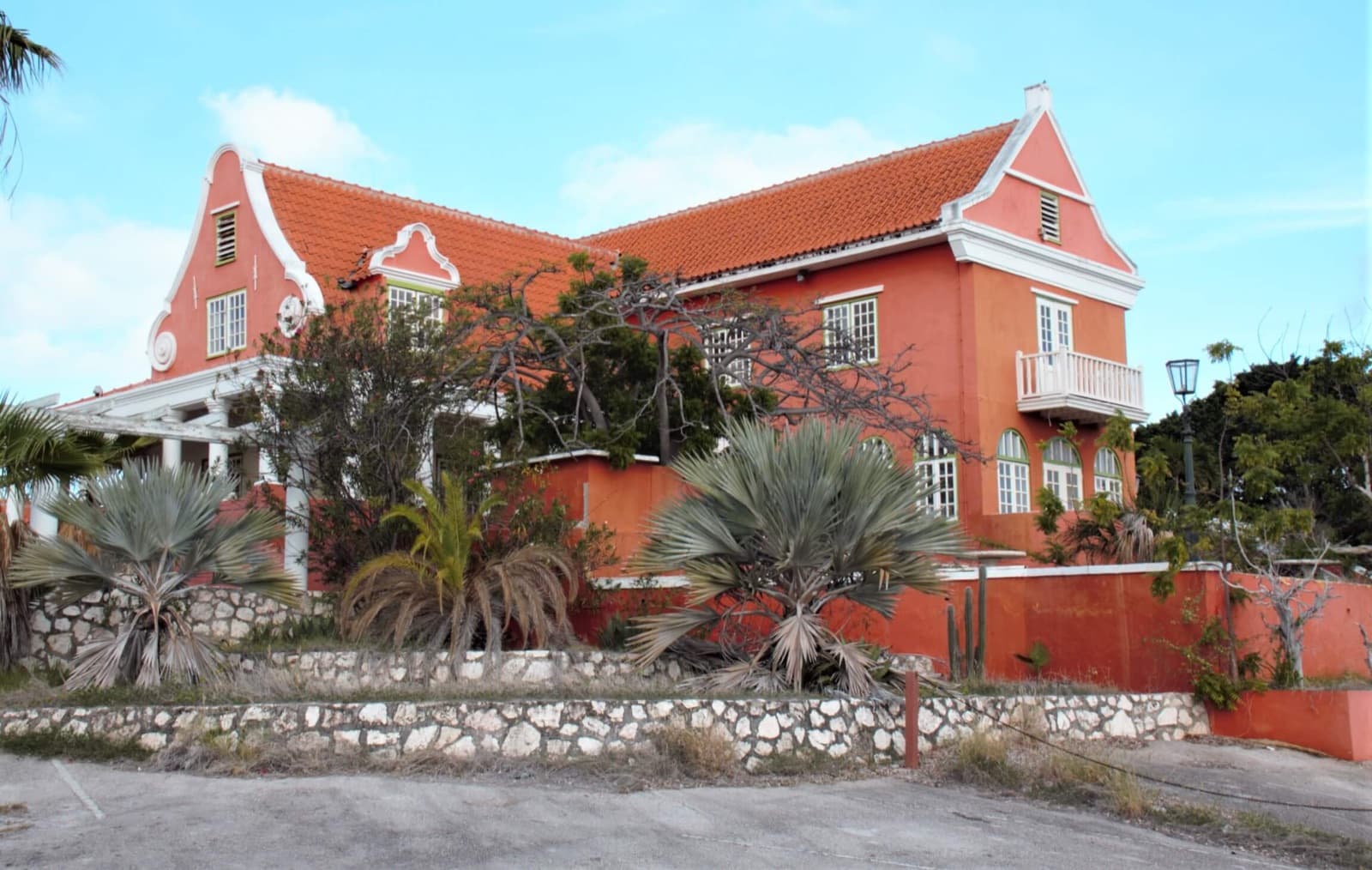
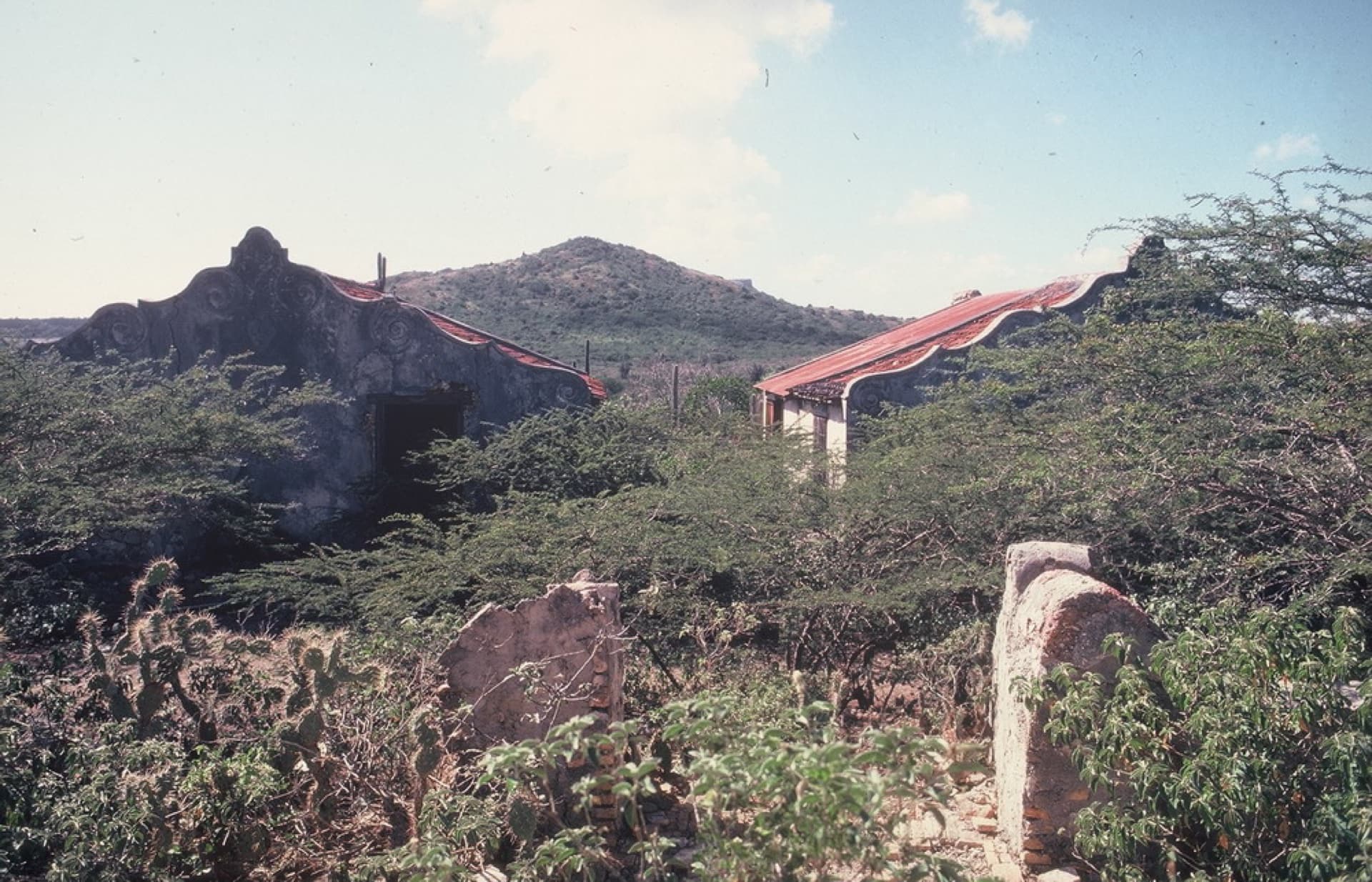
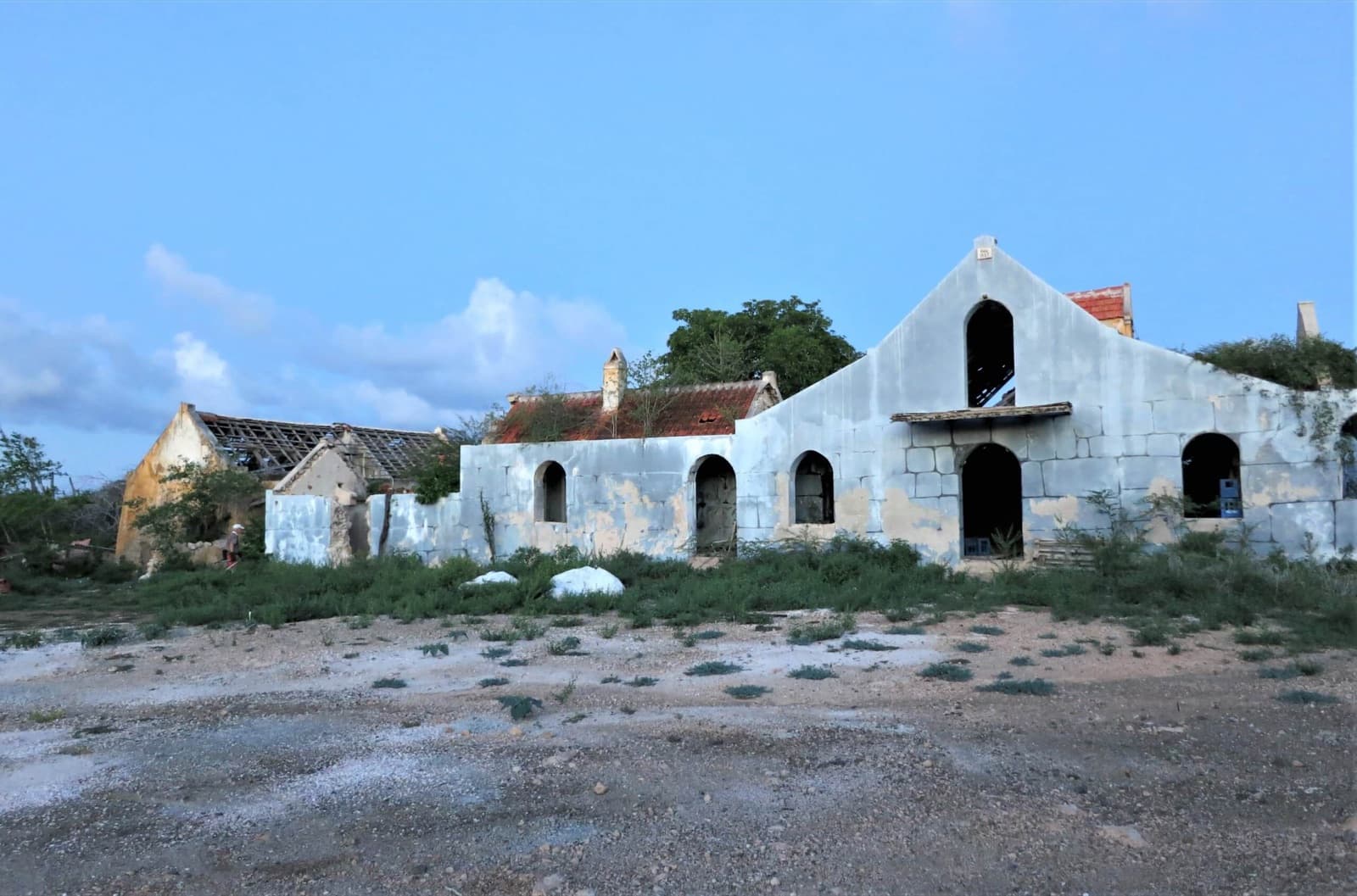
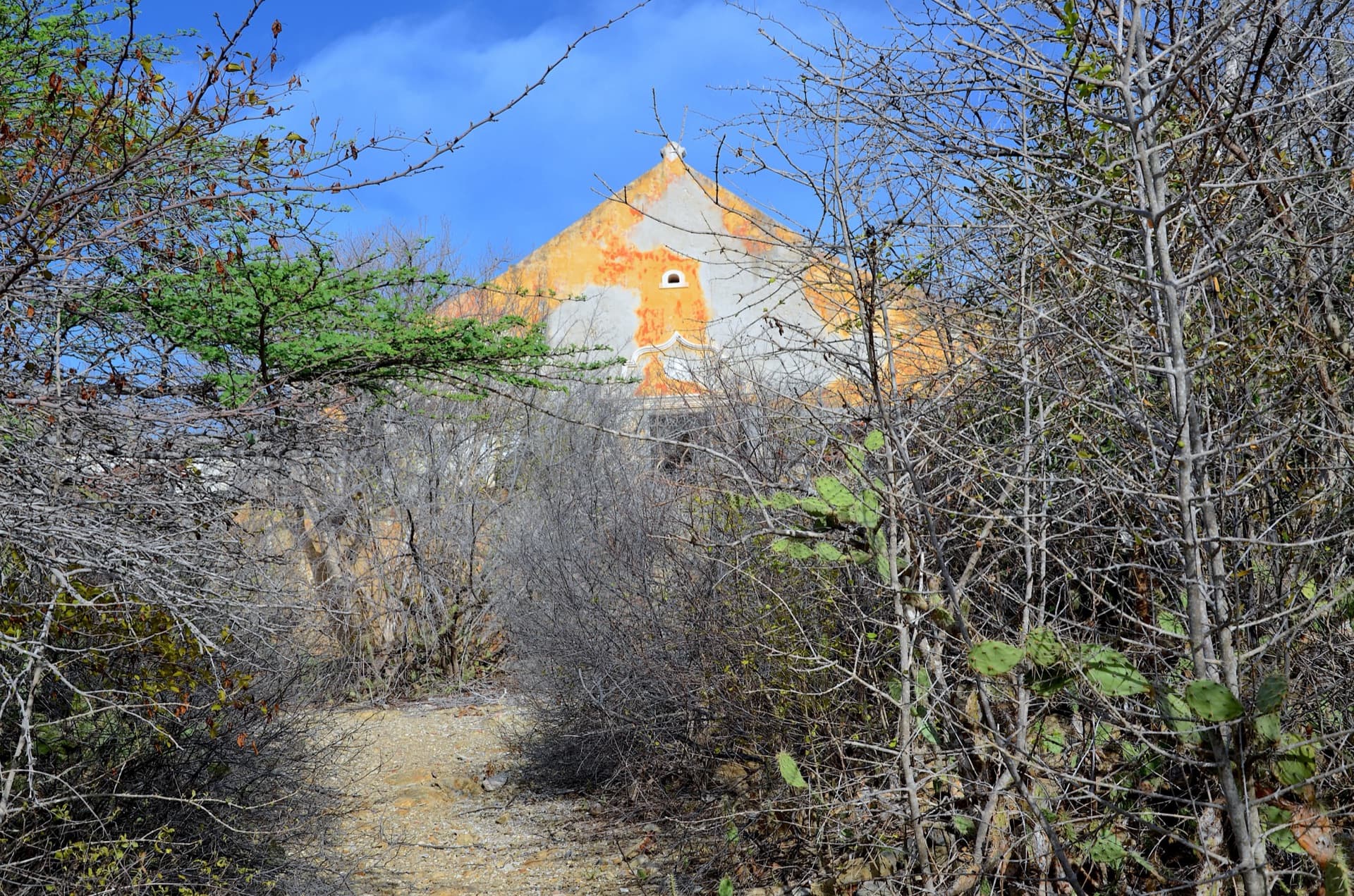
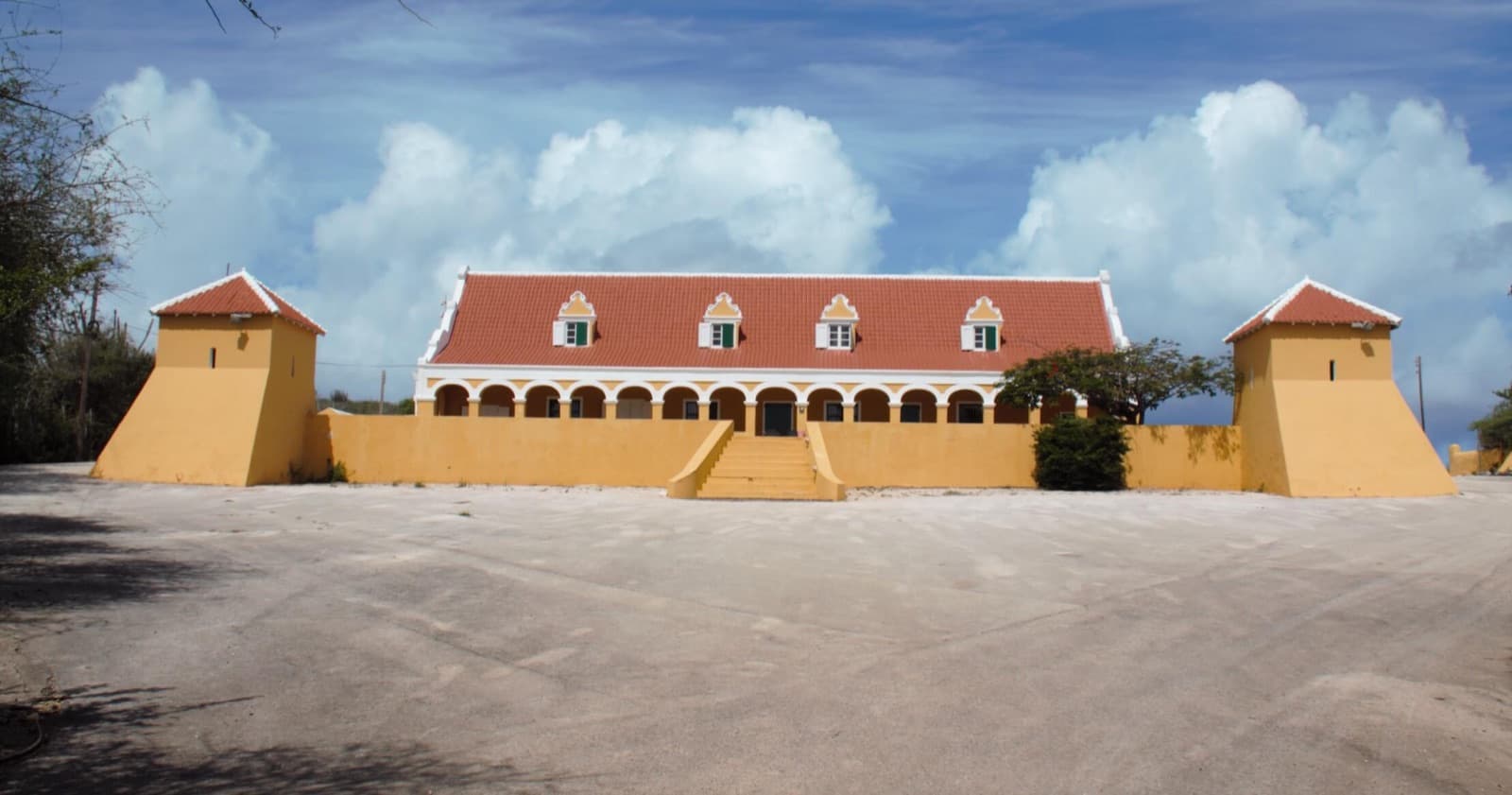
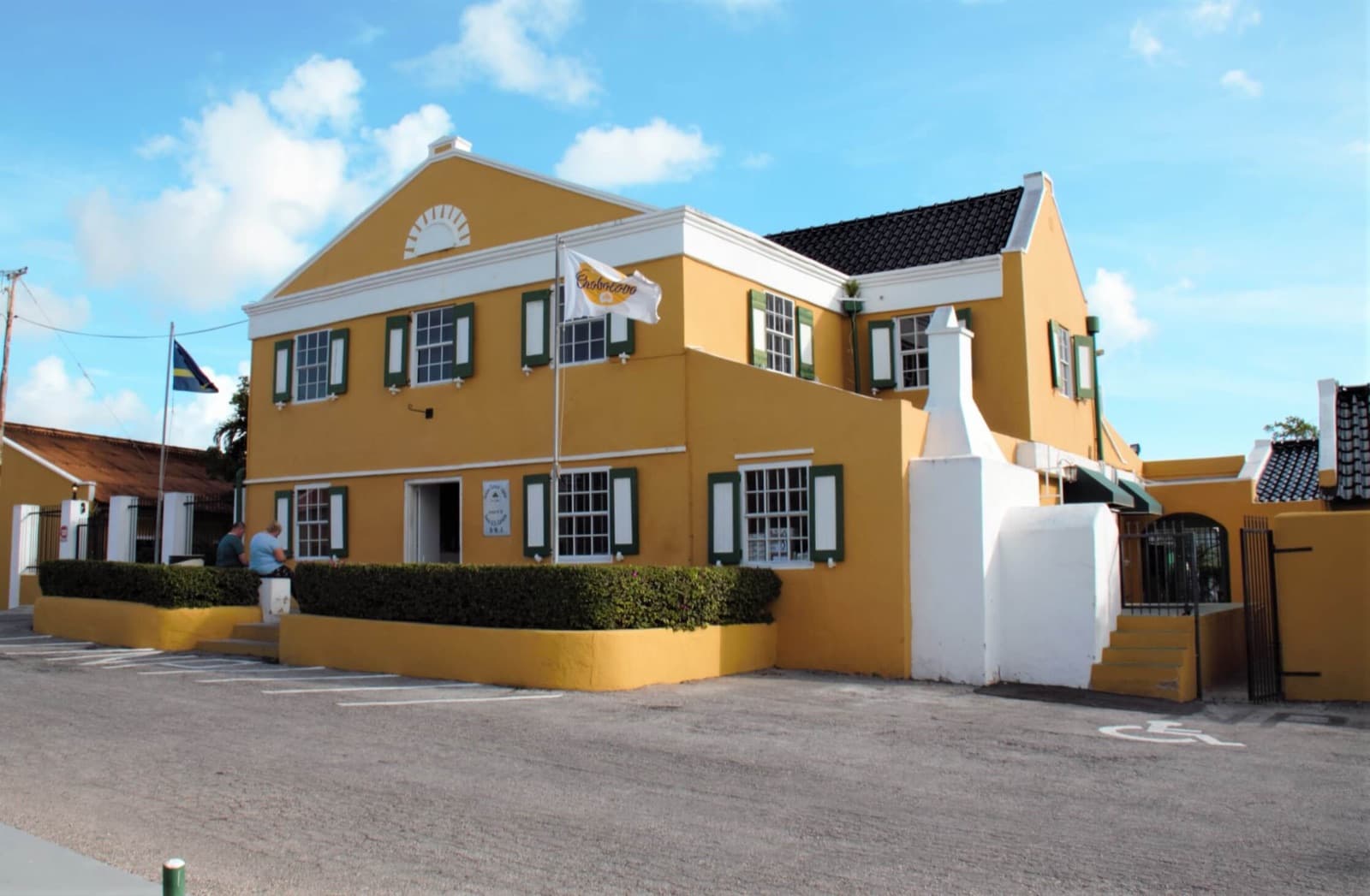
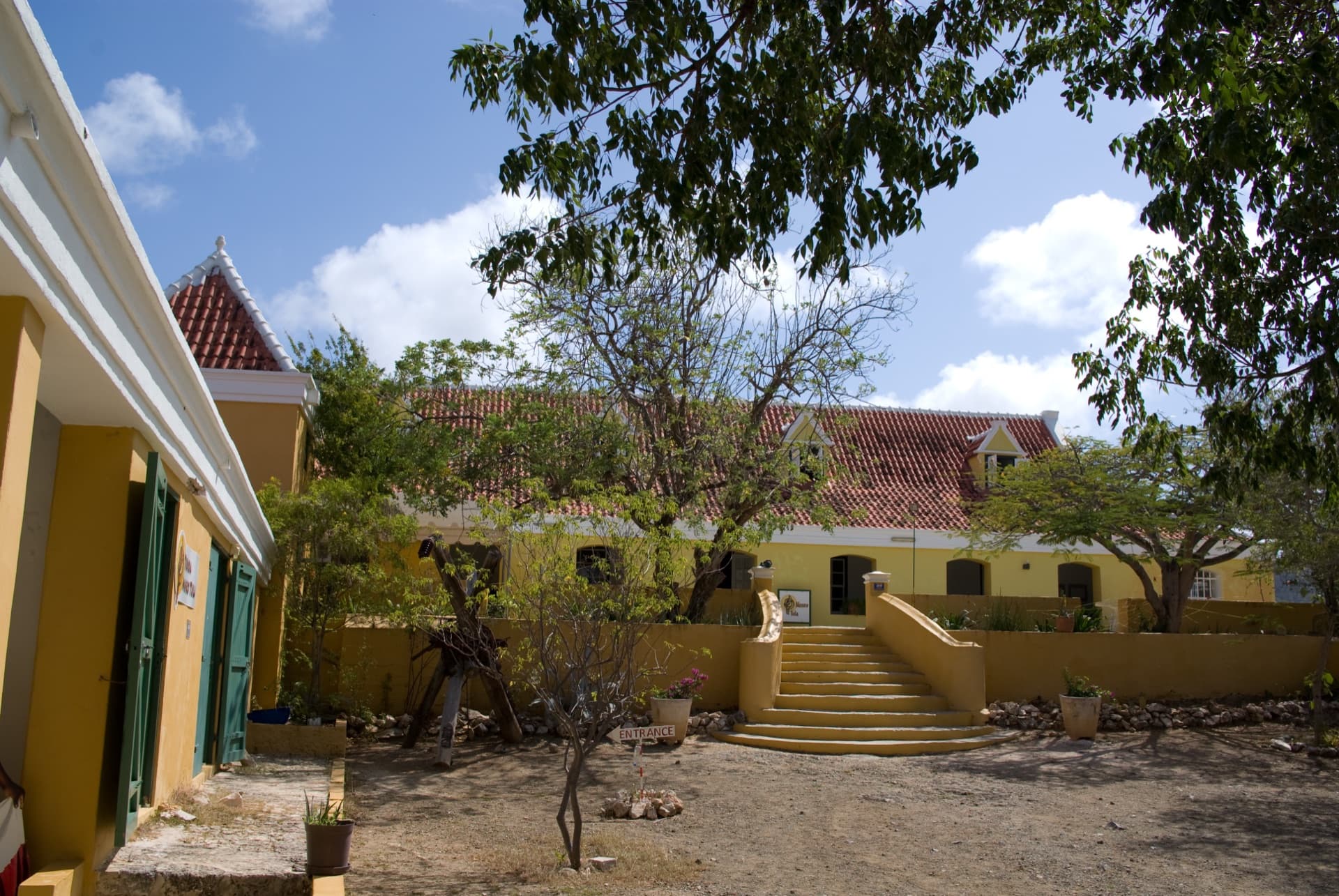
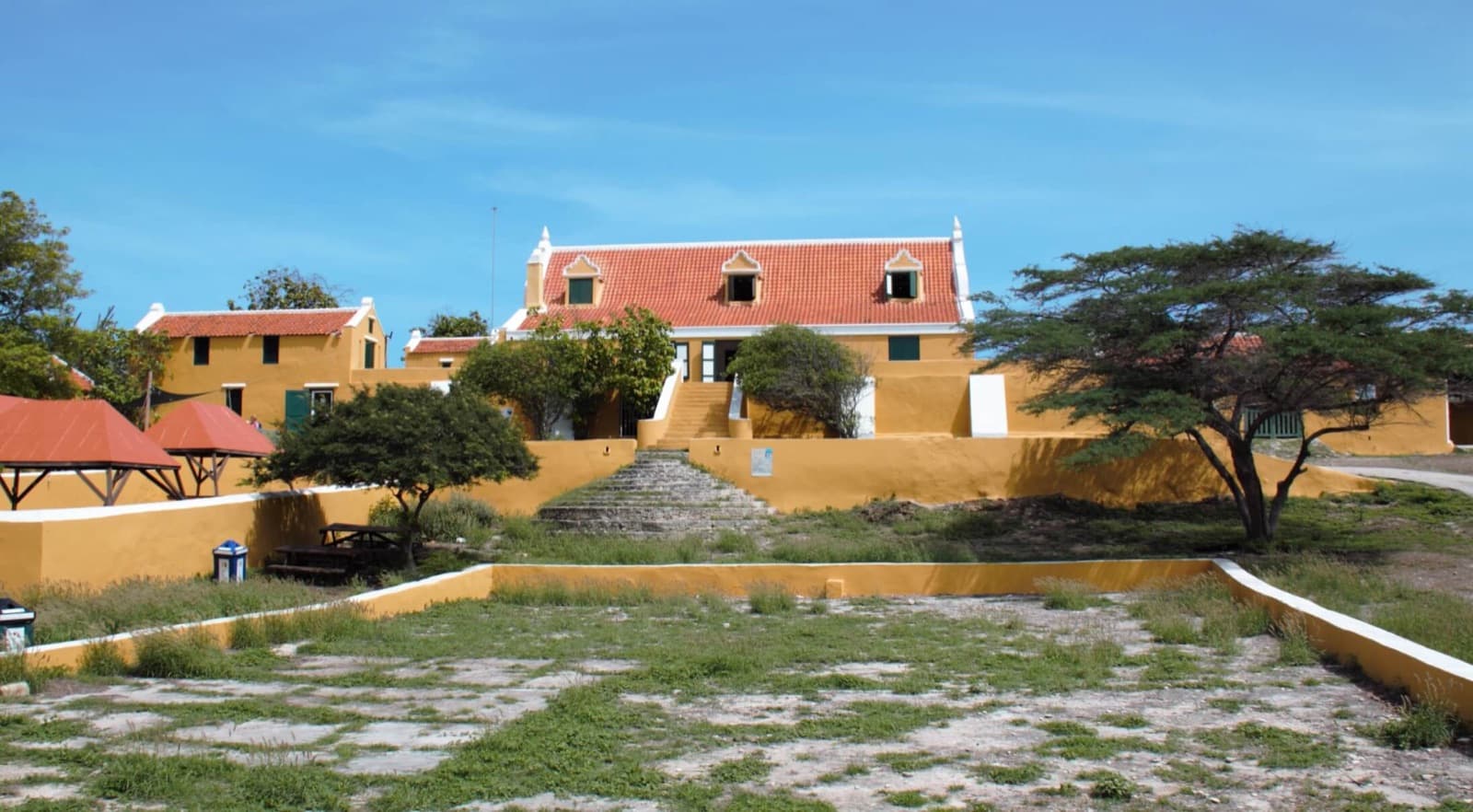
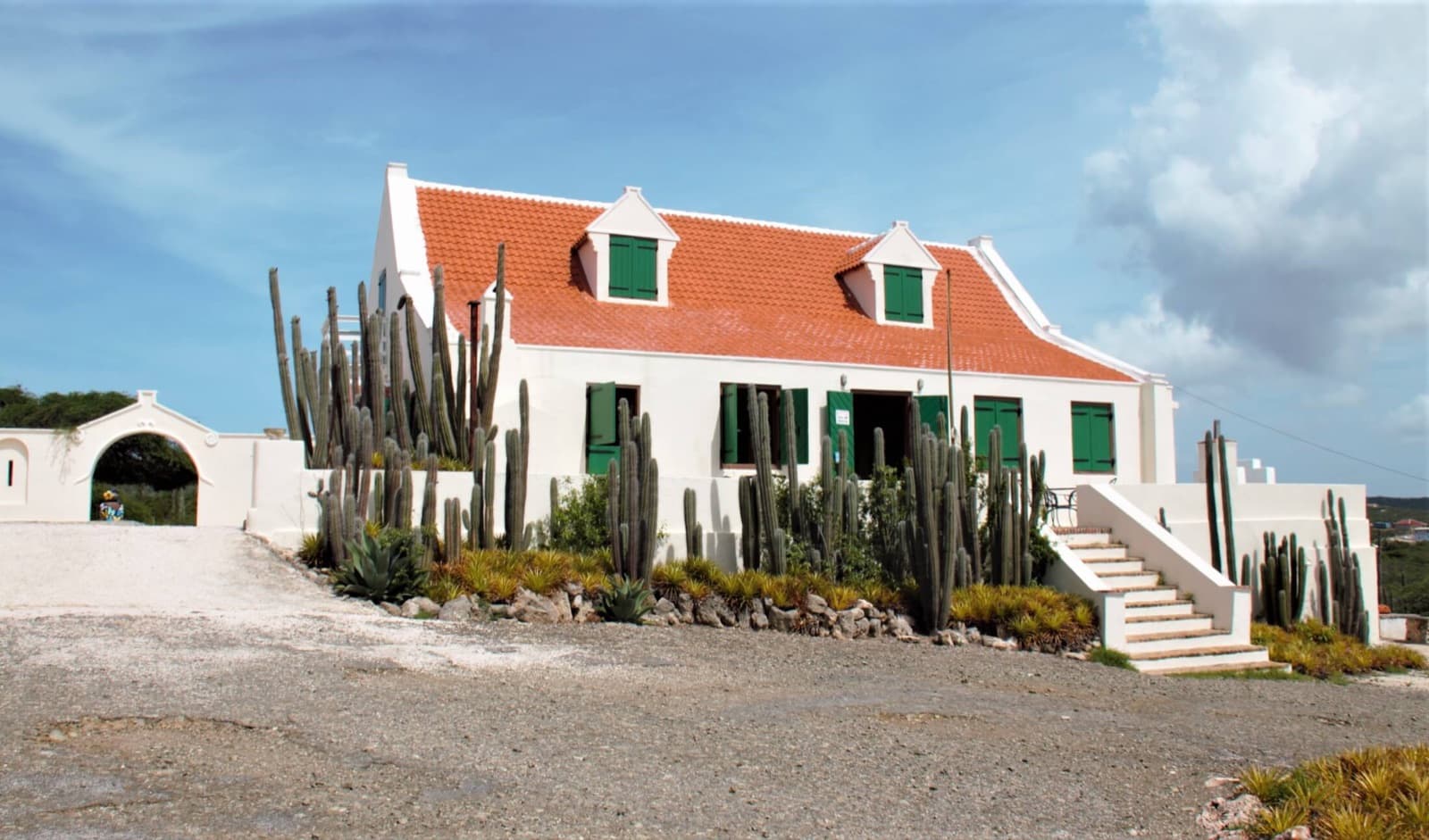
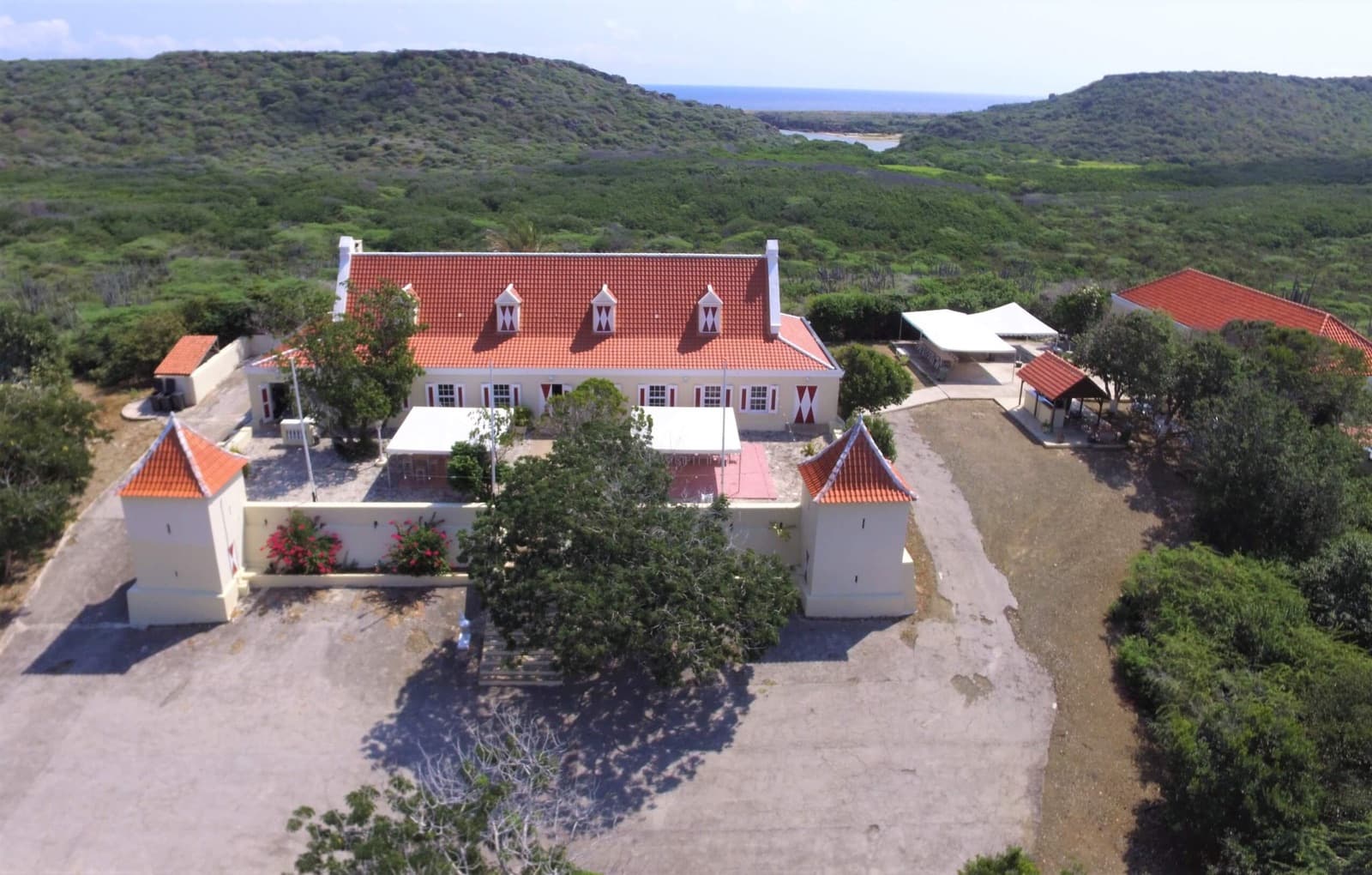
Landhuis Ascencion towers above the green hills of central Curaçao with its striking red-and-white shutters, a landmark visible from the road long before you reach the gates. The estate takes its name from a small indigenous settlement that once stood here: Pueblo de la Madre de Dios Ascencion, whose natural freshwater spring made the site valuable long before European arrival. Jurriaan Janszoon Exteen founded the plantation in 1672; the landhuis followed soon after. Its most distinctive architectural feature is a pair of imposing corner towers flanking the terrace — one of the few examples on Curaçao — which originally provided extra storage below and housed the plantation's pigeons on top, a food source kept by every self-respecting plantation owner of the era. The consistent water supply allowed sorghum, indigo, cotton, and later aloe to be cultivated, alongside herds of goats, sheep, cattle, and horses. Ascencion's fortunes rose again in 1884 when phosphate was discovered on the Seru Mainshi, part of the estate. The Curaçaosche Phosphaat Maatschappij Ascencion was founded the same year to exploit the find, part of an island-wide phosphate boom that followed the 1874 discovery on the Tafelberg near Santa Barbara. The current appearance owes much to architect Serge Alexeenko, who restored the house in 1963-1964 — the sandglass motif on the shutters is his addition, not historically original, but widely accepted as part of the landhuis' look today.
💡 Tip: The towers and their role as dovecotes are easiest to appreciate from the terrace side — walk around before leaving, the architecture makes more sense from there.