Bèk na guia di biaha

Guia di Espesie

The marine and land wildlife of Curaçao — what you can see, where to see it, and when.

Curaçao's coral reefs host over 400 species, and the island's dry-forest interior adds flamingos, parrots, iguanas, and more. This guide covers 30+ of the most visible and distinctive species — what they look like, where to spot them, and what makes each one worth looking for.

Green Sea Turtle (Chelonia mydas)

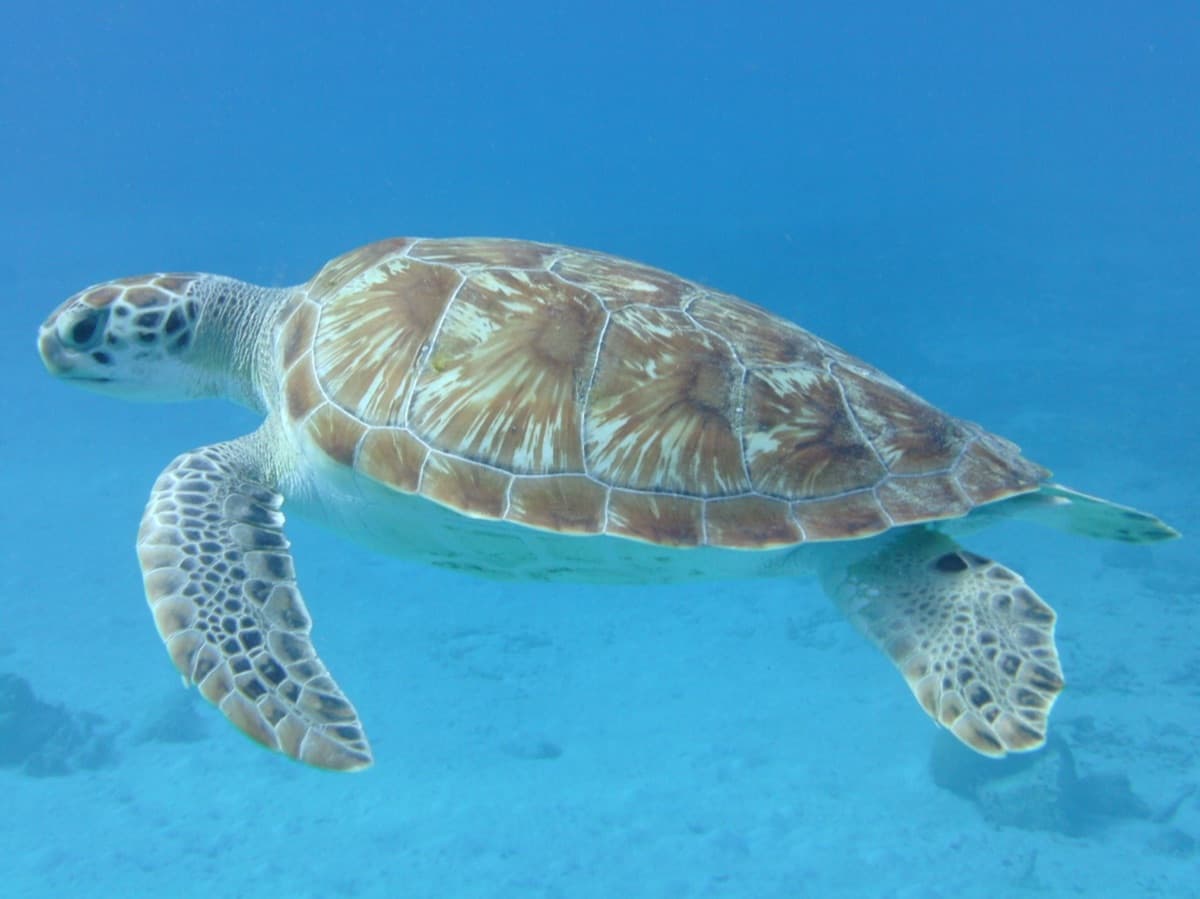
Green Sea Turtle (Chelonia mydas)

The green sea turtle is Curaçao's most commonly sighted turtle species, particularly at Playa Piskado (Turtle Beach) where individuals feed on sponges and fishermen's scraps daily. Adults can exceed 1 metre in shell length and weigh 150 kg. They're herbivorous as adults — mostly sea grass and algae — which is the 'green' in the name (the fat layer turns greenish from chlorophyll). They surface every 5-10 minutes to breathe during active foraging. Protected species; no touching. Best seen: Playa Piskado, Playa Lagun, Alice in Wonderland (Playa Kalki).

💡 Tip: Green turtles swim with a sculling motion using both front flippers simultaneously. Hawksbills flap alternately. That's how to tell them apart from above.
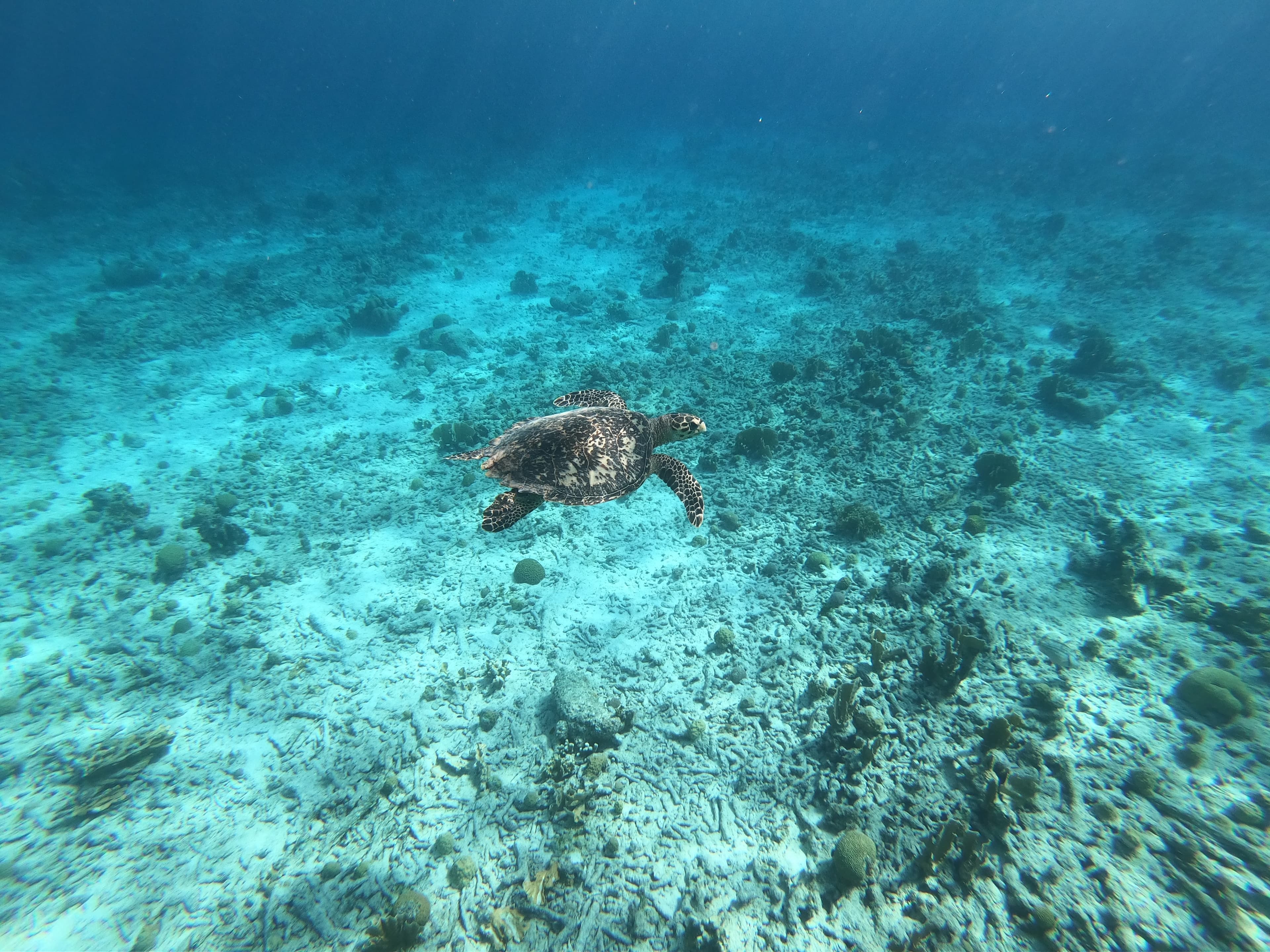
Hawksbill Turtle (Eretmochelys imbricata)

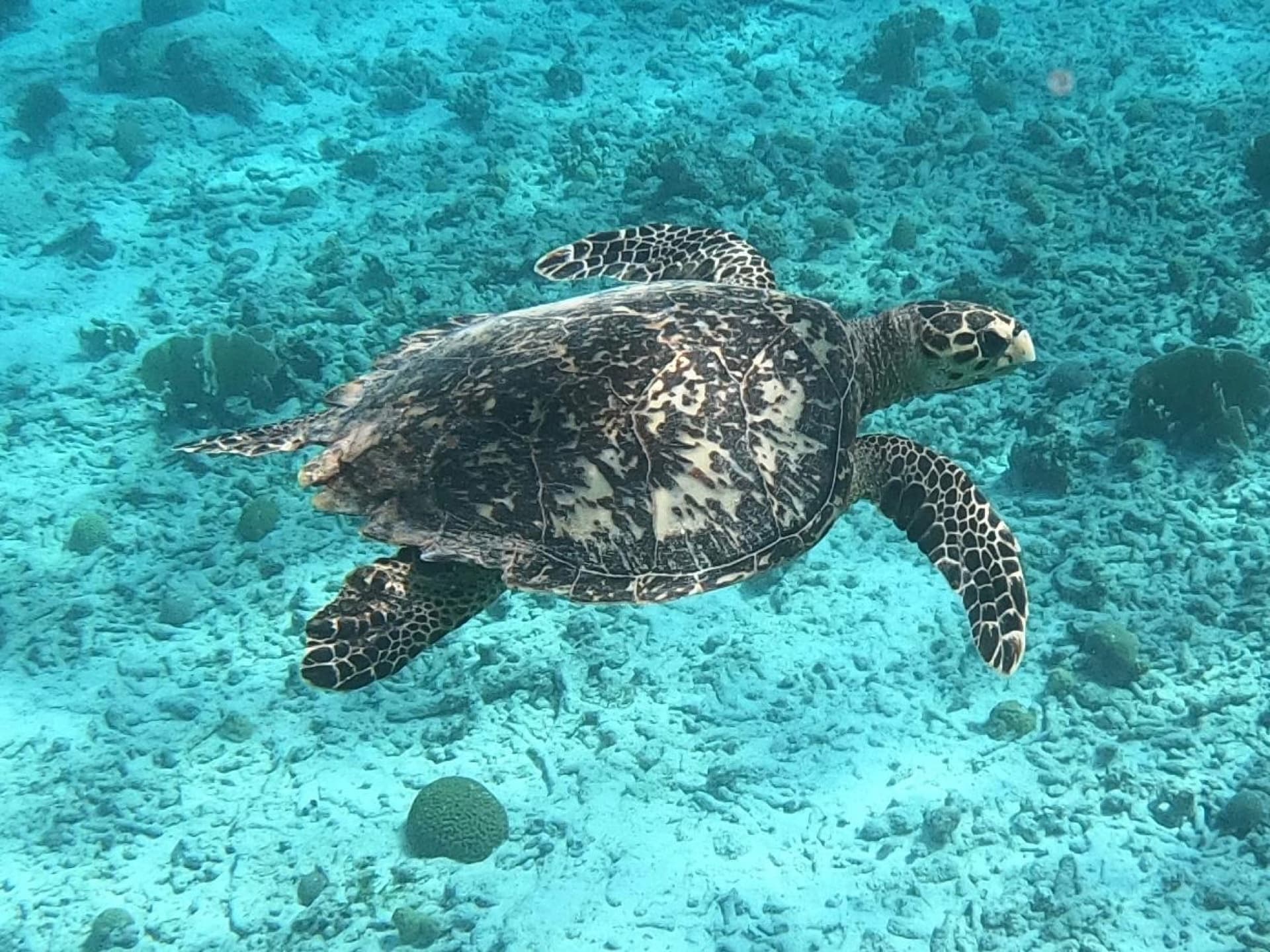
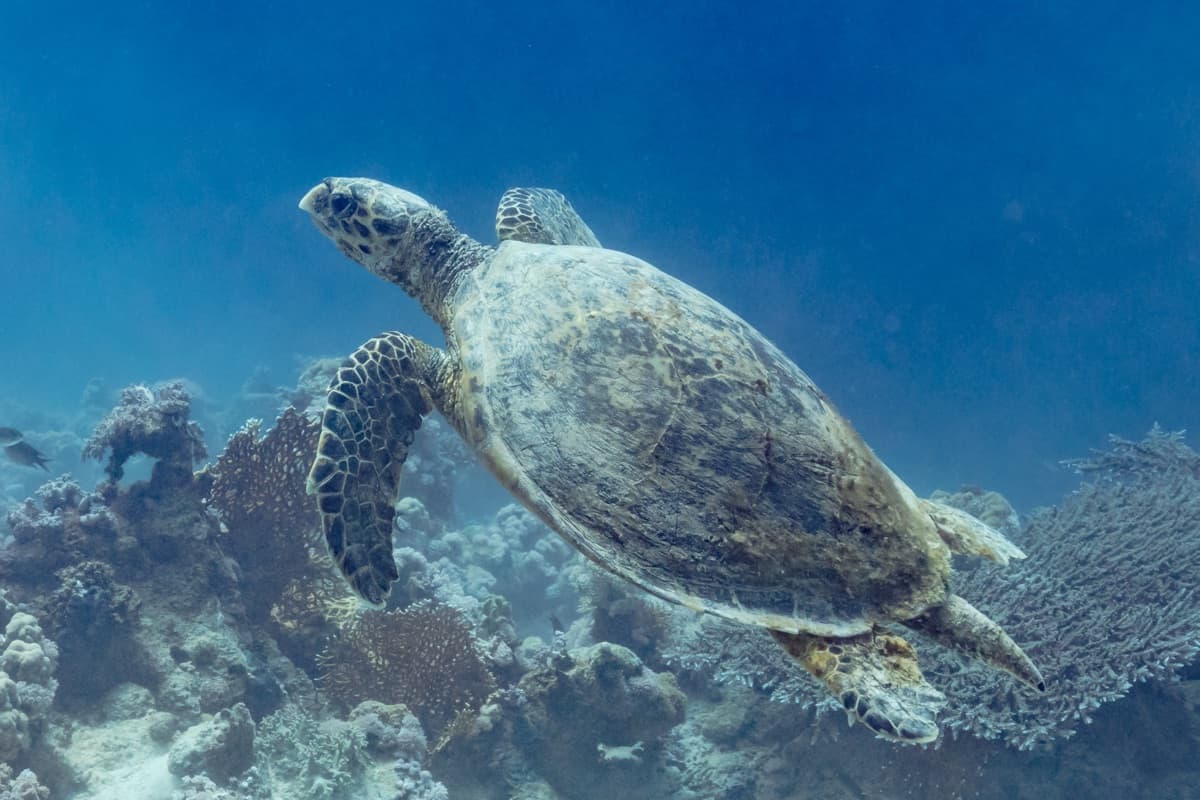
Hawksbill Turtle (Eretmochelys imbricata)

The hawksbill is the more elusive of Curaçao's regularly-sighted turtles — smaller than the green (up to 90 cm shell length), with a distinctive pointed 'beak' and overlapping scutes on the carapace. They're specialists: they eat sponges almost exclusively. On Curaçao's reefs you'll find them methodically biting chunks from barrel sponges and tube sponges at 6-15 metres. Critically endangered globally; seeing one is a real encounter. Best seen: Playa Lagun, Santa Martha, Alice in Wonderland, Porto Mari outer reef.

💡 Tip: Their amber-and-brown shell pattern was historically harvested for 'tortoiseshell' — jewellery, eyewear, carvings. The species is protected everywhere now; international trade is banned.

Loggerhead Turtle (Caretta caretta)

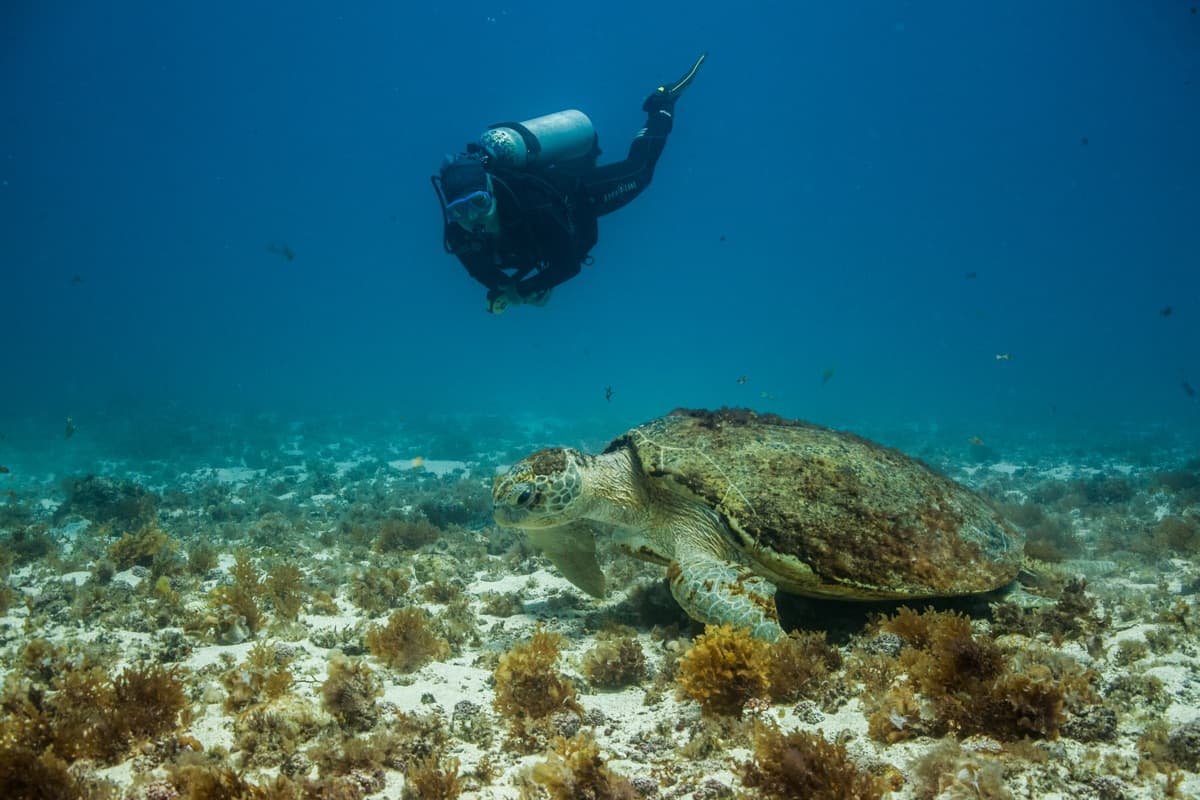
Loggerhead Turtle (Caretta caretta)

The loggerhead is the rarer visitor of Curaçao's three turtle species — larger than either green or hawksbill (up to 110 cm shell length) with a huge head and powerful jaws adapted to crushing molluscs and crustaceans. They're carnivorous, unlike the mostly-herbivorous green. Sightings are less predictable; occasional encounters on the offshore reefs of Klein Curaçao and the far north coast. Best seen: Klein Curaçao outer reefs, occasional at Watamula.

💡 Tip: The head size relative to the body is the quick ID — loggerheads look 'big-headed'. Greens and hawksbills have proportionally smaller heads.

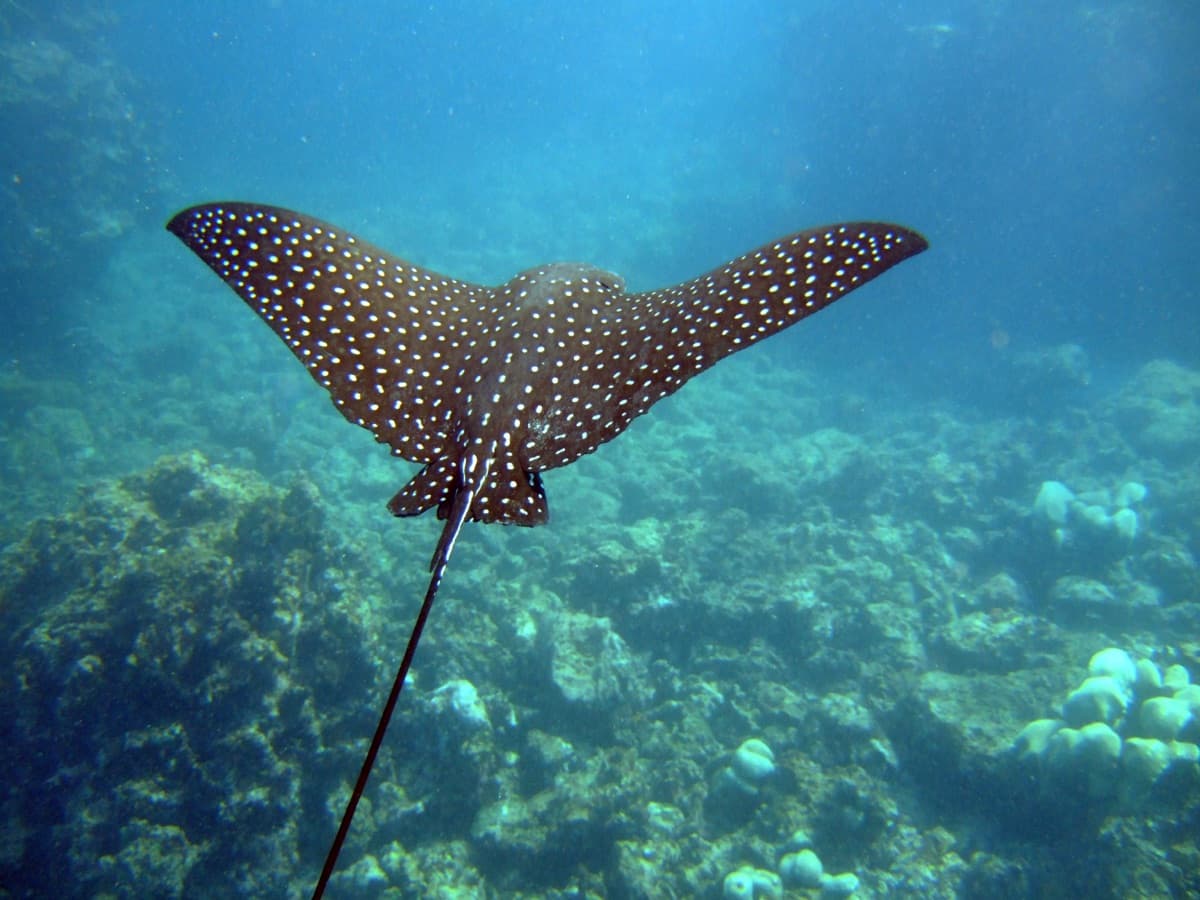
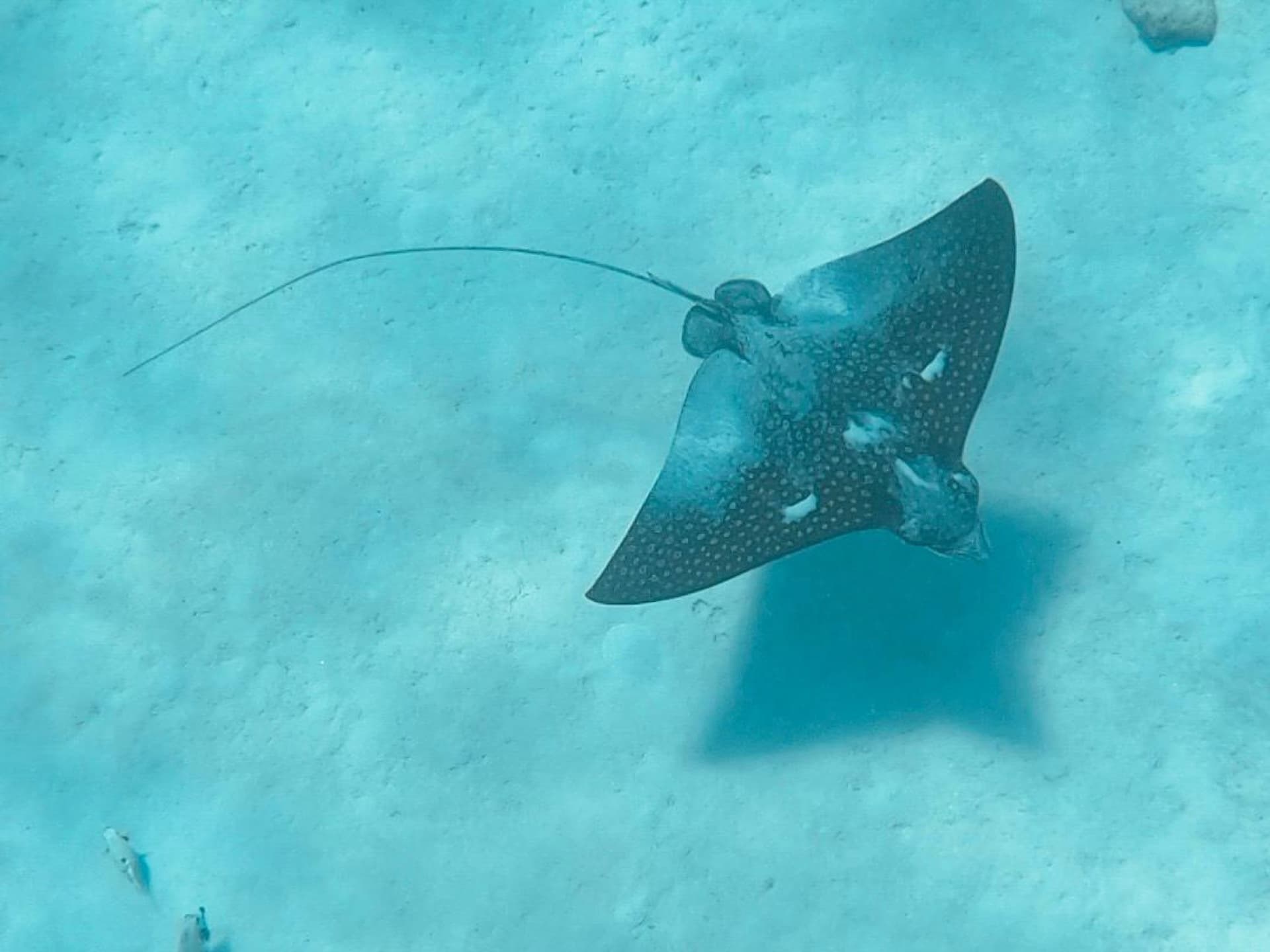
Spotted Eagle Ray (Aetobatus narinari)

Spotted Eagle Ray (Aetobatus narinari)

The spotted eagle ray is Curaçao's most photogenic pelagic — up to 3 metres wingspan, distinctive white-spotted dark back, and a graceful gliding flight pattern above the sand between reef zones. They often travel in small groups of 2-5 individuals, sometimes larger schools. They feed on molluscs and crustaceans in the sandy areas between reef formations. Unlike stingrays, eagle rays rarely rest on the bottom; they're almost always in motion.

💡 Tip: Best sightings happen along the wall edges at 15-25 metres where they cruise the sand. Slow approach from the side; they're shy of sudden movements from above.
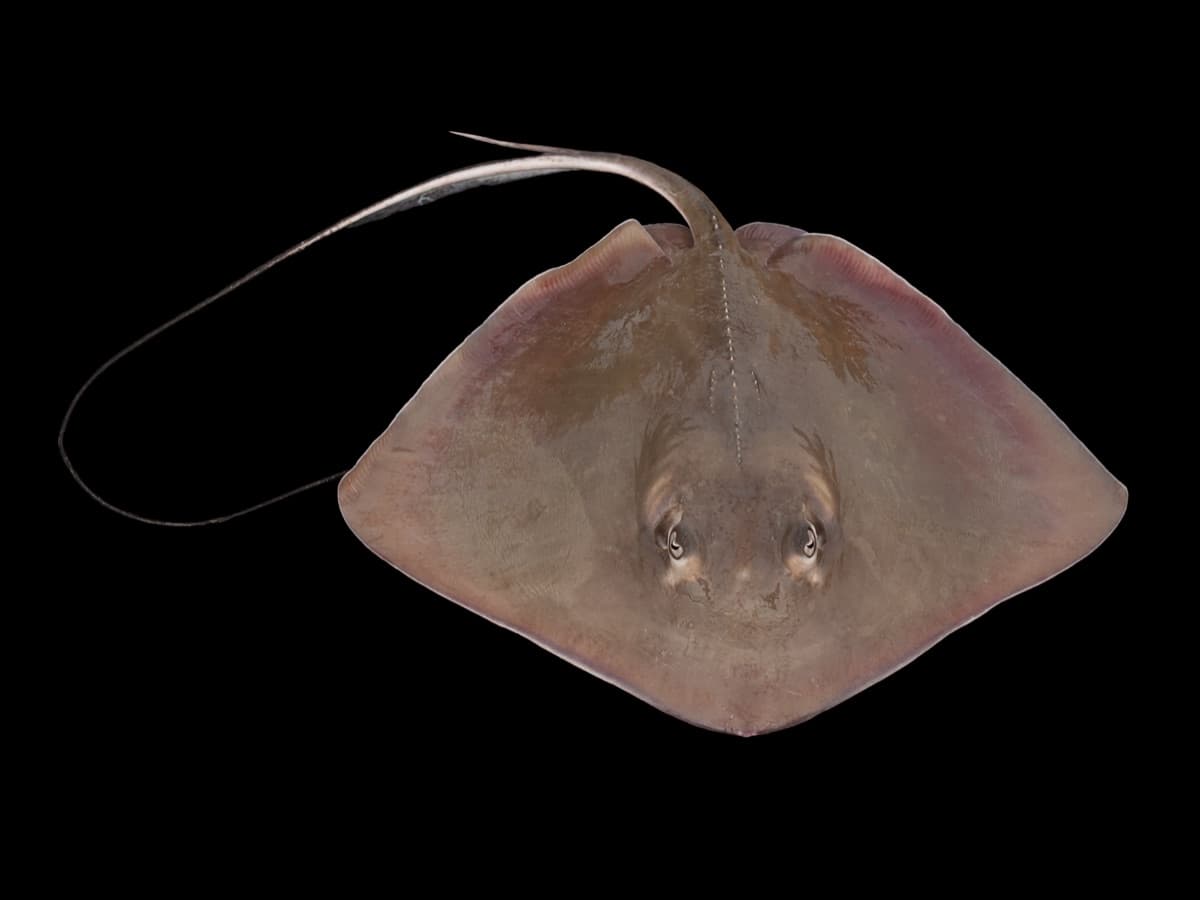
Southern Stingray (Hypanus americanus)

Southern Stingray (Hypanus americanus)

The southern stingray is a reliable find on Curaçao's sandy bottoms — flat, disk-shaped, up to 1.5 metres across, often half-buried in sand with only the eyes and spiracles exposed. They use their mouths on the underside of their bodies to vacuum up molluscs, crustaceans, and small fish from the sediment. The tail carries a venomous spine used only in self-defence; give them space. Best seen: Porto Mari sand channel, Director's Bay, Alice in Wonderland.

💡 Tip: Look for 'dig marks' in the sand — craters where stingrays have been feeding. The ray is often still nearby, just buried.

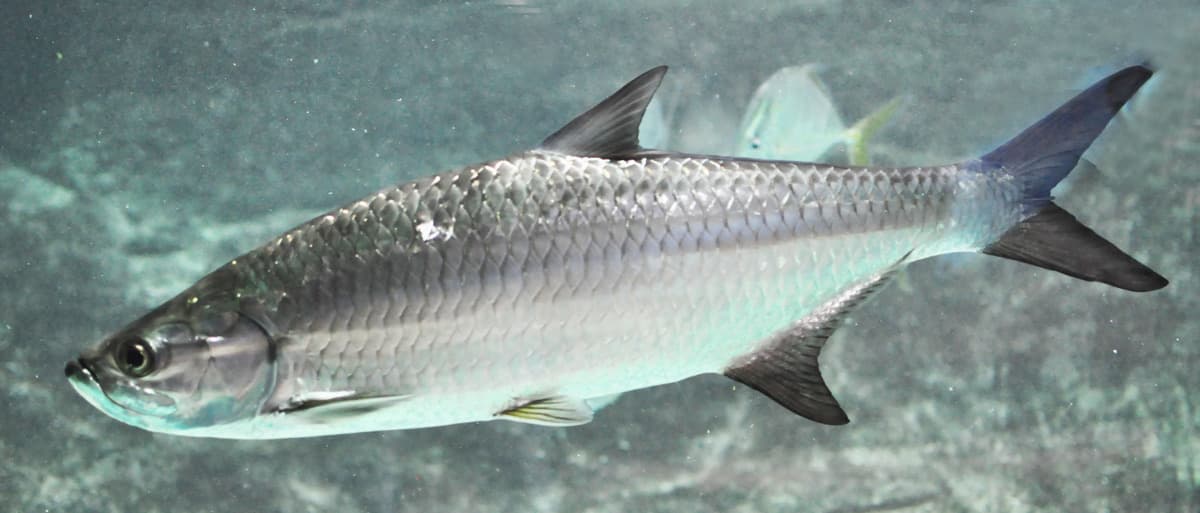
Atlantic Tarpon (Megalops atlanticus)

Atlantic Tarpon (Megalops atlanticus)

The tarpon is the silver giant of Curaçao's south coast reefs. Adults reach 2 metres and 150 kg, with massive shining scales and a distinctive upward-pointing lower jaw. Schools of tarpon use specific reef sites as daytime holding stations — Tarpon City and Tarpon Bridge are named for this. Divers who hover calmly can be surrounded by a school of 50+ fish, each the size of a person. Primarily nocturnal hunters; during daylight they cruise slowly along reef walls.

💡 Tip: Tarpon City and Tarpon Bridge on the south coast (boat-access) are the reliable sites. Stay calm and still — they'll come close.

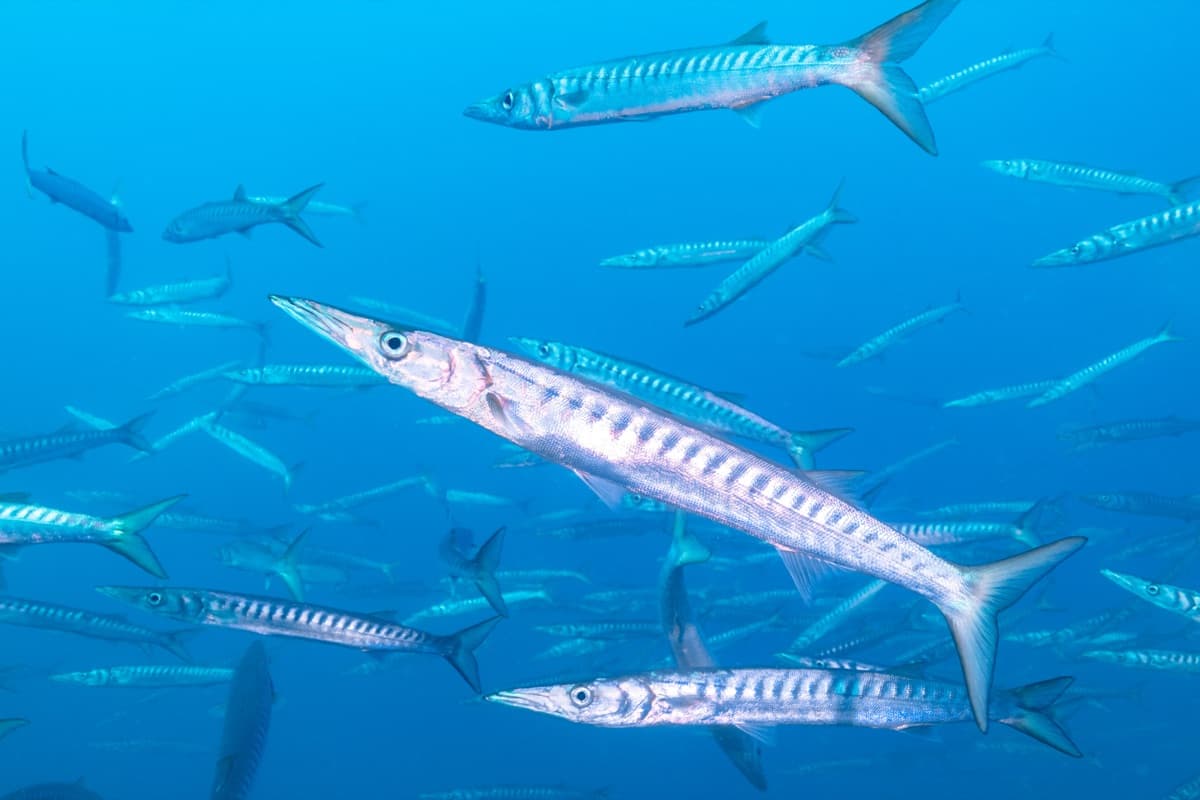
Great Barracuda (Sphyraena barracuda)

Great Barracuda (Sphyraena barracuda)

The great barracuda is Curaçao's most common apex predator — lean, silver, up to 1.5 metres long, with a prominent lower jaw showing sharp teeth. Often seen hovering motionless in mid-water or slowly cruising alongside divers. Despite reputation, unprovoked attacks on humans are vanishingly rare. They hunt by ambush, attacking smaller fish with a lightning burst of speed. Solo adults are most common; juveniles form small schools.

💡 Tip: Don't wear shiny metal jewellery on the reef — barracudas can mistake flashes for prey. Not dangerous, but they will investigate.

French Angelfish (Pomacanthus paru)

French Angelfish (Pomacanthus paru)

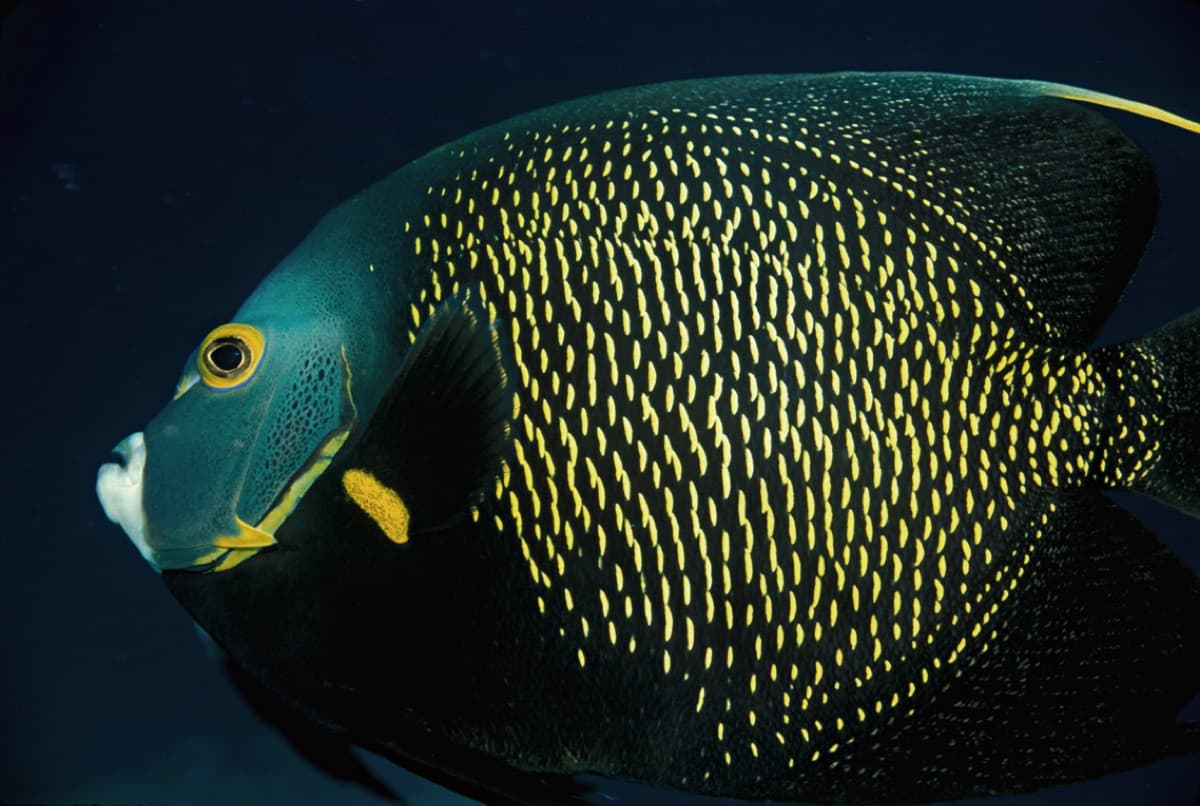
The French angelfish is one of the most recognisable reef fish on Curaçao — disk-shaped, deep black with each scale tipped yellow-gold, giving a speckled metallic appearance. Adults reach 40 cm. They often travel in pairs (mated for life) and patrol the reef for sponges, tunicates, and algae. Comfortable around divers; they'll often approach curiously. Juveniles are black with bright yellow vertical bars — totally different appearance.

💡 Tip: Watch for pairs moving together — the fact they're paired is a rare reef behaviour. Photograph both in one frame if possible.

Queen Angelfish (Holacanthus ciliaris)

Queen Angelfish (Holacanthus ciliaris)

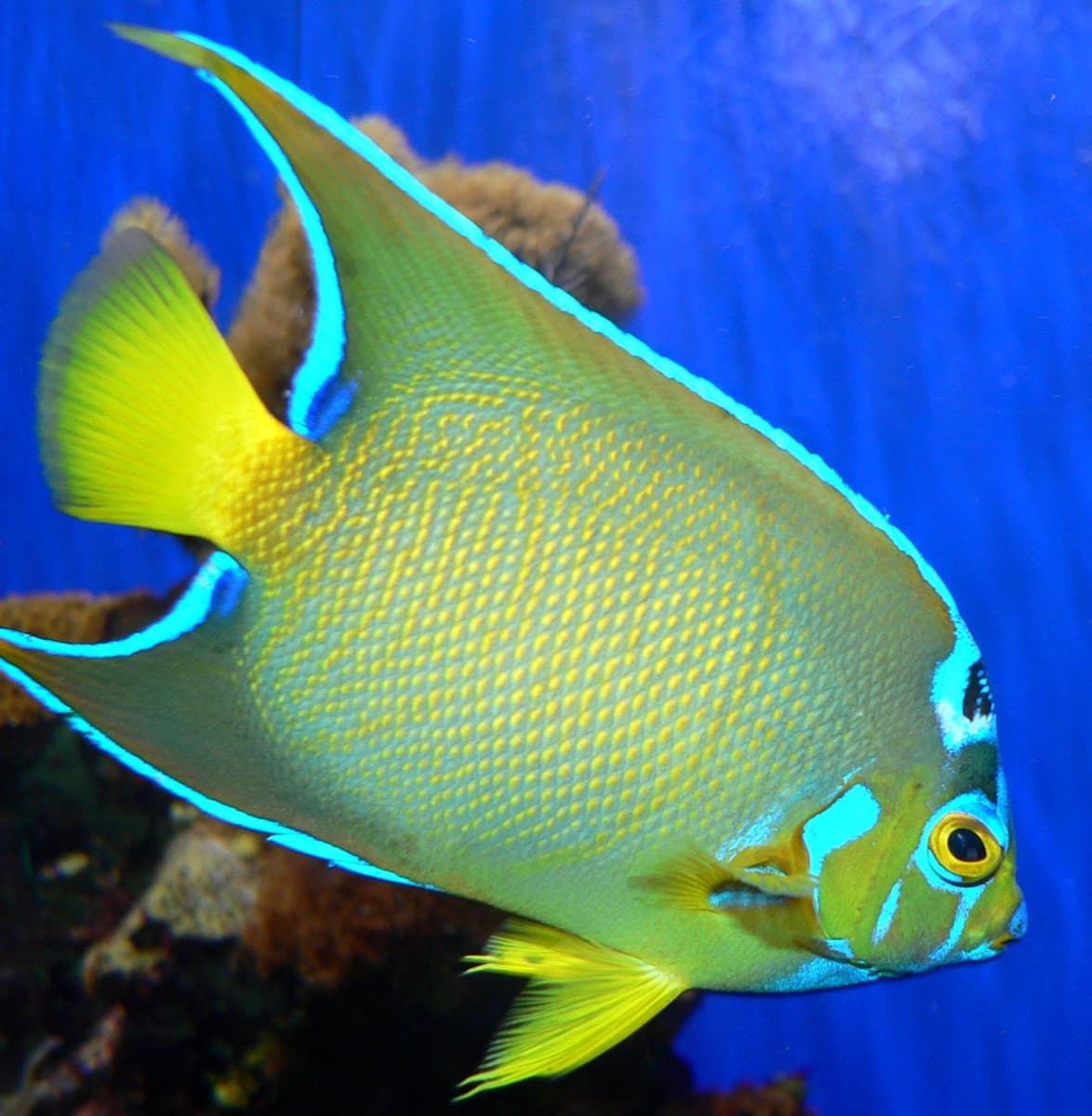
The queen angelfish is the more colourful cousin of the French — electric blues and yellows across the body, a distinctive crown-shaped blue marking on the forehead, and long filaments trailing from the dorsal and anal fins. Adults reach 45 cm. Territorial; they patrol a specific section of reef and will defend it against other queens. Feed on sponges, tunicates, and algae. Best seen on shallower healthy reefs.

💡 Tip: The 'crown' marking on the forehead is the identification shortcut. French angelfish has no crown; queen angelfish always does.

Stoplight Parrotfish (Sparisoma viride)

Stoplight Parrotfish (Sparisoma viride)

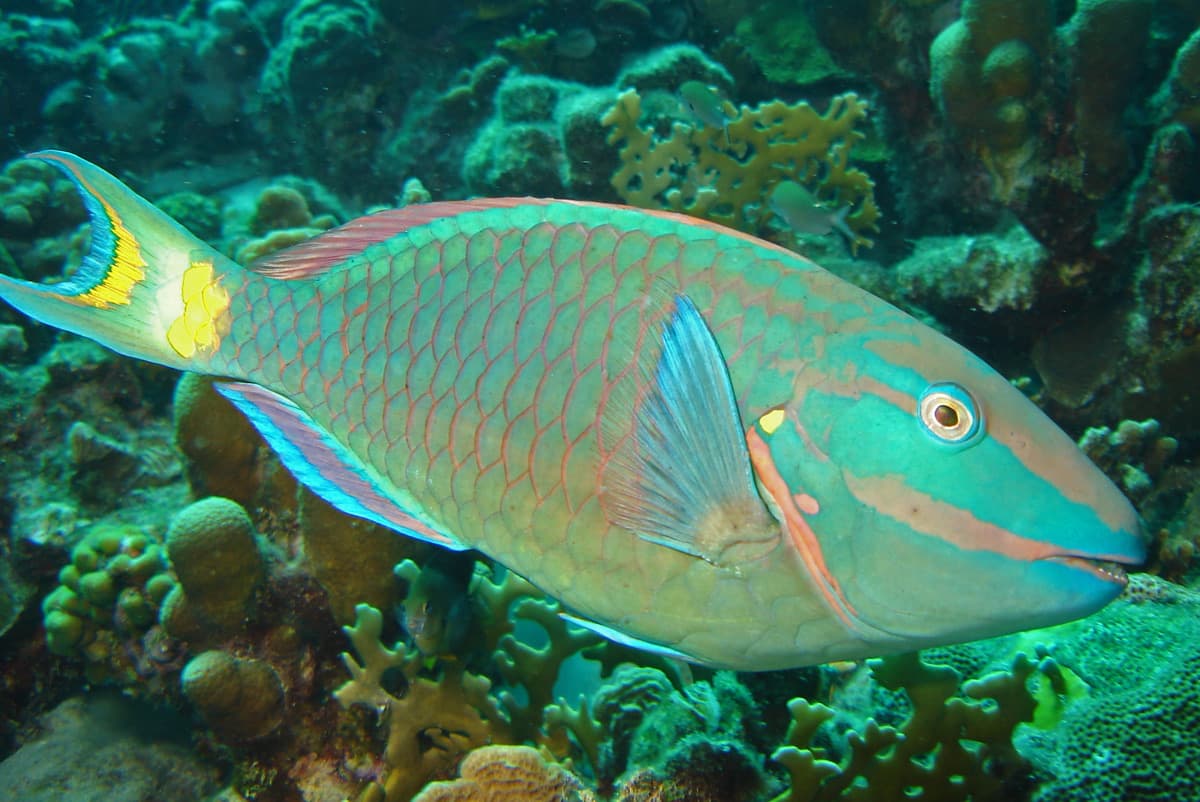
The stoplight parrotfish is a colourful contributor to the Caribbean reef — adults show bright blue-green bodies, pink bellies, and a yellow spot near the tail (the 'stoplight'). Up to 60 cm long. Parrotfish use beak-like fused teeth to scrape algae and coral polyps off reef surfaces, producing sand as a byproduct — literally a single parrotfish can produce 100 kg of sand per year. They change sex during their lifetime (female to male). Hear them biting coral during dives; the sound is unmistakable.

💡 Tip: Sleep in mucus cocoons at night to avoid predators. Night dives at Director's Bay sometimes find them slumbering wrapped in slime.

Blue Chromis (Chromis cyanea)

Blue Chromis (Chromis cyanea)

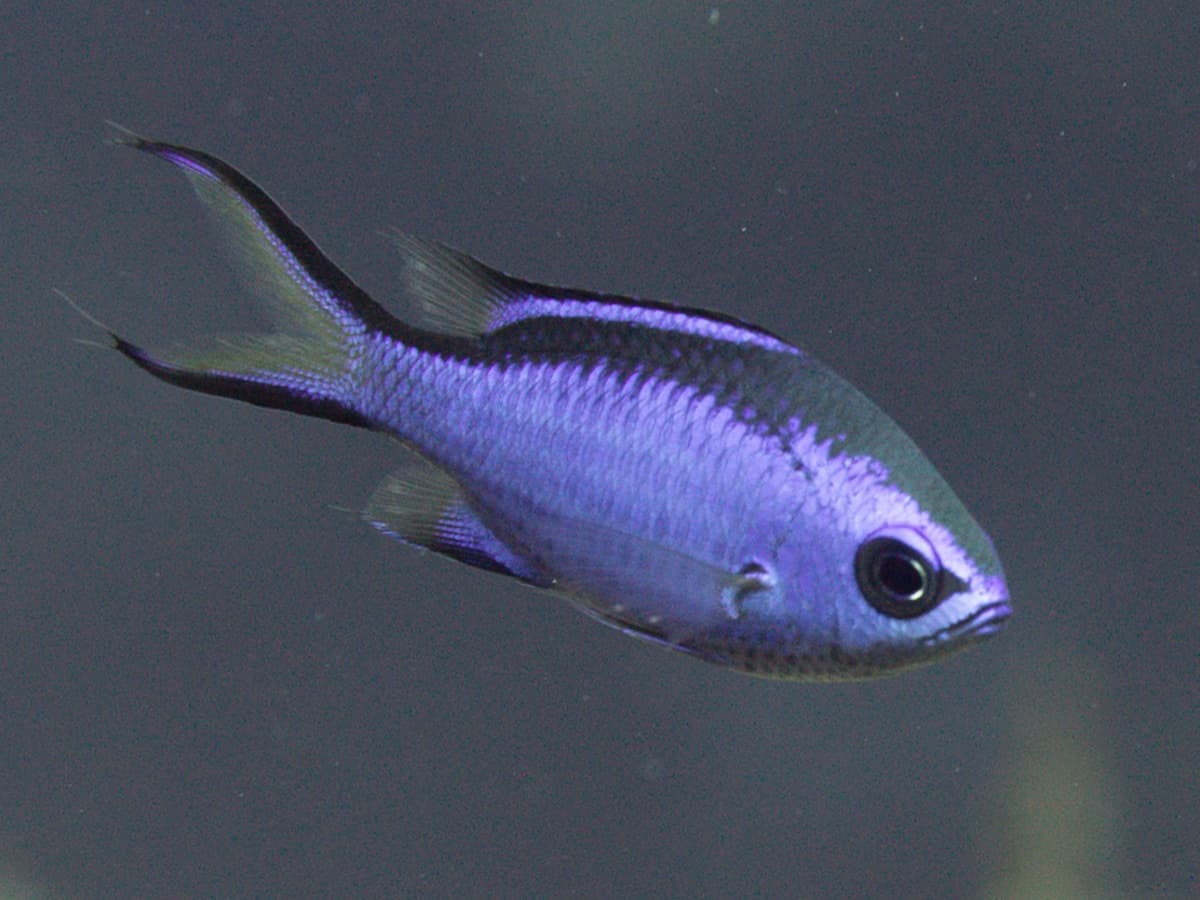
The blue chromis is the small, electric-blue fish that forms dense schools hovering above Curaçao reefs. Each fish is only 10-15 cm long but they travel in schools of hundreds, creating a shimmering blue cloud in the water column. They feed on zooplankton drifting past the reef. A standard background element on nearly every Curaçao dive site — so common that divers sometimes stop noticing them, but they are iconic reef animation.

💡 Tip: When a blue chromis school suddenly dives for cover into the coral, look for a predator nearby — it's a real-time reef warning system.

Trumpetfish (Aulostomus maculatus)

Trumpetfish (Aulostomus maculatus)

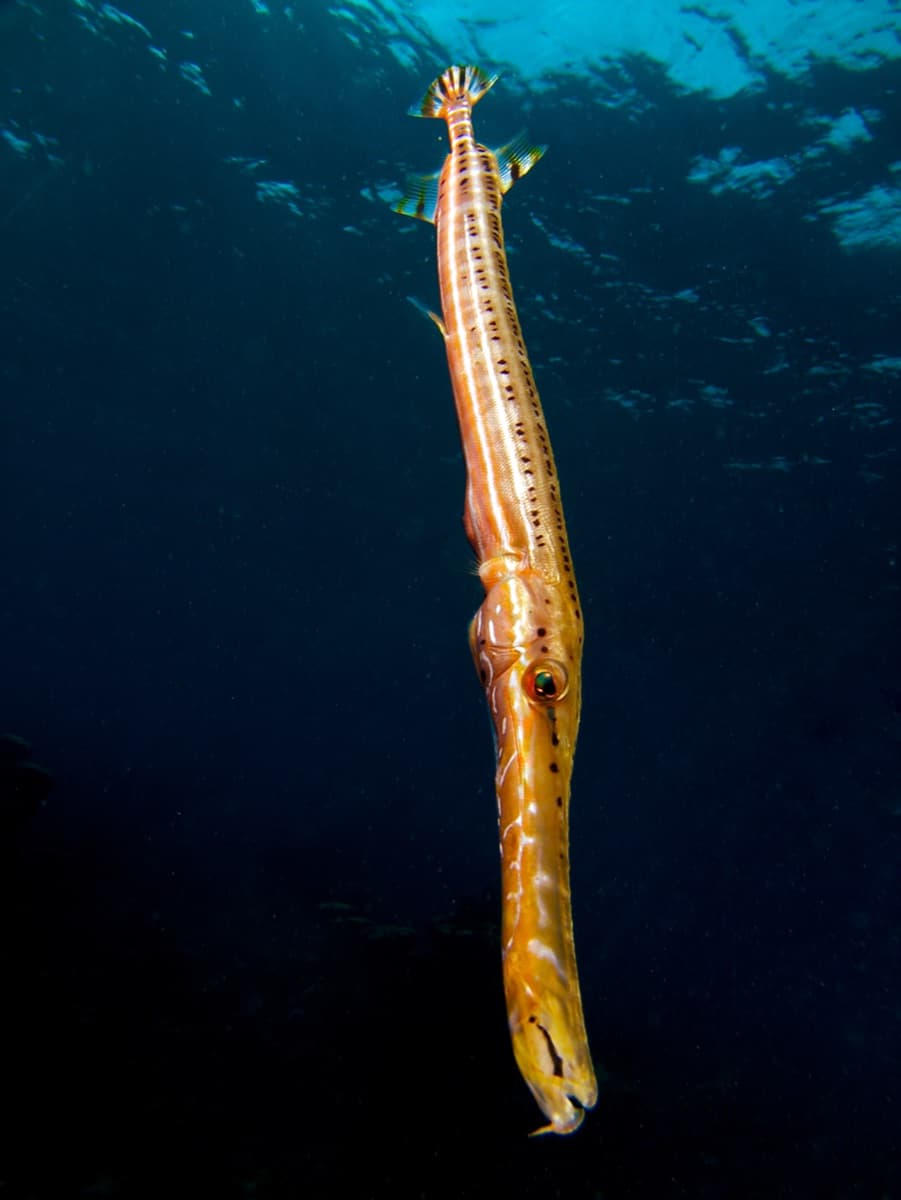
The trumpetfish is one of Curaçao's more bizarre reef residents — long, thin, with a trumpet-shaped mouth it uses to vacuum up small fish. Up to 1 metre long but only the thickness of a wrist, they often hover vertically amongst gorgonians and sea fans, hidden in plain sight. Colour varies from olive-brown to yellow; some individuals are striking bright yellow. They stalk prey by hiding alongside larger 'host' fish, using them as cover until they can ambush.

💡 Tip: Look vertically among sea fans and soft coral — you'll be surprised how often a trumpetfish is there. The yellow variant is a rare photo target.

Peacock Flounder (Bothus lunatus)

Peacock Flounder (Bothus lunatus)

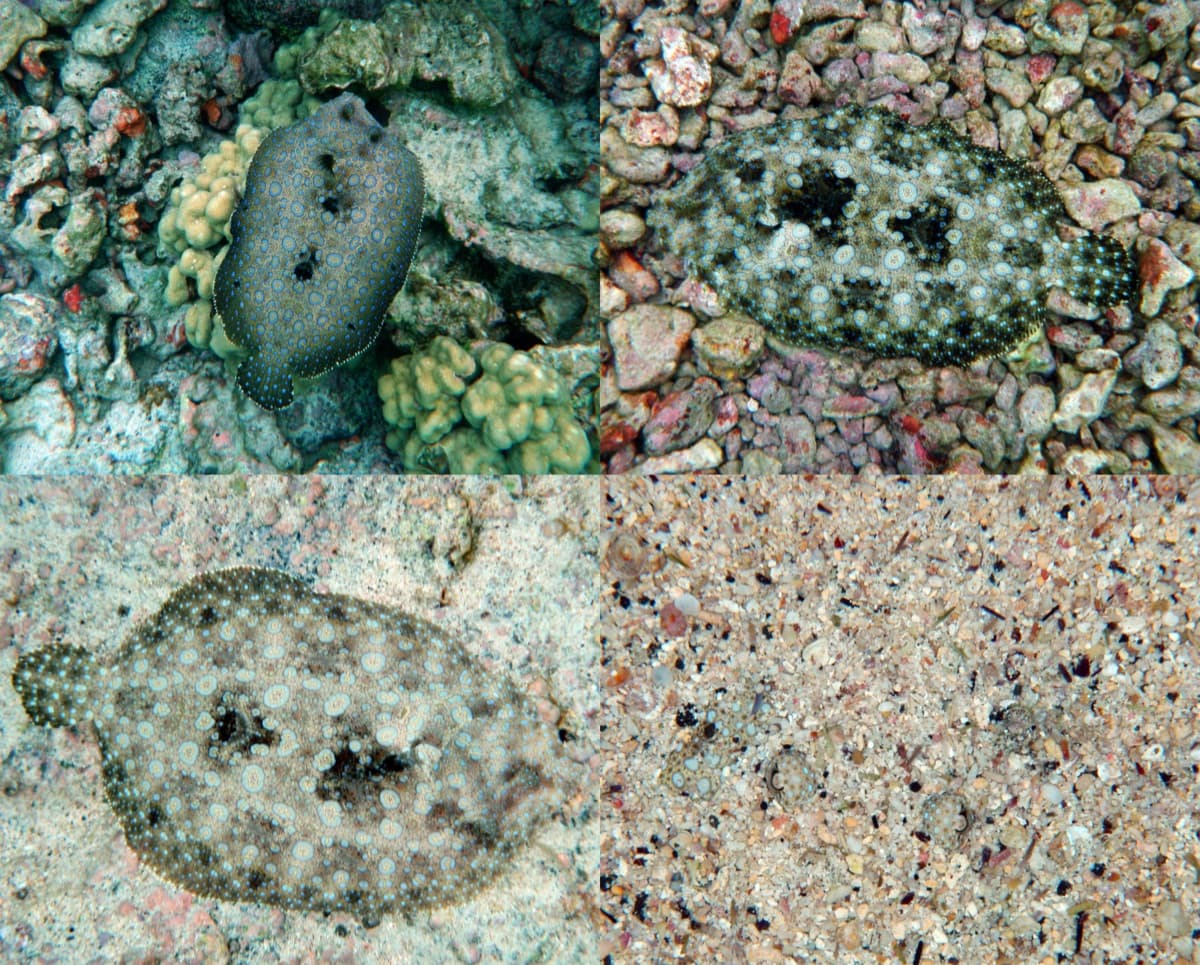
The peacock flounder is the master of disguise on Curaçao's sandy bottoms. Flat-bodied, up to 45 cm long, with both eyes on the top of its head (it lies on its right side). The skin has iridescent blue rings and spots that can instantly change colour to match the surrounding sand. Hunts small fish and crustaceans; moves in short bursts then stops and camouflages again. Easy to miss until they move.

💡 Tip: Scan the sand near the reef edge. A moving 'cloud' of sand often reveals a flounder that just relocated. Photograph quickly — they freeze and disappear.

Green Moray Eel (Gymnothorax funebris)

Green Moray Eel (Gymnothorax funebris)

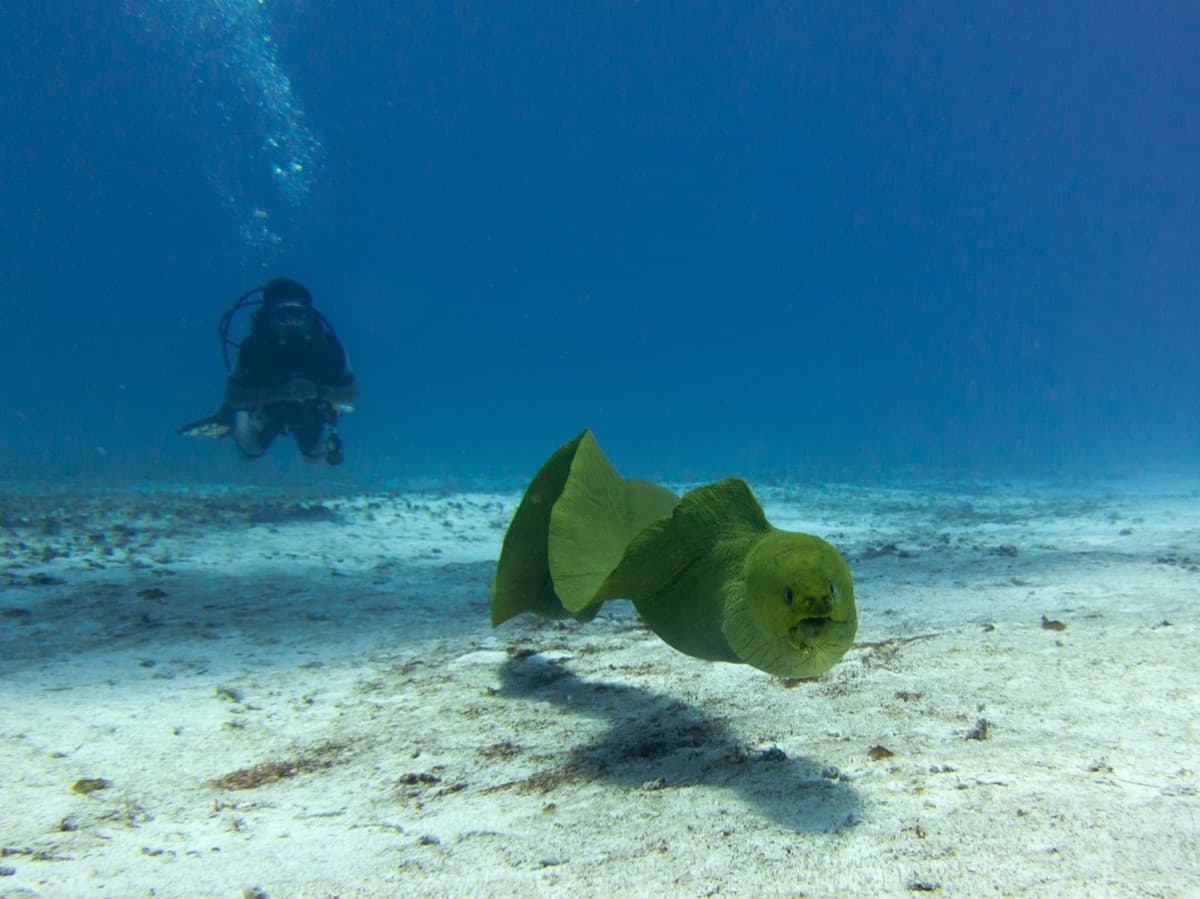
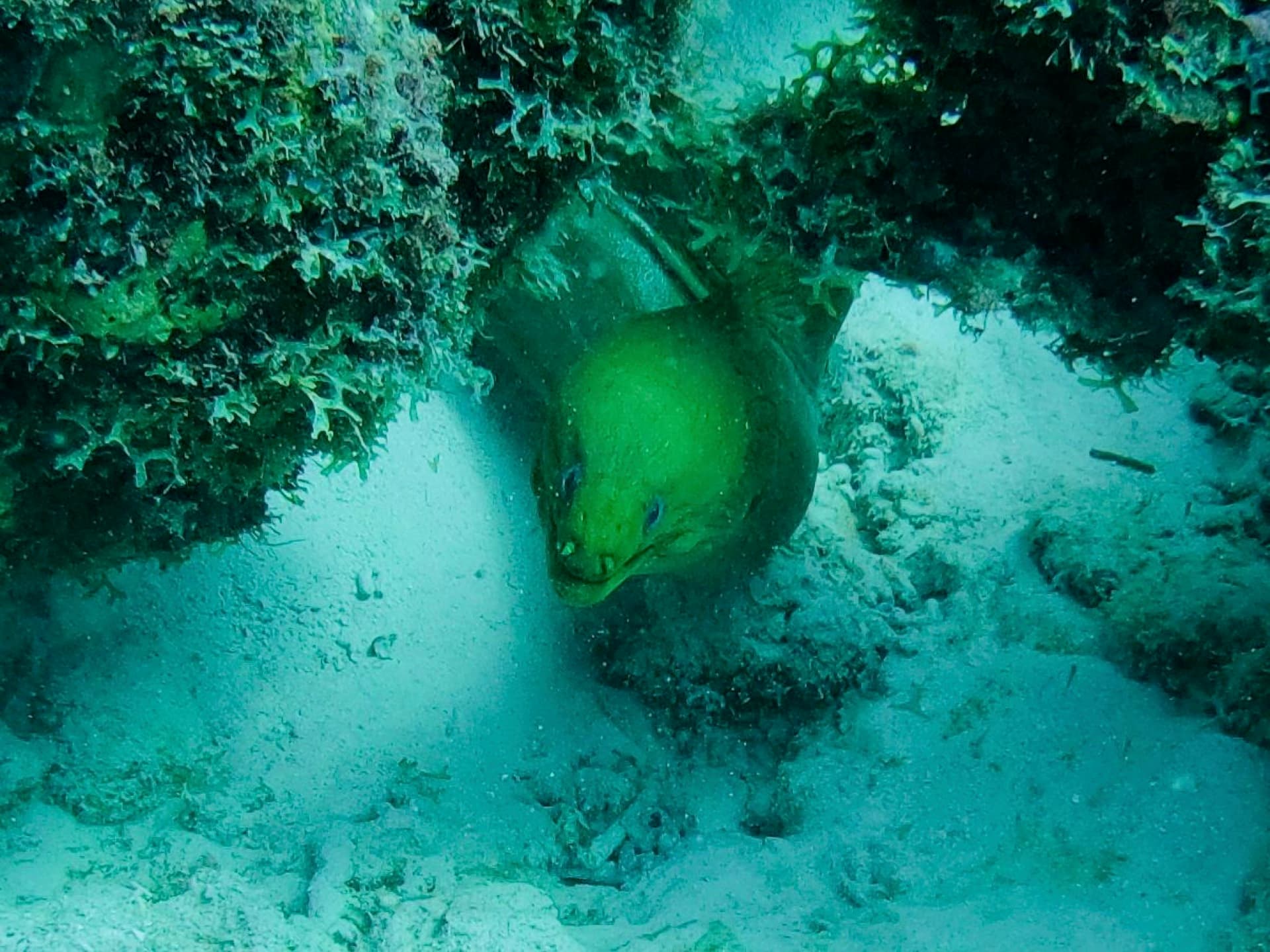
The green moray is the largest moray in Caribbean waters — up to 2.5 metres long, with a muscular green-brown body and an open-jawed resting posture that looks menacing but is just how they breathe (pumping water over gills). They hide in reef crevices during the day and hunt at night. The resident green moray at the Tugboat wreck is one of Curaçao's most photographed individuals. Not aggressive unless threatened; stay hands-off.

💡 Tip: The open mouth is not aggression — it's respiration. Give them 1 metre of space and they'll ignore you.

Lionfish (Pterois volitans) — The Invasive Threat

Lionfish (Pterois volitans) — The Invasive Threat

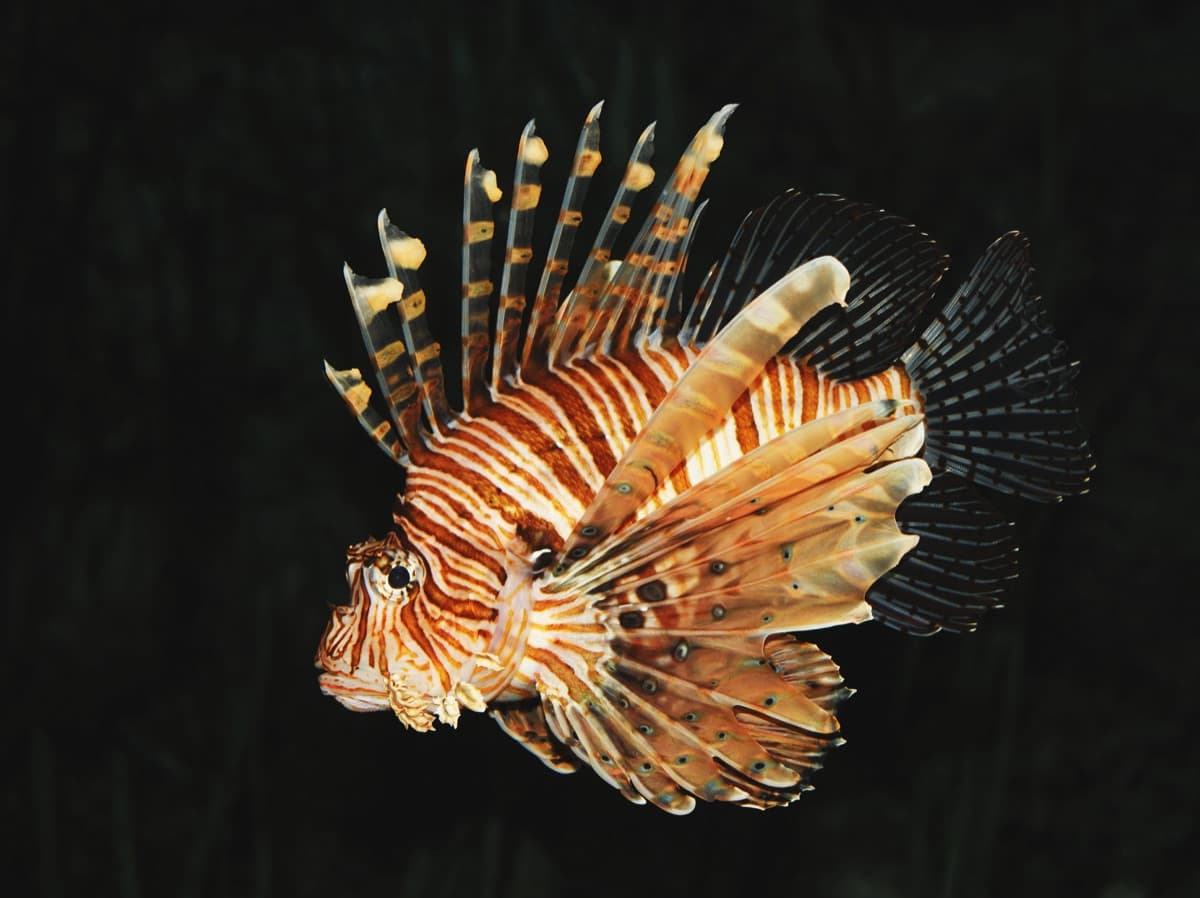
The red lionfish is an introduced species in Caribbean waters and a serious threat to Curaçao's reef ecology. Native to the Indo-Pacific, released accidentally in Florida decades ago, they've spread across the Caribbean with no natural predators. One lionfish can eat dozens of juvenile reef fish per day. Adults reach 35 cm, with dramatic spiny fins and striking red-and-white vertical stripes. The spines are venomous; don't touch. Curaçao has a 'Lionfish Hunter' diver certification allowing legal spear-fishing of lionfish to protect the reef. They're also excellent eating — many local restaurants serve lionfish ceviche.

💡 Tip: If you see a lionfish, report it to your dive shop — they pass sightings to licensed hunters. Do not attempt to spear one yourself without the certification.

Nassau Grouper (Epinephelus striatus)

Nassau Grouper (Epinephelus striatus)

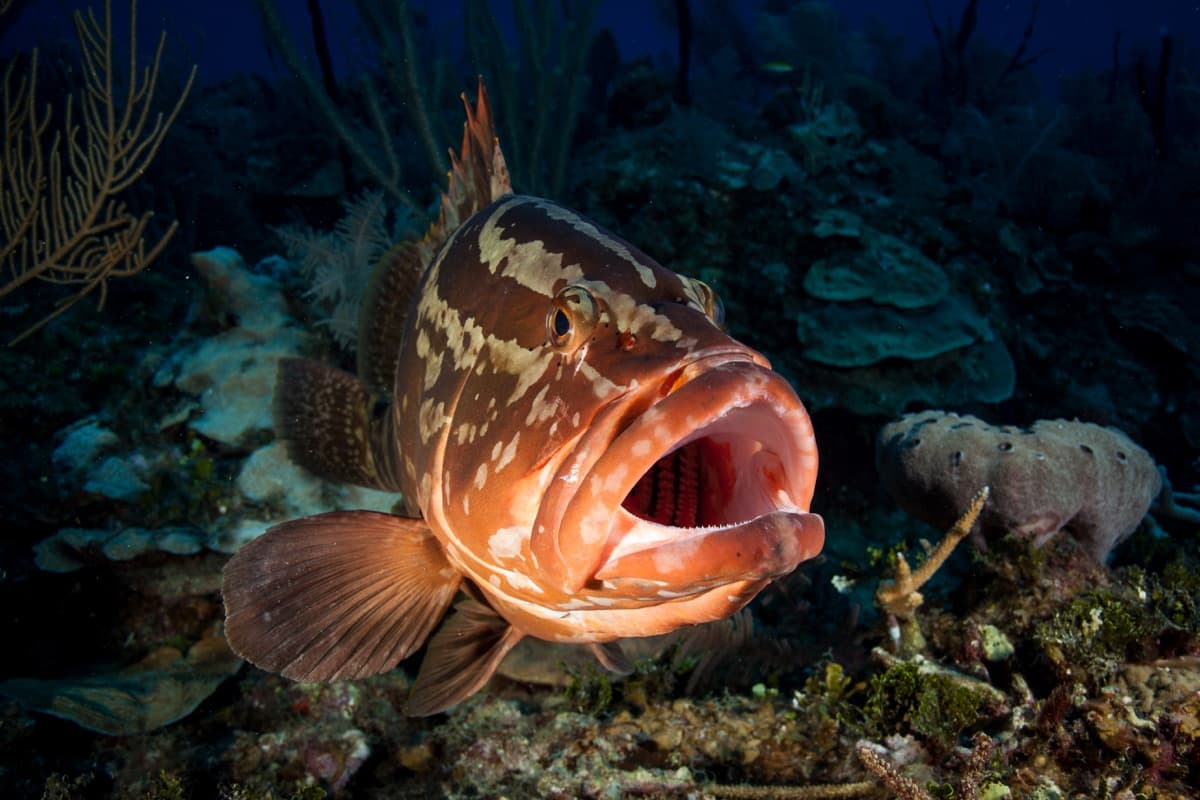
The Nassau grouper is Curaçao's most recognisable large reef fish — up to 1 metre long, with dramatic dark vertical bars, reddish-brown colouration, and often a distinctive 'saddle' marking on the tail. They're long-lived (up to 30 years) and slow-growing, which makes them vulnerable to overfishing; populations are now protected across much of the Caribbean. They hang out in rocky areas and reef overhangs. Seeing a large adult at close range is a classic Curaçao dive encounter.

💡 Tip: They're curious fish — hover calmly and they'll often swim right up. Don't chase; a calm approach gets closer encounters.

Elkhorn Coral (Acropora palmata)

Elkhorn Coral (Acropora palmata)

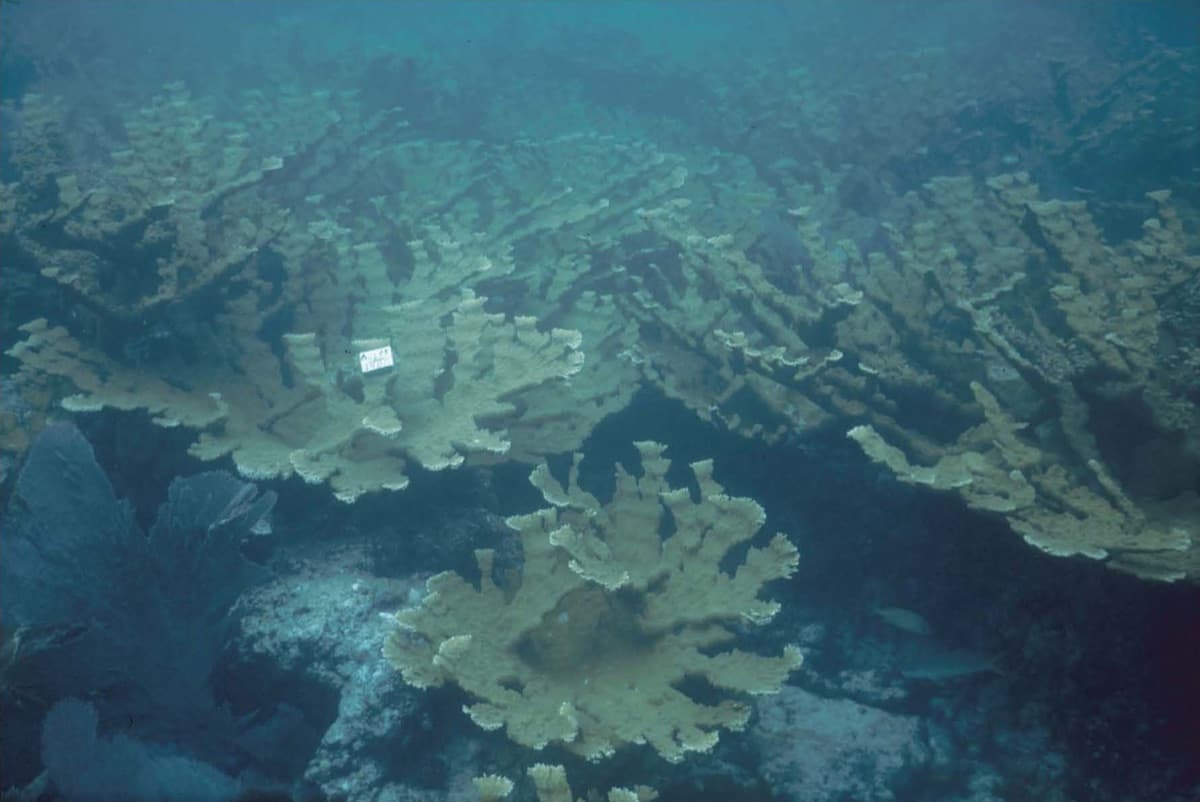
Elkhorn coral is one of the most important reef-building species in the Caribbean — but sadly one of the most endangered. The large branching colonies look like antlers (hence the name) and can exceed 4 metres across. Elkhorn has declined 97% across the Caribbean since 1980 due to disease, bleaching, and climate change. Curaçao is one of the few remaining Caribbean islands where mature elkhorn colonies still thrive, particularly at Alice in Wonderland (Playa Kalki) in the shallow zone. Seeing a healthy elkhorn colony is increasingly rare.

💡 Tip: Be especially careful with fins and gear near elkhorn — the species is critically endangered, and any physical damage matters.

Staghorn Coral (Acropora cervicornis)

Staghorn Coral (Acropora cervicornis)

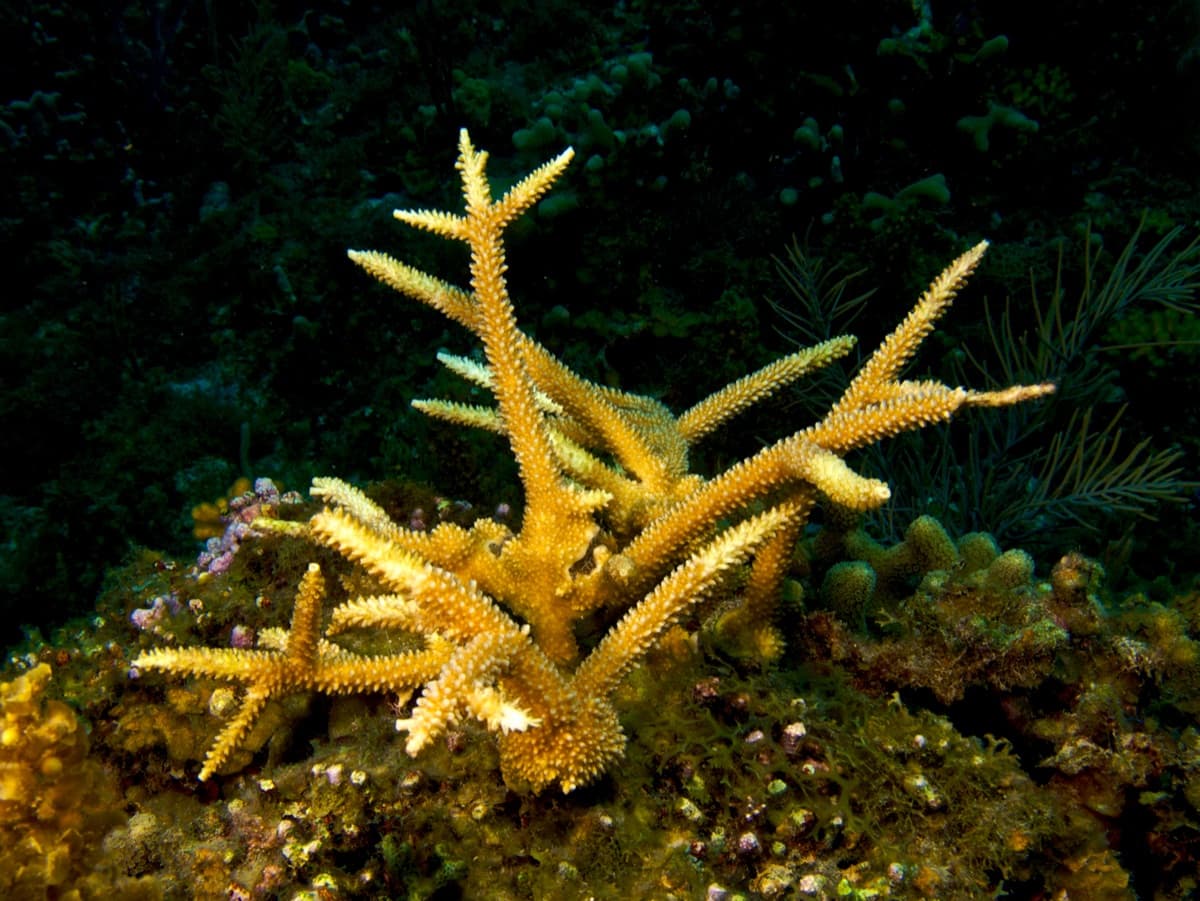
Staghorn coral is the elkhorn's thinner-branched sibling — dense thickets of pencil-thin branches forming in shallow reef zones. Like elkhorn, staghorn has declined catastrophically across the Caribbean (>90% loss) due to white-band disease and climate stress. Surviving thickets on Curaçao are precious — Alice in Wonderland, Playa Lagun, and Cas Abao all have staghorn zones. Provides critical habitat for juvenile reef fish; once lost, the habitat for many species disappears with it.

💡 Tip: Staghorn thickets are fish nurseries — slow down and look for small juvenile fish sheltered among the branches.

Brain Coral (Diploria labyrinthiformis)

Brain Coral (Diploria labyrinthiformis)

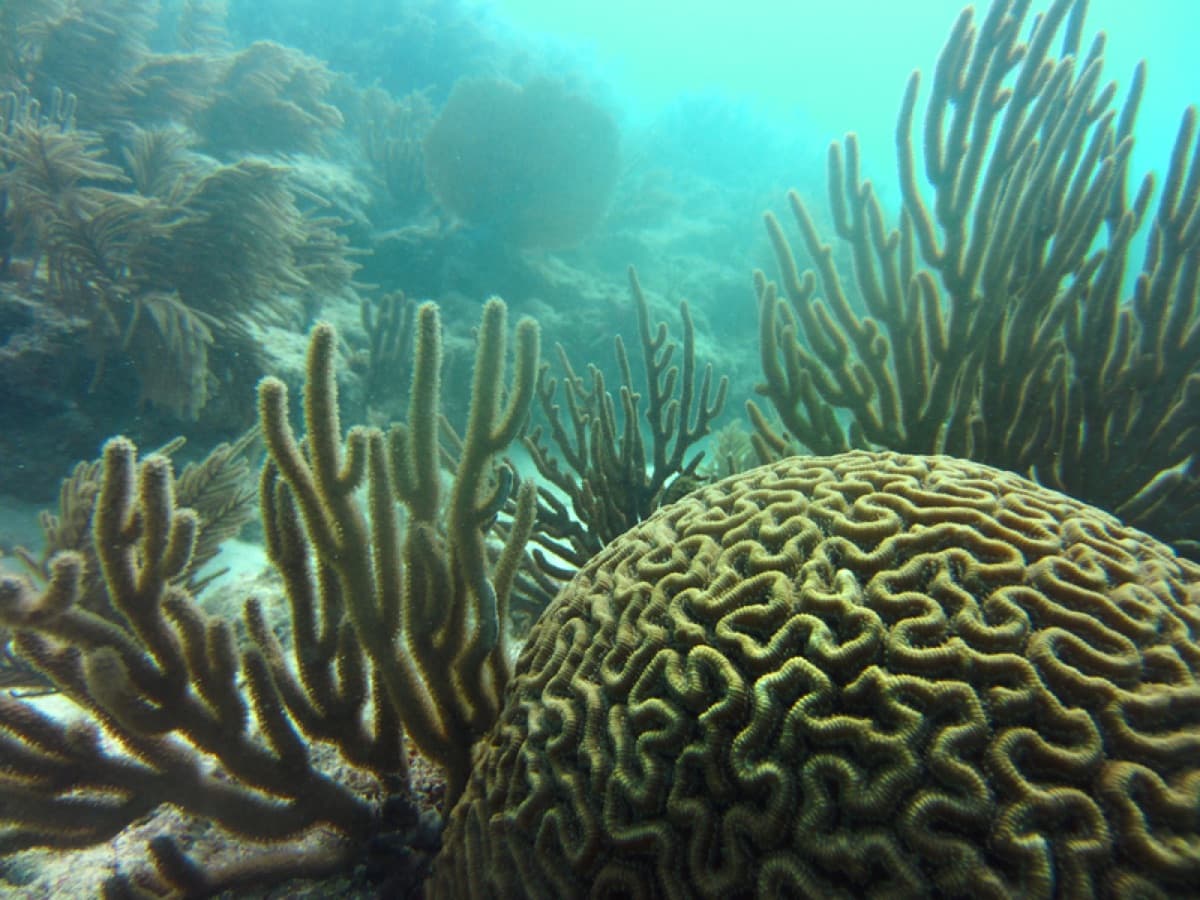
Brain coral colonies look exactly like their name — massive rounded boulders with a labyrinth-pattern surface that resembles a human brain. Slow-growing (about 1 cm per year) and long-lived (individual colonies can be centuries old). They form the structural backbone of many Caribbean reefs. Multiple species of brain coral exist on Curaçao's reefs; symmetrical brain coral (Pseudodiploria strigosa) is the most common. Look for them on nearly every Curaçao dive site at 5-15 metres.

💡 Tip: At night, the tiny coral polyps extend from the 'valleys' of the brain pattern to feed — a subtle but transformative visual shift. Night divers watch for this.

Giant Barrel Sponge (Xestospongia muta)

Giant Barrel Sponge (Xestospongia muta)

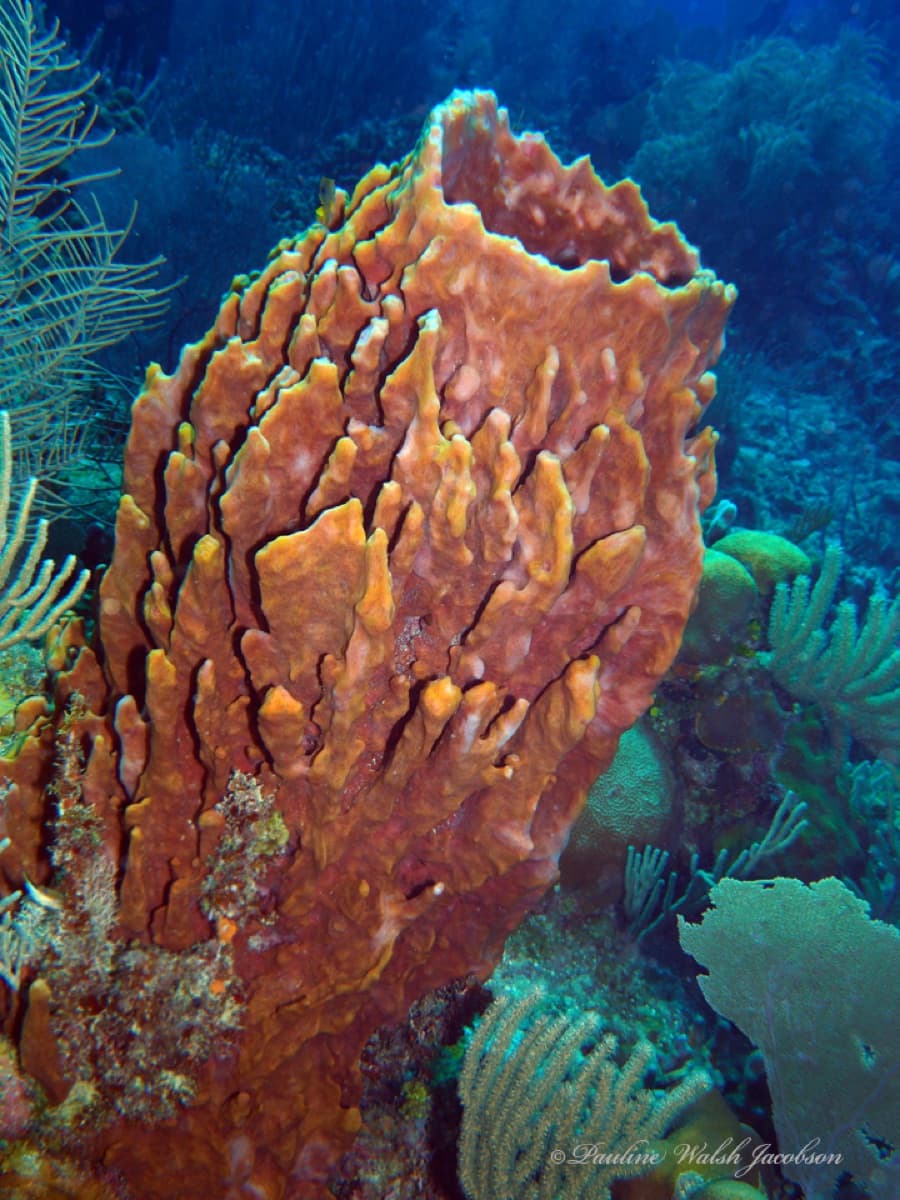
The giant barrel sponge is the largest sponge species in the Caribbean — some individuals exceed 2 metres in diameter and are estimated to be 500+ years old. Orange, cup-shaped, barrel-ish; they filter thousands of litres of seawater per day extracting plankton and bacteria. Sponge Forest on Curaçao's north-west coast is named for the dense population of these giants. Individual sponges have been given names by local dive guides. Hurt a barrel sponge and it doesn't recover; they grow at about 1 cm per year.

💡 Tip: Keep ALL gear (fins, computer, camera housing) away from barrel sponges — they are surprisingly fragile and extremely slow to recover.

Caribbean Reef Octopus (Octopus briareus)

Caribbean Reef Octopus (Octopus briareus)

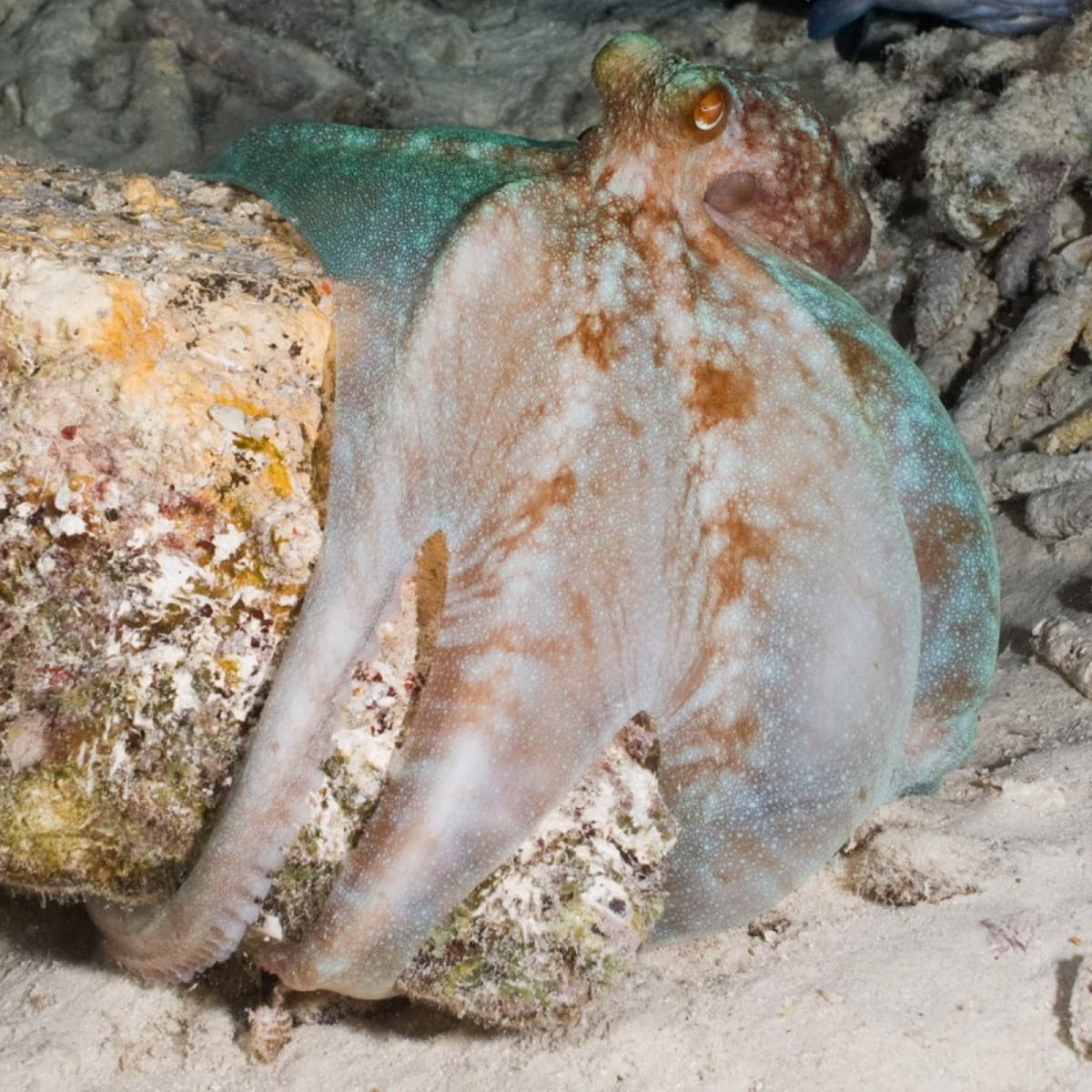
The Caribbean reef octopus is one of Curaçao's most fascinating night-dive sightings — small (arm-span up to 60 cm), highly intelligent, with colour-changing skin that can shift in milliseconds from pale white to rich red-brown. Nocturnal hunters; during day they hide in reef holes and rubble piles. At night they emerge to hunt crabs and small fish, using their eight arms with remarkable dexterity. Individual octopus have distinct personalities; some approach divers, others vanish instantly.

💡 Tip: Director's Bay night dives are the reliable sighting location. If an octopus approaches and 'touches' your dive torch, it's curiosity, not threat.

Caribbean Reef Squid (Sepioteuthis sepioidea)

The Caribbean reef squid is a smaller, diurnal cephalopod often seen hovering in small schools of 3-10 individuals just above the reef. They display rapid colour-change communication — within a single school, one squid might simultaneously flash bright colours to its neighbour while showing camouflage colouration to a potential predator on the other side. Each squid is only 15-20 cm long. Easy to approach slowly; they're curious and often pose for photos.

💡 Tip: Squid 'blush' when startled — the entire school flushing pink simultaneously. Move slowly to avoid triggering this; they're more interesting when calm.

Caribbean Spiny Lobster (Panulirus argus)

Caribbean Spiny Lobster (Panulirus argus)

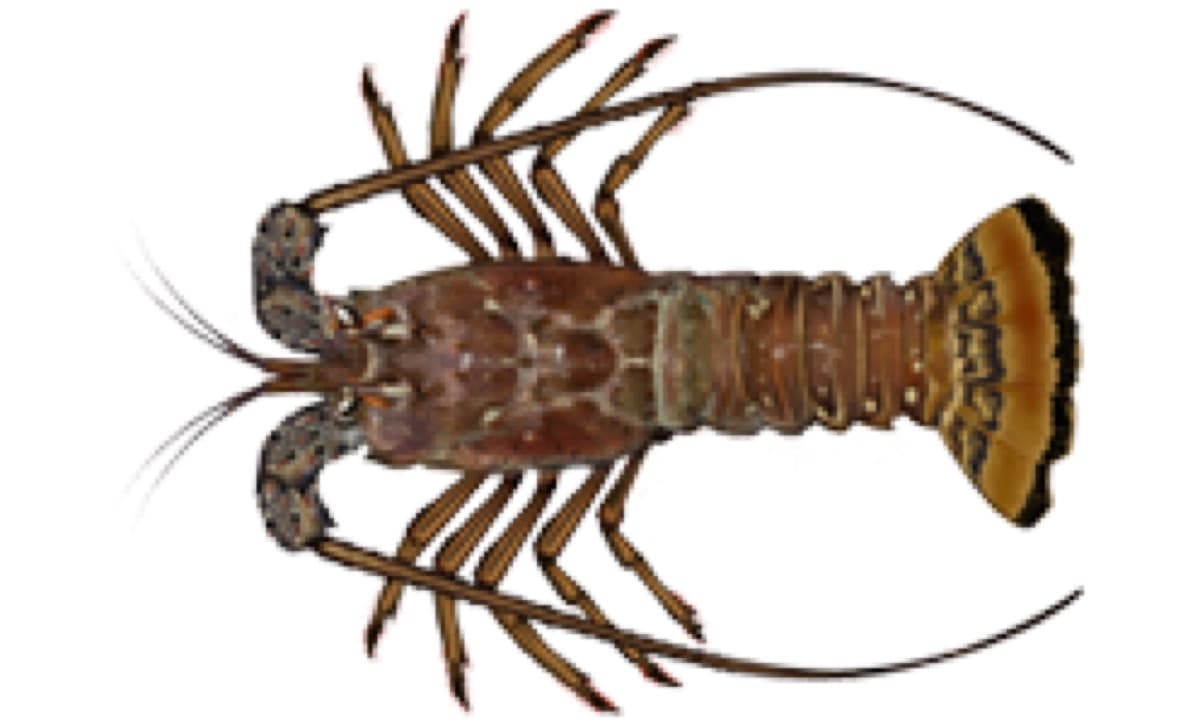
The spiny lobster is Curaçao's most common lobster — up to 60 cm body length, with two long antennae extending even further. Unlike American lobsters, spiny lobsters don't have the big front claws; they defend themselves with powerful tail-flips and spiny exoskeleton. Nocturnal; during day they hide in reef crevices with only antennae visible. Night dives reveal them walking the reef floor. Migrate in long single-file lines of dozens of individuals during certain seasons — a spectacular and rare sighting.

💡 Tip: Look for the twin antennae projecting from reef holes during daytime — often the only visible part of a hidden lobster.

Seahorse (Hippocampus reidi)

Seahorse (Hippocampus reidi)

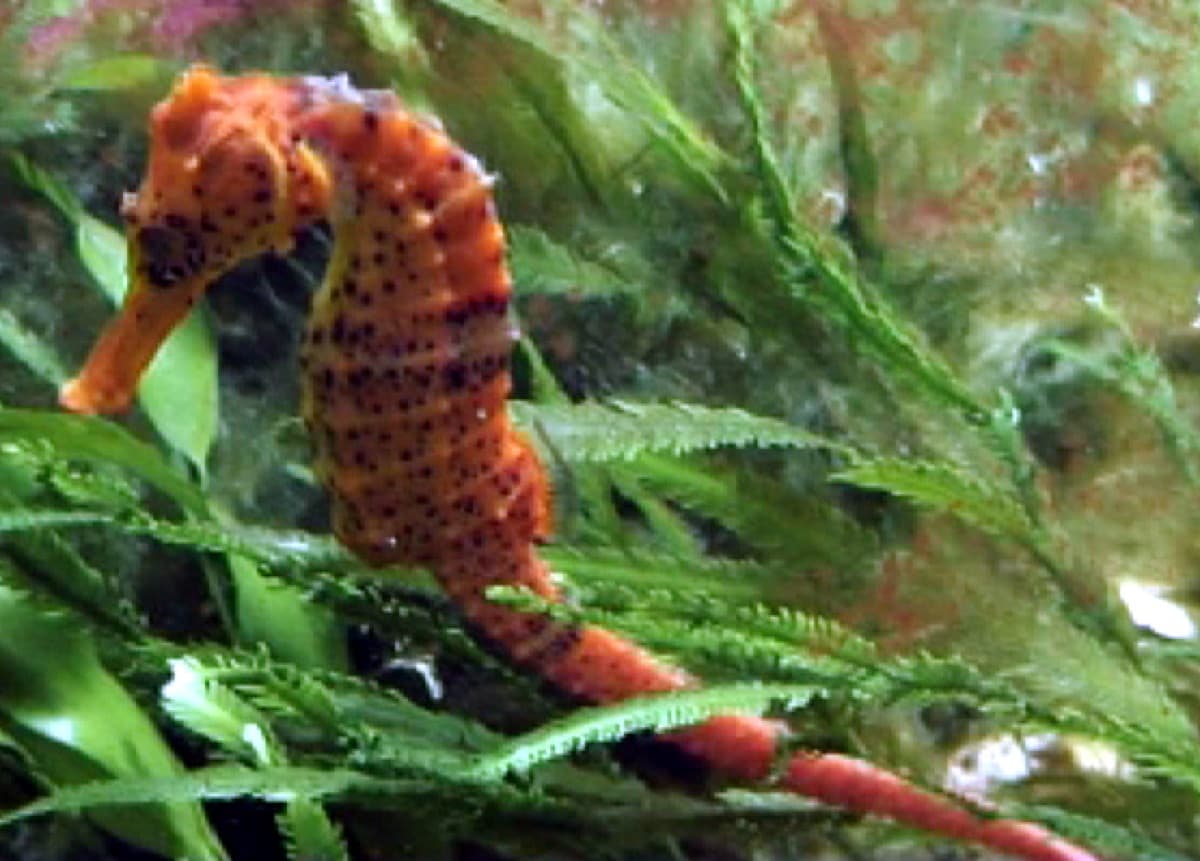
Seahorses in Curaçao are rare, cryptic, and thrilling to find. The longsnout seahorse lives in the mangrove root systems of Spanish Water and occasionally on the open reef. They grow to 15 cm, with variable colour (yellow, orange, brown, black depending on their surroundings), and cling to seagrass or coral with prehensile tails. Males incubate eggs in a brood pouch — one of the few species where males give 'birth'. Critically elusive; a guide doubles your chances of spotting one.

💡 Tip: Mangrove tours in Spanish Water with experienced guides have the highest seahorse encounter rate. Count on 30+ minutes of slow searching.

Flying Gurnard (Dactylopterus volitans)

Flying Gurnard (Dactylopterus volitans)

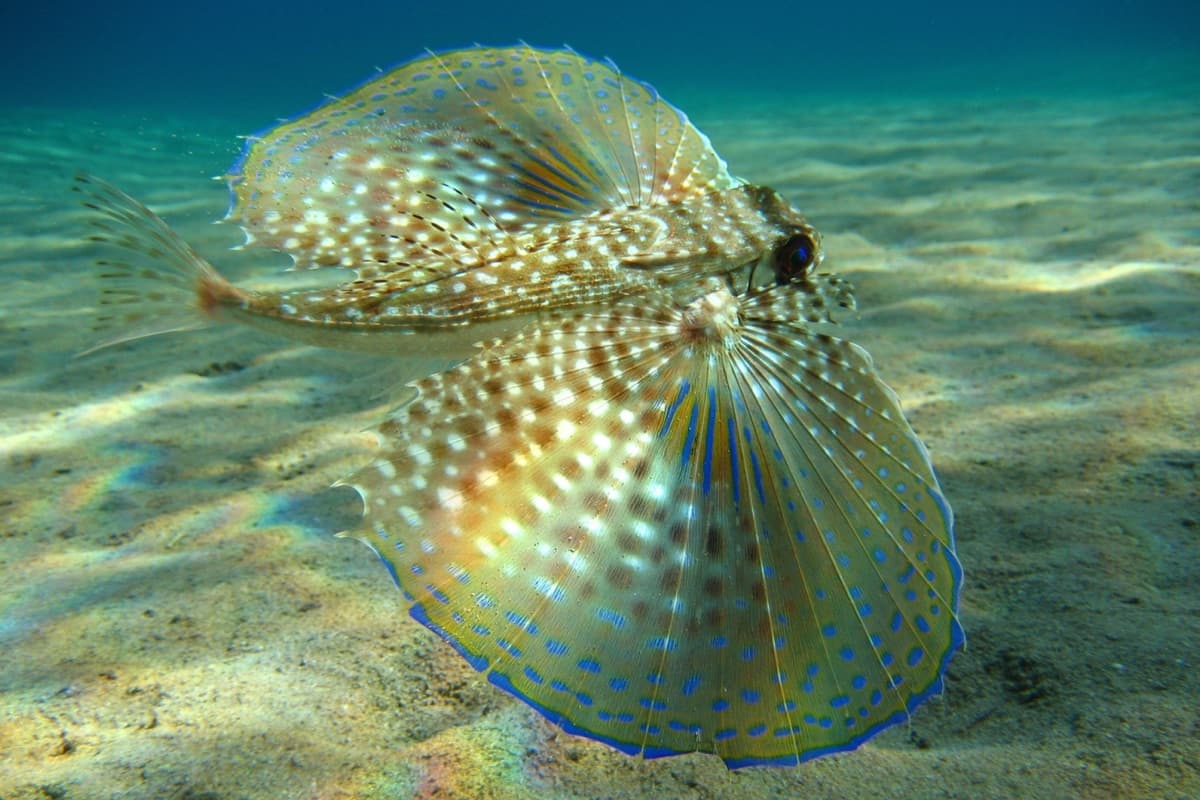
The flying gurnard is a strange bottom-dwelling fish with massive wing-like pectoral fins that spread to reveal blue-tipped rays when the fish is startled or courting. Up to 40 cm long, they walk on sandy bottoms using modified pelvic fins like little legs, feeding on crustaceans and small fish. The spread-fin display is extraordinary — an underwater rainbow fan. Relatively uncommon on Curaçao but spotted on sand channels and shallow reef edges.

💡 Tip: If you see a grey-brown fish 'walking' on the sand, approach very slowly. Any disturbance makes it fly off in a fin-spreading display.

Caribbean Flamingo (Phoenicopterus ruber)

Caribbean Flamingo (Phoenicopterus ruber)

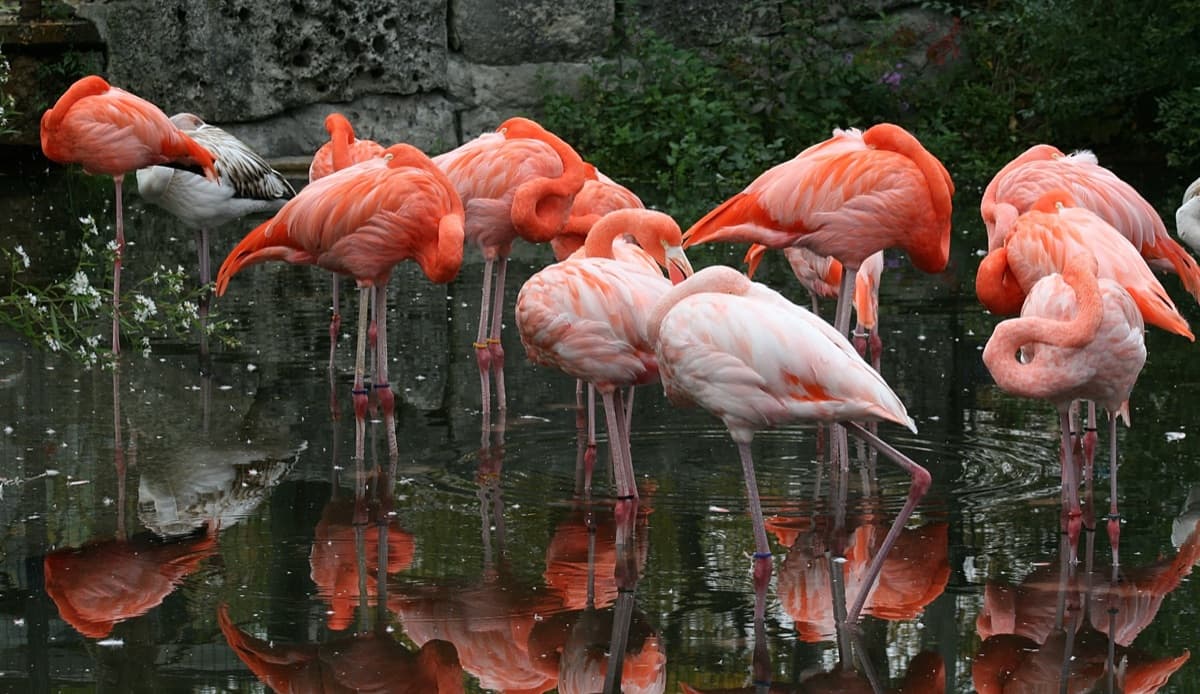
Caribbean flamingos are Curaçao's most recognisable non-marine wildlife. They feed in the salt pans and shallow inland bays, filtering algae and small crustaceans that give their feathers the distinctive pink colour. The best reliable viewing is at the Jan Kok salt pans, where small flocks wade year-round, but larger populations live mostly on Bonaire — Curaçao's flocks are smaller and fly between the two islands. Best photographed at sunset when the pink reflects in the pink-tinted water.

💡 Tip: Landhuis Jan Kok's restaurant terrace overlooks the flamingo feeding area. Dinner reservation there at sunset is the island's best flamingo-watching experience.

Brown Pelican (Pelecanus occidentalis)

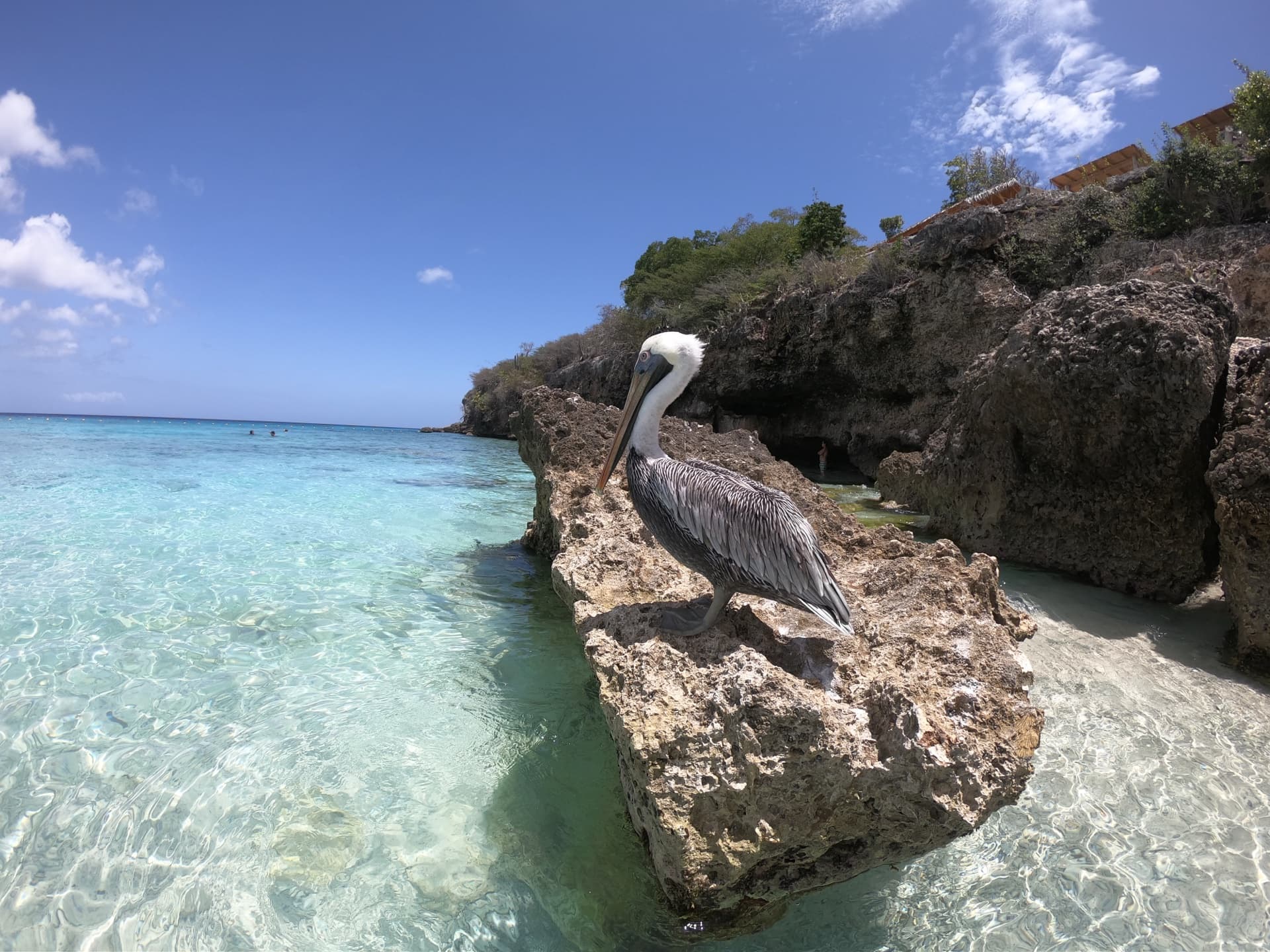
Brown Pelican (Pelecanus occidentalis)

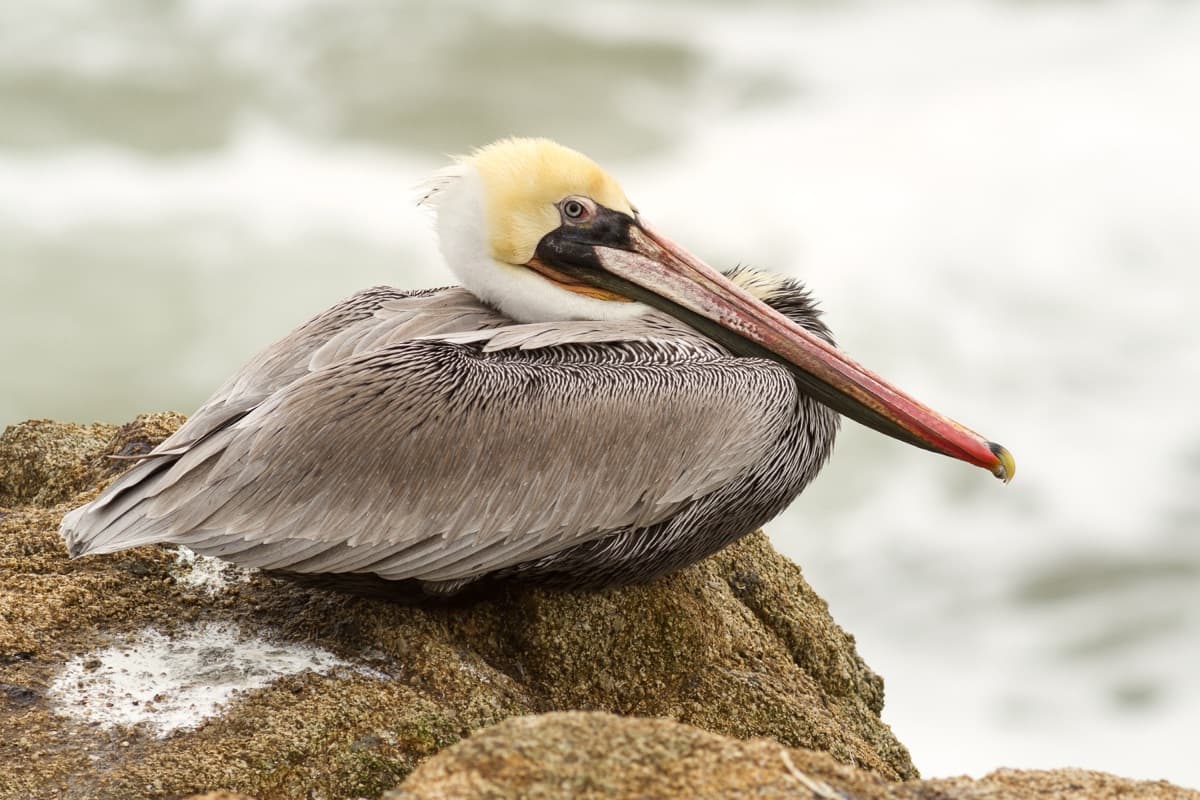
Brown pelicans are Curaçao's most dramatic coastal birds — up to 2 metre wingspan, with a spectacular plunging dive-fishing technique: they spot fish from the air, then drop bill-first from 5-10 metres to scoop prey into their expandable throat pouch. Resident populations along the entire coast. Often seen fishing near reef entries in the morning — frequently at the same dive sites where snorkellers enter the water.

💡 Tip: Watch the pelican dive patterns for fish schools — if pelicans are actively plunging in one area, there's a baitfish school visible from air, often also interesting for snorkel.

Trupial (Icterus icterus)

Trupial (Icterus icterus)

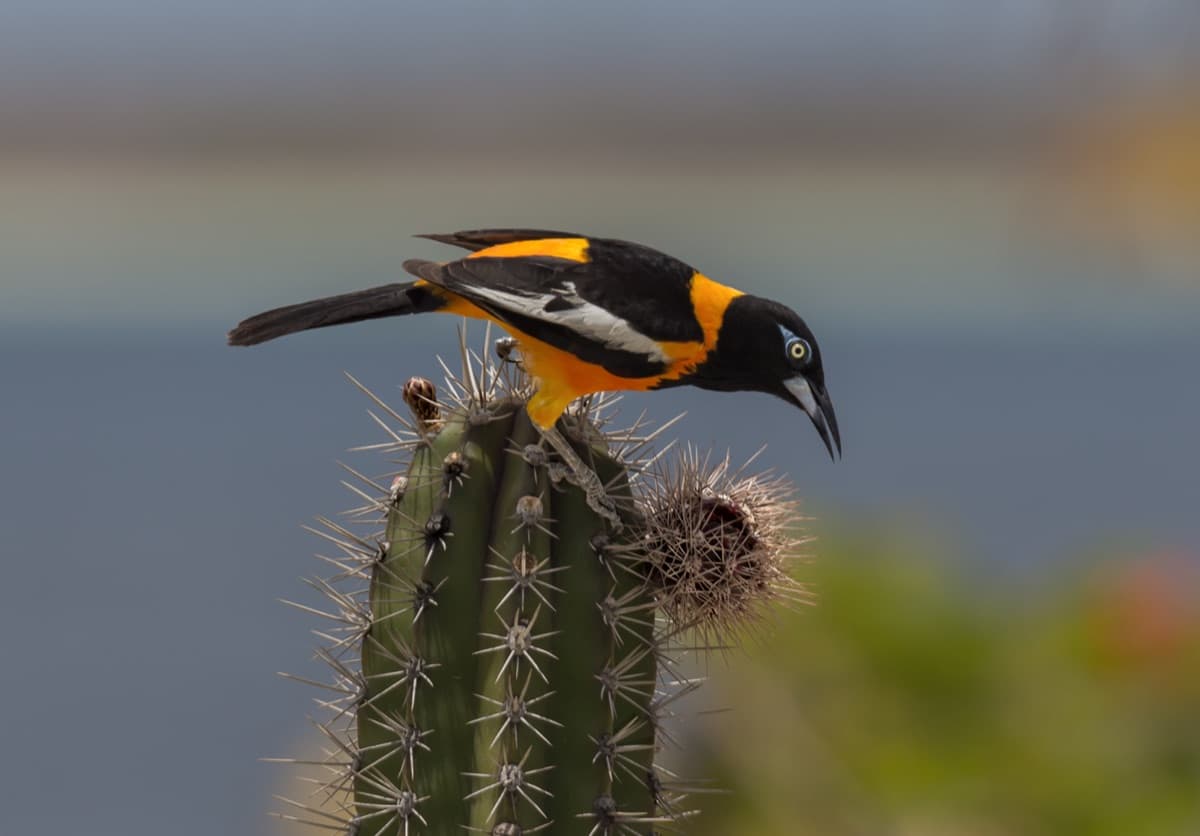
The Trupial is Curaçao's national bird — a striking black-and-orange songbird that is impossible to miss when it flies across the landscape. Males have a bright orange body, black head and tail, and distinctive white wing bars. They're loud, territorial, and often perch prominently on cactus tips or fence posts. Best sightings: Christoffel National Park, the dry cactus landscapes of the west coast, and the hills around Westpunt. A pair of Trupials often stays in the same territory for years.

💡 Tip: Listen before you look — the Trupial's song is a loud, whistling call that travels hundreds of metres. Follow the sound.

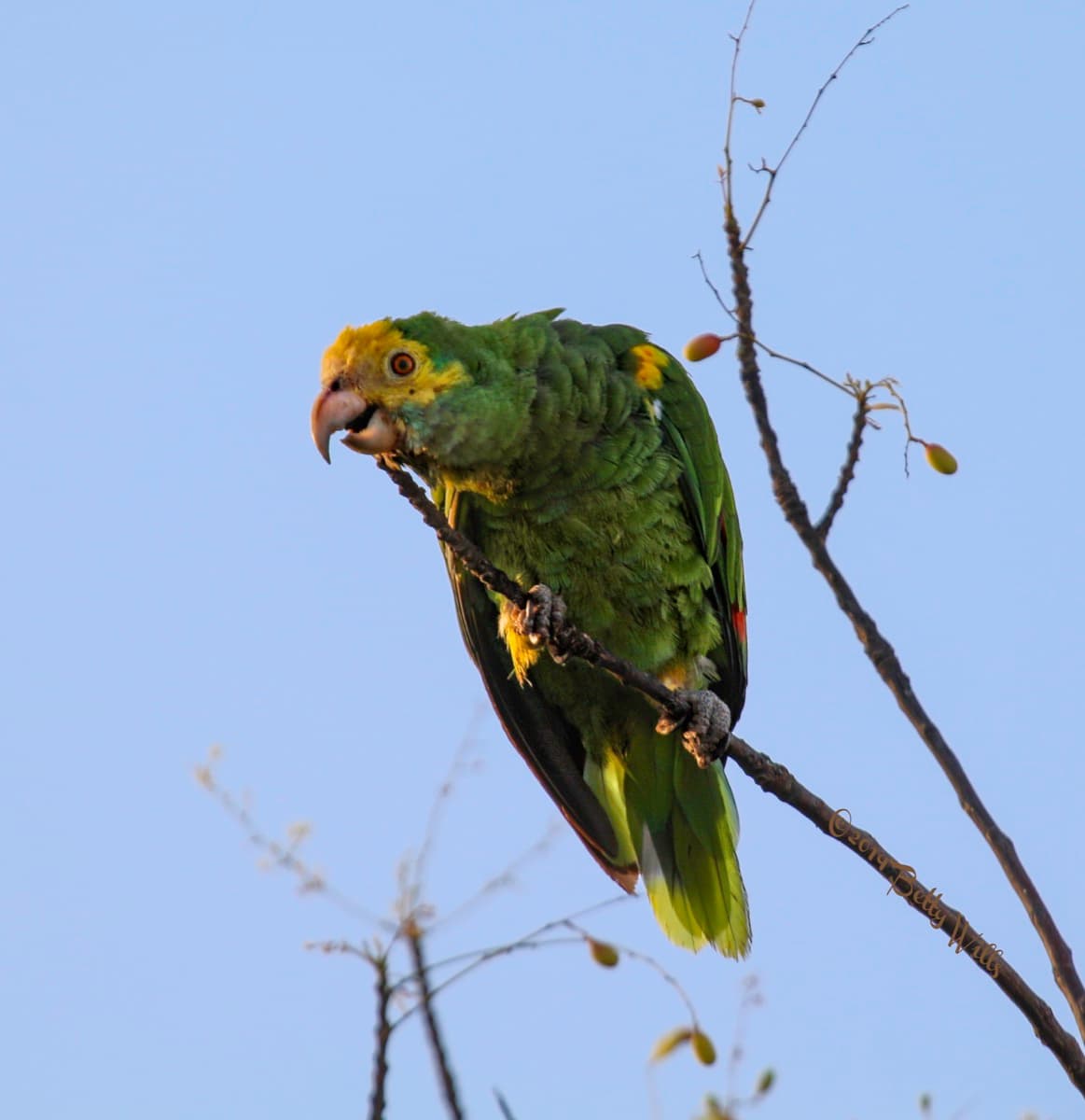
Yellow-Shouldered Parrot (Amazona barbadensis)

Yellow-Shouldered Parrot (Amazona barbadensis)

The yellow-shouldered parrot — locally called the Curaçao parrot — is the island's rarest endemic bird, critically endangered with only 700-900 individuals remaining in the wild. Medium-sized (around 33 cm), green body with yellow shoulders, blue on the wings, and a white forehead. They live primarily in the dry cactus landscape of Christoffel National Park and the surrounding hills. Conservation efforts are active; visiting the park supports protection programmes.

💡 Tip: Early morning (6-8 AM) and late afternoon (5-7 PM) in Christoffel Park are the best viewing times. They fly in small groups, usually calling loudly.

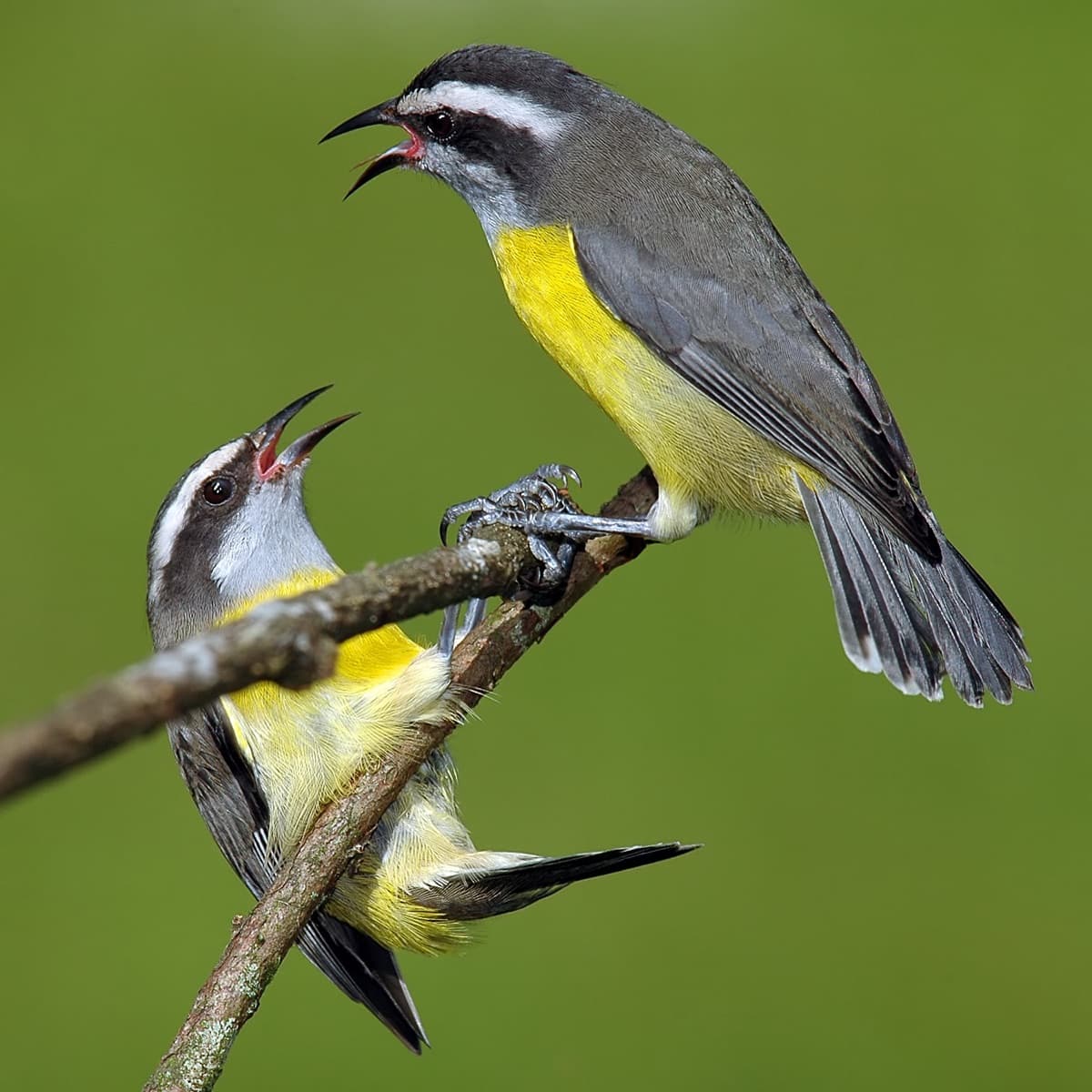
Bananaquit (Coereba flaveola)

Bananaquit (Coereba flaveola)

The bananaquit is the small, confiding bird you'll meet everywhere on Curaçao — black head with white eye-stripe, yellow belly, dark back. About 11 cm long. They're nectar feeders, moving between flowering plants with curved beaks adapted to reach deep into blossoms. Extremely common on hotel grounds, gardens, and terraces; they'll happily sip sugar water from open glasses if left unattended. One of the most accessible Caribbean birds for casual birdwatching.

💡 Tip: Leave a small dish of sugar water on your balcony and bananaquits will visit within hours. They're bold and unbothered by humans.

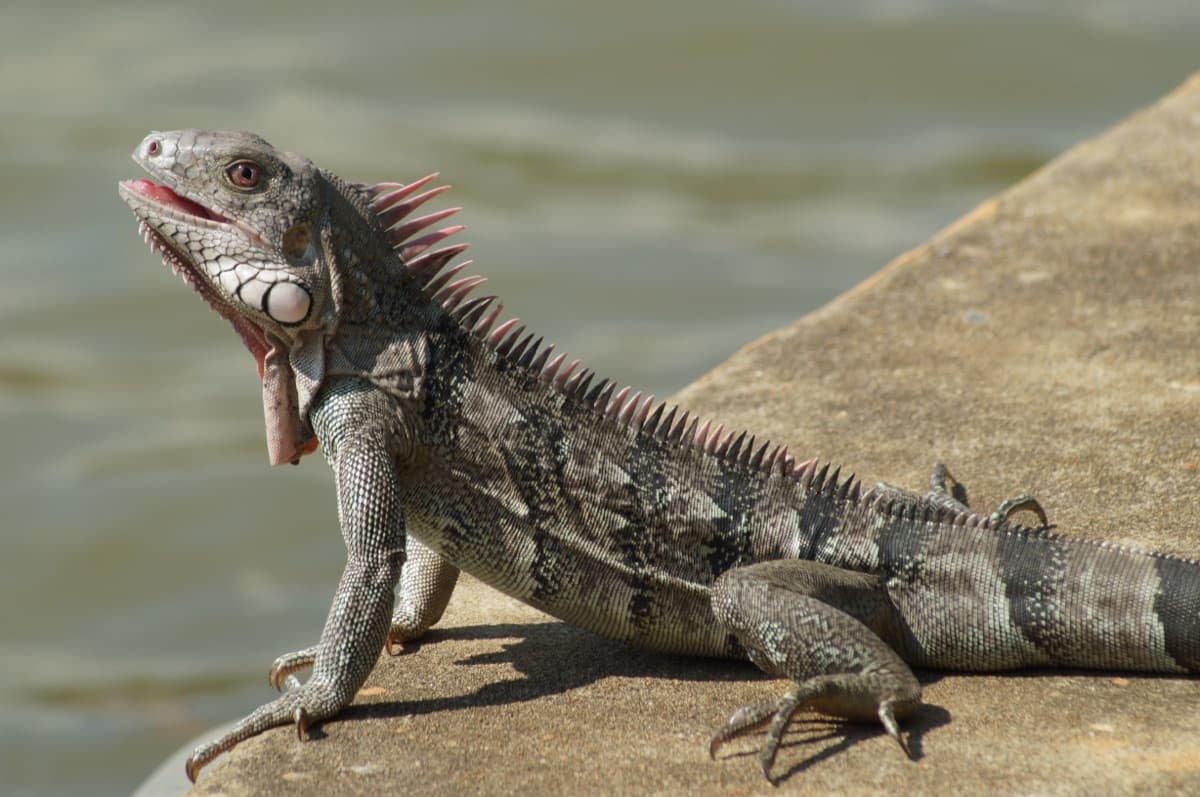
Green Iguana (Iguana iguana)

Green Iguana (Iguana iguana)

Green iguanas are Curaçao's most visible large reptile — often 1.5 metres long including the tail, with impressive spinal crests and loose skin folds under the chin. They're herbivorous, feeding on leaves and fruit, and are expert climbers often seen sunning on rocks or tree branches. Juveniles are bright green; adults shift to greyish-green with orange tones. On some parts of the island (Banda Abou, Christoffel Park area) they're hunted for food — iguana stew is a traditional Curaçao dish.

💡 Tip: The Curaçaosch Seaquarium and the restaurant at Landhuis Jan Kok both have resident tame iguanas — good for up-close observation.

Curaçao White-Tailed Deer (Odocoileus virginianus curassavicus)

The Curaçao white-tailed deer — locally called biná — is an endangered endemic subspecies of the North American white-tailed deer, surviving only in Christoffel National Park. The population is tiny (about 200 individuals), protected, and hard to spot during daytime. They're most active at dawn and dusk. The subspecies has been isolated on Curaçao for thousands of years and is genetically distinct from mainland white-tails. Conservation is a Christoffel Park priority.

💡 Tip: Early morning (6-7 AM) drives through Christoffel Park offer the highest chance of sighting. They cross the main park road at predictable points.

Bar Jack (Caranx ruber)

Bar jack ta un piská koló di plata, forma di torpedo, ku ta krese te serka di 60 cm, ku un raya skur delegá for di wowo te na rabo, i un bril blousá riba lomba. Den awa di Karibe no tin niun otro tipo di jack mas numeroso ku esaki, i normalmente nan ta muf den tou lòs den e awa ariba di refi, aunke bo ta topa piská solitario tambe. Nan dieta ta konsistí mayoria di piská chikí i kamarón, kompletá ku otro invertebrado kohí for di e awa, i nan tin kustumber di sigui nan kaminda sin molestá aunke tin buzo trahando serka. Na Kòrsou nan ta bini huntu na Halfway, tambe yamá Half Way West, entre Kokomo Beach i Boca Sami, ariba di refi na Sponge Forest pafó di Westpunt, i rònt di e steiger na Playa Piskadó, hopi biaha mesklá ku snapper i tou di creole wrasse.

💡 Tip: Wak ariba den awa habrí ariba di refi, no abou den e koral. Bar jack hopi biaha ta kompartí e awa ku barracuda i snapper ku ta kasa, asina ku si bo mira un bola di piská chikí ariba bo kabes, ta bal la pena wak dos biaha.

Barred Hamlet (Hypoplectrus puella)

Barred hamlet ta un piská chikí ku kurpa haltu, ku ta krese te serka di 15 cm, i ku raya skur vertikal riba un kurpa di koló kla te geel. E ta forma parti di un grupo di hamlet ku ta hopi parecido ku otro, asina ku ta masha difísil di distinguí for di otro bou di awa; barred, black, butter i yellowtail hamlet tur ta wòrdu haña huntu na mesun área, inkluso e parti abou i e drop-off na Playa Hundu na kosta wèst. Durante dia nan ta buska kuminda rònt di refi, kamarón i krab, i di biaha en biaha nan ta kohe un piská chikí; nan ta keda serka di e kantu pafó di refi, esun ku ta enfrentá laman habrí. Nan ta bastante teritorial, i hopi biaha bo ta mira dos di mesun espesie ta enfrentá otro riba un pida koral.

💡 Tip: Aserká poko poko i keda ketu; hamlet kasi no ta move ora nan sosegá, esaki ta duna bo tempu sufisiente pa wak bon e patronchi di raya, esun ku bo mester pa distinguí e espesienan for di otro.

Bermuda Chub (Kyphosus sectatrix)

Bermuda chub ta un piská di forma oval, koló di plata-grijs, ku ta biba den tou, i ku por alkansá te serka di 75 cm. Nan ta bai kalmu den grupo lòs riba fondo di santu, yerba di laman i kantu di refi. Alga eskarbá for di superfisie di refi ta forma mayor parti di nan dieta, kompletá di biaha en biaha ku un krab òf un moluska. Chub yòn hopi biaha ta skonde den sargassum ku ta drief den laman, i asina e korenti ta hiba nan hopi leu for di kas. Serka di Willemstad, nan ta parse ariba di refi na Oswaldo's Drop Off banda di e resort Sunscape, hopi biaha mesklá ku black durgon i bar jack ku ta traha den e mesun awa.

💡 Tip: Wak pa e tou lòs i trankil ku ta muf djis pafó di refi; chub kasi nunka ta kore bai skonde manera otro piská chikí ku ta biba den tou hasi.

Black Durgon (Melichthys niger)

Black durgon ta un triggerfish ku kurpa haltu, oval, koló kasi pretu, ku ta yega te serka di 50 cm, ku un liña blou kla riba kantu di e aleta dorsal i anal. E ta bini huntu den grupo lòs, ku ora tin te shen di nan huntu, banda di kantu ariba di refi i serka di drop-off; e ta piki plankton for di awa i kome alga direktamente for di riba refi. Na kosta wèst di Kòrsou e ta un bista regular den e awa na Witches Kitchen pafó di Banda Abou. Serka di Willemstad e ta parse tambe ariba di refi na Oswaldo's Drop Off banda di e resort Sunscape, hopi biaha huntu ku bar jack i Bermuda chub.

💡 Tip: Mantené un poko distansha, no landa dirèkt den un grupo di durgon; meskos ku otro triggerfish, nan por bira defensivo si bo hinka bo mes muchu serka di nan pida refi.

Black Grouper (Mycteroperca bonaci)

Black grouper ta un piská solitario ku kurpa pisá, ku por yega te serka di 1,5 meter i 100 kg, i ku por biba pasa 30 aña. E ta realmente komun den e awanan di Kòrsou, pero un espesie fásil pa lubidá, pasobra e piskánan grandi ta keda bon leu for di hende ku ta landa, en bes di keda dilanti pa laga hende wak nan. Na kosta noroeste di e isla, e baranka ku ta sobresalí largu di Watamula Reef ta un di e poko lugánan kaminda buzo, di biaha en biaha, ta topa ku un; e ta kompartí e mesun sombra di baranka ku green moray eel i dog snapper. Fuera di e temporada ku nan ta bini huntu pa reproducí, e ta kasa su so, i ta piki grunt i otro piská chikí di refi.

💡 Tip: Wak largu di baranka i sombra di baranka, no den awa habrí, i konta ku e lo keda leu asina e mira un buzo, en bes di bin wak mas serka.

Caribbean Sharpnose Puffer (Canthigaster rostrata)

Caribbean sharpnose puffer ta un pufferfish masha chikí, ku wowo grandi, ku kasi nunka ta krese pasa 12 cm, i ku ta preferá refi ku hopi koral blandu i sea fan. Diferente di hopi otro puffer ku ta skonde te ora skur kai, e ta buska kuminda den dia, i ta piki kamarón chikí, krab, kokolishi i vèrmè for di riba e refi. Na kosta noroeste di Kòrsou, sitionan di refi ku ta baha suave, manera Watamula, ta wòrdu deskribí komo lugá regular pa puffer chikí manera esaki, ku ta parse huntu ku boxfish riba e refinan yen di koral aki. Kada piská tin kustumber di teni su mes pida refi, i ora dos sharpnose puffer krusa kaminda, hopi biaha nan ta enfrentá otro pa un ratu kortiku pa defendé teritorio, en bes di sigui landa huntu.

💡 Tip: E ta landa lento sufisiente pa bo aserká trankil pa wak mas di serka, pero duna un pareha un poko espasio, pasobra ora bo mira dos huntu, hopi biaha nan ta meimei di un diskutí teritorial en bes di ta sosializá.

Cero (Scomberomorus regalis)

Cero ta un miembro delegá, ku ta landa rápido, di e famia mackerel, ku ta patruyá e awa habrí djis pafó di e refinan di Kòrsou, en bes di buska abrigo meimei di e koral mes; normalmente e ta bini su so òf den tou chikí i lòs. Adulto por yega te serka di 1,8 meter, i tipikamente e ta kasa den e promé 20 meter di awa, kome skuíd i kamarón, huntu ku piská chikí ku ta biba den tou manera silverside, anchovy, i herring. Guia di buzo lokal riba e isla ta pone cero, konosí aki tambe pa su nòmber Hulandes makreel, meimei di e poko piská di awa habrí ku buzo i snorkeler ta topa regularmente ora nan ta krusá kantu di refi. E ta wòrdu aprecia tambe komo piská di deporte.

💡 Tip: Skèn e awa blou habrí djis pafó di kantu di refi, no e koral mes; un forma rápido, koló di plata, ku ta pasa ta mas probabel un cero ku kualke kos skondí den e refi.

Coney (Cephalopholis fulva)

Coney ta un grouper chikí i komun ku ta bai skonde den kueba i buraku di refi den dia, riba henter Kòrsou, i ta sali despues ku skur kai pa kasa piská chikí i krustaseo. Adulto ta yega te serka di 43 cm i por biba serka di 20 aña. Kada coney ta kuminsá komo hembra; algun despues ta kambia seks i bira macho teritorial for di mas o menos 20 cm. Nan ta tolerá un buzo serka, pero nan ta keda nan distansha si nan sinti hopi hende rònt di nan. Banda pafó di refi kaminda e fondo ta baha, mas leu ku Jan Thiel Bay, i meimei di e Reef Balls na Playa Porto Mari, coney i su primo ku ta parse meskos, e graysby, ta wòrdu haña normalmente abou na refi, miéntras chromis ta keda den e awa ariba nan.

💡 Tip: Un grouper chikí, koló kòrá-brùin, ku ta keda flotá djis pafó di un buraku, no bèn aden, ta mas probabel un coney ku e graysby ku ta parse meskos.

Fairy Basslet (Gramma loreto)

Fairy basslet ta un piská chikí di refi, ku kasi nunka ta pasa 8 santimeter di largu, ku un kurpa di dos koló ku bo no por konfundí: violet-púrpel na e mitar dilanti i geel fuerte banda di rabo. E ta skonde den kueba, sombra di baranka i buraku riba muraya di refi vertikal, hopi biaha kologá ku kabes pabou bou di un baranka ku ta sobresalí, ora e ta piki zooplankton i krustaseo chikí for di e korenti ku ta pasa, den dia; anochi e ta bolbe skonde den e mesun buraku. Na Kòrsou e ta hopi biaha abundante largu di e muraya na Santa Martha, serka di e sitio bieu di Airplane Wreck, i riba e drop-off pariba di Fisherman's Wharf, kaminda e kara di baranka por parse kompletamente kubrí ku nan.

💡 Tip: Wak bou di baranka ku ta sobresalí i largu di e partinan sombriu di un muraya, no den espasio habrí, pasobra fairy basslet kasi nunka ta bai leu for di e abrigo di un buraku.

Flamingo Tongue Snail (Cyphoma gibbosum)

Flamingo tongue ta un kokolishi chikí di laman, kaminda e kaska mes ta un koló krema simpel, pero e animal bibu ta lora e den un mantel karnoso ku patronchi di mancha fuerte, ku ranchi oranje, esaki ta duna e e aparensia bibu ku a duna e su nòmber, te ora e wòrdu molestá; e ora ei e ta hala e mantel bèk paden i e koló ta desaparesé. E ta move masha poko poko riba koral blandu manera sea fan i sea whip; e ta kome e tehido bibu i ta uza e mesun venenu di e koral komo su defensa. Kasi nunka e ta pasa 4 santimeter, ni e ta bai leu for di e kolonia ku e ta kome for di dje. Na Kòrsou hende ta topa nan regularmente riba e sea fan na e parti abou di Sandy's Plateau, serka di Jan Thiel, meimei di koral blandu i fire coral ku ta krese ei.

💡 Tip: Wak poko poko largu di sea fan i sea whip na altura di wowo, pasobra e kokolishi ta move muchu poko poko pa yama atenshon, i su mantel por wòrdu konfundí ku parti di e koral te ora bo nota e ranchinan oranje.

Scorpionfish Pintá (Scorpaena plumieri)

E Scorpionfish Pintá ta un piska di rif pisá i ku mancha, ku ta krese te mas o menos 45 sentimeter, i ku ta konfia mas riba kamuflahe ku riba lihures: e ta keda ketu keto riba santu, baranka chikí òf koral na lugá di landa, i e ta mezkla ku su ambiente te ora un piska òf krustáseo ku ta pasa yega bastante serka pa e sùig'é paden den un solo momento, meskos ku un aspiradó. Na Kòrsou e ta parse komo un di e residentenan skondí di e rif, na lugánan manera Playa Lagun, kaminda santu ta topa ku rif, i Playa Manzalina, na Reef Balls di Playa Porto Mari, na e sitio Halfway entre Kokomo Beach i Boca Sami, i rònt di e wrak di Tugboat Saba serka Jan Thiel. E tin mas o menos diesdos spina ku tin veneno na nan punta, riba su aleta dorsal, i mayoria di e pikamentu ta sosodé ora un buzo òf snorkelista pone man òf pia abou sin wak promé; e veneno kasi nunka ta peligroso, pero e ta kousa dolor fuerte i duradero, i hinchazon.

💡 Tip: No pone man ni fin riba santu òf baranka chikí ku bo no a chek promé; i si e pika bo, laba e área ku awa di laman i mete e den awa asina kayente ku bo por soportá sin haña daño, pa kalma e dolor.

Mero Goliath (Epinephelus itajara)

E Mero Goliath ta e species di mero mas grandi ku ta wòrdu haña den awa di Kòrsou, un piska ku kurpa pisá ku por yega mas o menos 2,5 meter i vários shen kilo, ku un vida ku por dura te mas o menos 40 aña. E ta un piska solitario ku ta keda serka di un solo pida chikí di rif, na lugá di kana rònt hopi; i un mero adulto ta tene e mesun plataforma ei komo su teritorio pa hopi tempu, i e ta kontestá intrusonan ku un sonido fuerte i profundo, manera un 'bark', for di su swim bladder, na lugá di hui bai. Pasobra kada piska ta keda riba su mes pida rif, na lugá di move huntu ku otro na banku, haña un mero na Kòrsou ta nifiká haña presis su plataforma; pero un mero ku ta biba fiho na un lugá i ta defendé su teritorio ta fásil pa rekonosé, asina ku bo nota su tamaño enorme.

💡 Tip: Duna un mero Goliath residente su spasio i move kalmu; ta konosí kaso kaminda un mero ku ta defendé su teritorio a ataká buzo ku a hala muchu serka dje.

Graysby (Cephalopholis cruentata)

E Graysby ta un miembro chikí di e famia di mero, ku ta wòrdu haña na rif di Kòrsou, i ta krese te mas o menos 40cm. Diadia e ta skondí den kueba di rif, kraki i sponshi bashí, sin laga bo wak'é, te ora anochi yega i e ta sali pa kasa piska chikí manera chromis, squirrelfish i gobies, huntu ku krustáseo. Su kurpa kòrá-maron ku mancha i pintikí kla ta yud'é mezkla ku koral i sponshi miéntras e ta warda pasa e ora di dia. A opservá algun individuo ku ta kasa huntu ku morea despues ku solo baha, probablemente pa aprovechá di e presa ku e morea ta spanta for di skondite. Barakuda, tribon i mero mas grandi ta su prinsipal predado, un di e motibunan pakiko e ta dependé asina tantu riba bon skondite den rif diadia.

💡 Tip: Chek kueba, kraki i buraku di sponshi diadia, òf wak e base di rif ku un lanterna anochi, ora e ta sali pa kasa.

Soapfish Mas Grandi (Rypticus saponaceus)

E Soapfish Mas Grandi ta un piska macizo, ku koló oliva-maron apagá, ku ta yega mas o menos 35cm, i ta wòrdu haña den tereno di rif poko profundo rònt di Kòrsou. Normalmente e ta so, mitar skondí na pia di un kabes di koral òf trapá den un kraki, i anochi e ta kasa piska chikí i krustáseo, miéntras diadia e ta keda kasi sin move. Su nòmber ta bini for di e kapa diki di muku ku ta tapa su kueru: ora e piska ta bou di stress òf ora hende tòk'é, e kapa ei ta bira spuma manera habon, ku ta yuda kip'é leu for di predado manera tribon i eagle ray. Buzo normalmente solamente ta ripará dje ora lus di un lanterna dal'é skondí kontra e base di rif.

💡 Tip: Nunka kohe un soapfish òf laga e tòka bo kueru sunu; su kapa di muku ta bira un veneno suave ora e ta sinti su mes menasá.

Honeycomb Cowfish (Acanthostracion polygonius)

E Honeycomb Cowfish tin un kaska duru, na forma di kaha, hasí di plachi di wesu pegá huntu, marká ku e patronchi di seis banda ku ta duna e su nòmber; solamente su aleta, wowo i boka por move liber. Adultonan ta yega mas o menos 50cm i ta wòrdu wak riba rif di Kòrsou; nan ta move poko poko i ku kalma, na lugá di kore bai skonde, pasobra e kaska mes ta e piska su prinsipal defensa kontra predado, sobretodo tribon. Normalmente e ta buska kuminda so diadia, i e ta kohe sponshi, tunicate i kamaron chikí for di fondo. Su ritmo trankil i su poko altura ta hasi'é un di e piskanan di rif mas fásil pa aserká sin spant'é.

💡 Tip: Buska e miéntras e ta buska kuminda sin purá serka di sponshi i tunicate riba rif; su ritmo poko poko i su kaska manera armadura ta nifiká ku kasi nunka e ta hui, pa asina bo por wak'é di serka i sin purá.

Palu di Manzalina (Hippomane mancinella)

E palu manchineel, konosí lokalmente komo manzalina, ta krese lo largo di kosta di Kòrsou; Playa Manzaliña serka San Juan a haña su nòmber for di e palu akí. Tur parti di dje ta tóksiko: e fruta chikí ku ta parse un 'crab apple' bèrdè, e blachinan, e kaska, i e sukú manera lechi ku ta sali for di kualke kibra den e palu. Para bou di dje ora ta yobe por kousa blister riba kueru, pasobra e awa di yobida ta laba residu di sukú for di e blachinan i lag'é kai riba bo kurpa. Su nòmber Spañó, manzanilla de la muerte, ke men 'apelchi di morto'; segun loke ta konosí, e Karibenan tabata usa nan blachi pa envenená e awa di nan enemigunan, i eksploradó Juan Ponce de León a muri na 1521, despues ku a wòrdu heridá pa un flecha ku tabatin sukú di manchineel na su punta.

💡 Tip: Siña rekonosé su blachi brioso na forma oval i su fruta chikí ku parse apel bèrdè, i nunka sinta òf buska refugio bou di dje, sobretodo ora ta yobe.

Sponshi Oranje Oreha di Elefante (Agelas clathrodes)

E sponshi akí ta krese den lòbu largu, na forma di oreha, ku por yega mas o menos 1,8 meter di ancho, den koló ku ta varia for di oranje te kòrá tirando pa maron. E ta biba di filtrá kuminda: e ta hala awa di laman door di su tehido pa separá partikulanan di kuminda for di dje, i e por biba pa siglonan largu asina ku e ser stabilisá riba rif. Pasobra e ta prosperá mihó den awa mas profundo, mas o menos 12 pa 40 meter, ta mas buzo ku ta haña'é, ku snorkelista. Na Kòrsou e ta parse riba e rif ku ta baha na pendiente pafó di Westpunt, rònt di Sponge Forest, lo largo di e pendiente pará di rif na Playa Largu serka San Juan, i skondí bou di plataforma di koral na Bullenbaai.

💡 Tip: Buska e ora bo ta buza profundo, mas ku ora bo ta snorkel; su lòbu oranje kla ta resaltá klaramente kontra e plataforma di rif mas skur kaminda e ta krese.

Palometa (Trachinotus goodei)

Tambe konosí komo great pompano, e piska plateá akí, un tipo di jack, tin un kurpa plano i haltu, ku filamento largu ku ta kologá for di su aleta dorsal i anal. Adultonan normalmente ta yega mas o menos 50 sentimeter i ta reuní na banku suelto riba rif den awa poko profundo; diadia nan ta buska kuminda manera krustáseo, worm, molusko i piska chikí. Palometa hóben tin tendensia di keda mas serka di pida santu ku baranka chikí, na lugá di e rif mes. Rònt di Kòrsou nan ta parti di e piskanan plateá ku ta biba na banku ku snorkelista ta pasa ariba nan, riba e rif franha poko profundo, generalmente den awa di ménos ku mas o menos 12 meter profundo.

💡 Tip: Wak e filamentonan skur ku ta kologá for di e aleta dorsal i anal; esaki ta distinguí palometa for di permit i pompano ku ta parse meskos i ta biba na banku serka.

Porcupinefish (Diodon hystrix)

E pufferfish akí, ku kurpa pisá, ta yen di spina i por krese te mas o menos 90 sentimeter. E ta kasa so anochi pa snail, kangreu i sea urchin, i e ta pasa e ora di dia trapá den un kraki òf kueba di rif. Si e sinti su mes serio menasá, e porcupinefish ta bebe awa pa infla su kurpa te mas o menos dos biaha su tamaño normal, i e ta hisa su spina komo su último defensa. Na Kòrsou nan ta parse skondí entre e wraknan di outo i e pontoon barge na Kokomo Beach, rònt di Elvin's Plane Wreck, i serka Fisherman's Hut. Buzo i snorkelista mester wak nan, sin kohe nan: obligá un porcupinefish infla ta un stress grandi pa e piska, i su spina por pika kueru.

💡 Tip: Nunka kohe òf persigui un porcupinefish pa hasi'é infla; esaki ta un reakshon di stress ku tin un presio real pa e piska, i su spina por pasa dor di kueru.

Rainbow Runner (Elagatis bipinnulata)

E Rainbow Runner ta un tipo di jack ku kurpa aerodinámiko, lomba blou-bèrdè, barika kla i un raya hel smal ku ta kore lo largo di su banda. E por yega 1,8 meter, aunke piska di 60 pa 90 sentimeter ta muchu mas komun. Rainbow runner hopi biaha ta biaha na banku grandi, serka superfisie, ariba di rif, i nan ta kasa piska chikí i invertebrado durante nan biahe. Riba rif di Kòrsou nan normalmente ta wòrdu wak haltu den e kolòm di awa, ta krusa e awa habrí na lugá di keda serka di e koral mes.

💡 Tip: Wak e awa habrí ariba di rif, na lugá di e koral mes; rainbow runner ta keda leu for di fondo i hopi biaha ta pasa lihé den banku suelto.

Anémona Gigante di Karibe (Condylactis gigantea)

E anémona gigante di Karibe ta un anémona solitario, ku koló di su tentákulonan ta bai for di blanku kla te pardu, i e puntanan tin biaha ta bira rosa òf mòrá. Normalmente e ta midi te mas o ménos 30cm, e ta keda fihá na mesun lugá riba e ref mayoria di tempu, i ora e move, e ta hasi'é masha poko-poko. Algun eksemplar tin sufisiente beneno den nan tentákulonan pa inmobilisá un piská chikí, kamaron òf bichi pa sirbi komo kuminda, aunke e pika kasi nunka ta molestá e kamaron limpiadó di Pederson ku hopi biaha ta skonde meimei di e tentákulonan sin haña daño. Na Kòrsou bo ta topa'é regularmente entre e esponhanan i e koral duru na Cas Abao, i tambe riba e parti mas poko-hundu i variá di e ref na Double Reef, serka di Corendon Mangrove Resort.

💡 Tip: Wak pa un kamaron limpiadó di Pederson, chikí i kasi transparente, ku ta move meimei di e tentákulonan, i tene bo mannan bon leu, pasobra algun eksemplar por duna un pika suave.

Piská Lima Delegá (Monacanthus tuckeri)

E piská lima delegá aki, plat di banda pa banda, no ta pasa mas o ménos 10cm di largura, i kasi nunka e no ta laga e protekshon di koral suave i taki di gorgonia. Su kontorno delegá i su mancha-mancha ta yuda e kamuflahé bon. Durante dia e ta pasa tempu pikando kangreu chikí, bichi i pida-pida zooplankton ku ta drif for di e koral; despues di anochi e ta fiha su kurpa meimei di e takinan, sostené pa un sumpiña dorsal pará i un pida karni na su barika, i tin biaha e ta wanta su boka riba un pólipo miéntras e ta sosegá. Mero i barracuda ta su prinsipal depredadó. Na Kòrsou e ta parti e mondinan di koral suave ku piská trompèt na lugánan manera Atlantis, Sandy's Plateau pafó di Jan Thiel, i Dive City serka di Pietermaai.

💡 Tip: Buska taki pa taki den koral suave i abanikonan di laman, en bes di wak henter e ref habrí; normalmente si bo mira un tiki koló ku ta sigui drai pa keda será tras di un taki, ta e piská aki.

Piská Kahon Liso (Lactophrys triqueter)

E piská kahon liso ta karga su kurpa den un kaska di wesu triangulá i pegá, dekorá ku mancha blanku, ku un boka skur, kasi pretu, na su parti dilanti. E ta yega te mas o ménos 47cm. Belosidat no ta su defensa: e ta konfia riba e armadura di wesu, mas un beneno den su kueru ku e por lag'é sali ora e sinti stress, di manera ku e ta landa sin purá i ta laga snorkeler aserká'é basta será. Normalmente e ta kome dor di keda flotando net ariba di fondo i supla un chorro di awa den e santu pa saka bichi chikí i otro invertebrá skondí. Na Kòrsou e ta parse riba e plato di koral suave, poko hundu, na Sandy's Plateau pafó di Jan Thiel, huntu ku honeycomb cowfish i piská bunita di baranka, i tambe entre e bida di ref na Dive City serka di Pietermaai.

💡 Tip: Su forma manera kaha i su manera di landa sin purá ta hasi'é fásil pa wak di serka, ma su kaska pegá ta nifiká ku e no por hui lihé, i un eksemplar bou di stress por lag' beneno sali den e awa, pesei duna'é espasio, en bes di bin masha serka di dje.

Kangreu Flecha Liña Hel (Stenorhynchus seticornis)

E kangreu flecha liña hel ta un krustáseo chikí, kompòní manera un araña delikadu, ku un kurpa punta skèrpi, un par di garanan mòrá masha chikí pa su tamaño, i pianan hopi biaha mas largu ku su kurpa mes. Kompletamente krisí e ta midi mas o ménos 6cm, i di dia e ta keda skondí mayoria di tempu, sea den un esponha tubo òf muviendo ku kuidou meimei di e brasanan pikadó di un anémona òf e sumpiñanan di un bichi di laman spinoso. Asina solo baha, e ta sali pa kome detritu, alga i bichi chikí. E banda pafó di e ref di Cas Abao, yen di esponha tubo grandi i anémona, ta ofresé eksaktamente e tipo di refugio ku e kangreu aki ta preferá, i ta bal la pena bai wak. Mero, piská globo, piská trigger, wrasse i ronko ta su prinsipal depredadó.

💡 Tip: Sende un lus den boka di esponha tubo i esponha baril grandi; e pianan fini i kurpa delegá di e kangreu ta fásil pa pasa desapercibí kontra e interior irregular di e esponha.

Tribon Yaya (Ginglymostoma cirratum)

E tribon yaya ta e tribon ku mayoria snorkeler i buzo na Kòrsou realmente ta topa, mayoritariamente pasobra e ta pasa e oranan di dia ketu riba santu òf kologá bou di un saliente, en bes di patruyá e awa habrí. Animalnan grandi por yega mas ku 4 meter i mas o ménos 110 kg, ku un kabes redondo, boka chikí i un par di bigote ku e ta usa pa lokalisá lagosta, kangreu i karko skondí den e fondo di laman; e ta kasa mayormente despues di anochi. Na Kòrsou e ta parse regularmente na Boca Patrick i Houtjesbaai riba kosta nort, i alrededor di e lugánan di drift serka di Punt Kanon i Tarpon Bridge na e punta ost, mas e kueba na North Point di Klein Curaçao. Generalmente e ta trankil, pero e por duna un morde doloroso komo defensa si algun hende gara'é òf akorralá'é, pesei admir'é for di distansia, en bes di ekstendé man pa e.

💡 Tip: Wak bou di salientenan i den boka di kueba, en bes di den awa habrí: un forma gris ketu riba santu kasi semper ta un tribon yaya ta sosegá.

Koral Kandela (Millepora)

Koral kandela no ta un koral berdadero, ma un hidrozoario, mas relashoná ku kwal i anémona, i tur pólipo riba su superfisie tin pika. Na Kòrsou normalmente e ta krese komo un blachi fini i kibradiso òf un kapa riba baranka i koral morto, en bes di un kabes sólido, den tonu hel-pardu kla te berdóso. E ta tapa e plato- i saliente-nan di ref den henter e isla, i e forma di blachi ta partikularmente denso na Rolling Stones serka di Sint Michiel. E ta parti tambe e plato pòch pa snorkel na Playa Largu (Piscadera) ku koral suave, na mas o ménos 4-5 meter, presis kaminda hende ku ta kana den awa i landa ta pasa. E ta soportá kalor i golpi ku ta mata koral berdadero, pesei e ta sigui plama asta na lugánan kaminda otro refnan tin ménos koral.

💡 Tip: Un tokada kontra dje ta lanta un mancha ku ta kima den algun minüt: laba ku vinager òf alkohol di frega, nunka ku awa dushi, ku ta hasi e pika pió.

Koral Pretu (Antipatharia)

Koral pretu a haña su nòmber di su eskeleto, no di su koló: e tehido bibu normalmente ta pardu, kòrá, oranhe òf hel, i solamente e strukura di takinan bou di dje ta pretu. Kolonianan ta krese poko-poko den forma di taki, manera un mata chikitu, kasi sin krese den un aña, ma nan ta biba pa siglonan largu, tin biaha asta miles di aña, kasi sin nada ku ta kasa nan. Pasobra nan ta kome prinsipalmente zooplankton ku ta drif den awa, en bes di depende di solo, nan ta preferá e kantonan mas skur di e ref: kueba, kanal i saliente hundu. Na Kòrsou e konsentrashon mas kla a duna un lugá di buseo su nòmber, Black Coral Garden, riba e tereno di plantashi San Nicolas serka di Westpunt, ku mas kolonia mas leu den e partinan hundu di Seldom Reef na Bullenbaai.

💡 Tip: E ta parse mas un mata skur sin blachi ku 'koral', pesei wak den e partinan di muraya mas skur i mas hundu, en bes di e parti plano di ref kaminda solo ta bati. Evitá kontakto: e por irritá kueru, i un kolonia ta tuma siglonan pa krese bèk.

Koral Kopa Oranhe (Tubastraea coccinea)

Koral kopa oranhe ta un koral duru, chikí, ku no ta konstruí ref, kaminda su póliponan oranhe bibu ta parse mas un grupo di anémona chikitu ku un kabes di koral tipiko; e ta ekstendé tentákulo transparente pa gara plankton i pida-pida material organiko ku ta drif, en bes di haña energia for di solo via alga den su tehido. E no ta originalmente for di Karibe: registronan di transporte maritimo ta indiká ku el a wòrdu hibá aki for di Indo-Pasífiko riba kaska di barku, i e awanan rònt di Kòrsou ta figura entre e promé lugánan den e region kaminda el a aparesé, bèk na 1943. E echo ku e no ta dependé di lus ta laga e koloniá saliente ku sombra i tambe lugánan ku hopi koriente, i komo aki no tin nada ku ta kasa e, e ta sigui kita spasio for di e koralnan nativo riba e ref habrí. Hopi biaha e ta kubri e arko i murayanan na Tarpon Bridge i largu di e declive na Piedra Pretu (Black Rock), tur dos na e punta ost di e isla.

💡 Tip: Su póliponan normalmente ta keda será durante dia i habri despues di anochi, pesei un dive di anochi ta mustra e tentákulonan oranhe kompletamente ekstendí.

Karko (Strombus gigas)

Karko ta e molusko di kaska mas grandi ku ta eksistí den awa di Karibe; su kaska spiral diki ta krese te mas o ménos 30 cm i ta habri bira un rand ku un tinte rosa ora e bestia yega na su edat adulto, i eksemplarnan por biba dékadanan largu. E ta pasa su dianan kome alga i detritu riba santu habrí i yerba di laman, i e ta bira mas aktivo asina solo baha. En bes di hui for di peliger, su prinsipal defensa ta hala henter su kurpa bèk paden di e habertura di e kaska. Na Kòrsou bo ta mira'é regularmente den e kanal di santu na Double Reef, serka di Otrobanda, kaminda e ta parti e trecho di fondo habrí ei ku raya di zùit i sand tilefish. E kaska i su karni ta konosí lokalmente ku e nòmber Papiamentu karko, i kaska bashí ta wòrdu hañá regularmente riba kosta.

💡 Tip: Wak riba santu habrí i yerba di laman en bes di riba e ref mes, i buska un rastro di rastreo den e sedimento, un señal ku un karko a kome serka einan.

Kamaron Limpiadó di Pederson (Ancylomenes pedersoni)

Kamaron limpiadó di Pederson ta kamaron chikí, kasi transparente, ku no ta pasa mas o ménos 3 cm di largura, ku ta biba di kita parásito i kueru morto for di piská di ref. Nan ta biba den alkanse di e tentákulonan di un anémona di laman, un lugá ku mayoria otro bestia chikí ta evitá pasobra bin serka asina normalmente ta resultá den un pika, ma e kamaron mes no ta haña daño, i un solo anémona por kontené kasi diesdos di nan na mesun momento. Nan antenanan kla, ku ta move konstantemente, ta funshoná komo un señal, hala piská bin pa wòrdu limpiá, en bes di e kamaron mester buska nan. Na Kòrsou nan ta wòrdu mirá regularmente entre anémona na Playa Manzaliña, riba kosta San Juan, un lugá tambe konosí pa scorpionfish, flounder i otro bida chikí di ref ku ta fásil pa pasa desapercibí.

💡 Tip: Wak pa e antenanan blanku ku ta move, saliendo for di un anémona, en bes di e kurpa di e kamaron mes, ku kasi ta disparsé kompletamente kontra e tentákulonan.

Karabela Portugés (Physalia physalis)

Karabela portugés no ta un solo animal, ma un sifonóforo, un kolonia di sèl spesialisá ku ta drif i funshoná komo si fuera un solo bestia, distinguí pa un flotadó transparente den koló asul-mòrá ku ta drif riba e superfisie, ku tentákulonan ku ta kologá algun meter bou di dje. Kwal berdadero ta biba den e mesun awa i tin mas o ménos e mesun herment: sèlnan di pika riba nan tentákulo, yamá nematosisto, ku nan ta usa pa aturdí e plankton i piská chikí ku tur dos grupo ta kome. Ningun di dos ta presente konstantemente rònt di Kòrsou; avistamentu ta bini i bai segun temporada, en bes di aparesé kada buseo. Kontakto por varia for di un pika liher te un dolor intenso i duradero, i un tentákulo suèlt por sigui pika asta despues di keda morto seku riba santu, pesei ta bal la pena nunka mishi ku un for di kuriosidat.

💡 Tip: Si e pika bo, laba ku awa di laman i vinager, en bes di awa dushi. Awa di tubo por reaktivá kualke nematosisto ku a keda riba e kueru.

Mero Tigre (Mycteroperca tigris)

E mero tigre ta un depredadó solitario di ref, yamá pa su rayanan skur manera di tigre, ku ta kore for di su aleta dorsal baha kada banda di su kurpa; e koló di fondo ta varia for di pretu-pretu te kòrá, pardu kla òf hel, dependiendo di e eksemplar. Animalnan grandi ta yega mas o ménos un meter di largura, i nan ta kasa via emboskada, kapturando ronko, piská papagai, piská angel i otro piská di ref for di skondit, en bes di persiguí nan den awa habrí. Manera vários spesie di mero, nan ta kambia seksu durante nan bida, kuminsando komo hembra i madurando bira macho segun nan ta bira mas grandi. Na Kòrsou nan ta parse den e partinan mas hundu di e ref, reportá na Lost Anchor serka di Beacon Point riba kosta suredeste, i na Halfway riba kosta wèst, hopi biaha keda serka di skondit en bes di den espasio habrí.

💡 Tip: Nan rayanan vertikal ta mezklá ku sombra ora nan ta sosegá, pesei wak salientenan riba e declive hundu di e ref, en bes di riba santu habrí.

Jack Wowo di Kabai (Caranx latus)

Jack wowo di kabai ta jack grandi, ku kurpa haltu, yamá pa nan wowo prominente; nan ta krese te mas o ménos un meter, ku un kurpa plat, koló plata i un rabu bifurká skèrpi. Nan ta biaha den grupo suelto den awa habrí pafó di e ref, miéntras piská mas hóben normalmente ta keda mas serka di kosta, serka di plaianan di santu. Animalnan grandi ta kome piská mas chikí, kamaron i otro invertebrá, kapturá meimei di awa en bes di serka di e ref mes. Nan no ta miedoso di hende, hopi biaha landando serka pa wak un buzo òf snorkeler promé ku nan sigui bai. Riba kosta noroeste di Kòrsou, grupo ta wòrdu mirá regularmente kologá den e kolòm di awa ariba e ref na Playa Gipy, tin biaha mesklá ku bar jack i snapper rabu hel.

💡 Tip: Un grupo será, plata, ku ta muf lihé ariba bo kabes normalmente ta horse-eye jack òf bar jack kome piská chikí komo carnada; keda ketu den awa habrí i hopi biaha nan ta bini bèk pa wak bo mas di serka.

Tang Asul (Acanthurus coeruleus)

Tang asul ta e piská paster asul kompletu klásiko di e ref; nan ta krese te mas o ménos 40 cm i ta pasa dia kitando alga for di baranka i koral morto, sea solo òf drif den grupo mesklá ku otro piská ku ta kome alga. Yong ta kuminsa ku un koló hel neon sorprendente promé ku nan bira asul segun nan madurá. Ocean surgeonfish tin mas o ménos e mesun tamaño ma ku un koló grís-pardu simpel, i e dos spesienan hopi biaha ta paster e mesun partinan di ref huntu ku doctorfish, formando grupo suelto ku ta muf den seksionan habrí i soleá di koral. Tur dos ta karga un sumpiña chikí i skèrpi serka di base di nan rabu, ku ta plega habri pa defensa; ta di einan e nòmber Ingles 'surgeon' (siruhano) ta bini. Na Kòrsou e grupo mesklá aki di paster ta wòrdu mirá regularmente riba e plato di ref na Stella Maris Reef serka di Willemstad, i tang asul tambe ta parse riba e ref mas hundu na Alice in Wonderland, pafó di Playa Kalki.

💡 Tip: Wak base di rabu pa un sumpiña chikí ku por plega habri, na tur dos spesie; inofensivo si bo laga e piská keto, ma evitá akorralá un kontra e ref.

Piská Mariposa Rayá (Chaetodon striatus)

Piská mariposa rayá i piská mariposa kuater-wowo ta dos piská chikí di ref ku kurpa plat, hopi biaha wak huntu riba e koral mas pòch di Kòrsou. Piská mariposa rayá tin banda vertikal pretu-i-blanku bon marká i un raya skur ku ta pasa dor di e wowo; piská mariposa kuater-wowo tin un patronchi di liña diagonal poko marká i un wowo falsu serka di e rabu ku, huntu ku e wowo berdadero skondí den un banda skur, ta duna e spesie su nòmber. Tur dos ta krese te bou di 16 cm, ta kita bichi, invertebrá chikí i pólipo di koral suave i anémona for di kraki den e ref durante dia, i ta forma pareha monógamo ku ta tene mesun trosi di ref pa aña largu. Na Kòrsou nan ta wòrdu mirá regularmente riba e hardinnan di koral na Sandy's Plateau serka di Jan Thiel i largu di e ref na Korta Pe, kaminda vários spesie di piská mariposa ta encontrá, i nan ta parse den kantidat masha haltu riba e declive di ref na Playa Jeremi.

💡 Tip: Piská mariposa kasi semper ta biaha di dos-dos; si bo mira un, normalmente ta un señal pa bo wak e koral rònt pa e pareha ku tin serka.

Ronko Franses (Haemulon flavolineatum)

Ronko franses ta un piská básiko riba ref di Kòrsou; nan ta pak den grupo dènso durante dia, buskando protekshon bou di saliente i serka di elkhorn coral, promé ku nan plamama despues di anochi pa kasa krustáseo chikí, bichi i molusko. Animalnan grandi ta yega mas o ménos 30cm. Snapper schoolmaster, un parentela mas robusto ku ta krese pasa 60cm i por biba dékadanan largu, ta preferá e mesun protekshon di elkhorn coral, i hopi biaha ta forma grupo huntu ku ronko i snapper mahogany. Ronko i snapper ku ta forma grupo ta wòrdu mirá regularmente rònt di e wreck pòch di Tugboat, miéntras snapper schoolmaster spesíficamente ta buska protekshon, huntu ku snapper mahogany i blackbar soldierfish, entre e montonnan di koral ku tin kueba bou di dje, pafó di Playa Kalki (Alice in Wonderland).

💡 Tip: Ronko franses a haña nan nòmber di e zonido bou di ronka ku nan ta produsí dor di frega nan djente den garganta; bo por tende esaki si bo aserká ketu-ketu. Snapper schoolmaster ta keda ketu sin zonido, ku un liña asul kla bou di kada wowo komo e señal mas fásil pa rekonosé.

Sargento Mayor (Abudefduf saxatilis)

Sargento mayor, piská di ref plata-hel ku ta krese te mas o ménos 23cm, a haña nan nòmber di e sinku òf seis banda vertikal skur ku ta krusa nan kurpa, un patronchi ku ta rekordá e rayanan di rango militar. Nan ta bin huntu den awa pòch riba tapa di ref, hopi biaha formando grupo suelto pa kome ku por yega shen-shen di piská, i bo ta wak nan hopi biaha rònt di Elvin's Plane Wreck, huntu ku blue chromis, i tambe riba e ref na Dive City den e distrikt Punda di Willemstad. Yellowhead jawfish ta un vesindario mas ketu: piská kla, ku kabes hel, di solamente mas o ménos 10cm largu, ku ta koba buraku den seksionan di santu, forá nan ku pida-pida kaska i koral, i despues drif net ariba e entrada kome zooplankton ku ta pasa, bulando bèk rabu-promé n'e mínimo disturbio. Nan ta parse den e protekshon di koral pafó di e barankanan na Playa Jeremi, entre calamar, piská papagai i surgeonfish.

💡 Tip: Wak abou riba santu habrí pa un kabesitu kla ku ta saka for di entrada di un buraku; aserká poko-poko, pasobra un yellowhead jawfish ta disparsé rabu-promé den su buraku n'e promé movementu súbito.

Squirrelfish (Holocentrus adscensionis)

Squirrelfish i blackbar soldierfish ta dos di e piská wowo grandi, tirando pa kòrá, ku ta tuma kontrol di e refnan di Kòrsou asina solo baha. Tur dos ta pasa e oranan di dia bon skondí den kueba i krak, i despues di anochi nan ta sali pa kasa plankton i invertebrá chikí ku ta drif ariba e koral. Squirrelfish ta yega te mas o ménos 30cm, i blackbar soldierfish, marká pa un banda skur tras di wowo, ta krese te mas o ménos 25cm; tur dos ta sinti nan mas na kas riba ref pòch serka di kosta, aunke nan ta bai hopi mas hundu tambe. Squirrelfish ta wòrdu mirá regularmente entre e montonnan di koral di Rif Sint Marie i Habitat, serka di Sint Willibrordus, i e pareha ta buska protekshon huntu den e salientenan di ref na Long Beach, serka di Piscadera, huntu ku lagosta, moray eel i, di bes en kuando, un lionfish.

💡 Tip: Nan wowo grandi ta reflektá lus di flashlight komo un glimpi oranhe-kòrá skèrpi, e manera mas rápido pa distinguí un squirrelfish òf soldierfish for di un krak skur durante un dive di anochi òf un snorkel di atardi; wak kuidadosamente ku bo lus promé ku bo hinka man den kualke saliente, pasobra e mesun refugio tin biaha ta skonde un lionfish benenoso.

Tribon di Ref Karibense (Carcharhinus perezi)

E tribon di ref karibense ta e tribon ku bo ta topa mas frekuente riba ref di koral den Karibe; e ta krese te mas o ménos 3 meter i por biba kisas binti aña òf mas. E ta keda serka di drop-off i e kantonan di ref pa banda di laman habrí, den un rango di profundidat hopi amplio, for di algun meter te pasa 60. E ta kome piská di ref, huntu ku raya i raya águila. Tribon bull i tribon tigre, ku ta mas grandi, ta su propio depredadó. Na Kòrsou e ta presente na profundidat largu di kosta wèst, normalmente bou di 25 meter, pesei mayoria snorkeler nunka no ta mira un, i buzo ku sí mira un, generalmente ta na un muraya hundu. Avistamentu ta poko frekuente, no rutinario. Atakenan ta raro, aunke e spesie a wòrdu konosí pa heridá hende ku ta menasá'é òf akorralá'é, i no tin ningun atake fatal registrá. Un tribon ku ta drai su kabes, landa di un manera exagerá, dobla lomba òf laga su aletanan pektoral baha, ta bisa bo ku e no ta sinti su mes kómodo.

💡 Tip: Si un aparesé, keda ketu, tene bo bista riba dje i duna'é espasio pa pasa, en bes di landa bin dje pa saka un foto; e posturanan di aviso menshoná ariba ta nifiká bo mester retirá i sali for di e awa ketu-ketu.

Tokante nos safari Seafari

How do I book a Seafari tour?+
Book directly on seafariadventurescuracao.com — select your tour, pick a date, and fill in your details. Book now, pay later: no payment upfront, with full payment due 14 days before your tour. No booking fees. Cruise passengers: we plan your departure around your ship's schedule so you are back 90 minutes before all-aboard.
What's included in a Seafari tour?+
All our tours include professional snorkeling equipment, drinks (soft drinks, beer, signature Seafari cocktail), snacks or lunch depending on the tour, sun shade on the boat, and a multilingual guide. Snorkel vests are free on request. You only bring swimwear, towel, and sunscreen.
What if the weather is bad?+
Our Rupert 50 RIB handles moderate chop comfortably. For genuinely dangerous weather we reschedule or refund 100%. You get a call by 7 AM on the tour day if we need to adjust. Curaçao weather is stable year-round — cancellations happen less than 5% of the year.
Is Seafari suitable for children?+
Yes. Children 6+ are welcome on all standard tours. The boat has stable RIB hulls (no seasickness for most), life vests in all sizes, and our guides are trained in family snorkel introductions. For children under 6 we recommend a private charter for flexibility.
Can I book a private charter?+
Yes — the Rupert 50 is available for private charter for groups of 2-30: half-day $3,500, full-day $6,500, sunset $2,950 — the whole boat for your group. Design your own route, pick your own stops, set your own pace. Contact us via the Private Charter form and we'll confirm a fixed price within 24 hours.
What's the cancellation policy?+
Free cancellation or rebooking up to 24 hours before departure — full 100% refund. Within 24 hours of departure or a no-show: no refund. If WE cancel (weather, mechanical, safety): 100% refund or free reschedule, your choice. Groups of 10+ and private charters have a 72-hour cancellation window. Refunds are processed within 5-10 business days.

Eksperensiá for di awa

E kosta mas bunita di Kòrsou bo ta mira solamente for di laman. Nos sea safarinan ta trese bo na bahíanan skondí, paraísonan di snòrkel i lugarnan kaminda ningun kaminda ta yega.

Mira nos tournan