Back to Travel Guide

History & Culture of Curaçao

Curaçao's culture is as colourful as its buildings. Four centuries of Dutch, African, Portuguese, Spanish, and Jewish influence have created a society that is uniquely its own — proud, warm, and endlessly fascinating.

To understand Curaçao, you need to understand its history. This is an island shaped by colonialism and slavery, by trade and migration, by resilience and reinvention. The result is a culture that blends European formality with Caribbean warmth, African rhythms with Dutch pragmatism, and a language — Papiamentu — that is unlike anything else on earth. Walking through Willemstad is like walking through a living museum: every pastel-painted facade, every cobblestone street, every church and fort has a story to tell.

Willemstad — UNESCO World Heritage City

Willemstad — UNESCO World Heritage City

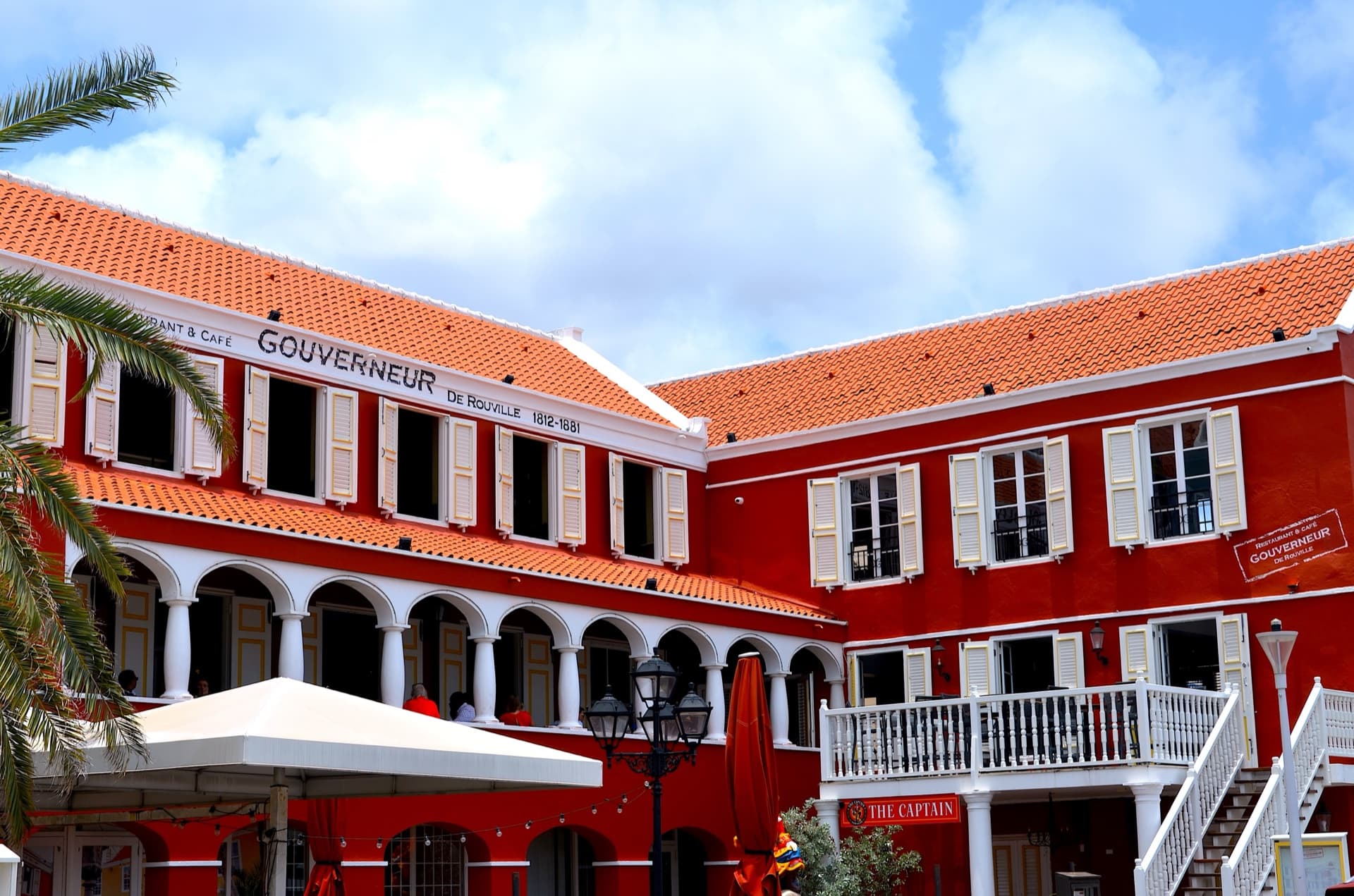
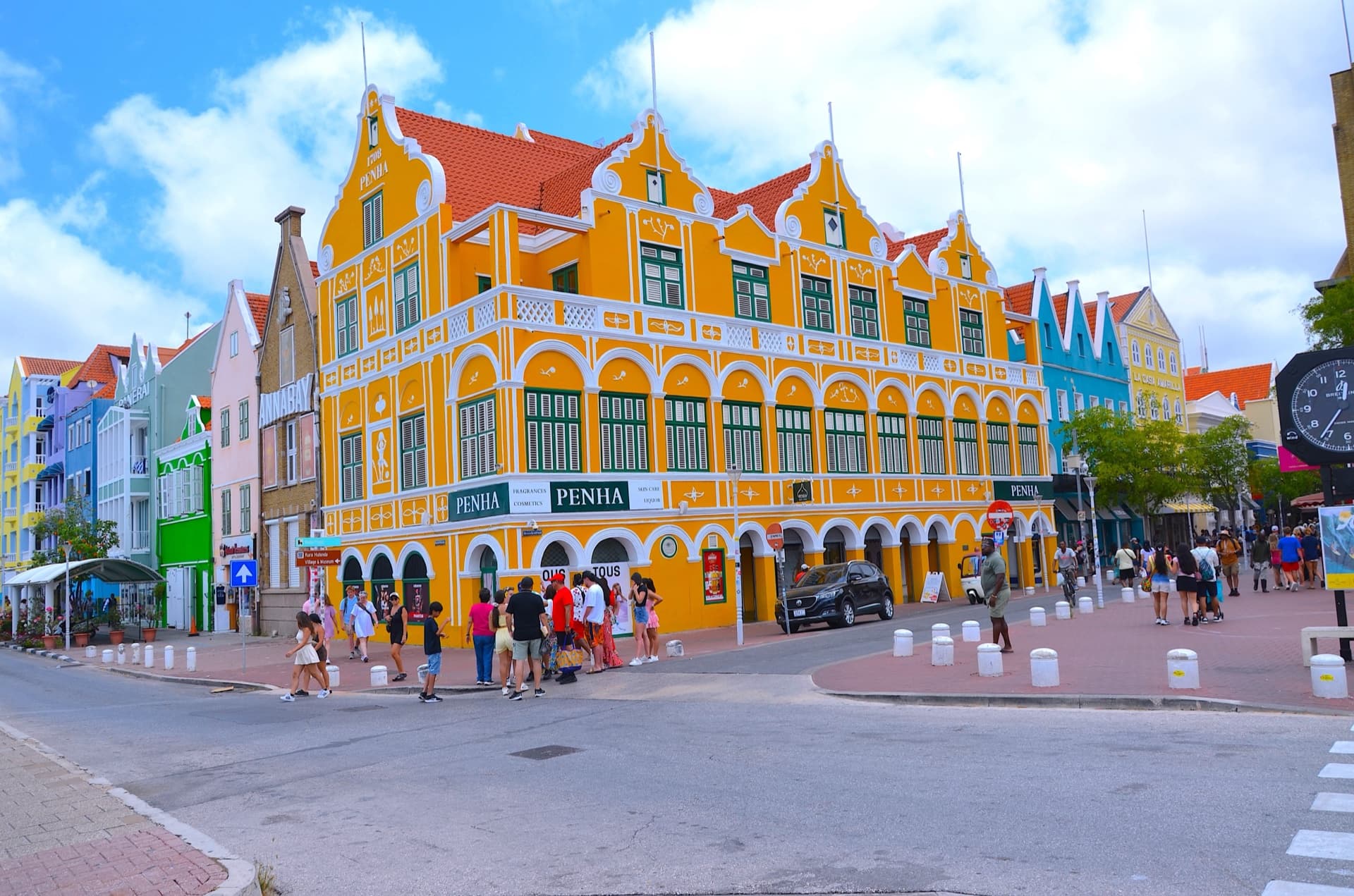
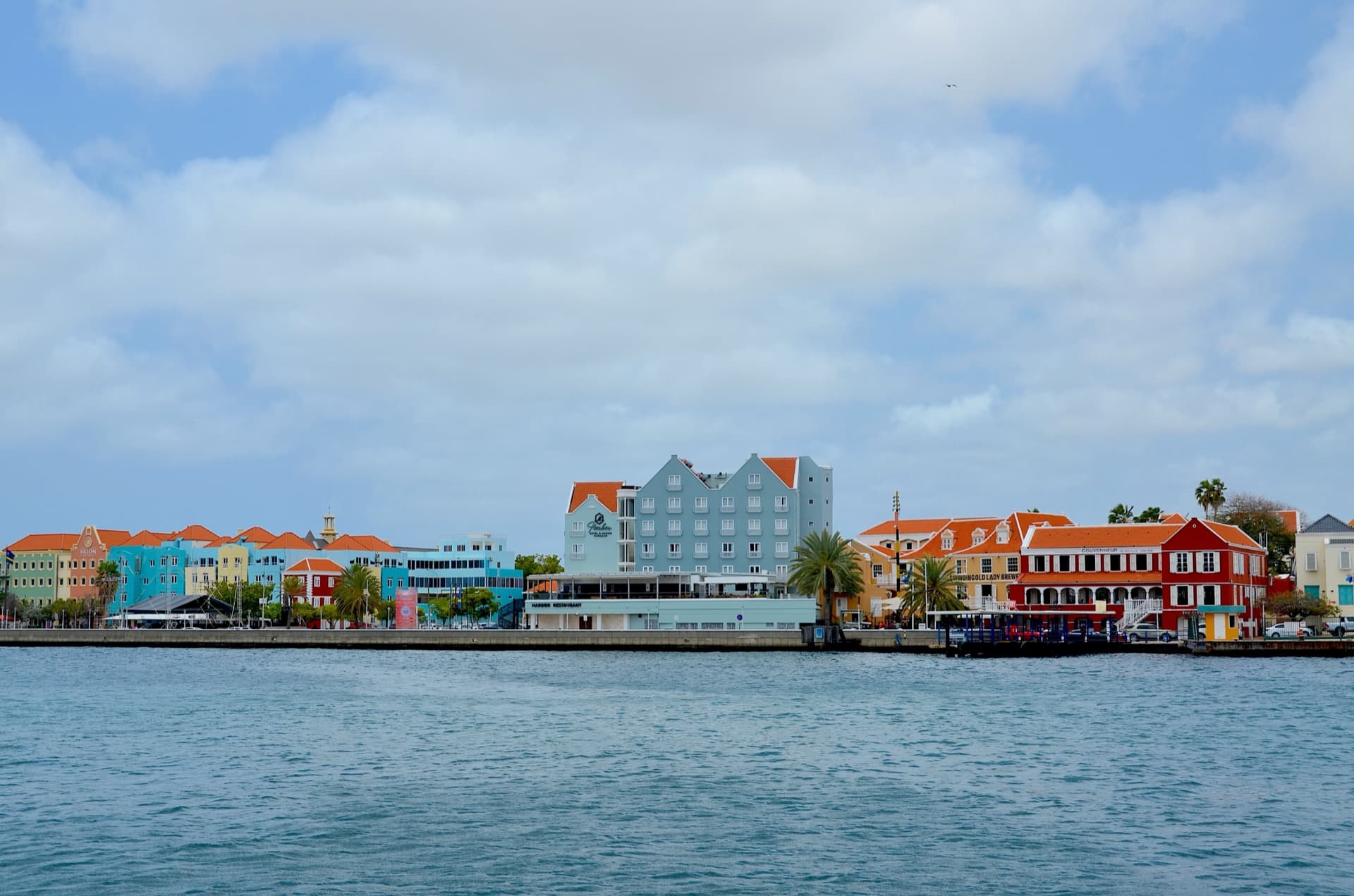
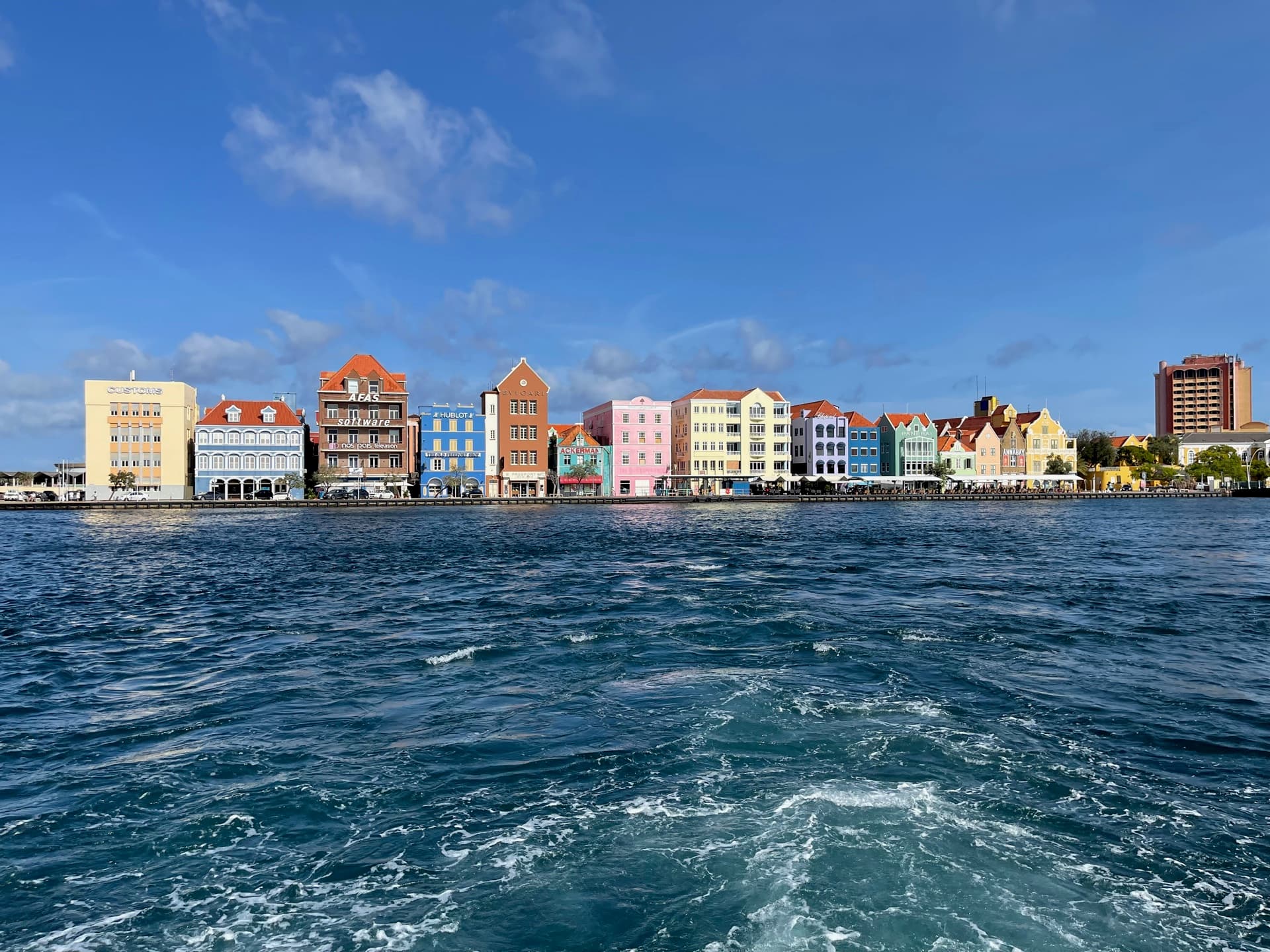
In 1997, the inner city and harbour of Willemstad were designated a UNESCO World Heritage Site. The recognition honours the city's remarkable colonial architecture and its role as a perfectly preserved example of a Dutch trading settlement. But Willemstad is no museum piece — it's a living, breathing Caribbean city where 400-year-old buildings house trendy restaurants and nightclubs. The iconic Handelskade waterfront — those rows of pastel-coloured Dutch colonial buildings reflected in the harbour water — is one of the most photographed spots in the Caribbean. The tradition of colourful facades dates to 1817, when the governor banned white-painted buildings because the tropical glare was reportedly causing headaches. Over 700 historic buildings in the centre are now protected architectural monuments.
Punda — The Historic Heart

Punda — The Historic Heart

Punda is where it all began. Founded in 1634 when the Dutch West India Company established Fort Amsterdam at the harbour entrance, Punda grew into a bustling trading district. Today, it's a compact neighbourhood of narrow streets lined with boutique shops, cafés, and galleries. The Handelskade waterfront is here, along with the floating Queen Emma pontoon bridge that connects Punda to Otrobanda. Every Thursday evening, Punda Vibes transforms the neighbourhood into an open-air festival with music, food stalls, and dancing. Fort Amsterdam still stands at the harbour entrance, now housing the governor's residence, a Protestant church (with a cannonball still embedded in its wall from a 1804 British attack), and a small museum.

Pietermaai — The Renaissance District

Pietermaai — The Renaissance District

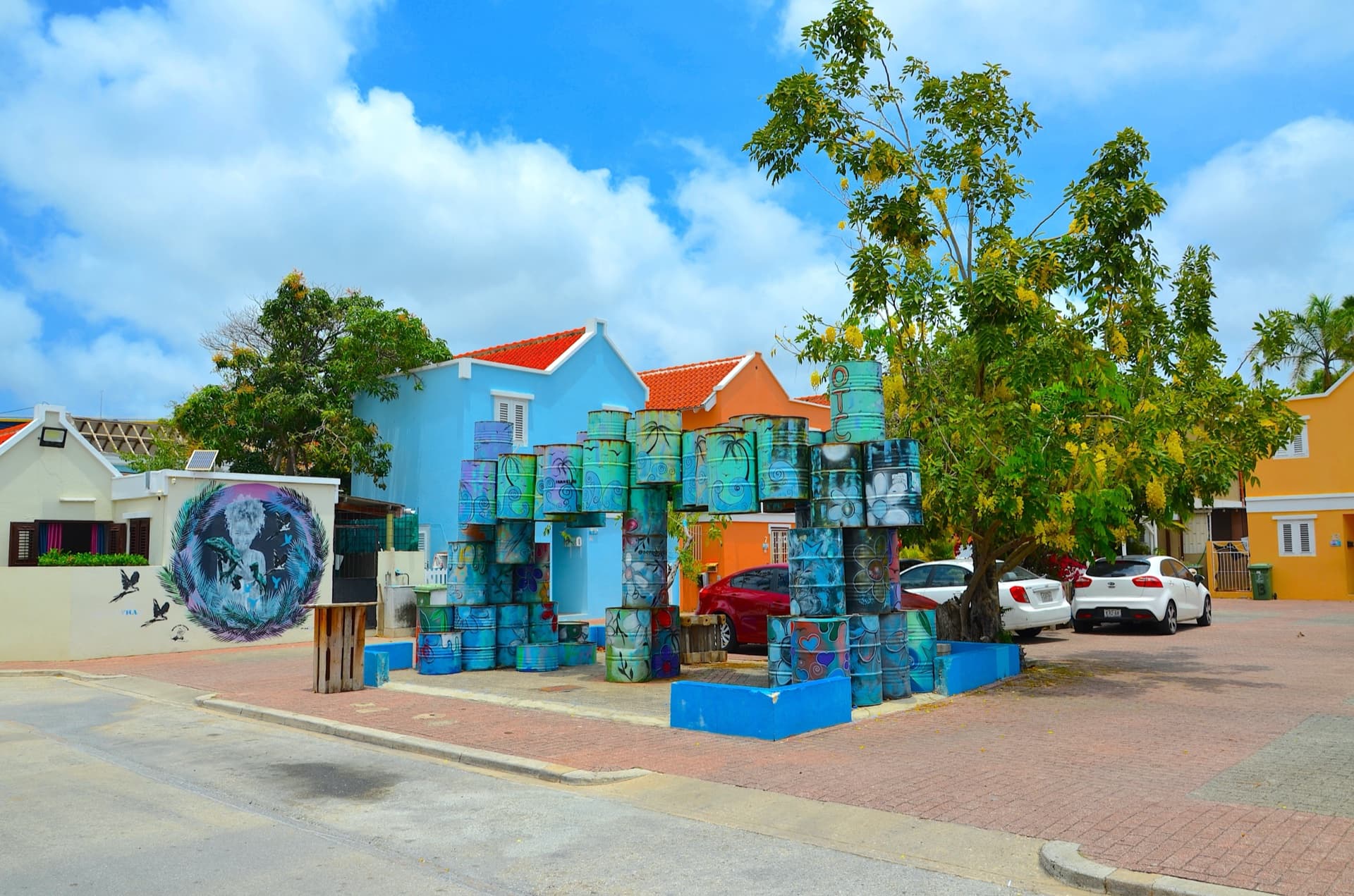
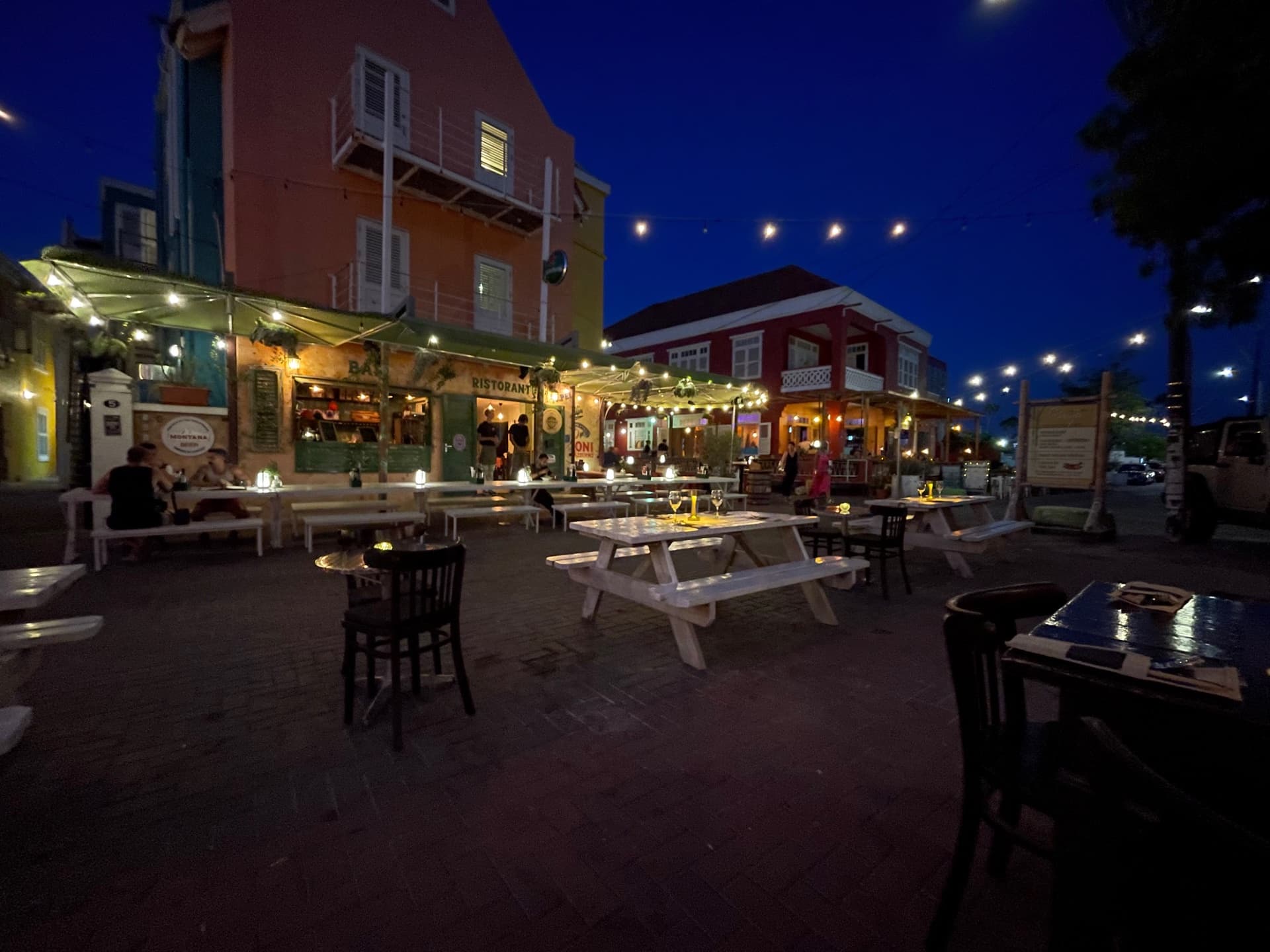
Perhaps no neighbourhood in the Caribbean has undergone a more dramatic transformation than Pietermaai. Until the early 2000s, this area east of Punda was derelict and dangerous — elegant colonial mansions crumbling into ruin. Then investors, artists, and entrepreneurs began restoring the buildings one by one. Today, Pietermaai is Curaçao's coolest district: a cobblestoned maze of boutique hotels, rooftop bars, live-music venues, and some of the best restaurants on the island. The colonial architecture has been preserved but reimagined — you might find a craft cocktail bar inside a 300-year-old Dutch mansion with original wooden shutters and coral-stone walls. Come at night when the streets fill with music, laughter, and the warm glow of candlelit terraces.

Otrobanda — The Other Side

Otrobanda — The Other Side

Otrobanda literally means 'the other side' in Papiamentu, referring to its position across the bay from Punda. Connected by the Queen Emma Bridge, Otrobanda developed as a more working-class neighbourhood and has retained a grittier, more authentic energy. The Kura Hulanda Museum here is one of the most important museums in the Caribbean — it chronicles the history of African empires, the transatlantic slave trade, and the African diaspora through a stunning collection of artefacts. The neighbourhood is also home to Rif Fort, a restored 19th-century fortification now housing restaurants and shops, and the stunning Brionplein waterfront where locals gather in the evenings.

Scharloo — The Art District

Scharloo — The Art District

North of Punda, Scharloo was once home to wealthy Jewish merchants who built ornate mansions in a mix of Art Deco, Baroque, and Dutch Colonial styles. After decades of decline, Scharloo is now emerging as an arts and culture district. The streets are lined with colourful murals and street art. Gallery Alma Blou showcases Caribbean artists in a restored mansion. The Curaçao Maritime Museum traces 500 years of harbour history through ship models and nautical artefacts. The Princess Amalia drawbridge — a classic Dutch design — connects Scharloo to Punda.

The Slave Trade & Tula's Revolt

From 1662, the Dutch West India Company made Curaçao one of the largest slave-trading centres in the Western Hemisphere. Enslaved people from West Africa were brought to the island and then sold throughout the Caribbean and the Americas. This painful history is visible in the architecture (the grand mansions were built on slave-trade wealth), the culture (Krioyo food, music, and Papiamentu all have deep African roots), and the monuments. In 1795, an enslaved man named Tula Rigaud led a major revolt with up to 4,000 participants. Though the revolt was suppressed, Tula became a national hero — a symbol of the fight for freedom and dignity. Today, August 17 is commemorated as Dia di Lucha pa Libertat (Day of the Fight for Freedom), and Tula's statue stands at the island's memorial site.

Mikvé Israel-Emanuel Synagogue

Built in 1732, the Mikvé Israel-Emanuel Synagogue is the oldest continuously operating synagogue in the Americas. It's a testament to Curaçao's significant Jewish community, which dates back to the 1650s when Sephardic Jews from Portugal and Spain settled on the island. The synagogue's sand floor — a tradition symbolising the desert wanderings of the Israelites — is unique. The adjacent Jewish Cultural-Historical Museum tells the story of 350 years of Jewish life on Curaçao. The community played a vital role in the island's commerce and culture, including the creation of the Curaçao Liqueur.

Carnival & Festivals

Curaçao's Carnival is a month-long explosion of colour, music, and dance that peaks in the weeks before Lent. The Gran Marcha — the main parade through Willemstad — features elaborate floats, costumed performers, and tumba music so loud you feel it in your chest. Tumba is Curaçao's signature musical genre, blending African rhythms with Latin beats. The Carnival season also includes the Tumba Festival, where artists compete for the coveted Tumba King or Queen title. Beyond Carnival, the island celebrates the Curaçao North Sea Jazz Festival (a branch of the famous Dutch event), Dia di Rincon (a celebration of local culture), and Seu (harvest festival) — each offering a window into the island's vibrant cultural soul.

Papiamentu — A Language Like No Other

Papiamentu is perhaps the most remarkable thing about Curaçao. Spoken nowhere else in the world except Aruba and Bonaire, it's a Creole language that blends Spanish, Portuguese, Dutch, English, French, and West African languages into something entirely unique. Unlike many Creole languages that exist only in informal settings, Papiamentu is used in parliament, schools, media, and daily life. It's the heart of Curaçaoan identity. You'll hear it everywhere: in the markets, on the radio, in the greetings of strangers. Learn a few words — 'Bon dia' (good day), 'Danki' (thank you), 'Dushi' (sweet/beautiful) — and watch the smiles light up. Curaçaoans are deeply proud of their language and will appreciate any attempt to speak it.

Street Art & Murals — Willemstad's Open-Air Gallery

Street Art & Murals — Willemstad's Open-Air Gallery

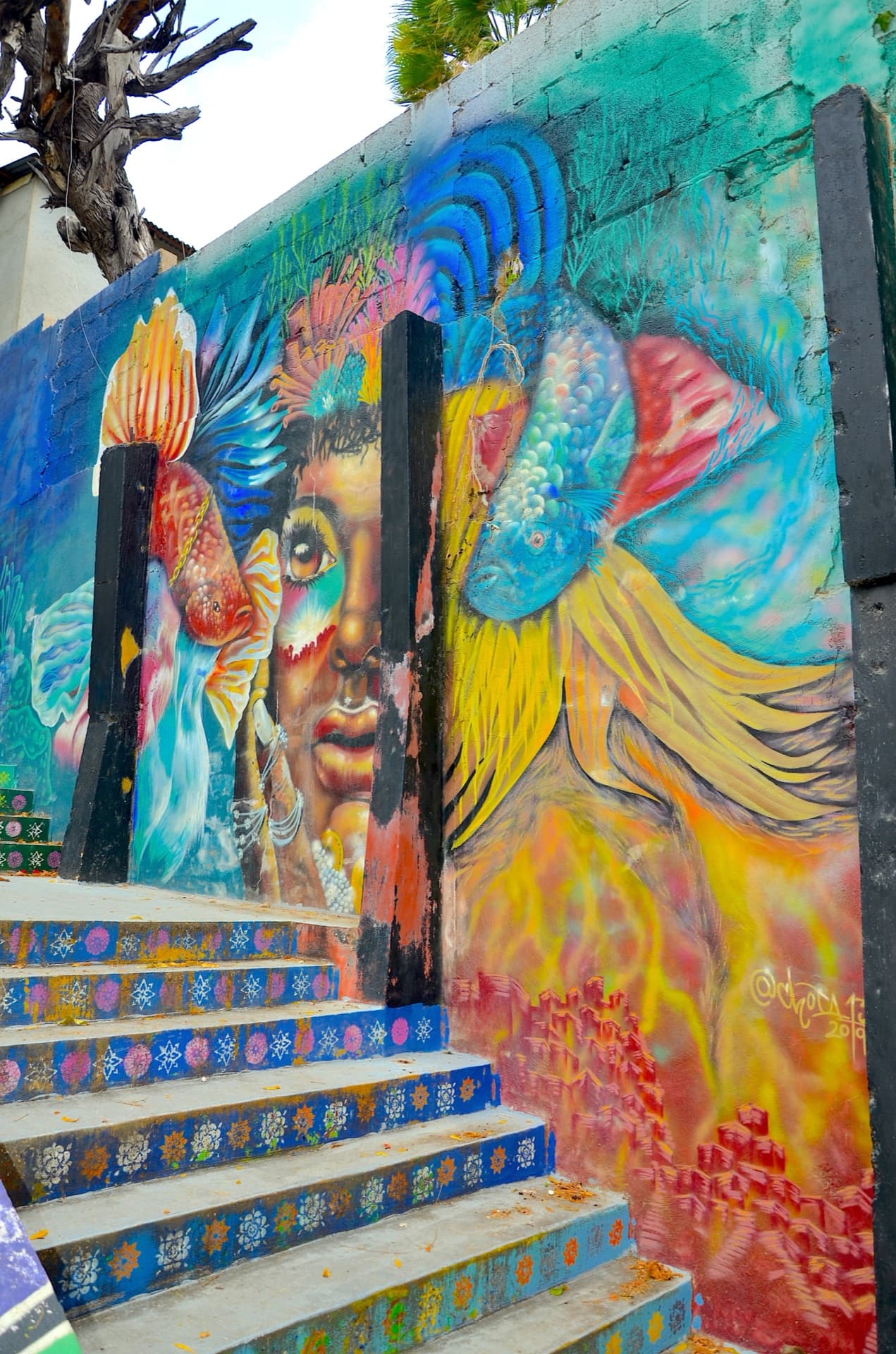
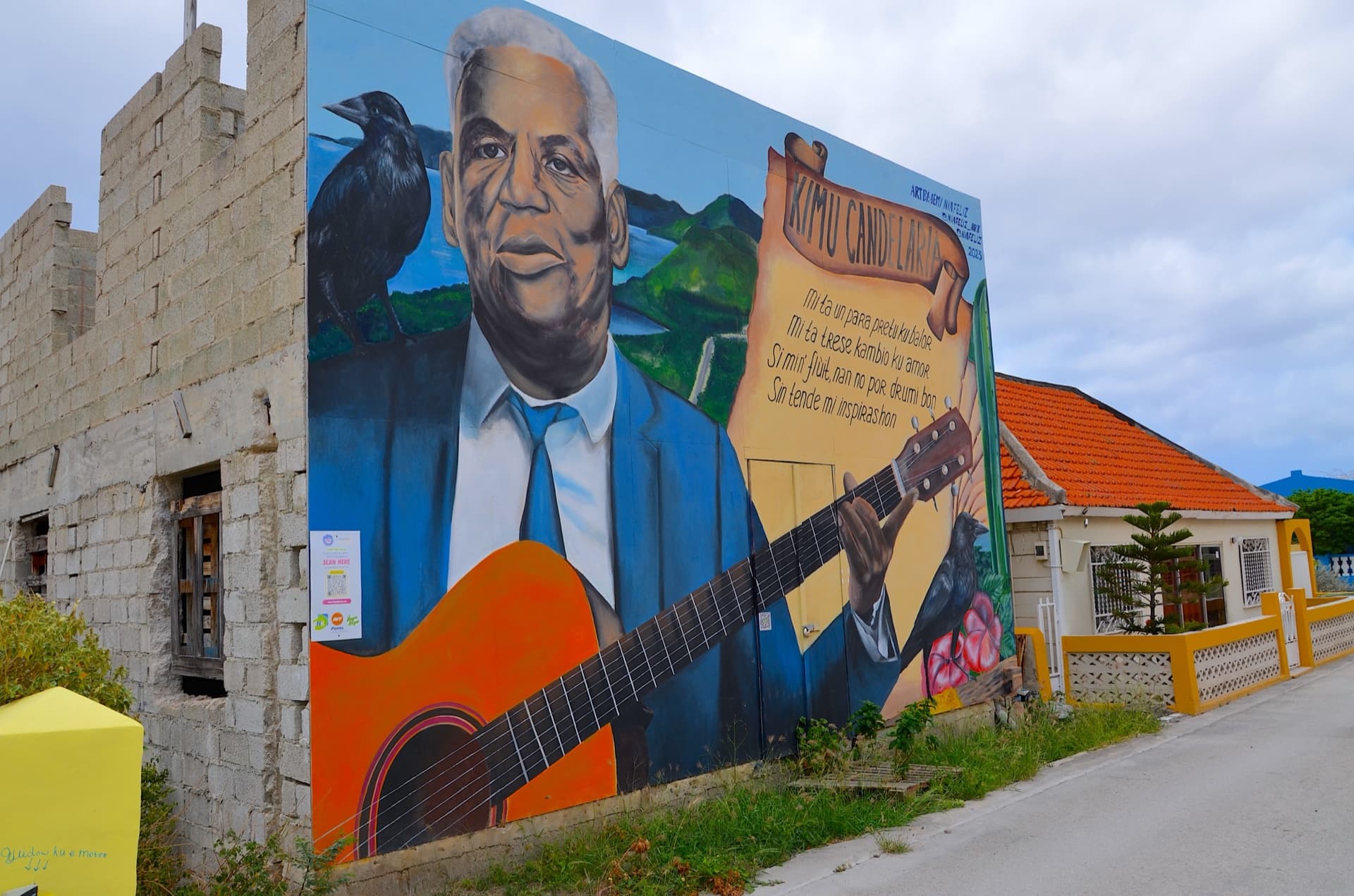
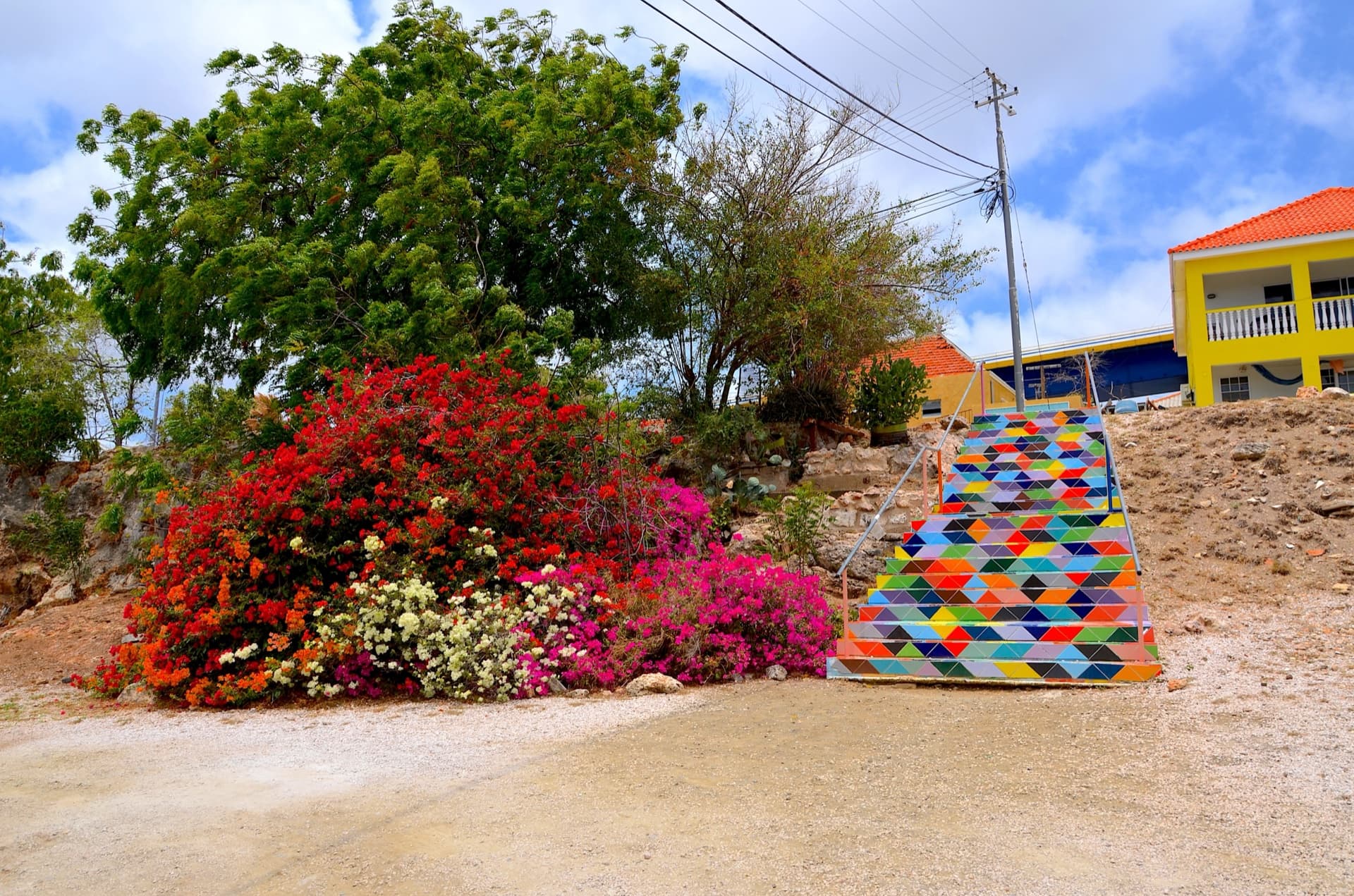
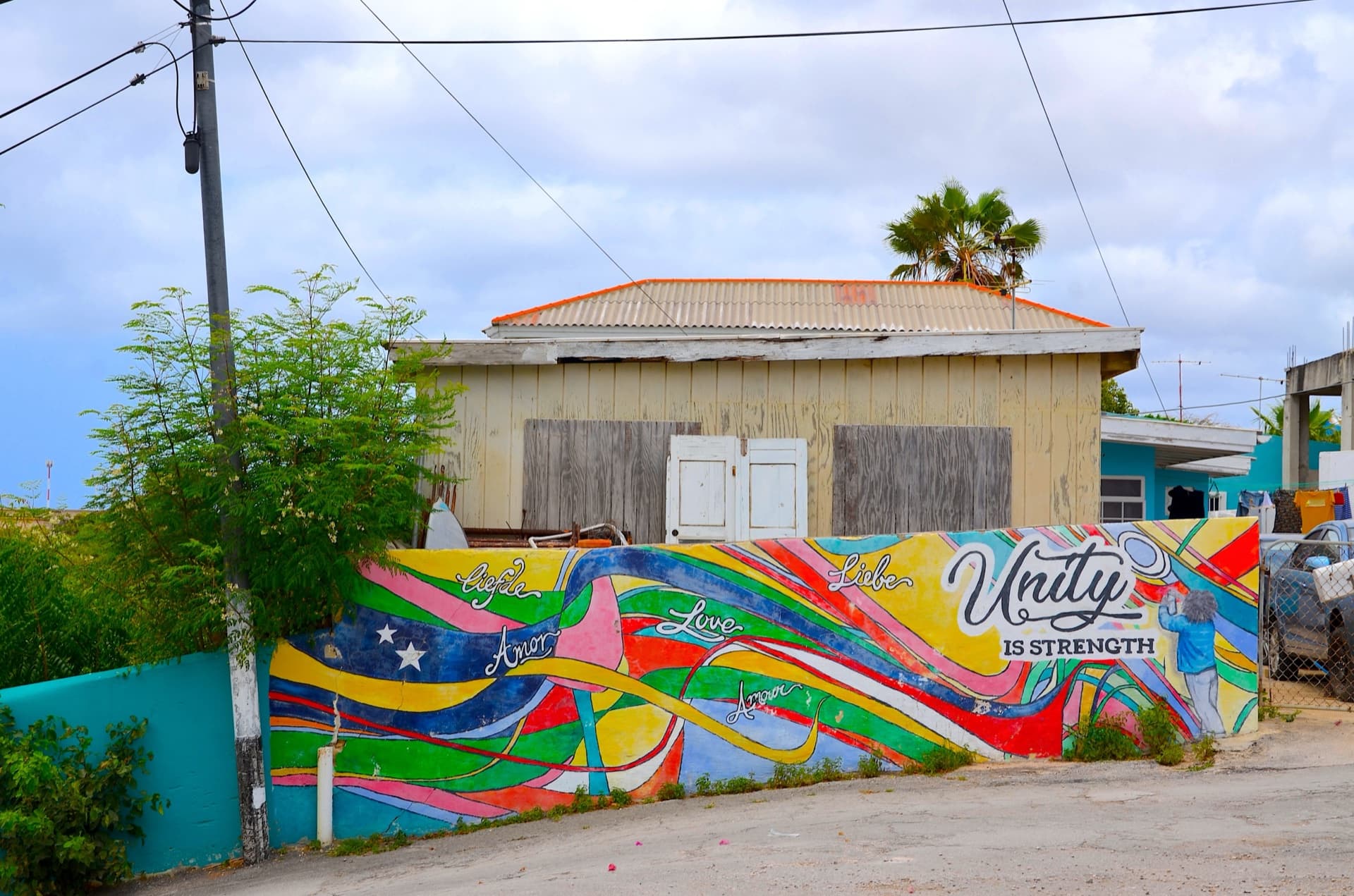
What started as a handful of guerrilla murals has turned Willemstad into one of the Caribbean's most impressive open-air museums. In Otrabanda, the Kaya Kaya Festival — launched in 2018 by local entrepreneurs Kurt Schoop, Raygen Zuiverloon and Clayton Lasten — transformed neglected streets into a rolling canvas. Start at Plaza Brion and walk down Breedestraat towards the Arubastraat viaduct, where Mr. Garek's carnival-coloured mural explodes beneath the concrete. Turn onto Willemstraat to discover Jhomar Loaiza's stunning triptych: three Curaçaoan women adorned with flowers and colourful headscarves, their gazes following you across three house facades. Around the corner on Frederikstraat, an entire building has been painted as an underwater aquarium, while Sander van Beusekom's intertwined dancer and ballerina carries the inscription 'Life is a beautiful struggle.' On Hoogstraat, Francis Sling's legendary 'Sunú' mural — a gigantic plucked chicken hanging its feathers on a clothesline — adorns the Keizershof wall. Follow the street to Van Lennepstraat, where Avantia Damberg's rainbow-coloured stairs climb towards Ser'i Otrobanda, offering views of the Queen Juliana Bridge. In Punda, duck into the 'hanchi' — the narrow alleys near Keukenstraat, where Nena Sanchez, the island's most beloved artist, painted three-dimensional iguanas and sunflowers without permission in an act of creative rebellion. Her legacy lives on in the Windstraat Art Alley, a corridor of murals and galleries. Cross the Waaigat to Scharloo Abou, where the Street Art Skálo initiative has revived a once-neglected neighbourhood since 2016. The crown jewel is Francis Sling's 'Three O'Clock Romance' on the corner of Bitterstraat and Van Raderstraat — a Kibrahacha tree in full yellow bloom surrounded by prikichi parakeets, symbolising freedom and renewal. Walk the route yourself: Otrabanda tour (Plaza Brion → Breedestraat → Willemstraat → Colorful Steps → Riffort, approx. 2 km) or Punda + Schaarloo tour (Queen Emma Bridge → Keukenstraat → Windstraat → Handelskade → Bitterstraat → Scharlooweg, approx. 2.5 km). Go early morning for the best light and coolest temperatures.

Chichi — Curaçao's Iconic Big Sister Statues

Chichi — Curaçao's Iconic Big Sister Statues

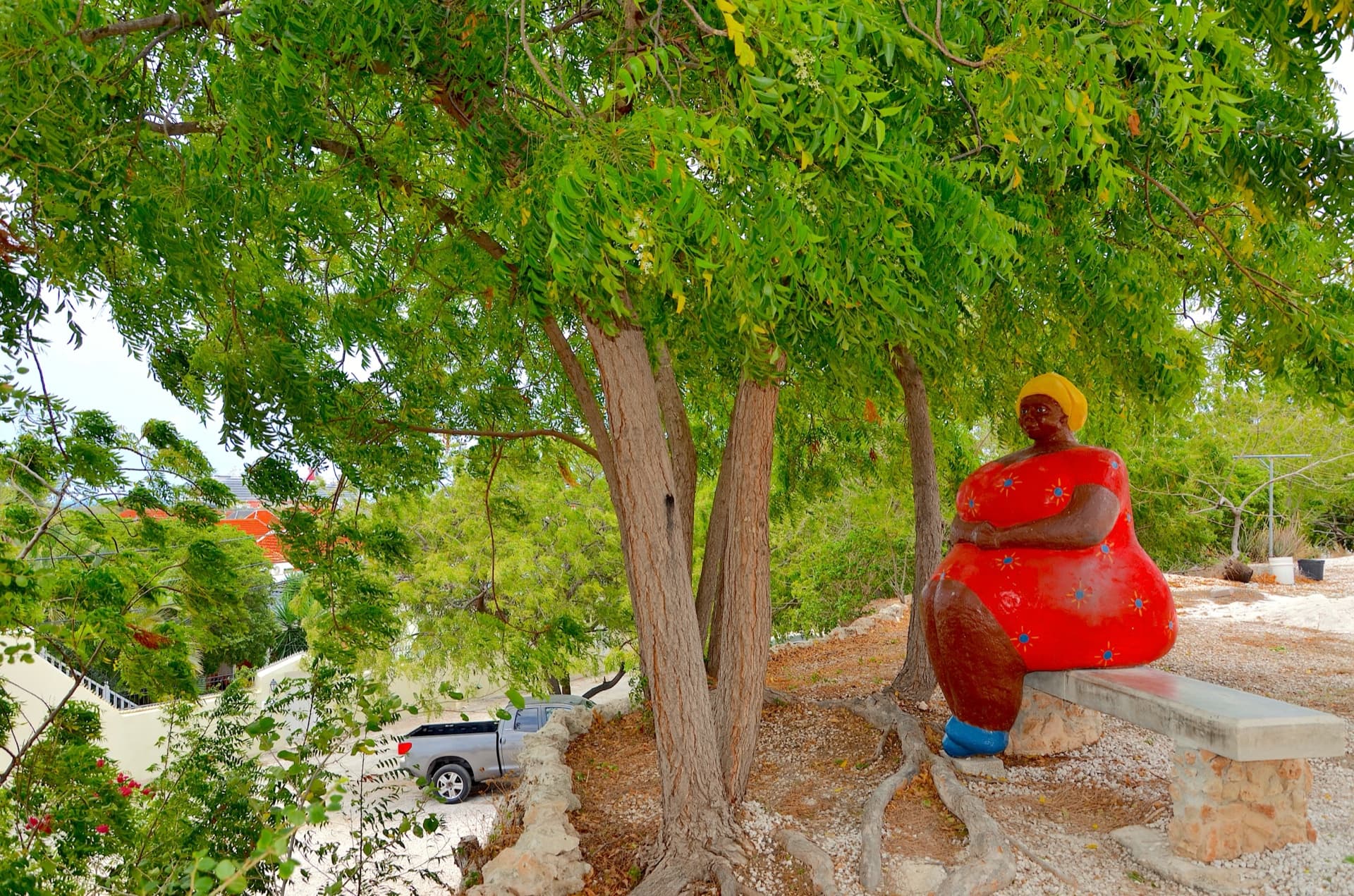
You cannot walk through Willemstad without encountering a Chichi — a voluptuous, joyfully painted female figure that has become Curaçao's most recognisable symbol. 'Chichi' means 'big sister' in Papiamentu, and the statues represent the eldest daughter who holds the family together with love and strength. They were created by Serena Janet Israel, a Berlin-born artist who sailed around the world for eight years before settling on the island in 2001. Inspired by Botero's rounded forms, Niki de Saint Phalle's colourful sculptures, and the prehistoric Venus of Willendorf, Serena developed Chichi as a celebration of Caribbean womanhood and body positivity. What began as a one-woman project has grown into a community enterprise employing over 25 local women at Serena's Art Factory near the Aloe Vera plantation in Sint Joris, where visitors can paint their own Chichi in the tropical sculpture garden. The family has expanded to include Bubu (big brother), Yuchi (baby), and Chochi (dog) — proceeds from Chochi sales go to animal rescue organisations. In Willemstad, you will find Chichis at three key locations: the Chichi Store in the Art Alley on Windstraat in Punda (look for the larger-than-life statue at the entrance on Gomezplein), at Mon Art craft shop in Riffort Village in Otrabanda, and the famous XXXL Chichi on the Handelskade waterfront near the Pontjesbrug. Each one is unique, hand-painted by local artists in the vivid Caribbean colours that make them irresistible. Important: Chichis cannot be shipped — you can only buy them on the island, which makes owning one a true Curaçao souvenir.

About our Seafari safaris

How do I book a Seafari tour?+
Book directly on seafariadventurescuracao.com — select your tour, pick a date, fill in your details, pay securely, and receive instant confirmation. No booking fees. Cruise passengers: we match your ship schedule and guarantee on-time return.
What's included in a Seafari tour?+
All our tours include professional snorkeling equipment, drinks (soft drinks, beer, signature Seafari cocktail), snacks or lunch depending on the tour, sun shade on the boat, and a multilingual guide. Snorkel vests are free on request. You only bring swimwear, towel, and sunscreen.
What if the weather is bad?+
Our Rupert 50 RIB handles moderate chop comfortably. For genuinely dangerous weather we reschedule or refund 100%. You get a call by 7 AM on the tour day if we need to adjust. Curaçao weather is stable year-round — cancellations happen less than 5% of the year.
Is Seafari suitable for children?+
Yes. Children 6+ are welcome on all standard tours. The boat has stable RIB hulls (no seasickness for most), life vests in all sizes, and our guides are trained in family snorkel introductions. For children under 6 we recommend a private charter for flexibility.
Can I book a private charter?+
Yes — the Rupert 50 is available for private charter for groups of 2-36. Design your own route, pick your own stops, set your own pace. Contact us via the Private Charter form and we'll quote a fixed price within 24 hours.
What's the cancellation policy?+
Free cancellation up to 48 hours before departure — full refund, no questions asked. Within 48 hours: 50% refund. If WE cancel (weather, mechanical, safety): 100% refund or free reschedule. Travel insurance is recommended for cruise passengers.

Discover it by boat

The best way to experience Curaçao's coastline is from the water. Our sea safaris take you to the island's most beautiful spots — places you can only reach by boat.

View Our Tours