Back to Travel Guide

Practical Travel Tips for Curaçao

Everything you need to know to plan the perfect Curaçao holiday — from getting around and currency to cruise port logistics and insider tips the guidebooks don't tell you.

Curaçao is one of the easiest Caribbean islands to visit — but a few practical tips will make your trip smoother. Here's our comprehensive guide, written by people who live and work on the island every day.

When to Visit

Curaçao lies below the hurricane belt, so there's no 'bad' time to visit. The weather is warm and dry year-round, with average temperatures around 27–30°C and a near-constant trade wind that keeps things comfortable. The brief 'rainy season' runs from October to January, but rain typically falls in short, localized showers — often early morning or late evening — and rarely disrupts beach plans. High season runs from December through April, coinciding with the European and North American winter. Hotels fill up and prices rise. The shoulder seasons (May–June and November) offer the best combination of good weather, lower prices, and fewer crowds. If you want to experience Carnival, plan for February — but book accommodation months in advance.

Getting Around

Rent a car. This is the single best piece of advice for Curaçao. The island is only 61 km long and 14 km wide, roads are generally good, distances are short, and parking is free almost everywhere. Rental cars start at around $30–40 per day. Drive on the right side. Seat belts are mandatory. Speed limits are 45–60 km/h on most roads. There is no Uber or Lyft on the island. Taxis are available and safe, but not metered — agree on the price before you get in. A taxi from the airport to Willemstad costs about $25–30. Public buses ('konvoi') are cheap ($1–2 per ride) but routes are limited and schedules unpredictable. For beach-hopping and exploring the west coast, a rental car is essentially mandatory.

Currency & Money

The official currency is the Netherlands Antillean Guilder (ANG or NAf), pegged to the US dollar at roughly 1.78 NAf per $1. In practice, US dollars are accepted everywhere and most restaurants and shops display prices in both currencies. Credit cards (Visa and MasterCard) are widely accepted at restaurants, hotels, and larger shops. American Express is less common. Cash is still preferred at gas stations, small snack bars, Plasa Bieu, and some beach entrance gates. ATMs dispense both NAf and US dollars. Tipping is customary: 10–15% at restaurants (check if service charge is already included), and a few dollars for tour guides and taxi drivers.

Language

Curaçao is one of the most multilingual places in the world. The three official languages are Papiamentu (the local Creole language), Dutch (for government and education), and English (for tourism and business). Most Curaçaoans speak all three fluently, and many also speak Spanish. You'll get by perfectly with English, but learning a few Papiamentu phrases will earn you genuine appreciation: 'Bon dia' (good morning), 'Bon tardi' (good afternoon), 'Danki' (thank you), 'Dushi' (sweet/beautiful — used as a term of endearment).

Cruise Port Guide

Cruise Port Guide

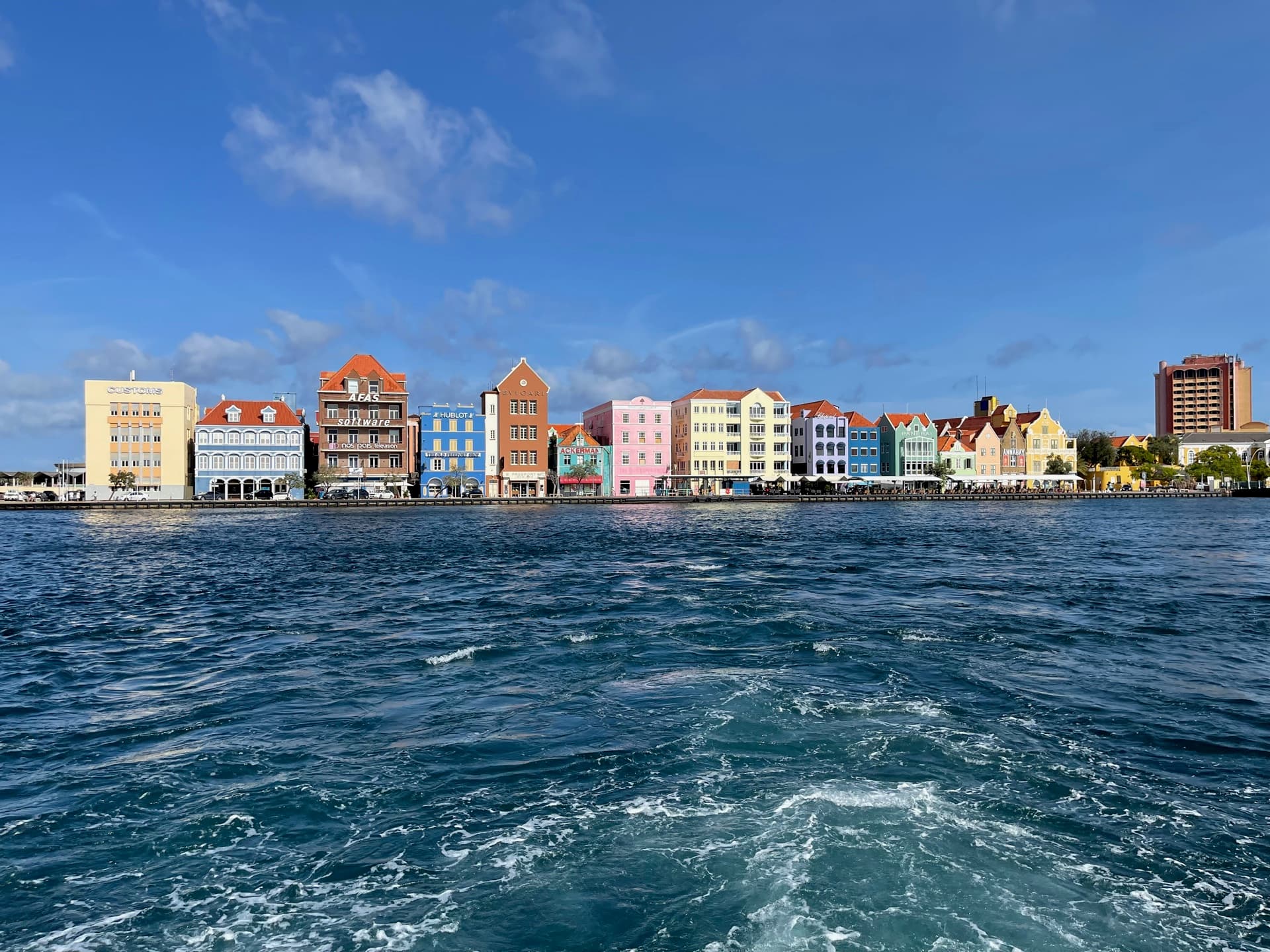
Cruise ships dock at Mega Pier in Otrobanda, right in the heart of Willemstad. From the terminal, it's a 5-minute walk to the Rif Fort (shops, restaurants) and a 10-minute walk across the Queen Emma Bridge to Punda. The closest beach to the port is Mambo Beach (about 10 minutes by taxi). If you want to explore the west-coast beaches, rent a car for the day or book an excursion. Our Seafari Half Day Safari is specifically designed for cruise passengers: we pick you up near the terminal, show you the island's best snorkelling spots, and guarantee you're back at the ship on time. The typical cruise-day schedule gives you 6–8 hours on the island.

Safety

Curaçao is one of the safest islands in the Caribbean. Violent crime against tourists is extremely rare. The main tourist areas — Punda, Pietermaai, Mambo Beach, Jan Thiel — are safe to walk around, even at night. That said, use the same common sense you would anywhere: don't leave valuables visible in your rental car (car break-ins happen), keep an eye on your belongings at the beach, and avoid poorly lit areas in less-touristy neighbourhoods after dark. The emergency number is 911.

Water & Health

Good news: Curaçao's tap water is safe to drink. It's desalinated seawater processed to some of the highest drinking-water standards in the world. No need to buy bottled water. The sun is fierce — the island is only 12 degrees from the equator. Wear reef-safe sunscreen (mandatory at some beaches to protect the coral), reapply often, and stay hydrated. The hospital (Sint Elisabeth Hospital) and medical facilities are modern and well-equipped. Travel insurance that covers medical evacuation is recommended, as it is for all Caribbean travel.

Power & Connectivity

Power outlets are 127V/50Hz with American-style two-pin Type A/B plugs — same as the USA, different from Europe. European visitors need a plug adapter. Wi-Fi is available at most hotels, restaurants, and beach clubs. Mobile coverage is good across the island. If you need mobile data, local SIM cards from Digicel or UTS are available at the airport and in town. Alternatively, most US phone plans include Curaçao for roaming.

What to Pack

Reef-safe sunscreen (the reef needs your protection), swimwear, a cover-up for restaurants, comfortable walking shoes for Willemstad's cobblestones, water shoes for rocky beach entries, a light rain jacket for occasional showers, a GoPro or underwater camera for snorkelling, insect repellent for evenings, and a reusable water bottle (the tap water is excellent). Leave the formal wear at home — Curaçao is casual. Smart-casual is the dressiest you'll ever need, even at fine dining restaurants.

About our Seafari safaris

How do I book a Seafari tour?+
Book directly on seafariadventurescuracao.com — select your tour, pick a date, fill in your details, pay securely, and receive instant confirmation. No booking fees. Cruise passengers: we match your ship schedule and guarantee on-time return.
What's included in a Seafari tour?+
All our tours include professional snorkeling equipment, drinks (soft drinks, beer, signature Seafari cocktail), snacks or lunch depending on the tour, sun shade on the boat, and a multilingual guide. Snorkel vests are free on request. You only bring swimwear, towel, and sunscreen.
What if the weather is bad?+
Our Rupert 50 RIB handles moderate chop comfortably. For genuinely dangerous weather we reschedule or refund 100%. You get a call by 7 AM on the tour day if we need to adjust. Curaçao weather is stable year-round — cancellations happen less than 5% of the year.
Is Seafari suitable for children?+
Yes. Children 6+ are welcome on all standard tours. The boat has stable RIB hulls (no seasickness for most), life vests in all sizes, and our guides are trained in family snorkel introductions. For children under 6 we recommend a private charter for flexibility.
Can I book a private charter?+
Yes — the Rupert 50 is available for private charter for groups of 2-36. Design your own route, pick your own stops, set your own pace. Contact us via the Private Charter form and we'll quote a fixed price within 24 hours.
What's the cancellation policy?+
Free cancellation up to 48 hours before departure — full refund, no questions asked. Within 48 hours: 50% refund. If WE cancel (weather, mechanical, safety): 100% refund or free reschedule. Travel insurance is recommended for cruise passengers.

Discover it by boat

The best way to experience Curaçao's coastline is from the water. Our sea safaris take you to the island's most beautiful spots — places you can only reach by boat.

View Our Tours